



Sulpiride
Based on 13 publication(s) in Google Scholar
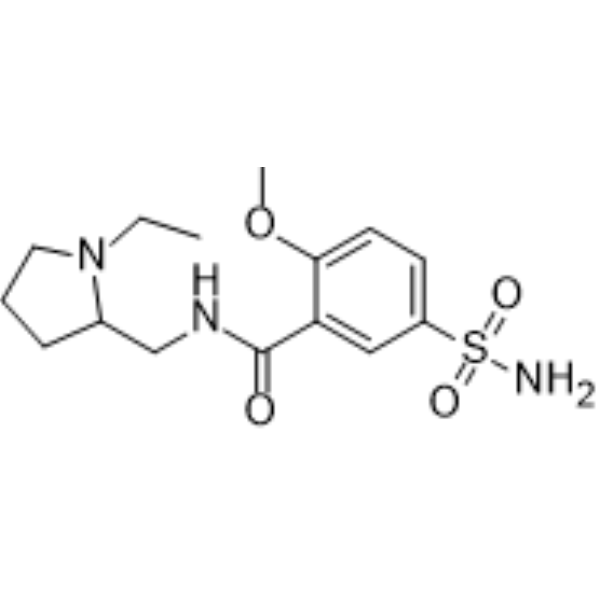
Sulpiride is an orally active dopamine D2/D3 receptor antagonist. Sulpiride is an atypical antipsychotic agent of the benzamide family. Sulpiride can be used in research into anxiety, depression and breast cancer.
Nur für Forschungszwecke. Wir verkaufen nicht an Patienten.
- Reinheit : 99.28%
- CAS. Nr.: 15676-16-1
- Formel: C15H23N3O4S
- Molecular Weight:341.43
-
Speicherung:Powder -20°C, 3 years , 4°C, 2 years ; In solvent -80°C, 2 years , -20°C, 1 year

To place orders, for customer services and technical support, please contact: MedChemExpress USA
Tel: 609-228-6898 E-mail: [email protected] [email protected]


-
 Biologische Aktivität
-
Chemical Information
-
Lösungsmittel & Löslichkeit
- Protokoll
- Reinheit & Dokumentation
- Verweise
-
 Help & FAQs


-
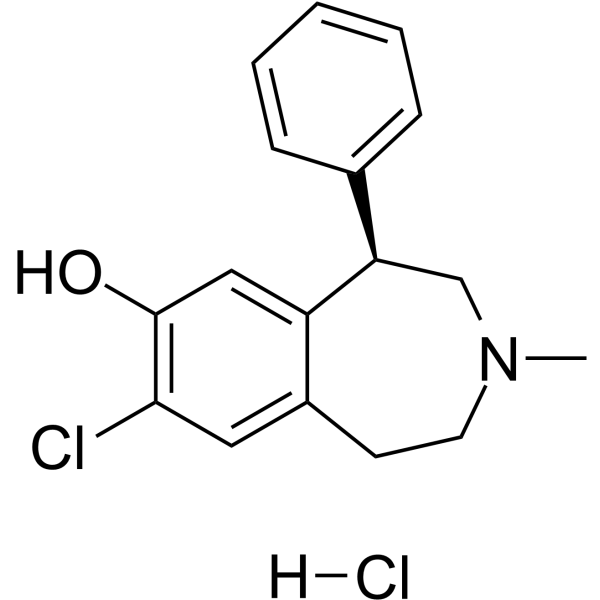
HY-19545A
SCH-23390 hydrochlorideDopamine D1 Receptor Antagonist -
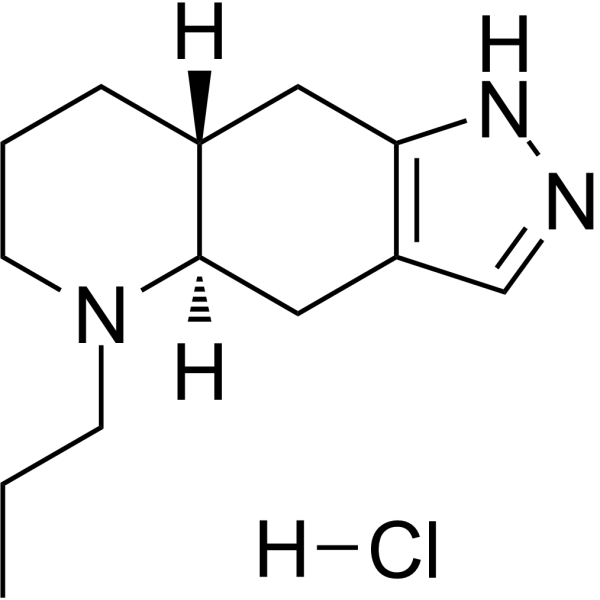
HY-B1752A
Quinpirole hydrochlorideD2/D3R Agonist -
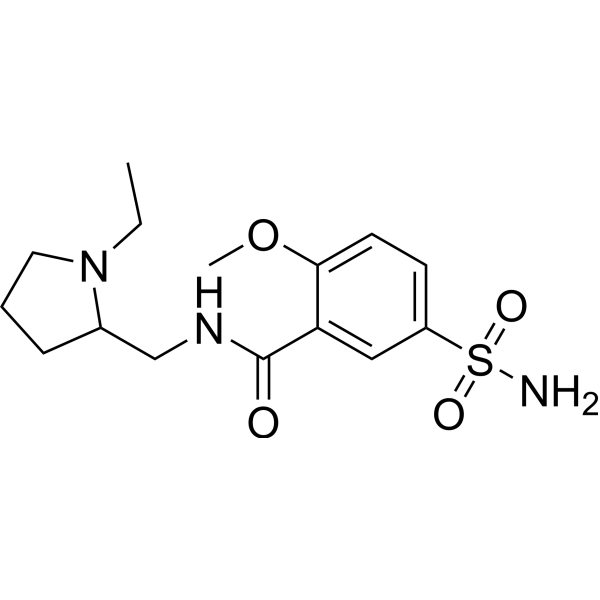
HY-B1019R
Sulpiride (Standard)D2/D3 Receptor Antagonist -
HY-B0573B
Propranololβ-Adrenoceptor Blocker -
HY-14538
HaloperidolDopamine Receptor Antagonist -
HY-11018
Risperidone5-HT2 Receptor Blocker -
HY-17498
Atenololβ1-Adrenergic Receptor Blocker -
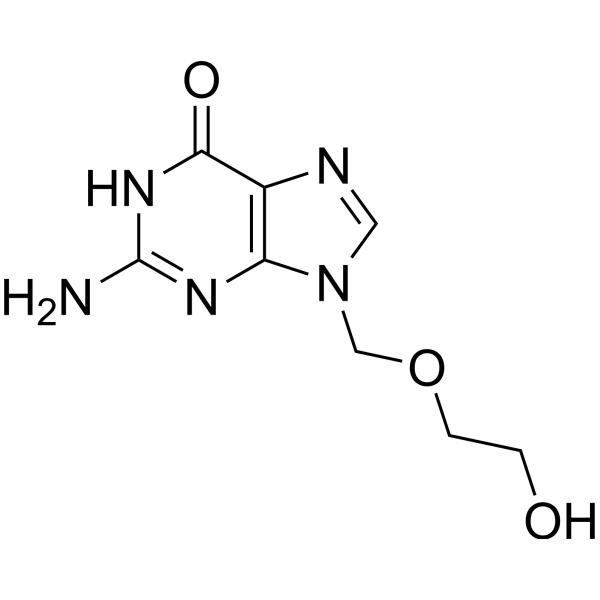
HY-17422
AcyclovirHSV Inhibitor -
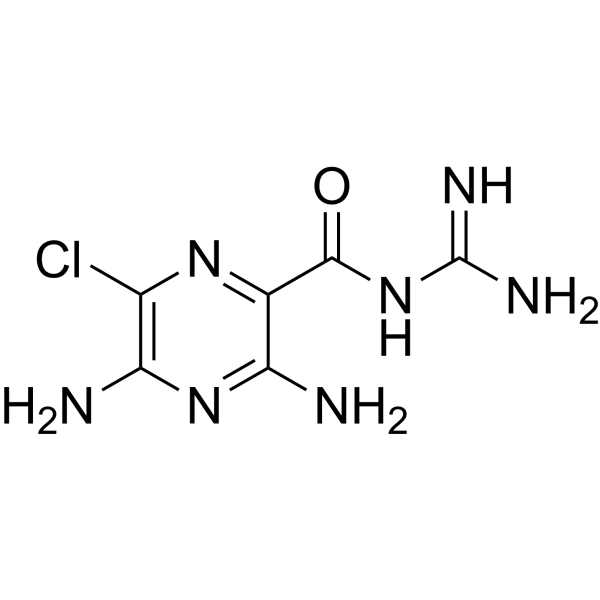
HY-B0285
AmilorideApoptosis Inducer -
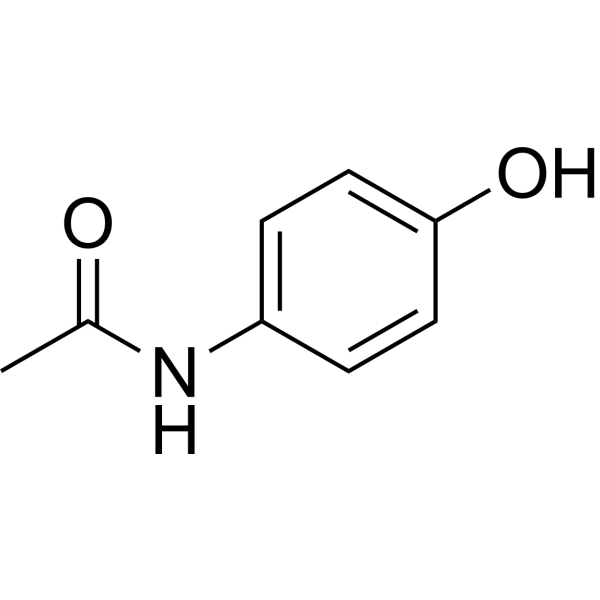
HY-66005
AcetaminophenCOX-2 Inhibitor -
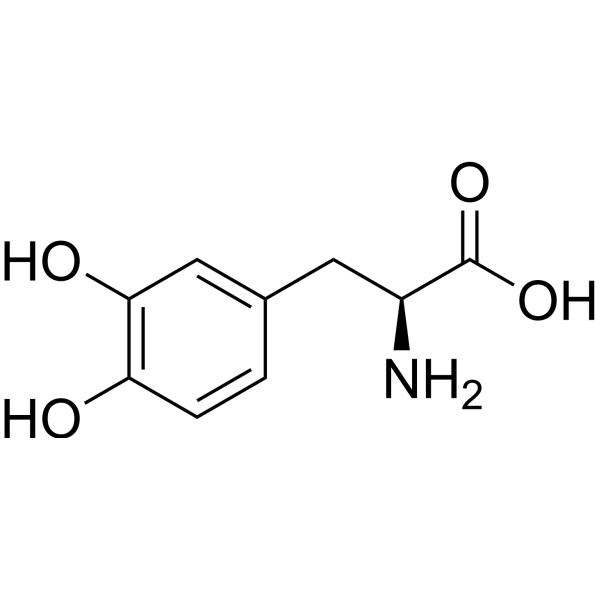
HY-N0304
L-DOPADopamine Precursor -
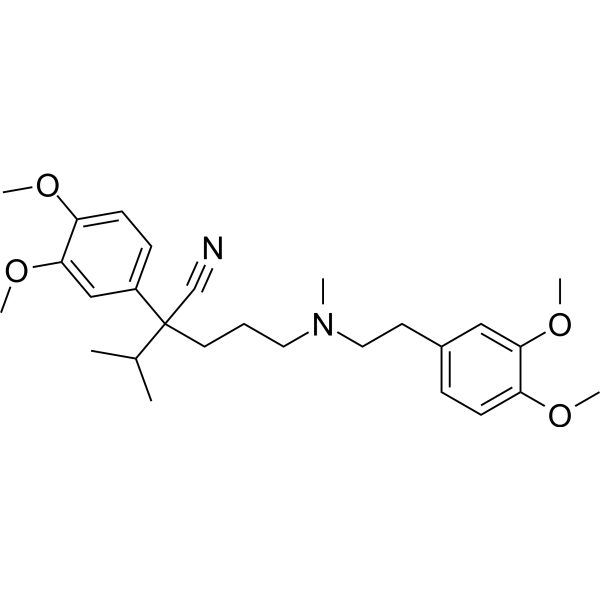
HY-14275
VerapamilCalcium Channel Blocker
Publications Citing Use of MedChemExpress (MCE) Sulpiride
More- Nat Methods. 2024 Apr;21(4):680-691. [Abstract]
- Exp Mol Med. 2026 Aug;58(8):2762-2780.
- Neuron. 2023 May 17;111(10):1626-1636.e6. [Abstract]
- Adv Sci (Weinh). 2026 Jul;13(37):e19913. [Abstract]
- Mol Psychiatry. 2025 Dec 12. [Abstract]
- Acta Pharmacol Sin. 2024 Nov;45(11):2253-2266. [Abstract]
- J Headache Pain. 2026 Feb 9;27(1):39. [Abstract]
- J Headache Pain. 2022 Aug 10;23(1):98. [Abstract]
- Antioxidants (Basel). 2024 Jun 14;13(6):725. [Abstract]
- iScience. 2023 Mar 22;26(4):106488. [Abstract]
- J Neurosci. 2025 Sep 3;45(36):e0382252025. [Abstract]
- Brain Res. 2026 Mar 15:1875:150181. [Abstract]
- bioRxiv. 2023 Aug 25:2023.08.24.554559. [Abstract]
 Customer Validation & Images

-
Bio/Physico-chemical Assay
-
Bio/Physico-chemical Assay
-
Bio/Physico-chemical Assay
-
In Vivo Efficacy Study
-
In Vivo Efficacy Study
Alle Dopamine Receptor Isoform-spezifische Produkte anzeigen
More

Biologische Aktivität
Beschreibung
IC50 & Target
[2]|
D2 Receptor |
D3 Receptor |
Cellular Effect
|
Cell Line

|
Type | Value | Description | References |
|---|---|---|---|---|
| CHO-K1 | IC50 |
560 nM
Compound: Sulpiride
|
Antagonist activity at human dopamine D3 receptor expressed in CHO-K1 cells assessed as inhibition of dopamine-induced recruitment of beta-arrestin-2 after 90 mins by beta-galactosidase assay
Antagonist activity at human dopamine D3 receptor expressed in CHO-K1 cells assessed as inhibition of dopamine-induced recruitment of beta-arrestin-2 after 90 mins by beta-galactosidase assay
|
[PMID: 21495689] |
| Sf21 | IC50 |
>1000 μM
Compound: Sulpiride
|
Inhibition of human BSEP expressed in plasma membrane vesicles of Sf21 cells assessed as inhibition of ATP-dependent [3H]taurocholate uptake
Inhibition of human BSEP expressed in plasma membrane vesicles of Sf21 cells assessed as inhibition of ATP-dependent [3H]taurocholate uptake
|
[PMID: 21965623] |
| Sf21 | IC50 |
>1000 μM
Compound: Sulpiride
|
Inhibition of Sprague-Dawley rat Bsep expressed in plasma membrane vesicles of Sf21 cells assessed as inhibition of ATP-dependent [3H]taurocholate uptake
Inhibition of Sprague-Dawley rat Bsep expressed in plasma membrane vesicles of Sf21 cells assessed as inhibition of ATP-dependent [3H]taurocholate uptake
|
[PMID: 21965623] |
In Vitro
Dopamine, Alzheimer's, depression, Anxiety, Sprague-Dawley rats, NMRI mouse, Parkinson’s disease, psychosis, MCF-7/Adr, Breast cancer, Dexamethasone, Drug combination,MCF-7/Adr, Cancer stem-like cells (CSCs)
MedChemExpress (MCE) has not independently confirmed the accuracy of these methods. They are for reference only. Further protocols information, click here.
In Vivo
Sulpiride (5-20 mg/kg; Intraperitoneal injection; Single dose) improves memory, but induces anxiety in Parkinson's disease (PD) mice at a dose of 20 mg/kg[3].
Sulpiride (25-100 mg/kg; Oral gavage; Once daily for 18 days) can enhance the anti-tumor activity of dexamethasone (DEX) (HY-14648) (1 and 8 mg/kg) in combination with dexamethasone in nu/nu nude mice bearing MCF-7/Adr xenografts.Without significant toxicity to organs[4].
MedChemExpress (MCE) has not independently confirmed the accuracy of these methods. They are for reference only.
-
Animal Model:Sprague-Dawley rats model[2]
-
Dosage:50 mg/kg
-
Administration:Subcutaneous injection (s.c.); Single dose.
-
Result:Caused dopamine concentrations in the dialysates to roughly double.
-
Animal Model:6-hydroxydopamine (6-OHDA) male NMRI mouse model of Parkinson’s disease (PD)[3]
-
Dosage:5 mg/kg, 10 mg/kg, 20 mg/kg
-
Administration:Intraperitoneal injection (i.p.); Single dose
-
Result:Decreased %OAT (open-arm time) but had no significant effect on %OAE (open-arm entries) and locomotor activity.
-
Animal Model:Female nu/nu nude mouse models of breast cancer bearing MCF-7/Adr xenografts[4]
-
Dosage:25 mg/kg, 50 mg/kg, 100 mg/kg
-
Administration:Oral gavage (p.o.); Once daily for 18 days. In combination with DEX (1 and 10 mg/kg; p.o.; Once daily for 18 days)
-
Result:When used in combination with DEX (1 mg/kg) at 50 m/kg, enhanced the tumor suppression rate (14.4%).
When combined with DEX (8 mg/kg) at 25, 50, and 100 mg/kg, enhanced the tumor suppression rate by 30.2%, 27.55%, and 14.97%, respectively.
Clinical Trial
| NCT Number | Sponsor | Condition | Start Date |
Phase
|
|---|---|---|---|---|
| NCT01329991 | Plexxikon| | 2011-05 | PHASE1 |


Chemical Information
-
CAS. Nr. 15676-16-1
-
Appearance Solid
-
Molecular Weight 341.43
-
Formel C15H23N3O4S
-
Color White to off-white
-
SMILES
O=C(NCC1N(CC)CCC1)C2=CC(S(=O)(N)=O)=CC=C2OC
-
Versand
Room temperature in continental US; may vary elsewhere.
-
Speicherung
Powder -20°C 3 years 4°C 2 years In solvent -80°C 2 years -20°C 1 year


Publications (13)
-
Journal Impact Factor
-
Most Recent
-
Nat Methods
2024 Apr;21(4):680-691. PMID: 38036855
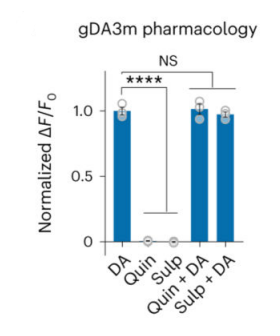
Sulpiride purchased from MedChemExpress. Usage Cited in: Nat Methods. 2024 Apr;21(4):680-691. [Abstract]
Normalized fluorescence change in gDA3m to indicated compounds (1 μM). Sulpiride (Sulp), D2R antagonist. n = 3 wells with 500-600 cells per well.
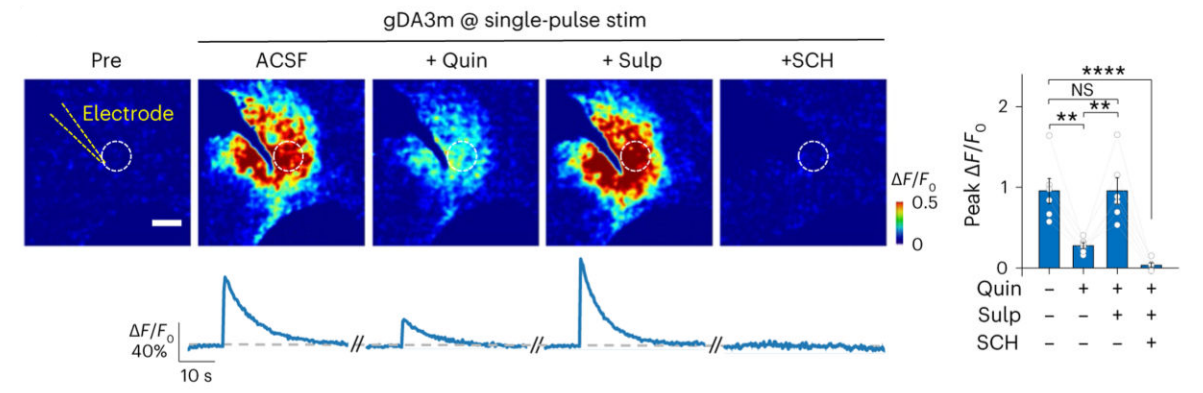
Sulpiride purchased from MedChemExpress. Usage Cited in: Nat Methods. 2024 Apr;21(4):680-691. [Abstract]
Activation of endogenous D2Rs by the D2-specific agonist quinpirole decreased the stimulus-evoked change in gDA3m fluorescence, reflecting presynaptic inhibition via D2 autoreceptors; this decrease was reversed by the addition of D2R antagonist Sulpiride (Sulp), and adding the D1R-specific antagonist SCH abolished the stimulation-evoked response.
-
-
Neuron
2023 May 17;111(10):1626-1636.e6. PMID: 36917979 -
Adv Sci (Weinh)
Nigra-Subthalamic Dopaminergic Circuitry Modulates and Represents Distinct Pain Modality in Physiological and Pain States in Mice. [Abstract]2026 Jul;13(37):e19913. PMID: 41944312 -
Mol Psychiatry
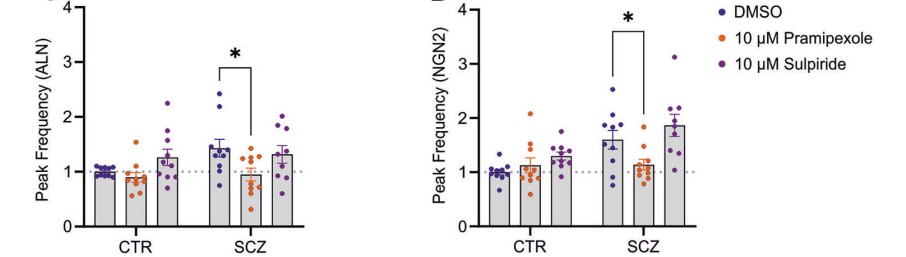
A co-culture model of dopaminergic and glutamatergic neurons derived from patients with idiopathic schizophrenia reveals a hypodopaminergic phenotype. [Abstract]2025 Dec 12. PMID: 41388144
Sulpiride purchased from MedChemExpress. Usage Cited in: Mol Psychiatry. 2025 Dec 12. [Abstract]
Peak frequency analysis of calcium traces retrieved from spontaneously active ALN and NGN2 neurons after 24 h treatment with DMSO (solvent control), 10 µM of Pramipexole dihydrochloride (DRD2 agonist) or 10 µM of Sulpiride (DRD2 antagonist).
-
Acta Pharmacol Sin
Single-dose methamphetamine administration impairs ORM retrieval in mice via excessive DA-mediated inhibition of PrLGlu activity. [Abstract]2024 Nov;45(11):2253-2266. PMID: 38914676
Sulpiride purchased from MedChemExpress. Usage Cited in: Acta Pharmacol Sin. 2024 Nov;45(11):2253-2266. [Abstract]
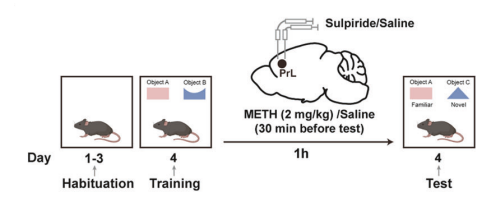
Experimental timeline and schematic of NOR test to examine the role of Sulpiride (D2R antagonist) on ORM retrieval in saline- and METH-treated mice. Saline or METH (2 mg/kg, i.p.) was injected 30 min before the test; simultaneously, saline or Sulpiride (0.25 μg/side) was microinfused bilaterally into PrL.
Sulpiride purchased from MedChemExpress. Usage Cited in: Acta Pharmacol Sin. 2024 Nov;45(11):2253-2266. [Abstract]
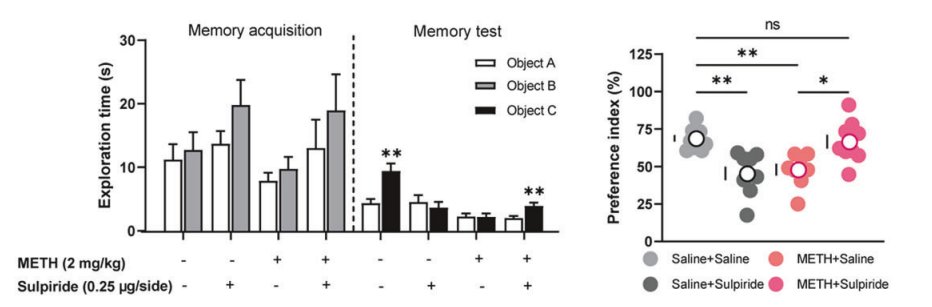
Bilateral infusion of Sulpiride (0.25 μg/side) effectively reversed the ORM retrieval impairment. In addition, the exploration time of novel object C compared with familiar object A was not significantly different in the Saline + Sulpiride (0.25 μg/side) group, while PI was decreased compared with the Saline + Saline group.
-
J Headache Pain
Downregulation of neuronal DRD2 drives microglia synaptic pruning and results in cognitive deficits by promoting CCL2 release in a rat model of chronic migraine. [Abstract]2026 Feb 9;27(1):39. PMID: 41663919 -
J Headache Pain
Dopamine receptor D2 regulates GLUA1-containing AMPA receptor trafficking and central sensitization through the PI3K signaling pathway in a male rat model of chronic migraine. [Abstract]2022 Aug 10;23(1):98. PMID: 35948867 -
Antioxidants (Basel)
Dopamine D2 Receptor Activation Blocks GluA2/ROS Positive Feedback Loop to Alienate Chronic-Migraine-Associated Pain Sensitization. [Abstract]2024 Jun 14;13(6):725. PMID: 38929165 -
iScience
Thrombospondin1 mimics rapidly relieve depression via Shank3 dependent uncoupling between dopamine D1 and D2 receptors. [Abstract]2023 Mar 22;26(4):106488. PMID: 37091229 -
J Neurosci
Potentiation of Nigra-Striatal Dopaminergic Projection Underpins Core Autism-Like Behaviors in Valproate-Exposed Mice. [Abstract]2025 Sep 3;45(36):e0382252025. PMID: 40769723 -
Brain Res
Single administration of vitamin C produces rapid antidepressant-like effects in female mice: A possible role of dopamine D2 receptor signalling. [Abstract]2026 Mar 15:1875:150181. PMID: 41577025 -
bioRxiv
2023 Aug 25:2023.08.24.554559. PMID: 37662187


Lösungsmittel & Löslichkeit
In Vitro:
DMSO : 100 mg/mL (292.89 mM; Need ultrasonic; Hygroscopic DMSO has a significant impact on the solubility of product, please use newly opened DMSO)
Please refer to the solubility information to select the appropriate solvent. Once prepared, please aliquot and store the solution to prevent product inactivation from repeated freeze-thaw cycles.
Storage method and period of stock solution: -80°C, 2 years; -20°C, 1 year. When stored at -80°C, please use it within 2 years. When stored at -20°C, please use it within 1 year.
Please refer to the solubility information to select the appropriate solvent. Once prepared, please aliquot and store the solution to prevent product inactivation from repeated freeze-thaw cycles.
Storage method and period of stock solution: -80°C, 2 years; -20°C, 1 year. When stored at -80°C, please use it within 2 years. When stored at -20°C, please use it within 1 year.
Konzentration (Stammlösung) × Volumen (Stammlösung) = Konzentration (Ziellösung) × Volumen (Ziellösung)
In Vivo:
Select the appropriate dissolution method based on your experimental animal and administration route.
- For the following dissolution methods, please ensure to first prepare a clear stock solution using an In Vitro approach and then sequentially add co-solvents:
- To ensure reliable experimental results, the clarified stock solution can be appropriately stored based on storage conditions. As for the working solution for In Vivo experiments, it is recommended to prepare freshly and use it on the same day.
- The percentages shown for the solvents indicate their volumetric ratio in the final prepared solution. If precipitation or phase separation occurs during preparation, heat and/or sonication can be used to aid dissolution.
Add each solvent one by one: 10% DMSO 40% PEG300 5% Tween-80 45% Saline
Solubility: ≥ 2.5 mg/mL (7.32 mM); Clear solution
This protocol yields a clear solution of ≥ 2.5 mg/mL (saturation unknown).
Taking 1 mL working solution as an example, add 100 μL DMSO stock solution (25.0 mg/mL) to 400 μL PEG300, and mix evenly; then add 50 μL Tween-80 and mix evenly; then add 450 μL Saline to adjust the volume to 1 mL.
Preparation of Saline: Dissolve 0.9 g sodium chloride in ddH₂O and dilute to 100 mL to obtain a clear Saline solution.
Add each solvent one by one: 10% DMSO 90% (20% SBE-β-CD in Saline)
Solubility: ≥ 2.5 mg/mL (7.32 mM); Clear solution
This protocol yields a clear solution of ≥ 2.5 mg/mL (saturation unknown).
Taking 1 mL working solution as an example, add 100 μL DMSO stock solution (25.0 mg/mL) to 900 μL 20% SBE-β-CD in Saline, and mix evenly.
Preparation of 20% SBE-β-CD in Saline (4°C, storage for one week): 2 g SBE-β-CD powder is dissolved in 10 mL Saline, completely dissolve until clear.
In Vivo Dissolution Calculator
Please enter the basic information of animal experiments:
-
-
-
-
Recommended: Prepare an additional quantity of animals to account for potential losses during experiments.
Please enter your animal formula composition:
-
%DMSO +
Recommended: Keep the proportion of DMSO in working solution below 2% if your animal is weak.
-
%+
-
+%Tween-80 + +
-
%Saline +
The co-solvents required include: DMSO, . All of co-solvents are available by MedChemExpress (MCE). , Tween 80. All of co-solvents are available by MedChemExpress (MCE).
Working solution concentration: 0.22 mg/mL
Method for preparing stock solution: mg drug dissolved in μL DMSO. Stock solution concentration: mg/mL.
1. Take μL DMSO stock solution;
2. Add μL .
μL , mix evenly;
3. Then add μL Tween 80, mix evenly;
4. Then add μL
Please ensure that the stock solution in the first step is dissolved to a clear state, and add co-solvents in sequence. You can use ultrasonic heating (ultrasonic cleaner, recommended frequency 20-40 kHz), vortexing, etc. to assist dissolution.

Protokoll
-
Breast Cancer Modeling
Breast cancer is a heterogeneous cancer, and it has been distinguished into four subtypes: luminal A, luminal B, HER2-positive and basal-like. Molecular mutations, epigenetic alterations, hormone exposure and immune microenvironment are related to the progression of breast cancer.


Reinheit & Dokumentation
-
Data Sheet (279 KB)
-
SDS (418 KB)
- English - EN (418 KB)
- Français - FR (418 KB)
- Deutsch - DE (418 KB)
- Norwegian - NO (418 KB)
- Español - ES (418 KB)
- Swedish - SV (418 KB)
- Italian - IT (418 KB)
- Korean - KR (418 KB)
- Portuguese - PT (418 KB)
-
Handling Instructions (2659 KB)
Verweise
[1]. Rüther, E et al. Antidepressant action of sulpiride. Results of a placebo-controlled double-blind trial. Pharmacopsychiatry vol. 32,4 (1999): 127-35. [Content Brief]
[2]. Jaworski, J N et al. Effect of dopamine D2/D3 receptor antagonist sulpiride on amphetamine-induced changes in striatal extracellular dopamine. European journal of pharmacology vol. 418,3 (2001): 201-6. [Content Brief]
[3]. Zarrindast, Mohammad-Reza et al. Synergistic effect between quinpirole and L-NAME as well as sulpiride and L-arginine on the modulation of anxiety and memory processes in the 6-OHDA mouse model of Parkinson's disease: An isobologram analysis. Neurobiology of learning and memory vol. 186 (2021): 107538. [Content Brief]
[4]. Li, Jian et al. Dopamine D2 receptor antagonist sulpiride enhances dexamethasone responses in the treatment of drug-resistant and metastatic breast cancer. Acta pharmacologica Sinica vol. 38,9 (2017): 1282-1296. [Content Brief]


Complete Stock Solution Preparation Table
Please refer to the solubility information to select the appropriate solvent. Once prepared, please aliquot and store the solution to prevent product inactivation from repeated freeze-thaw cycles.
Storage method and period of stock solution: -80°C, 2 years; -20°C, 1 year. When stored at -80°C, please use it within 2 years. When stored at -20°C, please use it within 1 year.
| Optional Solvent | Concentration Solvent Mass | 1 mg | 5 mg | 10 mg | 25 mg |
|---|---|---|---|---|---|
| DMSO | 1 mM | 2.9289 mL | 14.6443 mL | 29.2886 mL | 73.2215 mL |
| 5 mM | 0.5858 mL | 2.9289 mL | 5.8577 mL | 14.6443 mL | |
| 10 mM | 0.2929 mL | 1.4644 mL | 2.9289 mL | 7.3221 mL | |
| 15 mM | 0.1953 mL | 0.9763 mL | 1.9526 mL | 4.8814 mL | |
| 20 mM | 0.1464 mL | 0.7322 mL | 1.4644 mL | 3.6611 mL | |
| 25 mM | 0.1172 mL | 0.5858 mL | 1.1715 mL | 2.9289 mL | |
| 30 mM | 0.0976 mL | 0.4881 mL | 0.9763 mL | 2.4407 mL | |
| 40 mM | 0.0732 mL | 0.3661 mL | 0.7322 mL | 1.8305 mL | |
| 50 mM | 0.0586 mL | 0.2929 mL | 0.5858 mL | 1.4644 mL | |
| 60 mM | 0.0488 mL | 0.2441 mL | 0.4881 mL | 1.2204 mL | |
| 80 mM | 0.0366 mL | 0.1831 mL | 0.3661 mL | 0.9153 mL | |
| 100 mM | 0.0293 mL | 0.1464 mL | 0.2929 mL | 0.7322 mL |


Sulpiride Related Classifications
HY-B1019 Related Classifications
 Powered by Bioz