



Di-4-ANEPPS

Based on 1 Customer Validation
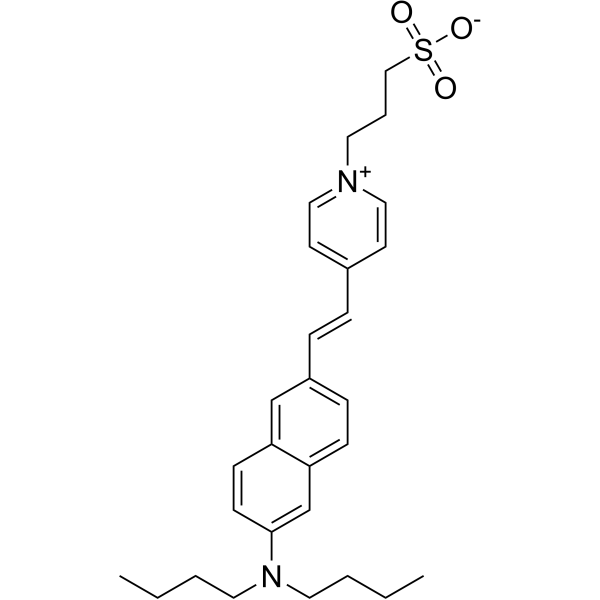
Di-4-ANEPPS is a voltage-sensitive dye that acts on voltage-gated ion channels (such as sodium channels) and inhibits sodium current, significantly reducing sodium current density, although specific values like IC50 remain unclear. It mainly binds to the voltage-sensitive regions on the cell membrane, changing its fluorescence properties to reflect membrane potential changes and thus affecting the function of ion channels to exert its activity. This substance can be used in cardiovascular research, such as the electrophysiology of cardiomyocytes, myocardial ischemia, and the effects of drugs on cardiomyocytes. It is of great value in evaluating drug cardiotoxicity and exploring the mechanisms of arrhythmias.
For research use only. We do not sell to patients.
- Purity : 99.00%
- CAS No.: 90134-00-2
- Formula: C28H36N2O3S
- Molecular Weight:480.66
-
Storage:
4°C, protect from light
* In solvent : -80°C, 6 months; -20°C, 1 month (protect from light)

To place orders, for customer services and technical support, please contact: MedChemExpress USA
Tel: 609-228-6898 E-mail: [email protected] [email protected]


-
 Biological Activity
-
Chemical Information
-
Solvent & Solubility
- Protocols
- Purity & Documentation
- References
-
 Help & FAQs


-
HY-70062
PevonedistatNAE Inhibitor -
HY-101896
Fluo-4 AMCa2+ Indicator -
HY-101891
Di-8-ANEPPSVoltage-Sensitive Fluorescent Dye -
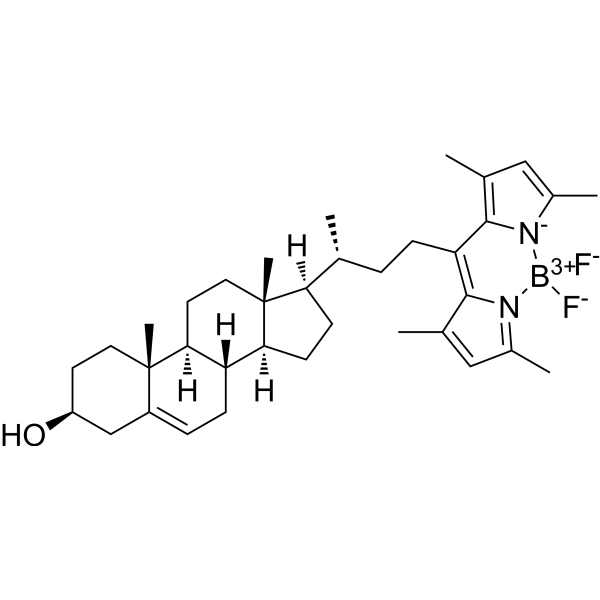
HY-125746
BODIPY-CholesterolFluorescent Dye -
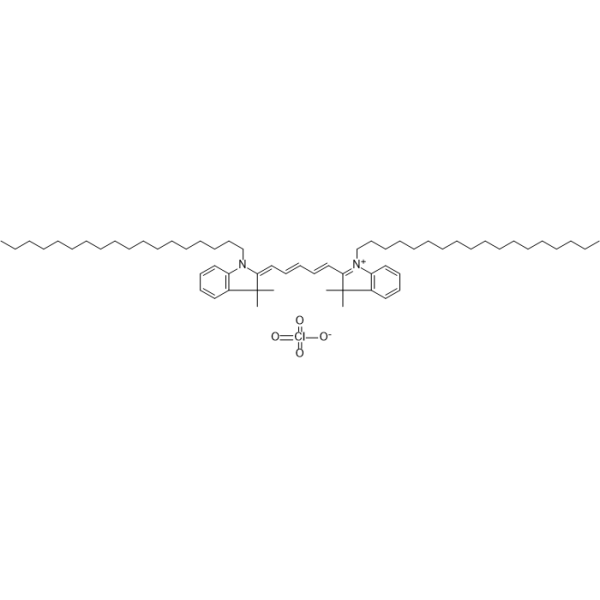
HY-D1028
DiD perchlorateDye -
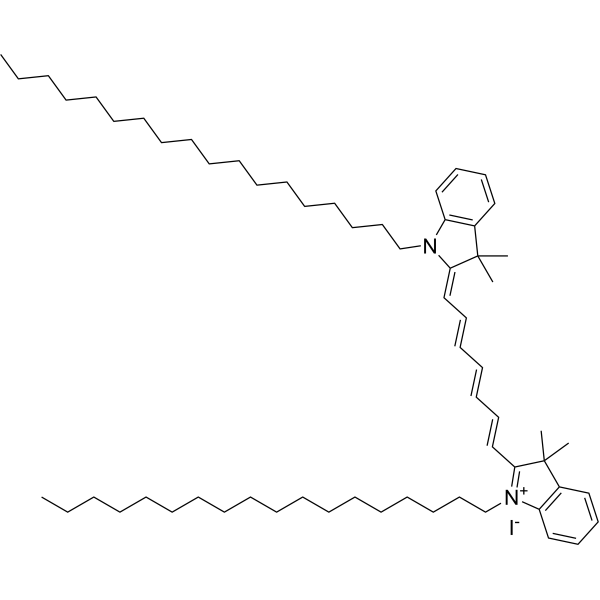
HY-D1048
DiRMembrane Dye -
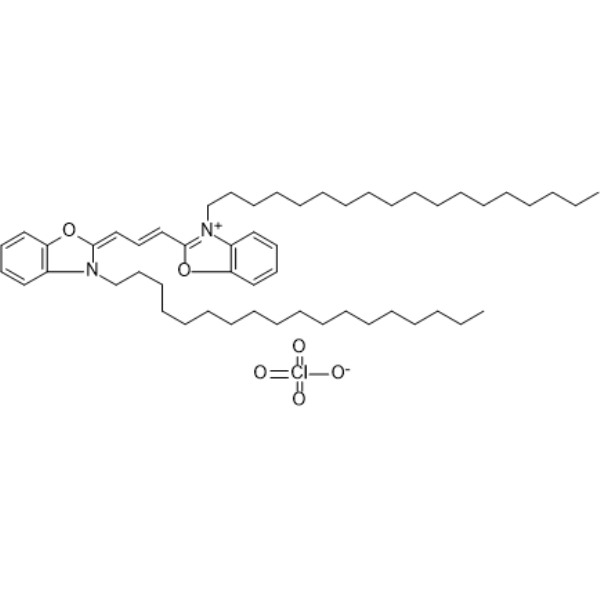
HY-D0969
DiOFluorescent Probe -
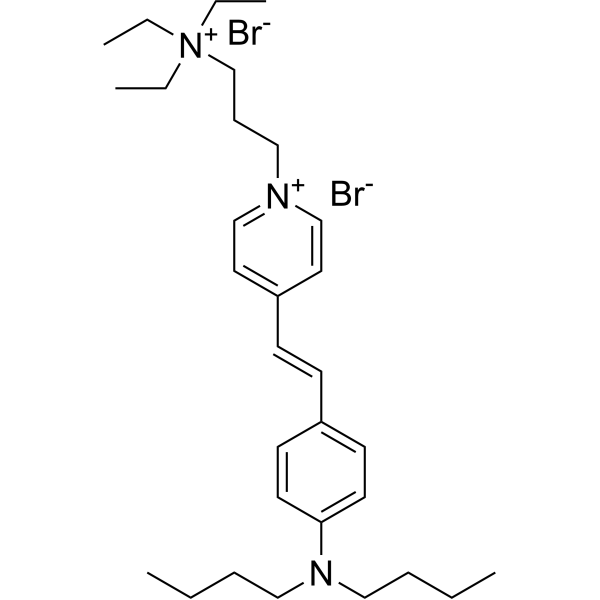
HY-D1434
FM1-43Track Endocytosis/Exocytosis -
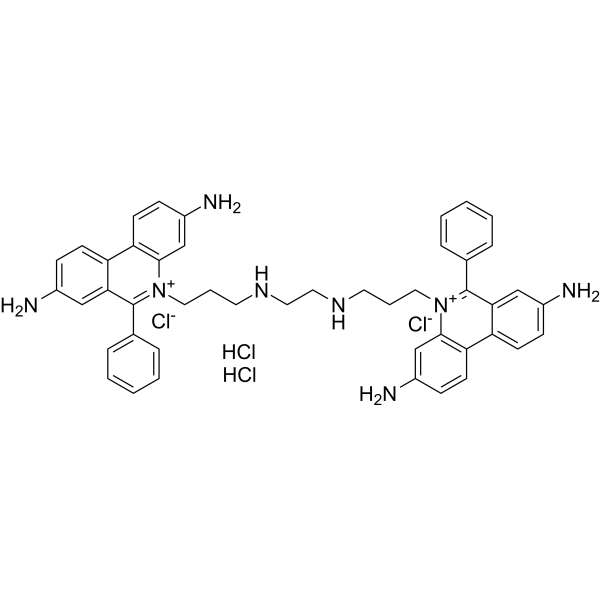
HY-D0093
Ethidium homodimerDNA Fluorochrome -
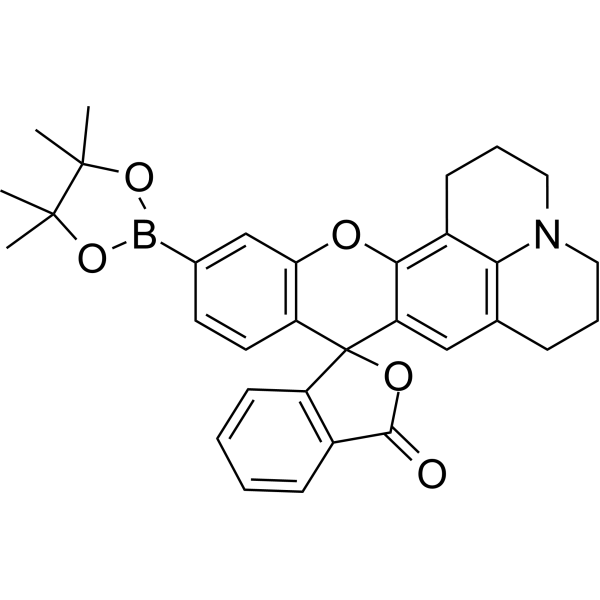
HY-103469
Peroxy Orange 1H2O2 probe -

HY-DY1013
DiR (solution)Membrane Dye -

HY-DY1029
BODIPY-Cholesterol (solution)Fluorescent Dye


Biological Activity
Description
In Vitro
Di-4-ANEPPS (2 μM; 20 min) treatment of isolated rabbit hearts alters cardiac electrical activity, such as slowing heart rate and ventricular conduction, and reduces ischemia detection capability[1].
Di-4-ANEPPS (6 μM; 1 min) can be used in experiments with human induced pluripotent stem cell-derived cardiomyocytes (hiPSC-CMs) to evaluate the electrophysiological properties of hiPSC-CMs and to assess the effects of drugs on their electrophysiology[2].
Guidelines (The following is our recommended experimental protocol. This protocol is for reference only, and specific operations should be adjusted according to your actual needs).
[1][2][3]:
1. Isolated rabbit heart staining experiment[1]:
Randomly divide the experimental subjects into a staining group and a control group.
After deep anesthesia of the rabbits, perform tracheal intubation and artificial ventilation, followed by thoracotomy to excise the heart and place it in cold Krebs-Henseleit (K-H) solution.
After aortic cannulation, place the heart into a bath filled with K-H solution and perfuse under stable conditions (pressure 80 mmHg, temperature 37°C) using K-H solution saturated with mixed gas (95% O2 and 5% CO2). Allow the heart to stabilize for 20 minutes.
After stabilization, perfuse the staining group hearts with 2 μM Di-4-ANEPPS solution for 20 minutes for staining, followed by washing with K-H solution for 20 minutes to remove unbound dye molecules.
The control group does not undergo dye loading or washing steps, but instead the stabilization period is extended to 60 minutes. Throughout the experiment, electrograms (EGs) are recorded non-contactly using bipolar leads from Ag-AgCl disc electrodes placed in the bath, while coronary flow is periodically measured to monitor the overall stability of the heart preparation.
Throughout the experiment, EGs are sampled at 2 kHz with 16-bit resolution.
2. Human induced pluripotent stem cell-derived cardiomyocyte (hiPSC-CM) staining experiment[2]:
Store hiPSC-CMs in liquid nitrogen and revive them before use.
Cells are cultured on 96-well glass-bottom culture plates pre-coated with fibronectin and incubated in a humidified incubator at 37°C for 3 hours.
Before the experiment, wash the cells with serum-free medium (SF media).
Then stain hiPSC-CMs with 6 μM Di-4-ANEPPS at room temperature for 1 minute, followed by washing with SF media without indicator dye, and incubate in the incubator for 2 hours before experimentation.
Place the culture plate in an environmental control incubator (37°C, 5% CO2) and record the fluorescence signal of Di-4-ANEPPS from a 0.2 mm × 0.2 mm region under a 40× objective lens (excitation wavelength 470±10 nm).
Note: A light-emitting diode (LED) may be used as the light source, and emitted light is collected by two photomultiplier tubes (PMTs) at 510-560 nm and 590-650 nm, respectively.
3. Mouse brain slice staining experiment[3]:
Use brain slices obtained from transgenic mice aged 25-90 days.
During the experiment, deeply anesthetize the mice with isoflurane, then decapitate and remove the brain, immersing the head in ice-cold physiological saline (artificial cerebrospinal fluid, ACSF, containing 125 mM NaCl, 26 mM NaHCO3, 2.3 mM KCl, 1.26 mM KH2PO4, 2 mM CaCl2, 1 mM MgSO4, and 10 mM glucose).
Cut 300 μm coronal slices from the frontal-parietal cortex, incubate first at 37°C for 30 minutes, and then keep at room temperature.
Transfer acute brain slices to an upright microscope (10× objective, 0.3 NA) and perfuse with physiological saline saturated with mixed gas (5% CO2/95% O2). All experimental measurements are conducted at 34°C.
Use a stimulus isolation unit for synaptic stimulation. The stimulation electrode (1.5 mm borosilicate glass with filament, resistance ~2 MΩ) is backfilled with physiological saline.
First apply three synaptic stimulations at a stimulus interval of 120 ms (8.3 Hz), then after 1 s apply another three synaptic stimulations at an interval of 12 ms (83 Hz).
Each optical experiment consists of two synaptic stimulation triplets lasting 3 seconds (3 seconds of light exposure), with at least a 12 s dark period (no light exposure) between consecutive experimental scans.
The light source for Di-4-ANEPPS is LED GYR 500-600 nm, and the optical filter set includes excitation 520/60 nm, dichroic mirror 570 nm, and emission 600 LP.
MedChemExpress (MCE) has not independently confirmed the accuracy of these methods. They are for reference only. Further protocols information, click here.
-
Cell Line:NG108-15 cells
-
Concentration:2 μM
-
Incubation Time:30 min
-
Result:Significantly inhibited the current density of sodium current in NG108-15 cells in the whole range of membrane voltages compared to non-stained cells.
Emission (Em)
705
Excitation (Ex)
496


Chemical Information
-
CAS No. 90134-00-2
-
Appearance Solid
-
Molecular Weight 480.66
-
Formula C28H36N2O3S
-
Color Brown to reddish brown
-
SMILES
O=S(CCC[N+]1=CC=C(/C=C/C2=CC=C3C=C(N(CCCC)CCCC)C=CC3=C2)C=C1)([O-])=O
-
Shipping
Room temperature in continental US; may vary elsewhere.
-
Storage
4°C, protect from light
* In solvent : -80°C, 6 months; -20°C, 1 month (protect from light)


Solvent & Solubility
In Vitro:
DMSO : 12.5 mg/mL (26.01 mM; Need ultrasonic; Hygroscopic DMSO has a significant impact on the solubility of product, please use newly opened DMSO)
Please refer to the solubility information to select the appropriate solvent. Once prepared, please aliquot and store the solution to prevent product inactivation from repeated freeze-thaw cycles.
Storage method and period of stock solution: -80°C, 6 months; -20°C, 1 month (protect from light). When stored at -80°C, please use it within 6 months. When stored at -20°C, please use it within 1 month.
Please refer to the solubility information to select the appropriate solvent. Once prepared, please aliquot and store the solution to prevent product inactivation from repeated freeze-thaw cycles.
Storage method and period of stock solution: -80°C, 6 months; -20°C, 1 month (protect from light). When stored at -80°C, please use it within 6 months. When stored at -20°C, please use it within 1 month.
Concentration (start) × Volume (start) = Concentration (final) × Volume (final)

Protocols
-
Cardiac voltage-sensitive optical mapping
Cardiac voltage-sensitive optical mapping records changes in transmembrane potential from cardiac tissue by staining the preparation with a voltage-sensitive dye and imaging fluorescence changes during electrical activation; the resulting optical action potentials can be used to map activation time, action potential duration, conduction velocity, wavefront propagation, and arrhythmia dynamics. The optical signal represents a relative fluorescence change from a tissue volume rather than a single-cell intracellular recording, so spatial resolution, sampling rate, voltage resolution, optical magnification, light penetration, and motion control must be considered together when interpreting optical action potentials.
-
Cell Cytotoxicity Assay
Cytotoxicity assays are usually based on the assessment of cell membrane damage, which can also be indirectly detected by measuring cell viability. Detection methods include MTT assay, CKK-8 assay, LDH assay and ATP assay, etc.
-
Neuronal voltage-sensitive dye imaging
Neuronal voltage-sensitive dye imaging detects membrane-potential-dependent optical changes from dyes associated with neuronal membranes, enabling optical recording of electrical activity from single neurons, dendrites, axons, spines, or neuronal populations in brain slices and cultured neurons. VSD signals are typically reported as fractional fluorescence or absorbance changes over baseline, such as ΔF/F or ΔI/I, and published protocols use high-speed cameras or photodiode arrays because neuronal voltage signals occur on millisecond time scales. Fast VSD imaging can be applied at two common scales: bulk staining of brain slices to measure circuit-level spatiotemporal activity, and single-cell loading or biolistic delivery to record membrane-potential transients from individual neuronal compartments. Optical signals should be interpreted as membrane-potential-related readouts, and validation by simultaneous electrophysiology or pharmacological controls is recommended when the experimen
-
Fluorescent plasma-membrane potential dye assay
Fluorescent plasma-membrane potential dye assays measure changes in cell membrane potential using voltage-sensitive dyes whose fluorescence changes when cells depolarize or hyperpolarize. Anionic bis-oxonol dyes such as DiBAC4(3) enter depolarized cells more readily and show increased fluorescence after intracellular binding, while hyperpolarization reduces dye accumulation and fluorescence. FMP/FLIPR membrane-potential dyes are used for faster, homogeneous microplate assays of ion-channel or receptor-mediated membrane-potential changes.


Purity & Documentation
-
Data Sheet (278 KB)
-
SDS (252 KB)
- English - EN (252 KB)
- Français - FR (252 KB)
- Deutsch - DE (252 KB)
- Norwegian - NO (252 KB)
- Español - ES (252 KB)
- Swedish - SV (252 KB)
- Italian - IT (252 KB)
- Korean - KR (252 KB)
- Portuguese - PT (252 KB)
-
Handling Instructions (2659 KB)
References
[1]. Marina Ronzhina, et al. Di-4-ANEPPS Modulates Electrical Activity and Progress of Myocardial Ischemia in Rabbit Isolated Heart. Front Physiol. 2021 Jun 10;12:667065. [Content Brief]
[2]. Hortigon-Vinagre MP, et al. The Use of Ratiometric Fluorescence Measurements of the Voltage Sensitive Dye Di-4-ANEPPS to Examine Action Potential Characteristics and Drug Effects on Human Induced Pluripotent Stem Cell-Derived Cardiomyocytes. Toxicol Sci. 2016 Dec;154(2):320-331. [Content Brief]


Complete Stock Solution Preparation Table
Please refer to the solubility information to select the appropriate solvent. Once prepared, please aliquot and store the solution to prevent product inactivation from repeated freeze-thaw cycles.
Storage method and period of stock solution: -80°C, 6 months; -20°C, 1 month (protect from light). When stored at -80°C, please use it within 6 months. When stored at -20°C, please use it within 1 month.
| Optional Solvent | Concentration Solvent Mass | 1 mg | 5 mg | 10 mg | 25 mg |
|---|---|---|---|---|---|
| DMSO | 1 mM | 2.0805 mL | 10.4024 mL | 20.8047 mL | 52.0118 mL |
| 5 mM | 0.4161 mL | 2.0805 mL | 4.1609 mL | 10.4024 mL | |
| 10 mM | 0.2080 mL | 1.0402 mL | 2.0805 mL | 5.2012 mL | |
| 15 mM | 0.1387 mL | 0.6935 mL | 1.3870 mL | 3.4675 mL | |
| 20 mM | 0.1040 mL | 0.5201 mL | 1.0402 mL | 2.6006 mL | |
| 25 mM | 0.0832 mL | 0.4161 mL | 0.8322 mL | 2.0805 mL |


Di-4-ANEPPS Related Classifications
HY-129763 Related Classifications
 Powered by Bioz