



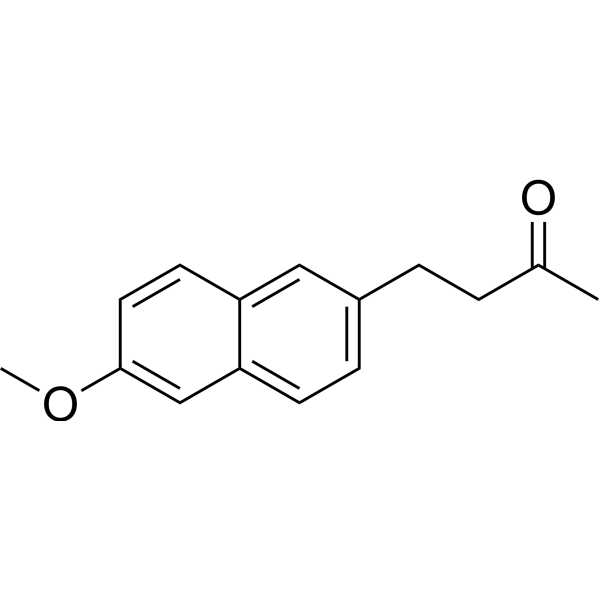
Nabumetone
Based on 2 publication(s) in Google Scholar
Nabumetone is an orally active non-acidic anti-inflammatory agent, acts as a potent and selective COX-2 inhibitor, and is the proagent of the active metaboliteα-Demethylnaproxen (HY-W086896). Nabumetone can inhibit cancer cells proliferation and relieve gastric ulcers.
For research use only. We do not sell to patients.
- Purity : 99.94%
- CAS No.: 42924-53-8
- Formula: C15H16O2
- Molecular Weight:228.29
-
Storage:Powder -20°C, 3 years , 4°C, 2 years ; In solvent -80°C, 2 years , -20°C, 1 year

To place orders, for customer services and technical support, please contact: MedChemExpress USA
Tel: 609-228-6898 E-mail: [email protected] [email protected]


-
 Biological Activity
-
Chemical Information
-
Solvent & Solubility
- Protocol
- Purity & Documentation
- References
-
 Help & FAQs


-
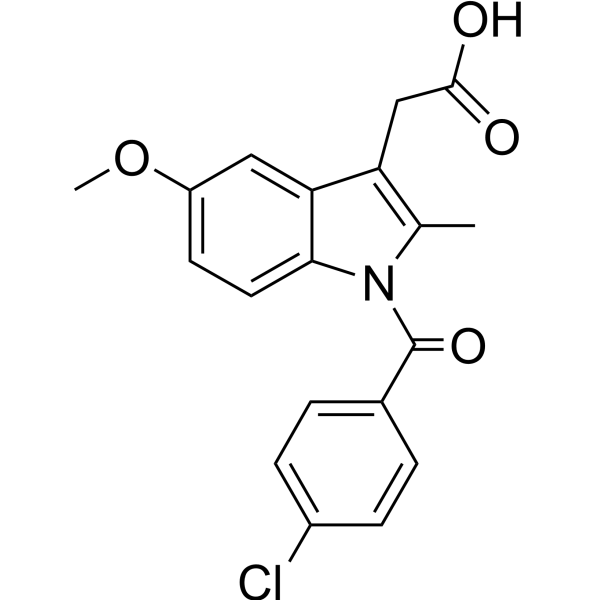
HY-14397
IndomethacinCOX1/2 Inhibitor -
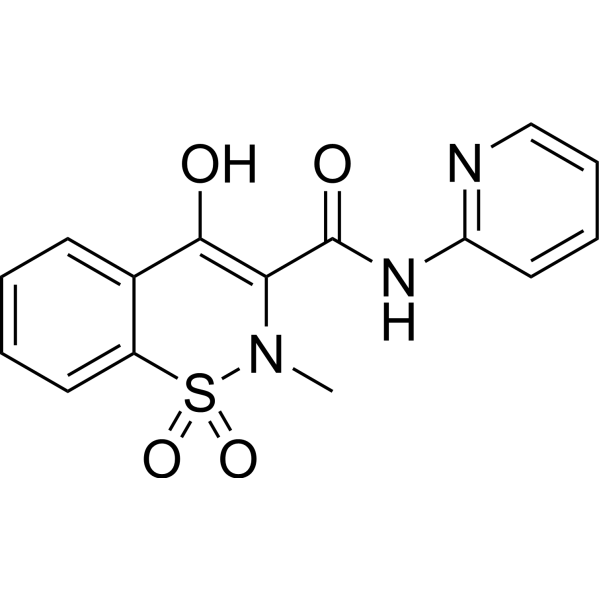
HY-B0253
PiroxicamCOX Inhibitor -
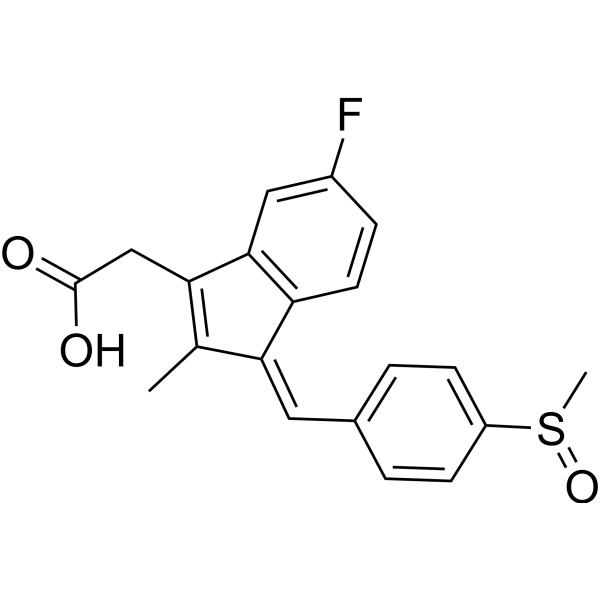
HY-B0008
SulindacAnti-inflammatory Agent -
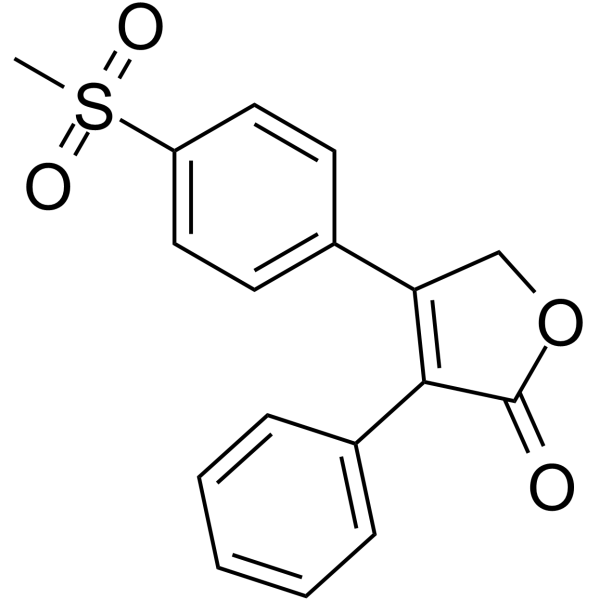
HY-17372
Rofecoxib -
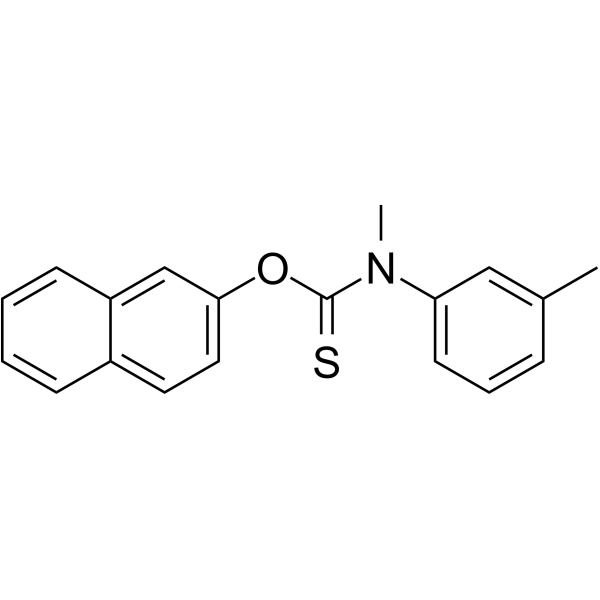
HY-B0370
TolnaftateFungal Inhibitor -
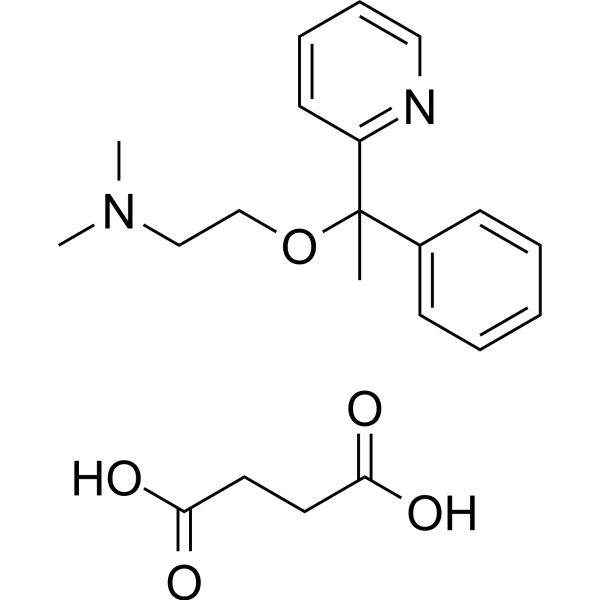
HY-A0069
Doxylamine succinateHistamine Receptor Antagonist -

HY-B2153
Tetraethylenepentamine pentahydrochlorideCopper Chelator -
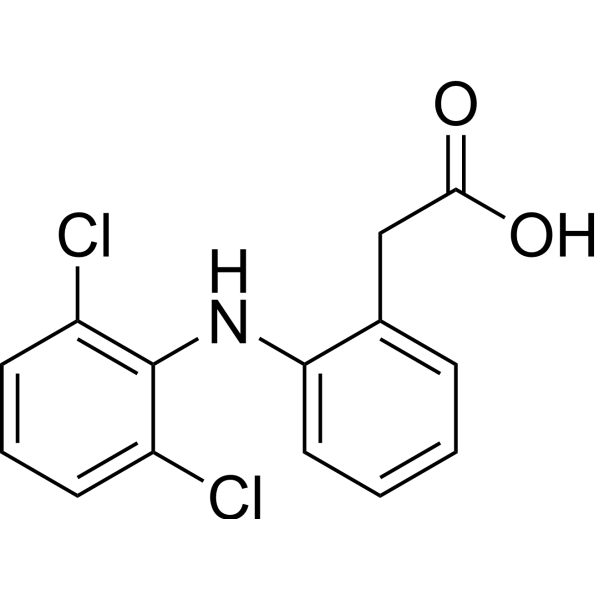
HY-15036
DiclofenacCOX Inhibitor -
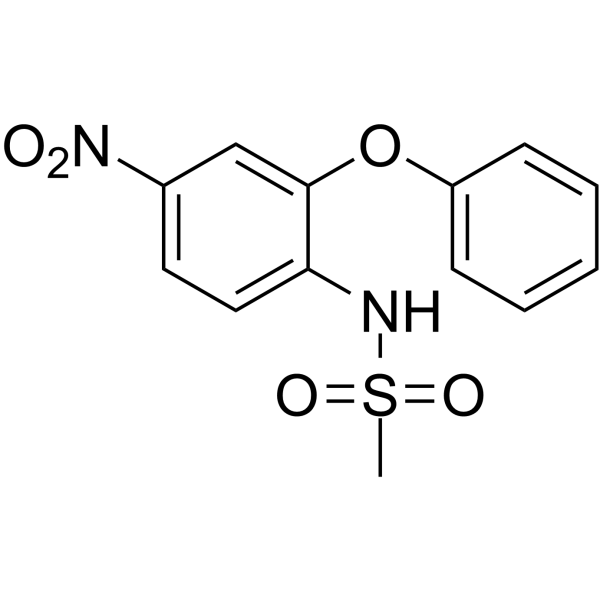
HY-B0363
NimesulideCOX Inhibitor -
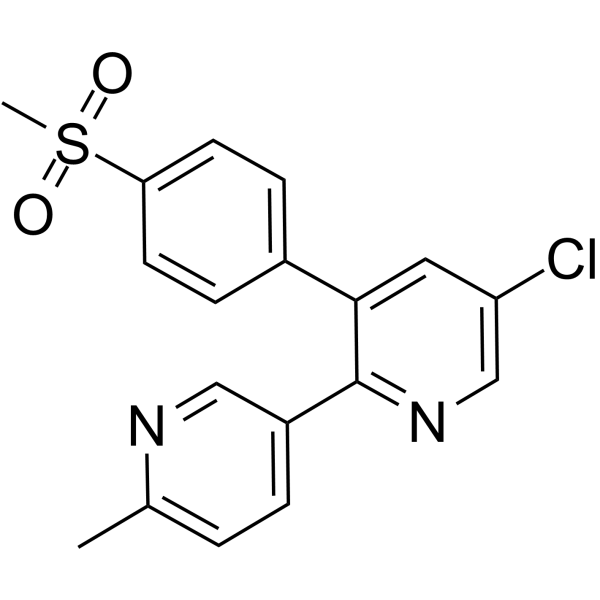
HY-15321
EtoricoxibCOX-2 Inhibitor -
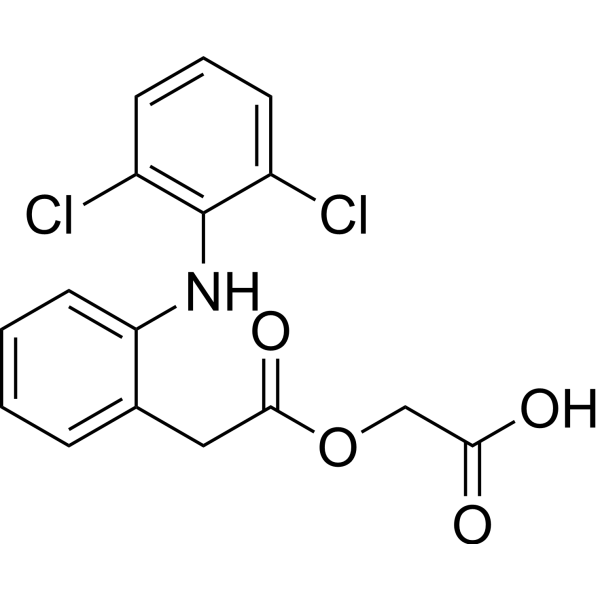
HY-B0634
AceclofenacNSAID -
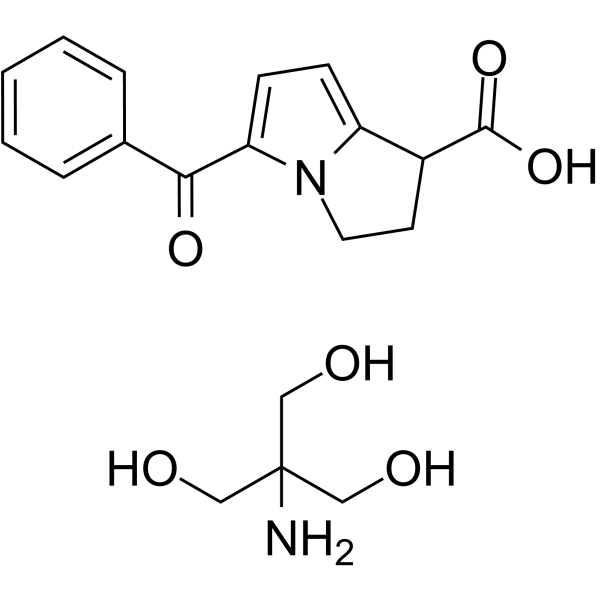
HY-B0138
Ketorolac tromethamine saltCOX Inhibitor
Publications Citing Use of MedChemExpress (MCE) Nabumetone
More

Biological Activity
Description
IC50 & Target
[1]|
COX-2 |
In Vitro
Nabumetone (50-500 μM, 48 h) dose-dependently inhibits the proliferation of K-562 and Meg-01 cells, but shows no obvious apoptotic effect[1].
Nabumetone (50-100 μM) potentiates the apoptotic effect of ADR (HY-15142) and reduces Bcl-2 expression in the K-562 cells[1].
MedChemExpress (MCE) has not independently confirmed the accuracy of these methods. They are for reference only.
In Vivo
Nabumetone does not induce gastric damage and causes only 57% inhibition of gastric mucosal 6-keto-PGF1α production in rats[2].
Nabumetone (25, 50, 100 mg/kg, i.p.) dose-dependently inhibits the increase of Diethyldithiocarbamate-induced mucus secretion and stimulates stress-induced mucus secretion in rats[3].
Nabumetone (25 mg/kg, i.p.) significantly suppresses stress-induced ulcer index in rats[3].
MedChemExpress (MCE) has not independently confirmed the accuracy of these methods. They are for reference only.
Clinical Trial
| NCT Number | Sponsor | Condition | Start Date |
Phase

|
|---|---|---|---|---|
| NCT01329991 | Plexxikon| | 2011-05 | PHASE1 |


Chemical Information
-
CAS No. 42924-53-8
-
Appearance Solid
-
Molecular Weight 228.29
-
Formula C15H16O2
-
Color White to off-white
-
SMILES
CC(CCC1=CC=C2C=C(OC)C=CC2=C1)=O
-
Synonyms
BRL14777
-
Shipping
Room temperature in continental US; may vary elsewhere.
-
Storage
Powder -20°C 3 years 4°C 2 years In solvent -80°C 2 years -20°C 1 year


Publications (2)
-
Journal Impact Factor
-
Most Recent
-
Comput Struct Biotechnol J
Network Proximity-based computational pipeline identifies drug candidates for different pathological stages of Alzheimer's disease. [Abstract]2023 Feb 24:21:1907-1920. PMID: 36936813 -


Solvent & Solubility
In Vitro:
DMSO : ≥ 100 mg/mL (438.04 mM; Hygroscopic DMSO has a significant impact on the solubility of product, please use newly opened DMSO)
H2O : < 0.1 mg/mL (insoluble)
* "≥" means soluble, but saturation unknown.
Please refer to the solubility information to select the appropriate solvent. Once prepared, please aliquot and store the solution to prevent product inactivation from repeated freeze-thaw cycles.
Storage method and period of stock solution: -80°C, 2 years; -20°C, 1 year. When stored at -80°C, please use it within 2 years. When stored at -20°C, please use it within 1 year.
Please refer to the solubility information to select the appropriate solvent. Once prepared, please aliquot and store the solution to prevent product inactivation from repeated freeze-thaw cycles.
Storage method and period of stock solution: -80°C, 2 years; -20°C, 1 year. When stored at -80°C, please use it within 2 years. When stored at -20°C, please use it within 1 year.
Concentration (start) × Volume (start) = Concentration (final) × Volume (final)
In Vivo:
Select the appropriate dissolution method based on your experimental animal and administration route.
- For the following dissolution methods, please ensure to first prepare a clear stock solution using an In Vitro approach and then sequentially add co-solvents:
- To ensure reliable experimental results, the clarified stock solution can be appropriately stored based on storage conditions. As for the working solution for In Vivo experiments, it is recommended to prepare freshly and use it on the same day.
- The percentages shown for the solvents indicate their volumetric ratio in the final prepared solution. If precipitation or phase separation occurs during preparation, heat and/or sonication can be used to aid dissolution.
Add each solvent one by one: 10% DMSO 40% PEG300 5% Tween-80 45% Saline
Solubility: ≥ 2.08 mg/mL (9.11 mM); Clear solution
This protocol yields a clear solution of ≥ 2.08 mg/mL (saturation unknown).
Taking 1 mL working solution as an example, add 100 μL DMSO stock solution (20.8 mg/mL) to 400 μL PEG300, and mix evenly; then add 50 μL Tween-80 and mix evenly; then add 450 μL Saline to adjust the volume to 1 mL.
Preparation of Saline: Dissolve 0.9 g sodium chloride in ddH₂O and dilute to 100 mL to obtain a clear Saline solution.
Add each solvent one by one: 10% DMSO 90% (20% SBE-β-CD in Saline)
Solubility: ≥ 2.08 mg/mL (9.11 mM); Clear solution
This protocol yields a clear solution of ≥ 2.08 mg/mL (saturation unknown).
Taking 1 mL working solution as an example, add 100 μL DMSO stock solution (20.8 mg/mL) to 900 μL 20% SBE-β-CD in Saline, and mix evenly.
Preparation of 20% SBE-β-CD in Saline (4°C, storage for one week): 2 g SBE-β-CD powder is dissolved in 10 mL Saline, completely dissolve until clear.
In Vivo Dissolution Calculator
Please enter the basic information of animal experiments:
-
-
-
-
Recommended: Prepare an additional quantity of animals to account for potential losses during experiments.
Please enter your animal formula composition:
-
%DMSO +
Recommended: Keep the proportion of DMSO in working solution below 2% if your animal is weak.
-
%+
-
+%Tween-80 + +
-
%Saline +
The co-solvents required include: DMSO, . All of co-solvents are available by MedChemExpress (MCE). , Tween 80. All of co-solvents are available by MedChemExpress (MCE).
Working solution concentration: 0.22 mg/mL
Method for preparing stock solution: mg drug dissolved in μL DMSO. Stock solution concentration: mg/mL.
1. Take μL DMSO stock solution;
2. Add μL .
μL , mix evenly;
3. Then add μL Tween 80, mix evenly;
4. Then add μL
Please ensure that the stock solution in the first step is dissolved to a clear state, and add co-solvents in sequence. You can use ultrasonic heating (ultrasonic cleaner, recommended frequency 20-40 kHz), vortexing, etc. to assist dissolution.

Protocol
Cell Assay[1]
Every cell line is plated into 6-well plates at a concentration of 3 × 10⁵/mL with or without drugs (Nabumetone, etc.) and incubated for 48 h. Viable cells are then counted using the trypan blue dye exclusion test. The percentage of proliferation inhibition is calculated as 1-(viable cells exposed to drug/viable cells in control) ×100[1].
MedChemExpress (MCE) has not independently confirmed the accuracy of these methods. They are for reference only.
Animal Administration[3]
Rats[3]
Albino male rats (250- to 300-g body weight) are used in the study. The animals are maintained in a single cage and are deprived of food for 16 h before the onset of experiments. Free access to water is allowed until 1 h before the beginning of experiments. There are eight rats in each group. The animals are pretreated with intraperitoneal injections of Nabumetone or dipyrone at 25-, 50-, or 100-mg/kg doses for 3 days[3].
MedChemExpress (MCE) has not independently confirmed the accuracy of these methods. They are for reference only.


Purity & Documentation
-
Data Sheet (276 KB)
-
SDS (393 KB)
- English - EN (393 KB)
- Français - FR (393 KB)
- Deutsch - DE (393 KB)
- Norwegian - NO (393 KB)
- Español - ES (393 KB)
- Swedish - SV (393 KB)
- Italian - IT (393 KB)
- Korean - KR (393 KB)
- Portuguese - PT (393 KB)
-
Handling Instructions (2659 KB)
References
[1]. Vural F, et al. Cyclo-oxygenase 2 inhibitor, nabumetone, inhibits proliferation in chronic myeloid leukemia cell lines. Leuk Lymphoma. 2005 May;46(5):753-6. [Content Brief]
[2]. Melarange R, et al. Anti-inflammatory and gastrointestinal effects of nabumetone or its active metabolite, 6MNA (6-methoxy-2-naphthylacetic acid): comparison with indomethacin. Agents Actions. 1992;Spec No:C82-3. [Content Brief]
[3]. Yıldırım E, et al. Effects of nabumetone and dipyrone on experimentally induced gastric ulcers in rats. Inflammation. 2013 Apr;36(2):476-81. [Content Brief]


Complete Stock Solution Preparation Table
Please refer to the solubility information to select the appropriate solvent. Once prepared, please aliquot and store the solution to prevent product inactivation from repeated freeze-thaw cycles.
Storage method and period of stock solution: -80°C, 2 years; -20°C, 1 year. When stored at -80°C, please use it within 2 years. When stored at -20°C, please use it within 1 year.
| Optional Solvent | Concentration Solvent Mass | 1 mg | 5 mg | 10 mg | 25 mg |
|---|---|---|---|---|---|
| DMSO | 1 mM | 4.3804 mL | 21.9020 mL | 43.8039 mL | 109.5098 mL |
| 5 mM | 0.8761 mL | 4.3804 mL | 8.7608 mL | 21.9020 mL | |
| 10 mM | 0.4380 mL | 2.1902 mL | 4.3804 mL | 10.9510 mL | |
| 15 mM | 0.2920 mL | 1.4601 mL | 2.9203 mL | 7.3007 mL | |
| 20 mM | 0.2190 mL | 1.0951 mL | 2.1902 mL | 5.4755 mL | |
| 25 mM | 0.1752 mL | 0.8761 mL | 1.7522 mL | 4.3804 mL | |
| 30 mM | 0.1460 mL | 0.7301 mL | 1.4601 mL | 3.6503 mL | |
| 40 mM | 0.1095 mL | 0.5475 mL | 1.0951 mL | 2.7377 mL | |
| 50 mM | 0.0876 mL | 0.4380 mL | 0.8761 mL | 2.1902 mL | |
| 60 mM | 0.0730 mL | 0.3650 mL | 0.7301 mL | 1.8252 mL | |
| 80 mM | 0.0548 mL | 0.2738 mL | 0.5475 mL | 1.3689 mL | |
| 100 mM | 0.0438 mL | 0.2190 mL | 0.4380 mL | 1.0951 mL |


Nabumetone Related Classifications
HY-B0559 Related Classifications
 Powered by Bioz