



AT791
Based on 11 publication(s) in Google Scholar
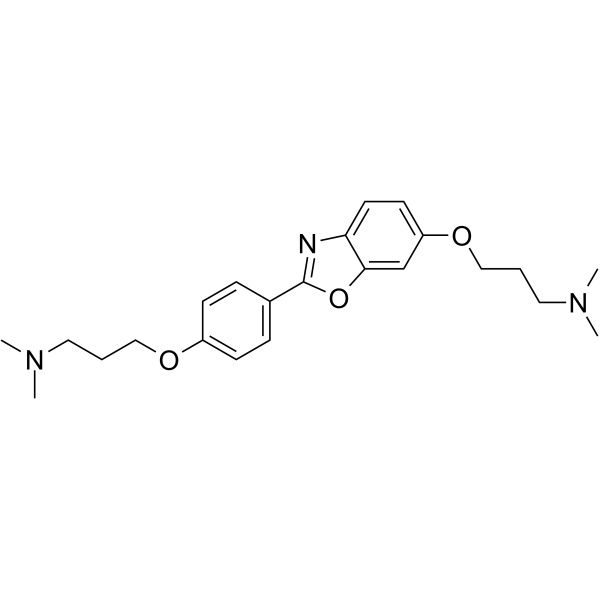
AT791 is a potent and orally bioavailable TLR7 and TLR9 inhibitor. AT791 inhibits TLR7 and 9 signaling in a variety of human and mouse cell types and inhibits DNA-TLR9 interaction in vitro.
Para uso exclusivo en investigación. No vendemos a pacientes.
- Pureza : 98.12%
- No. CAS: 1219962-49-8
- Fòrmula: C23H31N3O3
- Peso molecular:397.51
-
Almacenamiento:Powder -20°C, 3 years , 4°C, 2 years ; In solvent -80°C, 6 months , -20°C, 1 month

To place orders, for customer services and technical support, please contact: MedChemExpress USA
Tel: 609-228-6898 E-mail: [email protected] [email protected]


-
 Actividad biológica
-
Chemical Information
-
Solvente y solubilidad
- Pureza y Documentación
- Referencias
-
 Help & FAQs


-
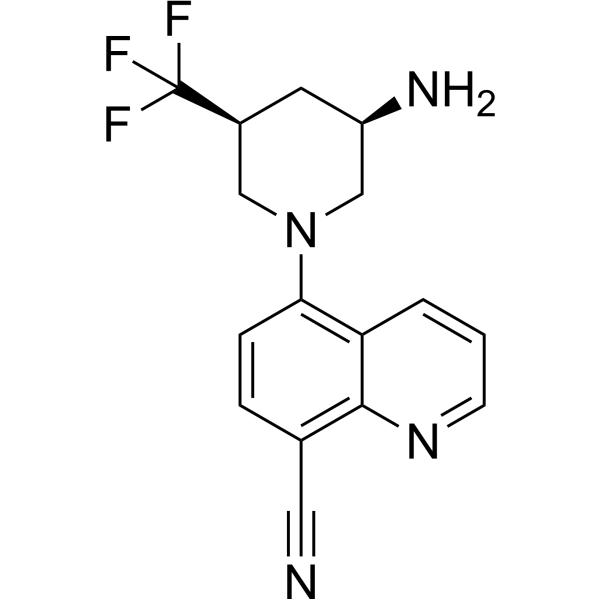
HY-134581
EnpatoranTLR7/8 Antagonist -
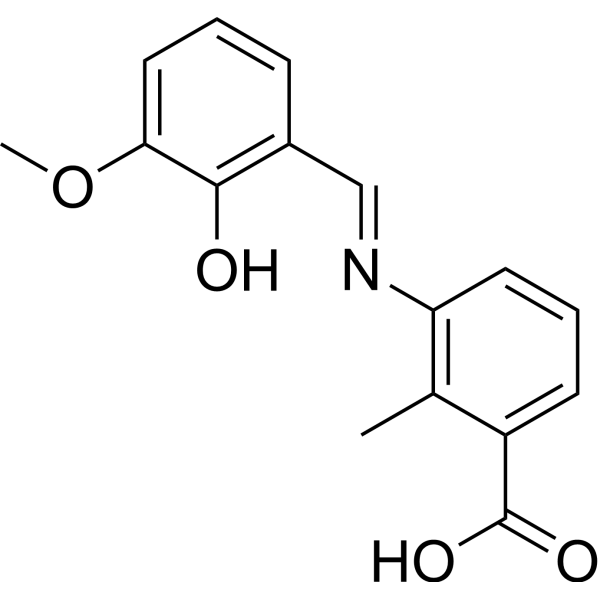
HY-100461
C29TLR2 Inhibitor -
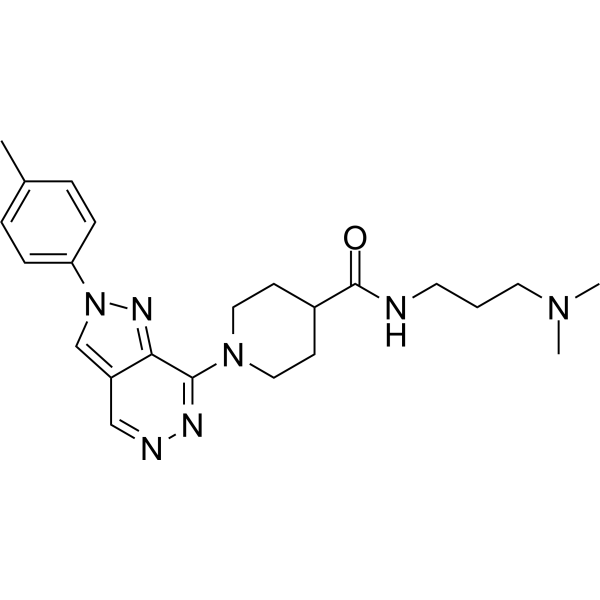
HY-148045
TLR9-IN-1TLR9 Inhibitor -
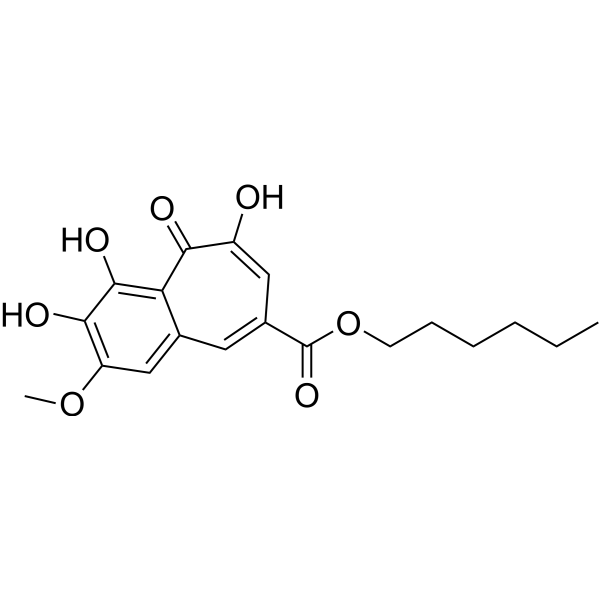
HY-108471
CU-CPT22TLR1/TLR2 Antagonist -
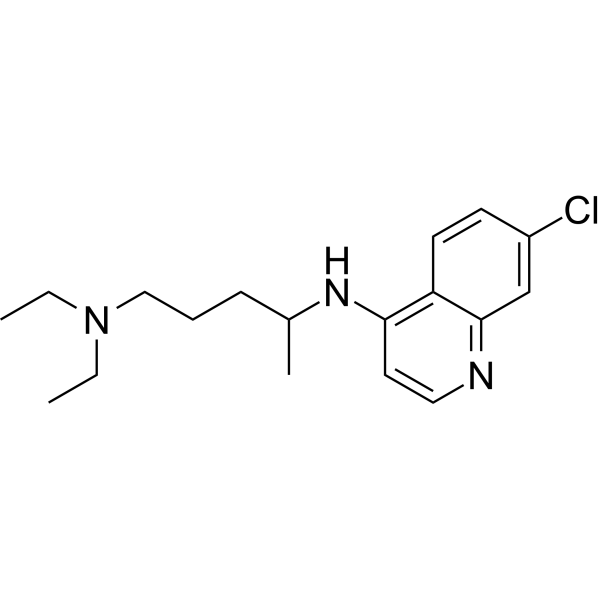
HY-17589A
ChloroquineAntimalarial Agent -
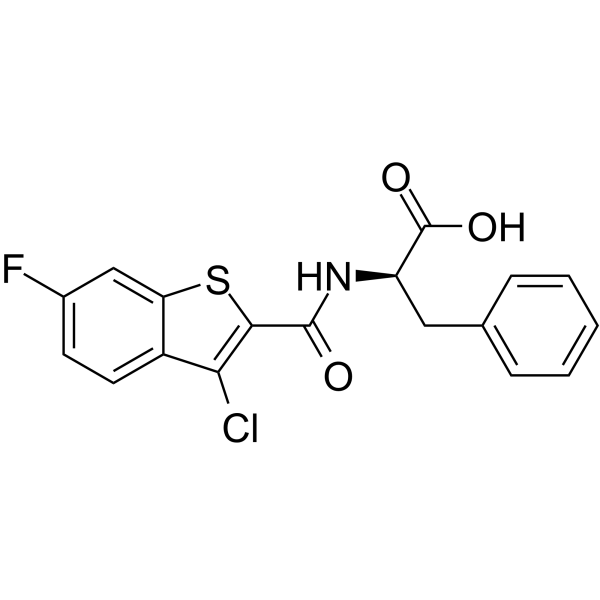
HY-108473
CU-CPT 4aTLR3 Inhibitor -
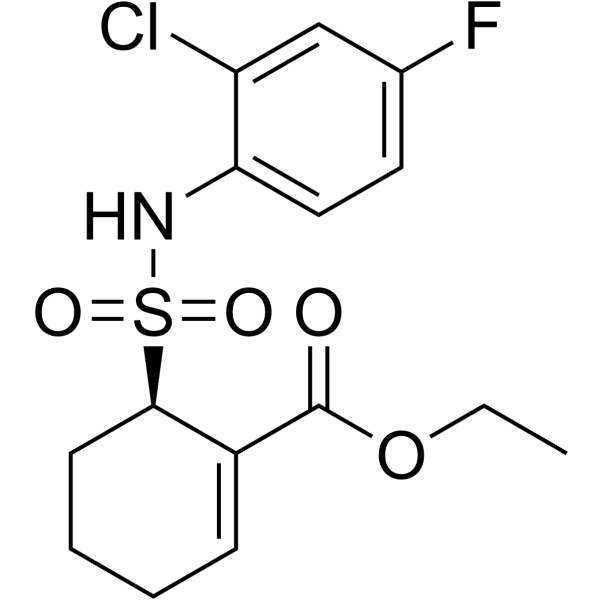
HY-11109
ResatorvidTLR4 Inhibitor -
HY-W021879
DSRM-3716SARM1 Inhibitor -
HY-103483
MD2-IN-1MD2 Inhibitor -
HY-134581A
Enpatoran hydrochlorideTLR7/8 Antagonist -
HY-139567
AfimetoranTLR7/8 Antagonist -
HY-116961
TH1020TLR5/Flagellin Complex Antagonist
Publications Citing Use of MedChemExpress (MCE) AT791
More- Adv Mater. 2025 Apr;37(17):e2410998. [Abstract]
- J Extracell Vesicles. 2025 Jul;14(7):e70134. [Abstract]
- Cell Death Dis. 2023 May 9;14(5):315. [Abstract]
- Apoptosis. 2026 May 24;31(6):152. [Abstract]
- Cell Biol Toxicol. 2025 Jul 1;41(1):109. [Abstract]
- Int J Mol Sci. 2024 Aug 23;25(17):9144. [Abstract]
- Arch Gerontol Geriatr. 2024 Oct:125:105504. [Abstract]
- Antiviral Res. 2023 Sep:217:105676. [Abstract]
- Infect Immun. 2019 Dec 17;88(1):e00697-19. [Abstract]
- J Mol Histol. 2026 Apr 24;57(3):148. [Abstract]
- Res Sq. 2026 May 12.
 Customer Validation & Images

-
WB

-
ELISA

-
WB


Actividad biológica
Descripciòn
IC50 & Target
[1]|
TLR7 3.33 μM (IC50) |
TLR9 0.04 μM (IC50) |
In Vitro
AT791 potently suppresses DNA stimulation of HEK:TLR9 cells, with IC50 of 0.04 μM and is significantly less effective at suppressing R848 stimulation of HEK:TLR7 cells (IC50= 3.33 μM) [1].
?
AT791 suppresses TLR9-DNA interaction in vitro, with an IC50 in the 1 to10 μM range[1].
?
AT791 and E6446 are typical of “lysosomotropic”compounds in that they are lipophilic and contain weak base amines. At neutral pH, such compounds are nonpolar and can penetrate lipid membranes, but within low pH vesicles they become protonated and are trapped (de Duve et al., 1974). Capillary electrophoresis showed that AT791 has pKas of 7.9 and 6.1, and E6446 has pKas of 8.6 and 6.5, indicating they would be more highly protonated in endolysosomal compartments compared with cytoplasm[1].
MedChemExpress (MCE) has not independently confirmed the accuracy of these methods. They are for reference only. .
In Vivo
MedChemExpress (MCE) has not independently confirmed the accuracy of these methods. They are for reference only.


Chemical Information
-
No. CAS 1219962-49-8
-
Appearance Solid
-
Peso molecular 397.51
-
Fòrmula C23H31N3O3
-
Color White to off-white
-
SMILES
CN(C)CCCOC1=CC=C(C2=NC3=CC=C(OCCCN(C)C)C=C3O2)C=C1
-
Envío
Room temperature in continental US; may vary elsewhere.
-
Almacenamiento
Powder -20°C 3 years 4°C 2 years In solvent -80°C 6 months -20°C 1 month


Publications (11)
-
Journal Impact Factor
-
Most Recent
-
Adv Mater
A Polymeric mRNA Vaccine Featuring Enhanced Site-Specific mRNA Delivery and Inherent STING-Stimulating Performance for Tumor Immunotherapy. [Abstract]2025 Apr;37(17):e2410998. PMID: 40095378 -
J Extracell Vesicles
Extracellular Vesicles Derived From Streptococcus anginosus Aggravate Lupus Nephritis by Triggering TLR2-MyD88-NF-κB Signalling in NK Cells. [Abstract]2025 Jul;14(7):e70134. PMID: 40673809 -
Cell Death Dis
TLR7-MyD88-DC-CXCL16 axis results neutrophil activation to elicit inflammatory response in pustular psoriasis. [Abstract]2023 May 9;14(5):315. PMID: 37160878 -
Apoptosis
Neutrophil extracellular traps in post-traumatic urethral microenvironment promote hypertrophic urethral stricture via the TLR9/NF-kB/Smad3/IL-8 axis. [Abstract]2026 May 24;31(6):152. PMID: 42178452 -
Cell Biol Toxicol
NGR-modified curcumin nanovesicles reverse immunotherapy resistance in triple-negative breast cancer via TLR9 and mTOR pathway modulation. [Abstract]2025 Jul 1;41(1):109. PMID: 40590998
AT791 purchased from MedChemExpress. Usage Cited in: Cell Biol Toxicol. 2025 Jul 1;41(1):109. [Abstract]
Western blot analysis of p-AKT and p-mTOR expression in 4 T1 and EMT6 cells treated with curcumin or TLR9 inhibitor AT791 (0.04 μM) for 24 hours, along with quantitative results.
-
Int J Mol Sci
Rabies Virus Regulates Inflammatory Response in BV-2 Cells through Activation of Myd88 and NF-κB Signaling Pathways via TLR7. [Abstract]2024 Aug 23;25(17):9144. PMID: 39273091
AT791 purchased from MedChemExpress. Usage Cited in: Int J Mol Sci. 2024 Aug 23;25(17):9144. [Abstract]
BV-2 cells incubated with or without the TLR7 inhibitor (HY-124603) before stimulation with CVS-11. The expression of CCL2 in the supernatant was measured via ELISA.
AT791 purchased from MedChemExpress. Usage Cited in: Int J Mol Sci. 2024 Aug 23;25(17):9144. [Abstract]
BV-2 cells pre-treated for 2 h with the inhibitor (HY-124603) and agonist (HY-117602) of TLR7 before stimulation with CVS-11 for 6 h. TRL7, Myd88, IRAK4 and TRAF6 were analyzed via Western blotting.
-
Arch Gerontol Geriatr
Elevated mtDNA content in RBCs promotes oxidative stress may be responsible for faster senescence in men. [Abstract]2024 Oct:125:105504. PMID: 38870707 -
Antiviral Res
Ceragenins exhibit antiviral activity against SARS-CoV-2 by increasing the expression and release of type I interferons upon activation of the host's immune response. [Abstract]2023 Sep:217:105676. PMID: 37481038 -
Infect Immun
Toll-Like Receptor 2 (TLR2) and TLR4 Mediate the IgA Immune Response Induced by Mycoplasma hyopneumoniae. [Abstract]2019 Dec 17;88(1):e00697-19. PMID: 31611272 -
J Mol Histol
Interleukin-1 Receptor-Associated Kinase 3 Attenuates Chondrocyte Senescence and Osteoarthritis via Inhibition of the TLR7/9-NF-κB Axis. [Abstract]2026 Apr 24;57(3):148. PMID: 42029757 -


Solvente y solubilidad
In Vitro:
DMSO : 100 mg/mL (251.57 mM; Need ultrasonic; Hygroscopic DMSO has a significant impact on the solubility of product, please use newly opened DMSO)
Please refer to the solubility information to select the appropriate solvent. Once prepared, please aliquot and store the solution to prevent product inactivation from repeated freeze-thaw cycles.
Storage method and period of stock solution: -80°C, 6 months; -20°C, 1 month. When stored at -80°C, please use it within 6 months. When stored at -20°C, please use it within 1 month.
Please refer to the solubility information to select the appropriate solvent. Once prepared, please aliquot and store the solution to prevent product inactivation from repeated freeze-thaw cycles.
Storage method and period of stock solution: -80°C, 6 months; -20°C, 1 month. When stored at -80°C, please use it within 6 months. When stored at -20°C, please use it within 1 month.
Concentration (start) × Volume (start) = Concentration (final) × Volume (final)
In Vivo:
Select the appropriate dissolution method based on your experimental animal and administration route.
- For the following dissolution methods, please ensure to first prepare a clear stock solution using an In Vitro approach and then sequentially add co-solvents:
- To ensure reliable experimental results, the clarified stock solution can be appropriately stored based on storage conditions. As for the working solution for In Vivo experiments, it is recommended to prepare freshly and use it on the same day.
- The percentages shown for the solvents indicate their volumetric ratio in the final prepared solution. If precipitation or phase separation occurs during preparation, heat and/or sonication can be used to aid dissolution.
Add each solvent one by one: 10% DMSO 40% PEG300 5% Tween-80 45% Saline
Solubility: ≥ 2.5 mg/mL (6.29 mM); Clear solution
This protocol yields a clear solution of ≥ 2.5 mg/mL (saturation unknown).
Taking 1 mL working solution as an example, add 100 μL DMSO stock solution (25.0 mg/mL) to 400 μL PEG300, and mix evenly; then add 50 μL Tween-80 and mix evenly; then add 450 μL Saline to adjust the volume to 1 mL.
Preparation of Saline: Dissolve 0.9 g sodium chloride in ddH₂O and dilute to 100 mL to obtain a clear Saline solution.
Add each solvent one by one: 10% DMSO 90% (20% SBE-β-CD in Saline)
Solubility: ≥ 2.5 mg/mL (6.29 mM); Clear solution
This protocol yields a clear solution of ≥ 2.5 mg/mL (saturation unknown).
Taking 1 mL working solution as an example, add 100 μL DMSO stock solution (25.0 mg/mL) to 900 μL 20% SBE-β-CD in Saline, and mix evenly.
Preparation of 20% SBE-β-CD in Saline (4°C, storage for one week): 2 g SBE-β-CD powder is dissolved in 10 mL Saline, completely dissolve until clear.
In Vivo Dissolution Calculator
Please enter the basic information of animal experiments:
-
-
-
-
Recommended: Prepare an additional quantity of animals to account for potential losses during experiments.
Please enter your animal formula composition:
-
%DMSO +
Recommended: Keep the proportion of DMSO in working solution below 2% if your animal is weak.
-
%+
-
+%Tween-80 + +
-
%Saline +
The co-solvents required include: DMSO, . All of co-solvents are available by MedChemExpress (MCE). , Tween 80. All of co-solvents are available by MedChemExpress (MCE).
Working solution concentration: 0.22 mg/mL
Method for preparing stock solution: mg drug dissolved in μL DMSO. Stock solution concentration: mg/mL.
1. Take μL DMSO stock solution;
2. Add μL .
μL , mix evenly;
3. Then add μL Tween 80, mix evenly;
4. Then add μL
Please ensure that the stock solution in the first step is dissolved to a clear state, and add co-solvents in sequence. You can use ultrasonic heating (ultrasonic cleaner, recommended frequency 20-40 kHz), vortexing, etc. to assist dissolution.


Pureza y Documentación
-
Ficha de datos (270 KB)
-
SDS (251 KB)
- English - EN (251 KB)
- Français - FR (251 KB)
- Deutsch - DE (251 KB)
- Norwegian - NO (251 KB)
- Español - ES (251 KB)
- Swedish - SV (251 KB)
- Italian - IT (251 KB)
- Korean - KR (251 KB)
- Portuguese - PT (251 KB)
-
Instrucciones de manejo (2659 KB)
Referencias


Complete Stock Solution Preparation Table
Please refer to the solubility information to select the appropriate solvent. Once prepared, please aliquot and store the solution to prevent product inactivation from repeated freeze-thaw cycles.
Storage method and period of stock solution: -80°C, 6 months; -20°C, 1 month. When stored at -80°C, please use it within 6 months. When stored at -20°C, please use it within 1 month.
| Optional Solvent | Concentration Solvent Mass | 1 mg | 5 mg | 10 mg | 25 mg |
|---|---|---|---|---|---|
| DMSO | 1 mM | 2.5157 mL | 12.5783 mL | 25.1566 mL | 62.8915 mL |
| 5 mM | 0.5031 mL | 2.5157 mL | 5.0313 mL | 12.5783 mL | |
| 10 mM | 0.2516 mL | 1.2578 mL | 2.5157 mL | 6.2891 mL | |
| 15 mM | 0.1677 mL | 0.8386 mL | 1.6771 mL | 4.1928 mL | |
| 20 mM | 0.1258 mL | 0.6289 mL | 1.2578 mL | 3.1446 mL | |
| 25 mM | 0.1006 mL | 0.5031 mL | 1.0063 mL | 2.5157 mL | |
| 30 mM | 0.0839 mL | 0.4193 mL | 0.8386 mL | 2.0964 mL | |
| 40 mM | 0.0629 mL | 0.3145 mL | 0.6289 mL | 1.5723 mL | |
| 50 mM | 0.0503 mL | 0.2516 mL | 0.5031 mL | 1.2578 mL | |
| 60 mM | 0.0419 mL | 0.2096 mL | 0.4193 mL | 1.0482 mL | |
| 80 mM | 0.0314 mL | 0.1572 mL | 0.3145 mL | 0.7861 mL | |
| 100 mM | 0.0252 mL | 0.1258 mL | 0.2516 mL | 0.6289 mL |


AT791 Related Classifications
HY-124603 Related Classifications
 Powered by Bioz