



WZB117
Based on 27 publication(s) in Google Scholar
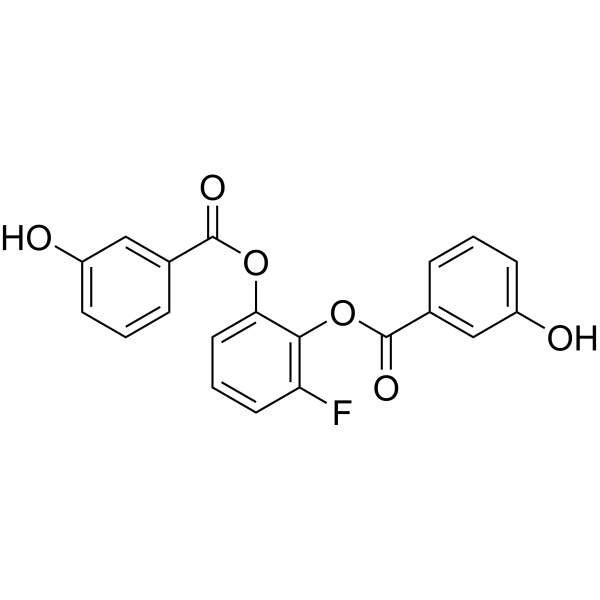
WZB117 is a glucose transporter 1 (Glut1) inhibitor, which downregulates glycolysis, induces cell-cycle arrest, and inhibits cancer cell growth in vitro and in vivo.
For research use only. We do not sell to patients.
- Purity : 99.74%
- CAS No.: 1223397-11-2
- Formula: C20H13FO6
- Molecular Weight:368.31
-
Storage:Powder -20°C, 3 years , 4°C, 2 years ; In solvent -80°C, 6 months , -20°C, 1 month

To place orders, for customer services and technical support, please contact: MedChemExpress USA
Tel: 609-228-6898 E-mail: [email protected] [email protected]


-
 Biological Activity
-
Chemical Information
-
Solvent & Solubility
- Protocols
- Purity & Documentation
- References
-
 Help & FAQs


-
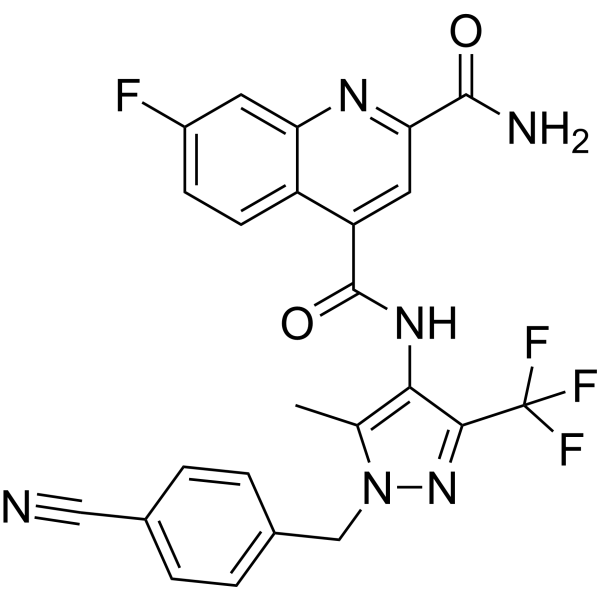
HY-100017
BAY-876GLUT1 Inhibitor -
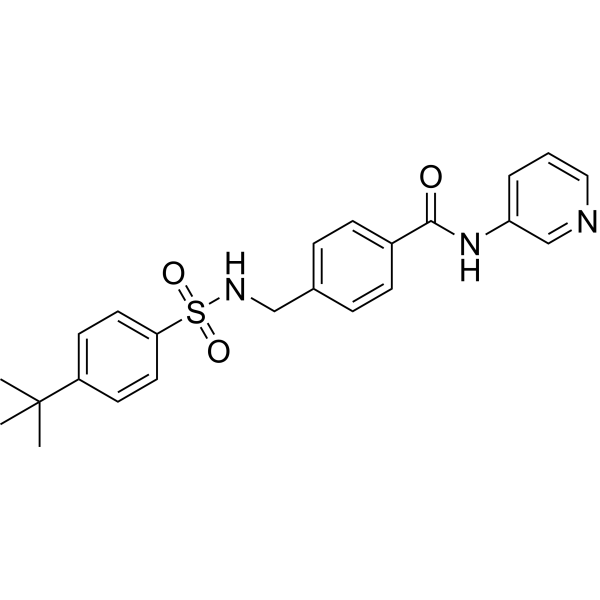
HY-18728
STF-31GLUT1 Inhibitor -
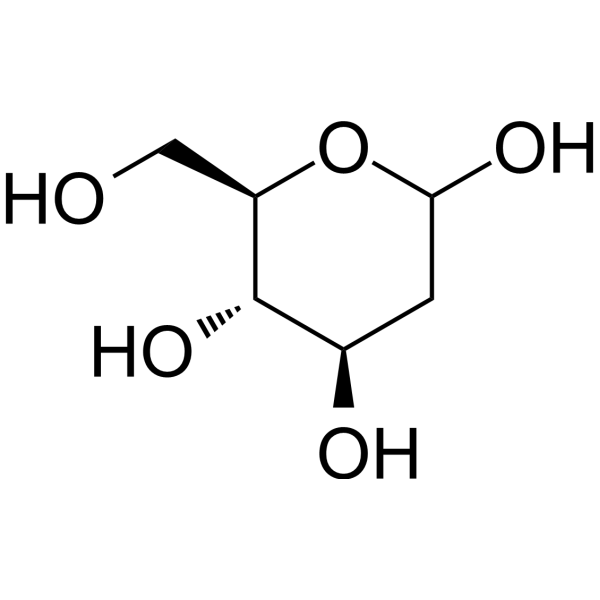
HY-13966
2-Deoxy-D-glucoseGlycolysis Inhibitor -
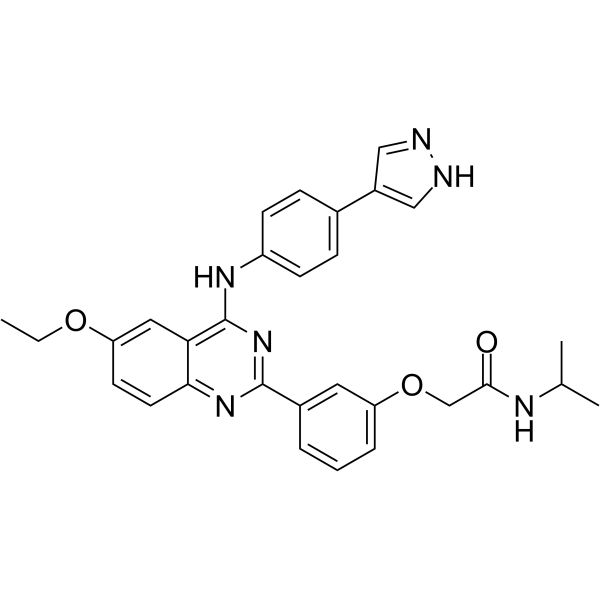
HY-145597
KL-11743GLUT1-4 Inhibitor -
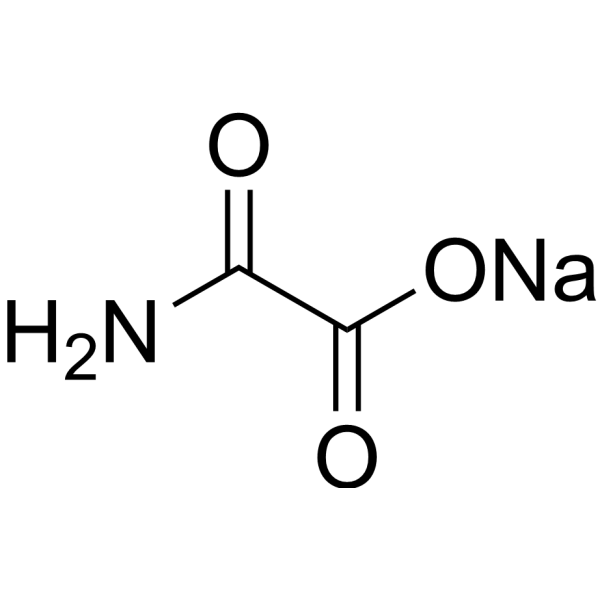
HY-W013032A
Oxamic acid sodiumLDH-A Inhibitor -
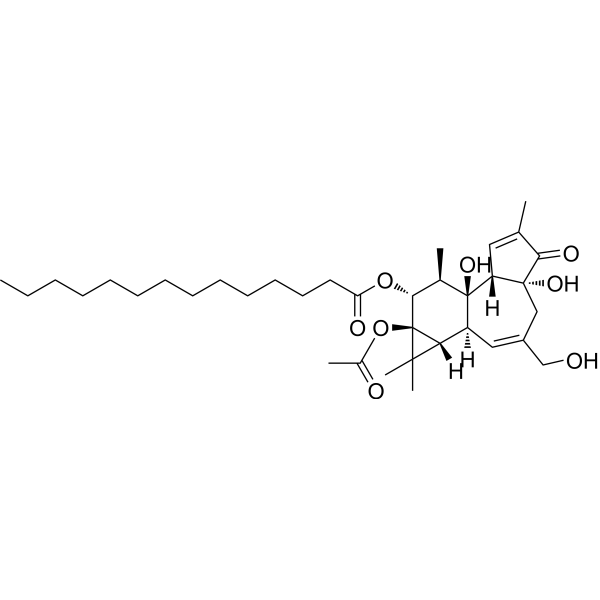
HY-18739
Phorbol 12-myristate 13-acetatePKC Activator -
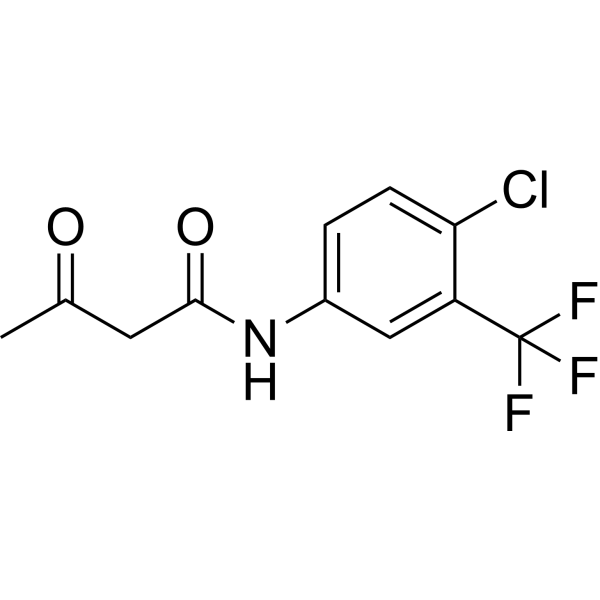
HY-101849
FasentinGLUT-1/GLUT-4 Inhibitor -
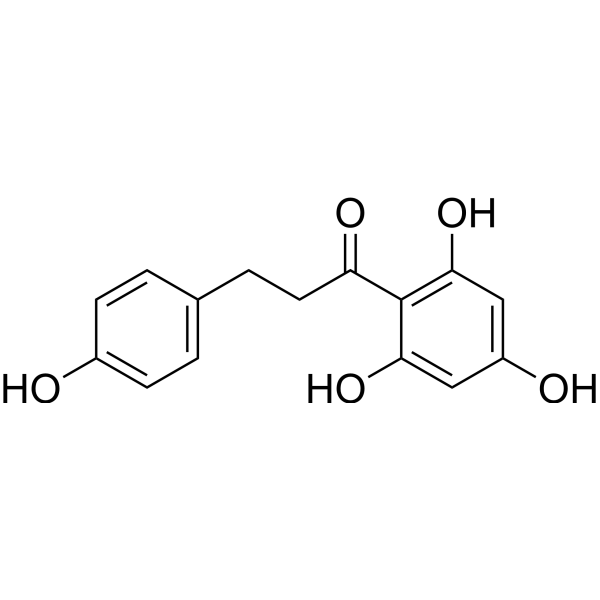
HY-N0142
PhloretinAnti-inflammatory Agent -
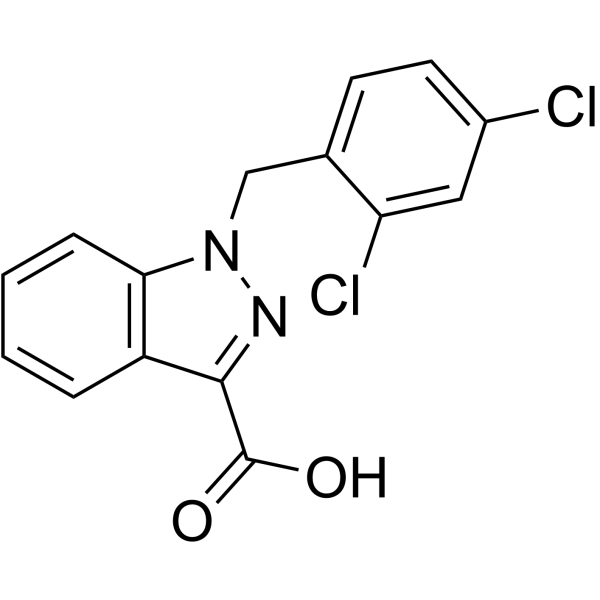
HY-B0486
LonidamineHexokinase Inhibitor -
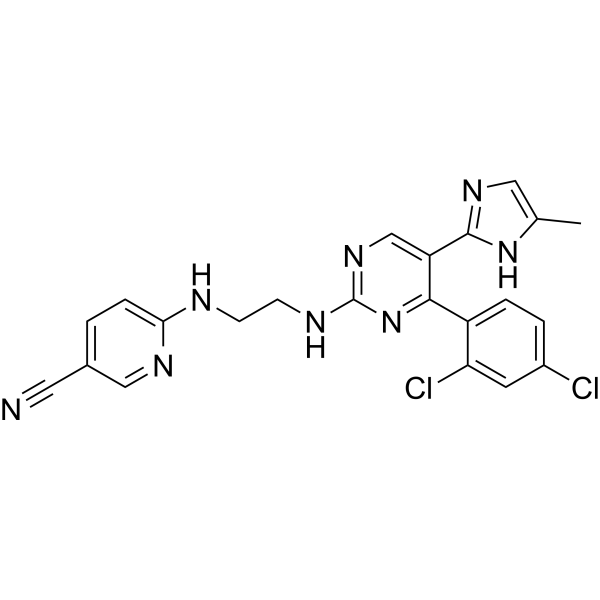
HY-10182
LaduviglusibGSK-3 Inhibitor -
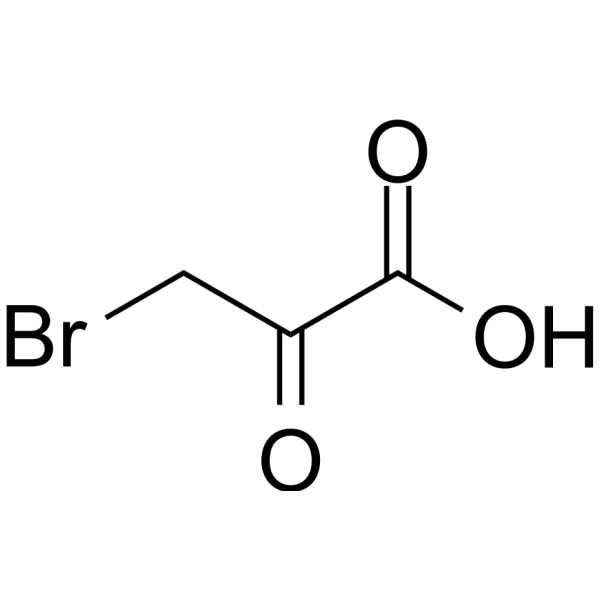
HY-19992
3-Bromopyruvic acidHexokinase II Inhibitor -
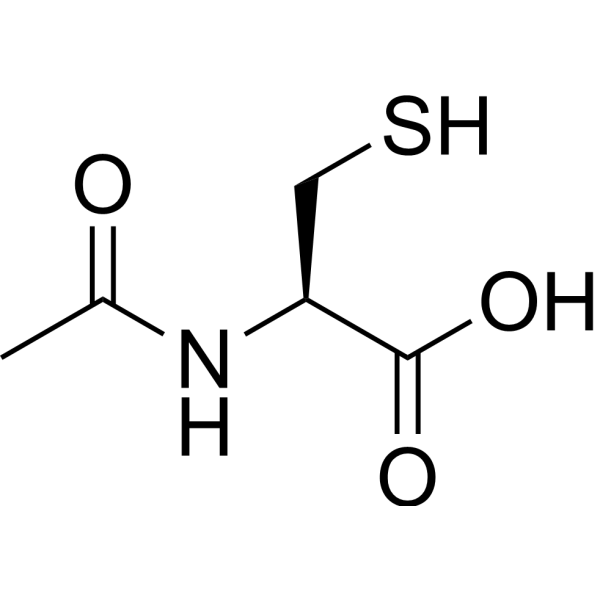
HY-B0215
AcetylcysteineMucolytic Agent
Publications Citing Use of MedChemExpress (MCE) WZB117
More- Cell Metab. 2022 Dec 6;34(12):1999-2017.e10. [Abstract]
- Nat Immunol. 2026 Mar;27(3):463-475. [Abstract]
- Nat Commun. 2026 Oct 1.
- Nat Commun. 2025 May 31;16(1):5074. [Abstract]
- J Nanobiotechnology. 2022 Sep 15;20(1):414. [Abstract]
- Adv Sci (Weinh). 2024 Aug;11(31):e2304687. [Abstract]
- Cell Death Dis. 2022 Feb 4;13(2):118. [Abstract]
- Nano Today. 2025 Apr.
- Cell Death Discov. 2026 Aug 29.
- Acta Pharmacol Sin. 2022 Jun;43(6):1556-1567. [Abstract]
- J Transl Med. 2023 Oct 26;21(1):754. [Abstract]
- Oncogene. 2023 Nov;42(47):3503-3513. [Abstract]
- Mol Med. 2024 Dec 20;30(1):257. [Abstract]
- J Med Chem. 2026 Jul 23;69(14):17448-17461.
- Mikrochim Acta. 2026 Jul 31;193(8):586.
- ACS Omega. 2025 Nov 7;10(45):54217-54223. [Abstract]
- Sci Rep. 2026 Jul 28;16(1):24140.
- Biochim Biophys Acta Mol Cell Res. 2023 Apr;1870(4):119434. [Abstract]
- J Biol Chem. 2026 May 28;302(7):113213. [Abstract]
- Lab Invest. 2022 Jul;102(7):691-701. [Abstract]
- J Nat Prod. 2024 Jan 26;87(1):2-13. [Abstract]
- Glycobiology. 2025 Dec 26:cwaf089. [Abstract]
- Photodiagnosis Photodyn Ther. 2020 Dec:32:102014. [Abstract]
- Lab Med. 2023 Mar 7;54(2):130-141. [Abstract]
- Sci Total Environ. 2024 Oct 15:947:174538. [Abstract]
- Research Square Print. November 15th, 2022
- Research Square Preprint. 2020 Aug.
 Customer Validation & Images

-
Cell Proliferation/Viability Assay
-
Flow Cytometry
-
RT-PCR
-
Flow Cytometry
-
Cell Imaging/Staining


Biological Activity
Description
IC50 & Target
[1]|
GLUT1 |
Cellular Effect
|
Cell Line

|
Type | Value | Description | References |
|---|---|---|---|---|
| HEK293 | IC50 |
>10 μM
Compound: 46830365
|
Inhibition of the Glucose Transporter (GLUT3, SLC2A3) as assessed by a FRET based flow cytometry assay using a genetically-encoded biosensor for measuring free glucose (FLII12Pglu-700uDelta6) in HEK293 JumpIN TRex SLC2A3 WT-OE cells
Inhibition of the Glucose Transporter (GLUT3, SLC2A3) as assessed by a FRET based flow cytometry assay using a genetically-encoded biosensor for measuring free glucose (FLII12Pglu-700uDelta6) in HEK293 JumpIN TRex SLC2A3 WT-OE cells
|
10.5281/zenodo.7360656 |
| HEK293 | IC50 |
>10 μM
Compound: 46830365
|
Inhibition of the Glucose Transporter (GLUT2, SLC2A2) as assessed by a FRET based flow cytometry assay using a genetically-encoded biosensor for measuring free glucose (FLII12Pglu-700uDelta6) in HEK293 JumpIN TRex SLC2A2 WT-OE cells
Inhibition of the Glucose Transporter (GLUT2, SLC2A2) as assessed by a FRET based flow cytometry assay using a genetically-encoded biosensor for measuring free glucose (FLII12Pglu-700uDelta6) in HEK293 JumpIN TRex SLC2A2 WT-OE cells
|
10.5281/zenodo.7360664 |
| HEK293 | IC50 |
>10 μM
Compound: 46830365
|
Inhibition of the Glucose Transporter (GLUT1, SLC2A1) as assessed by a FRET based flow cytometry assay using a genetically-encoded biosensor for measuring free glucose (FLII12Pglu-700uDelta6) in HEK293 JumpIN TRex SLC2A1 WT-OE cells
Inhibition of the Glucose Transporter (GLUT1, SLC2A1) as assessed by a FRET based flow cytometry assay using a genetically-encoded biosensor for measuring free glucose (FLII12Pglu-700uDelta6) in HEK293 JumpIN TRex SLC2A1 WT-OE cells
|
10.5281/zenodo.7360676 |
| HEK293 | IC50 |
>10 μM
Compound: 46830365
|
Inhibition of the Glucose Transporter (GLUT3, SLC2A3) as assessed by a FRET based flow cytometry assay using a genetically-encoded biosensor for measuring free glucose (FLII12Pglu-700uDelta6) in HEK293 JumpIN TRex SLC2A3 WT-OE cells (PubChem AID: 1794827)
Inhibition of the Glucose Transporter (GLUT3, SLC2A3) as assessed by a FRET based flow cytometry assay using a genetically-encoded biosensor for measuring free glucose (FLII12Pglu-700uDelta6) in HEK293 JumpIN TRex SLC2A3 WT-OE cells (PubChem AID: 1794827)
|
10.5281/zenodo.7360656 |
| HEK293 | IC50 |
>10 μM
Compound: 46830365
|
Inhibition of the Glucose Transporter (GLUT2, SLC2A2) as assessed by a FRET based flow cytometry assay using a genetically-encoded biosensor for measuring free glucose (FLII12Pglu-700uDelta6) in HEK293 JumpIN TRex SLC2A2 WT-OE cells (PubChem AID: 1794829)
Inhibition of the Glucose Transporter (GLUT2, SLC2A2) as assessed by a FRET based flow cytometry assay using a genetically-encoded biosensor for measuring free glucose (FLII12Pglu-700uDelta6) in HEK293 JumpIN TRex SLC2A2 WT-OE cells (PubChem AID: 1794829)
|
10.5281/zenodo.7360664 |
| HEK293 | IC50 |
>10 μM
Compound: 46830365
|
Inhibition of the Glucose Transporter (GLUT1, SLC2A1) as assessed by a FRET based flow cytometry assay using a genetically-encoded biosensor for measuring free glucose (FLII12Pglu-700uDelta6) in HEK293 JumpIN TRex SLC2A1 WT-OE cells (PubChem AID: 1794830
Inhibition of the Glucose Transporter (GLUT1, SLC2A1) as assessed by a FRET based flow cytometry assay using a genetically-encoded biosensor for measuring free glucose (FLII12Pglu-700uDelta6) in HEK293 JumpIN TRex SLC2A1 WT-OE cells (PubChem AID: 1794830
|
10.5281/zenodo.7360676 |
| HEK293 | IC50 |
2.5 μM
Compound: 46830365
|
Inhibition of the Glucose Transporter (GLUT4, SLC2A4) as assessed by a FRET based flow cytometry assay using a genetically-encoded biosensor for measuring free glucose (FLII12Pglu-700uDelta6) in HEK293 JumpIN TRex SLC2A4 WT-OE cells
Inhibition of the Glucose Transporter (GLUT4, SLC2A4) as assessed by a FRET based flow cytometry assay using a genetically-encoded biosensor for measuring free glucose (FLII12Pglu-700uDelta6) in HEK293 JumpIN TRex SLC2A4 WT-OE cells
|
10.5281/zenodo.7360638 |
| HEK293 | IC50 |
2.5 μM
Compound: 46830365
|
Inhibition of the Glucose Transporter (GLUT4, SLC2A4) as assessed by a FRET based flow cytometry assay using a genetically-encoded biosensor for measuring free glucose (FLII12Pglu-700uDelta6) in HEK293 JumpIN TRex SLC2A4 WT-OE cells (PubChem AID: 1794828)
Inhibition of the Glucose Transporter (GLUT4, SLC2A4) as assessed by a FRET based flow cytometry assay using a genetically-encoded biosensor for measuring free glucose (FLII12Pglu-700uDelta6) in HEK293 JumpIN TRex SLC2A4 WT-OE cells (PubChem AID: 1794828)
|
10.5281/zenodo.7360638 |
| NCI-H1299 | IC50 |
10 μM
Compound: 1, WZB117
|
Cytotoxicity against human H1299 cells assessed as reduction in cell viability
Cytotoxicity against human H1299 cells assessed as reduction in cell viability
|
[PMID: 25288186] |
| NCI-H1299 | IC50 |
20.4 μM
Compound: WZB117
|
Cytotoxicity against human H1299 cells assessed as growth inhibition after 48 hrs by MTT assay
Cytotoxicity against human H1299 cells assessed as growth inhibition after 48 hrs by MTT assay
|
[PMID: 24200808] |
In Vitro
Glucose uptake assays show that WZB117 inhibits glucose transport in cancer cells in a dose-dependent manner. The inhibition of glucose transport induced by WZB117 occurres within 1 minute after the assay started, suggesting that the inhibitory activity is likely to be via a direct and fast mechanism. Cell viability assay shows that WZB117 inhibits cancer cell proliferation with an IC50 of approximately 10 μM. The inhibitory activity of WZB117 on cancer cell growth is also confirmed with a clonogenic assay, which also indicates that the inhibition is irreversible in nature. WZB117 treatment results in significantly more cell growth inhibition in lung cancer A549 cells than in nontumorigenic lung NL20 cells. Similar results are also observed in breast cancer MCF7 cells and their nontumorigenic MCF12A cells. When WZB117 is added to cancer cells grown under hypoxic conditions, more cell growth inhibition is observed than under normoxic conditions[1].
MedChemExpress (MCE) has not independently confirmed the accuracy of these methods. They are for reference only.
In Vivo
MedChemExpress (MCE) has not independently confirmed the accuracy of these methods. They are for reference only.


Chemical Information
-
CAS No. 1223397-11-2
-
Appearance Solid
-
Molecular Weight 368.31
-
Formula C20H13FO6
-
Color White to off-white
-
SMILES
OC1=CC=CC(C(OC2=CC=CC(F)=C2OC(C3=CC(O)=CC=C3)=O)=O)=C1
-
Shipping
Room temperature in continental US; may vary elsewhere.
-
Storage
Powder -20°C 3 years 4°C 2 years In solvent -80°C 6 months -20°C 1 month


Publications (27)
-
Journal Impact Factor
-
Most Recent
-
Cell Metab
Cancer cells co-opt nociceptive nerves to thrive in nutrient-poor environments and upon nutrient-starvation therapies. [Abstract]2022 Dec 6;34(12):1999-2017.e10. PMID: 36395769
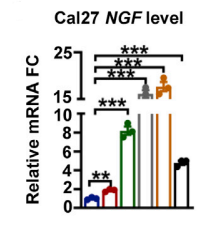
WZB117 purchased from MedChemExpress. Usage Cited in: Cell Metab. 2022 Dec 6;34(12):1999-2017.e10. [Abstract]
WZB117 (200 μM; 24 h) significantly increased the level of NGF in Cal27 cells.
-
Nat Immunol
Cell cycle arrest enhances CD8+ T cell effector function by potentiating glucose metabolism and IL-2 signaling. [Abstract]2026 Mar;27(3):463-475. PMID: 41555086 -
-
Nat Commun
Neoantigens combined with in situ cancer vaccination induce personalized immunity and reshape the tumor microenvironment. [Abstract]2025 May 31;16(1):5074. PMID: 40450037 -
J Nanobiotechnology
Targeting therapy and tumor microenvironment remodeling of triple-negative breast cancer by ginsenoside Rg3 based liposomes. [Abstract]2022 Sep 15;20(1):414. PMID: 36109762
WZB117 purchased from MedChemExpress. Usage Cited in: J Nanobiotechnology. 2022 Sep 15;20(1):414. [Abstract]
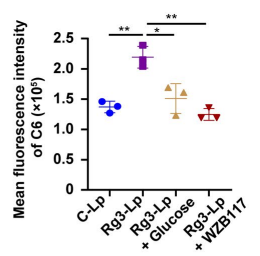
The quantitative analysis of cellular uptake of C-Lp/C6, Rg3-Lp/C6 and Rg3-Lp/C6 with Glut1 inhibitors (WZB117) in 4T1 cells via flow cytometry. The fluorescent intensity represents the mean fluorescence intensity (MFI) of C6-loaded liposome uptake by 4T1 cells. The results showed that WZB117 (10 μM; 1 h) significantly inhibited the cellular uptake of Rg3-Lp in 4T1 cells.
WZB117 purchased from MedChemExpress. Usage Cited in: J Nanobiotechnology. 2022 Sep 15;20(1):414. [Abstract]
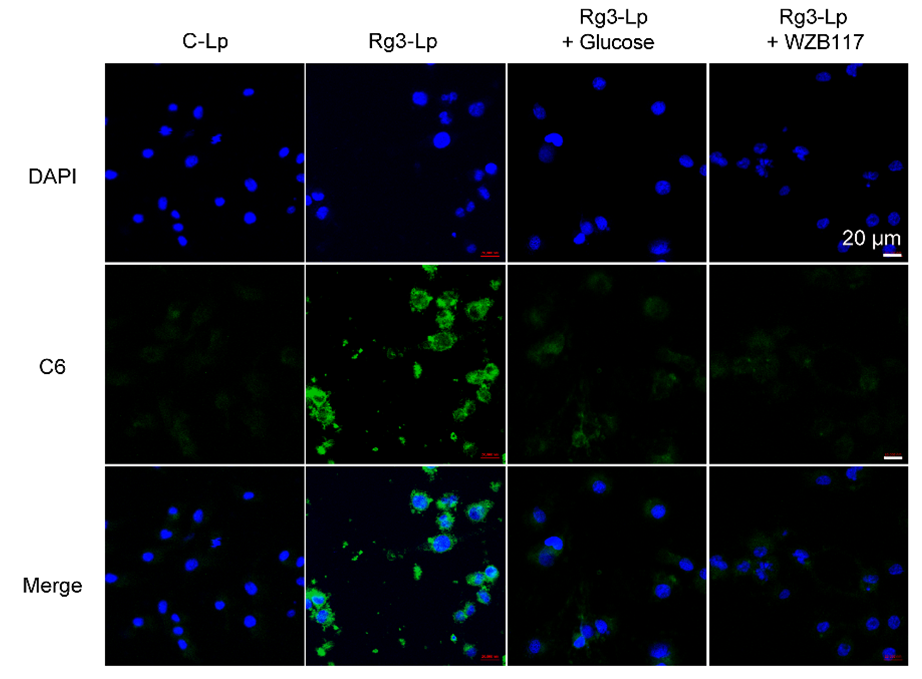
Confocal laser scanning microscope (CLSM) images of the cellular uptake of C-Lp/C6, Rg3-Lp/C6 and Rg3-Lp/C6 with Glut1 inhibitors (WZB117) in 4T1 cells. The results showed that WZB117 (10 μM; 1 h) significantly inhibited the cellular uptake of Rg3-Lp in 4T1 cells. Scale bars: 20 μm.
-
Adv Sci (Weinh)
Cordycepin Modulates Microglial M2 Polarization Coupled with Mitochondrial Metabolic Reprogramming by Targeting HKII and PDK2. [Abstract]2024 Aug;11(31):e2304687. PMID: 38889331
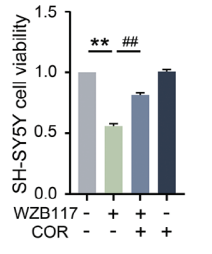
WZB117 purchased from MedChemExpress. Usage Cited in: Adv Sci (Weinh). 2024 Aug;11(31):e2304687. [Abstract]
CCK-8 assay was used to quantify the cell viability of SH‐SY5Y cells after treatment with conditioned media from BV2 cells. BV2 cells were treated with or without WZB117 (10 µM), and COR for 24 h.
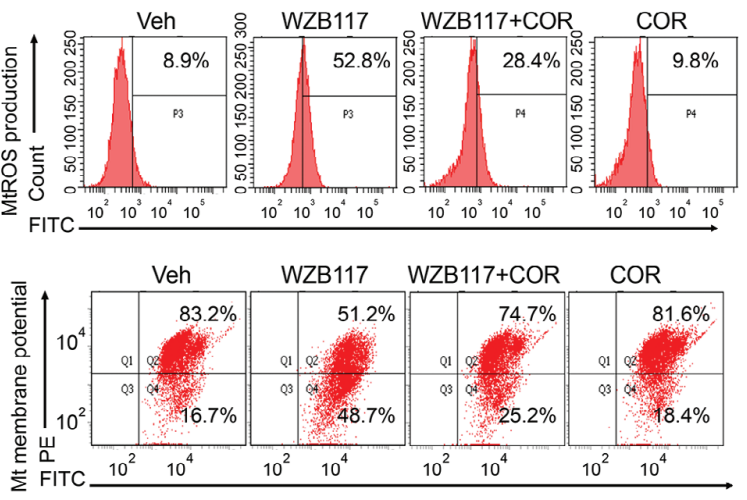
WZB117 purchased from MedChemExpress. Usage Cited in: Adv Sci (Weinh). 2024 Aug;11(31):e2304687. [Abstract]
FACS plots showing representative mtROS expression levels and mitochondrial membrane potential in BV2 cells. BV2 cells were treated with or without WZB117 (10 µM), and COR for 24 h.
-
Cell Death Dis
PGK1 contributes to tumorigenesis and sorafenib resistance of renal clear cell carcinoma via activating CXCR4/ERK signaling pathway and accelerating glycolysis. [Abstract]2022 Feb 4;13(2):118. PMID: 35121728 -
-
-
Acta Pharmacol Sin
Modified citrus pectin inhibits breast cancer development in mice by targeting tumor-associated macrophage survival and polarization in hypoxic microenvironment. [Abstract]2022 Jun;43(6):1556-1567. PMID: 34462562 -
J Transl Med
Fasting mimicking diet inhibits tumor-associated macrophage survival and pro-tumor function in hypoxia: implications for combination therapy with anti-angiogenic agent. [Abstract]2023 Oct 26;21(1):754. PMID: 37884960 -
Oncogene
D-mannose induces TFE3-dependent lysosomal degradation of EGFR and inhibits the progression of NSCLC. [Abstract]2023 Nov;42(47):3503-3513. PMID: 37845392 -
Mol Med
GLUT1 exacerbates trophoblast ferroptosis by modulating AMPK/ACC mediated lipid metabolism and promotes gestational diabetes mellitus associated fetal growth restriction. [Abstract]2024 Dec 20;30(1):257. PMID: 39707215 -
-
-
ACS Omega
A Glucosylated BODIPY Uses the GLUT Channel to Target Cancer Cells in In Vitro and In Vivo Models. [Abstract]2025 Nov 7;10(45):54217-54223. PMID: 41280800 -
-
Biochim Biophys Acta Mol Cell Res
Cytoskeletal orchestration of glucose uptake in Sertoli cell to support efferocytosis of apoptotic germ cells. [Abstract]2023 Apr;1870(4):119434. PMID: 36716822 -
J Biol Chem
Hexosamine biosynthesis drives hemocyanin O-GlcNAcylation to potentiate antibacterial immunity in shrimp. [Abstract]2026 May 28;302(7):113213. PMID: 42214671 -
Lab Invest
Induction of cancer cell stemness in glioma through glycolysis and the long noncoding RNA HULC-activated FOXM1/AGR2/HIF-1α axis. [Abstract]2022 Jul;102(7):691-701. PMID: 35013529 -
J Nat Prod
Target Separation and Potential Anticancer Activity of Withanolide-Based Glucose Transporter Protein 1 Inhibitors from Physalis angulata var. villosa. [Abstract]2024 Jan 26;87(1):2-13. PMID: 38117981 -
Glycobiology
High glucose enhances lung cancer cell aggressiveness: The impacts of GLUT1, UAP1, UGP2, and N-linked Glycosylation. [Abstract]2025 Dec 26:cwaf089. PMID: 41452006 -
Photodiagnosis Photodyn Ther
2020 Dec:32:102014. PMID: 32950730 -
Lab Med
Combination of Circulating Cell-Free DNA and Positron Emission Tomography to Distinguish Non-Small Cell Lung Cancer from Tuberculosis. [Abstract]2023 Mar 7;54(2):130-141. PMID: 36106407 -
Sci Total Environ
Arsenic activated GLUT1-mTORC1/HIF-1α-PKM2 positive feedback networks promote proliferation and migration of bladder epithelial cells. [Abstract]2024 Oct 15:947:174538. PMID: 38977090 -
-


Solvent & Solubility
In Vitro:
DMSO : 250 mg/mL (678.78 mM; Need ultrasonic; Hygroscopic DMSO has a significant impact on the solubility of product, please use newly opened DMSO)
Please refer to the solubility information to select the appropriate solvent. Once prepared, please aliquot and store the solution to prevent product inactivation from repeated freeze-thaw cycles.
Storage method and period of stock solution: -80°C, 6 months; -20°C, 1 month. When stored at -80°C, please use it within 6 months. When stored at -20°C, please use it within 1 month.
Please refer to the solubility information to select the appropriate solvent. Once prepared, please aliquot and store the solution to prevent product inactivation from repeated freeze-thaw cycles.
Storage method and period of stock solution: -80°C, 6 months; -20°C, 1 month. When stored at -80°C, please use it within 6 months. When stored at -20°C, please use it within 1 month.
Concentration (start) × Volume (start) = Concentration (final) × Volume (final)
In Vivo:
Select the appropriate dissolution method based on your experimental animal and administration route.
- For the following dissolution methods, please ensure to first prepare a clear stock solution using an In Vitro approach and then sequentially add co-solvents:
- To ensure reliable experimental results, the clarified stock solution can be appropriately stored based on storage conditions. As for the working solution for In Vivo experiments, it is recommended to prepare freshly and use it on the same day.
- The percentages shown for the solvents indicate their volumetric ratio in the final prepared solution. If precipitation or phase separation occurs during preparation, heat and/or sonication can be used to aid dissolution.
Add each solvent one by one: 10% DMSO 40% PEG300 5% Tween-80 45% Saline
Solubility: ≥ 2.5 mg/mL (6.79 mM); Clear solution
This protocol yields a clear solution of ≥ 2.5 mg/mL (saturation unknown).
Taking 1 mL working solution as an example, add 100 μL DMSO stock solution (25.0 mg/mL) to 400 μL PEG300, and mix evenly; then add 50 μL Tween-80 and mix evenly; then add 450 μL Saline to adjust the volume to 1 mL.
Preparation of Saline: Dissolve 0.9 g sodium chloride in ddH₂O and dilute to 100 mL to obtain a clear Saline solution.
Add each solvent one by one: 10% DMSO 90% (20% SBE-β-CD in Saline)
Solubility: ≥ 2.5 mg/mL (6.79 mM); Clear solution
This protocol yields a clear solution of ≥ 2.5 mg/mL (saturation unknown).
Taking 1 mL working solution as an example, add 100 μL DMSO stock solution (25.0 mg/mL) to 900 μL 20% SBE-β-CD in Saline, and mix evenly.
Preparation of 20% SBE-β-CD in Saline (4°C, storage for one week): 2 g SBE-β-CD powder is dissolved in 10 mL Saline, completely dissolve until clear.
In Vivo Dissolution Calculator
Please enter the basic information of animal experiments:
-
-
-
-
Recommended: Prepare an additional quantity of animals to account for potential losses during experiments.
Please enter your animal formula composition:
-
%DMSO +
Recommended: Keep the proportion of DMSO in working solution below 2% if your animal is weak.
-
%+
-
+%Tween-80 + +
-
%Saline +
The co-solvents required include: DMSO, . All of co-solvents are available by MedChemExpress (MCE). , Tween 80. All of co-solvents are available by MedChemExpress (MCE).
Working solution concentration: 0.22 mg/mL
Method for preparing stock solution: mg drug dissolved in μL DMSO. Stock solution concentration: mg/mL.
1. Take μL DMSO stock solution;
2. Add μL .
μL , mix evenly;
3. Then add μL Tween 80, mix evenly;
4. Then add μL
Please ensure that the stock solution in the first step is dissolved to a clear state, and add co-solvents in sequence. You can use ultrasonic heating (ultrasonic cleaner, recommended frequency 20-40 kHz), vortexing, etc. to assist dissolution.


Purity & Documentation
-
Data Sheet (277 KB)
-
SDS (394 KB)
- English - EN (394 KB)
- Français - FR (394 KB)
- Deutsch - DE (394 KB)
- Norwegian - NO (394 KB)
- Español - ES (394 KB)
- Swedish - SV (394 KB)
- Italian - IT (394 KB)
- Korean - KR (394 KB)
- Portuguese - PT (394 KB)
-
Handling Instructions (2659 KB)
References


Complete Stock Solution Preparation Table
Please refer to the solubility information to select the appropriate solvent. Once prepared, please aliquot and store the solution to prevent product inactivation from repeated freeze-thaw cycles.
Storage method and period of stock solution: -80°C, 6 months; -20°C, 1 month. When stored at -80°C, please use it within 6 months. When stored at -20°C, please use it within 1 month.
| Optional Solvent | Concentration Solvent Mass | 1 mg | 5 mg | 10 mg | 25 mg |
|---|---|---|---|---|---|
| DMSO | 1 mM | 2.7151 mL | 13.5755 mL | 27.1510 mL | 67.8776 mL |
| 5 mM | 0.5430 mL | 2.7151 mL | 5.4302 mL | 13.5755 mL | |
| 10 mM | 0.2715 mL | 1.3576 mL | 2.7151 mL | 6.7878 mL | |
| 15 mM | 0.1810 mL | 0.9050 mL | 1.8101 mL | 4.5252 mL | |
| 20 mM | 0.1358 mL | 0.6788 mL | 1.3576 mL | 3.3939 mL | |
| 25 mM | 0.1086 mL | 0.5430 mL | 1.0860 mL | 2.7151 mL | |
| 30 mM | 0.0905 mL | 0.4525 mL | 0.9050 mL | 2.2626 mL | |
| 40 mM | 0.0679 mL | 0.3394 mL | 0.6788 mL | 1.6969 mL | |
| 50 mM | 0.0543 mL | 0.2715 mL | 0.5430 mL | 1.3576 mL | |
| 60 mM | 0.0453 mL | 0.2263 mL | 0.4525 mL | 1.1313 mL | |
| 80 mM | 0.0339 mL | 0.1697 mL | 0.3394 mL | 0.8485 mL | |
| 100 mM | 0.0272 mL | 0.1358 mL | 0.2715 mL | 0.6788 mL |


WZB117 Related Classifications
HY-19331 Related Classifications
 Powered by Bioz