



Fenretinide
Based on 11 publication(s) in Google Scholar
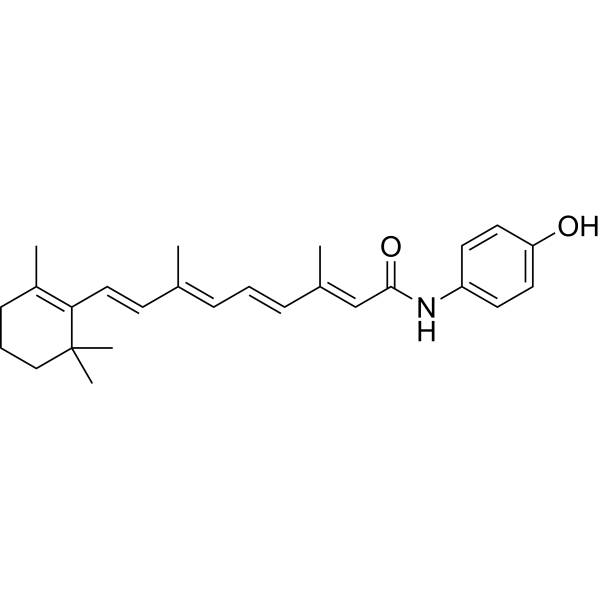
Fenretinide (4-HPR) is a synthetic retinoid deriverative, binding to the retinoic acid receptors (RAR) at concentrations necessary to induce cell death.
For research use only. We do not sell to patients.
- Purity : 98.56%
- CAS No.: 65646-68-6
- Formula: C26H33NO2
- Molecular Weight:391.55
-
Storage:Powder -20°C, 3 years , 4°C, 2 years ; In solvent -80°C, 2 years , -20°C, 1 year

To place orders, for customer services and technical support, please contact: MedChemExpress USA
Tel: 609-228-6898 E-mail: [email protected] [email protected]


-
 Biological Activity
-
Chemical Information
-
Solvent & Solubility
- Protocols
- Purity & Documentation
- References
-
 Help & FAQs


-
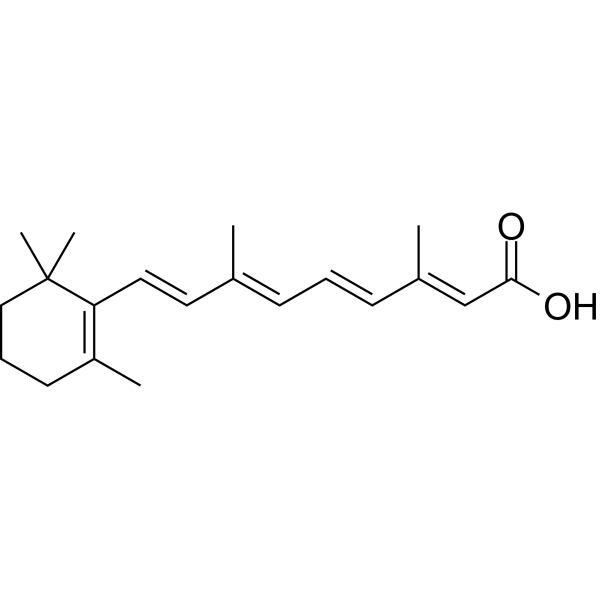
HY-14649
Retinoic acidRAR Agonist -
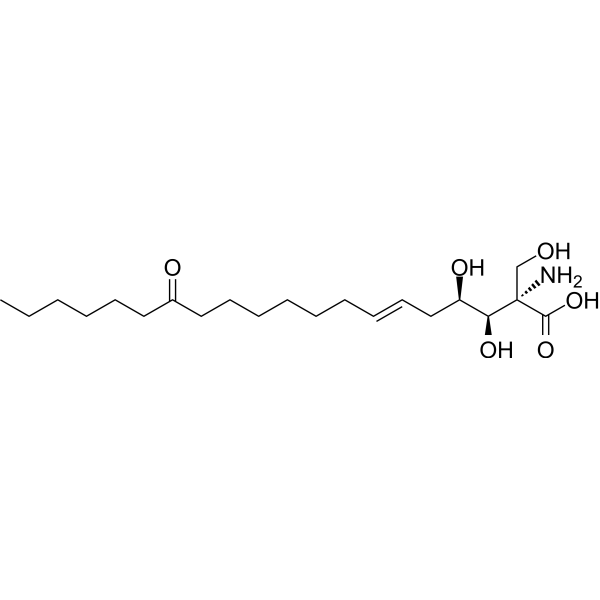
HY-N6798
MyriocinSPT Inhibitor -
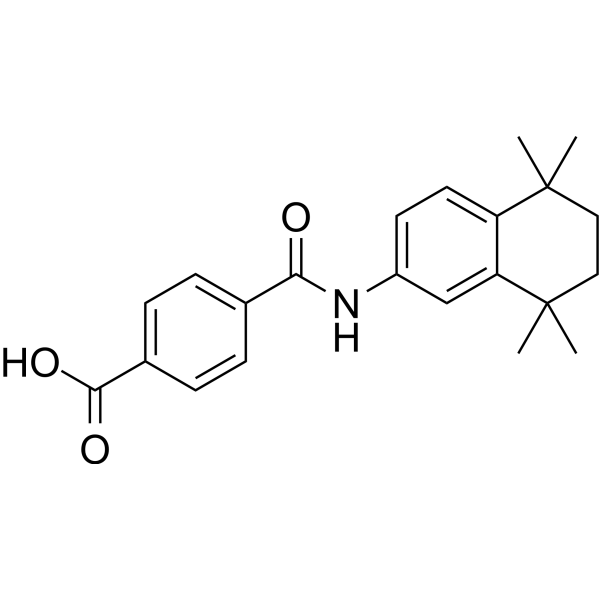
HY-14652
TamibaroteneApoptosis Inducer -
HY-14171
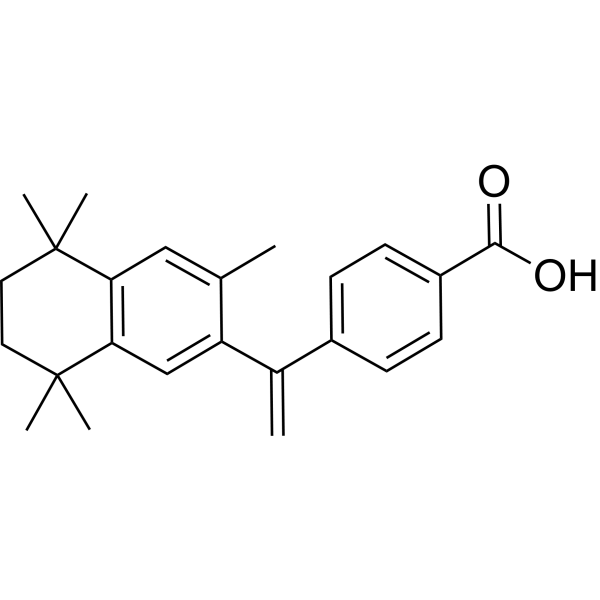
BexaroteneRXR Agonist -
HY-100256
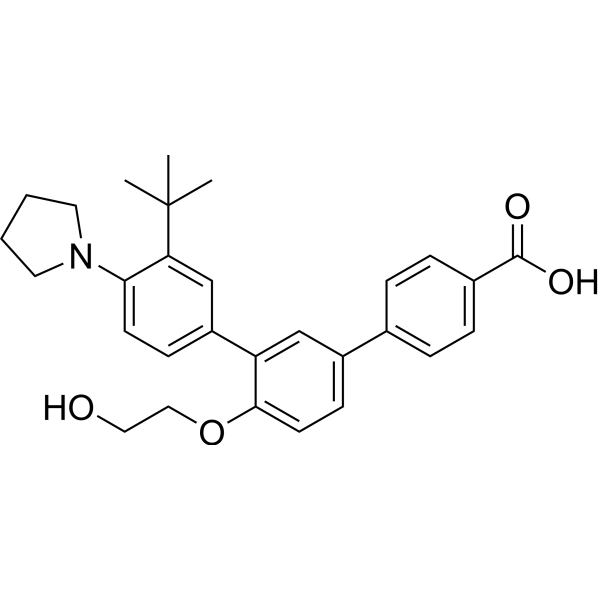
TrifaroteneRARγ Agonist -
HY-14531
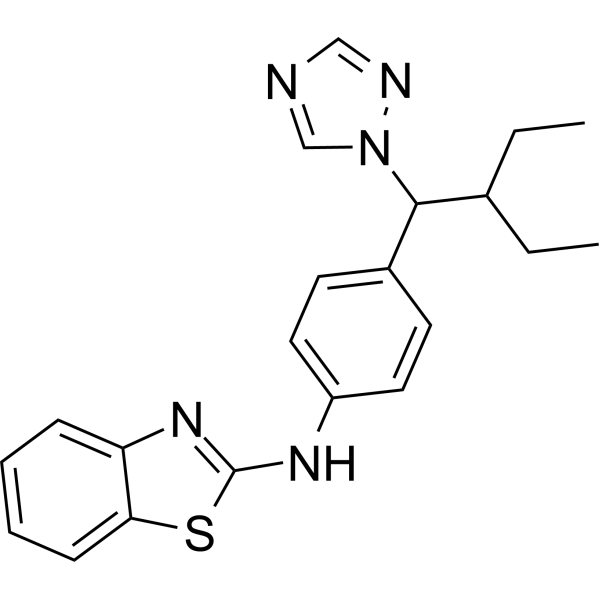
TalarozoleCYP26 Inhibitor/RAMBA -
HY-Y0873
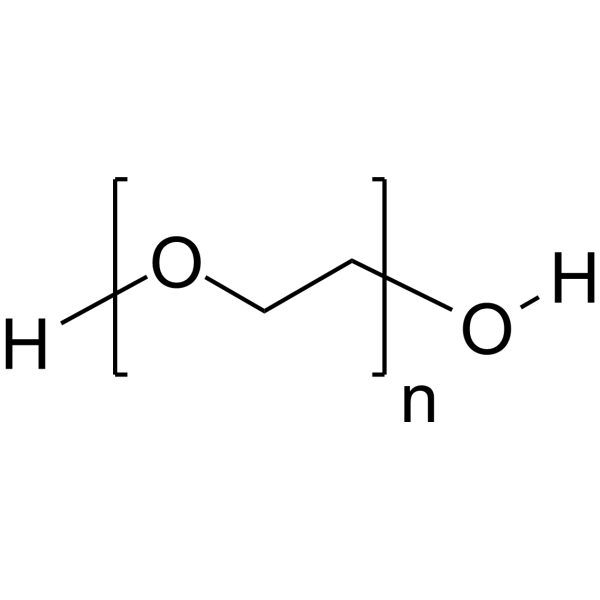
PEG300Neutral Polymer -

HY-Y1891
Tween 80 -
HY-15388
TazaroteneRAR Agonist -

HY-Y0320C
Dimethyl sulfoxideAprotic Solvent -
HY-14398
CelecoxibCOX-2inhibitor -
HY-104026
L-KynurenineAryl Hydrocarbon Receptor Agonist
Publications Citing Use of MedChemExpress (MCE) Fenretinide
More- Signal Transduct Target Ther. 2022 Oct 24;7(1):370. [Abstract]
- Biochim Biophys Acta Mol Basis Dis. 2026 Aug;1872(6):168275. [Abstract]
- Oncol Rep. 2018 Jul;40(1):518-526. [Abstract]
- Clin Exp Med. 2025 Aug 21;25(1):297. [Abstract]
- J Cancer. 2019 Nov 1;10(27):6767-6778. [Abstract]
- Cell Biochem Biophys. 2021 Sep;79(3):461-475. [Abstract]
- Cornea. 2018 Dec;37(12):1579-1585. [Abstract]
- SSRN. 2026 Jul 24.
- Biomed Pharmacother. 2020 May;125:109680. [Abstract]
- Patent. 20200038327A1.
- Wayne State University. 2015 Jan.
 Customer Validation & Images

-
WB
-
IHC
-
WB
-
WB
-
WB


Biological Activity
Description
Cellular Effect
|
Cell Line

|
Type | Value | Description | References |
|---|---|---|---|---|
| Astrocyte | EC50 |
2.399 μM
Compound: 11
|
Antiproliferative activity against mouse astrocyte cells by MTT assay
Antiproliferative activity against mouse astrocyte cells by MTT assay
|
[PMID: 17417631] |
| BHK-21 | CC50 |
31.5 μM
Compound: 192
|
Cytotoxicity against BHK21 cells in presence of ATP by Celltiter-Glo assay
Cytotoxicity against BHK21 cells in presence of ATP by Celltiter-Glo assay
|
[PMID: 28689975] |
| CWR22R | GI50 |
3.23 μM
Compound: 4-HPR, fenretinide
|
Growth inhibition of human CWR22Rv1 cells by MTT assay
Growth inhibition of human CWR22Rv1 cells by MTT assay
|
[PMID: 25634130] |
| Daoy | GI50 |
5 μM
Compound: Fenretinide
|
Antiproliferative activity against human Daoy cells assessed as inhibition of cell growth incubated for 24 to 96 hrs by MTT assay
Antiproliferative activity against human Daoy cells assessed as inhibition of cell growth incubated for 24 to 96 hrs by MTT assay
|
[PMID: 33636537] |
| G-401 | IC50 |
5 μM
Compound: 1
|
Cytotoxicity against human G401 cells assessed as cell survival after 3 days by MTS assay
Cytotoxicity against human G401 cells assessed as cell survival after 3 days by MTS assay
|
[PMID: 18556204] |
| HEK-293T | IC50 |
18.7 μM
Compound: Fenretinide
|
Inhibition of mouse Ido2 transfected in HEK293T cells using L-tryptophan as substrate assessed as kynurenine formation after 45 mins by spectrophotometric analysis
Inhibition of mouse Ido2 transfected in HEK293T cells using L-tryptophan as substrate assessed as kynurenine formation after 45 mins by spectrophotometric analysis
|
[PMID: 23122865] |
| HEK-293T | IC50 |
59.9 μM
Compound: Fenretinide
|
Inhibition of mouse Ido1 transfected in HEK293T cells using L-tryptophan as substrate assessed as kynurenine formation after 45 mins by spectrophotometric analysis
Inhibition of mouse Ido1 transfected in HEK293T cells using L-tryptophan as substrate assessed as kynurenine formation after 45 mins by spectrophotometric analysis
|
[PMID: 23122865] |
| HuCCT-1 | IC50 |
6 μM
Compound: 3, Fenretinide
|
Cytotoxicity against human HuCCT1 cells after 72 hrs by MTT assay
Cytotoxicity against human HuCCT1 cells after 72 hrs by MTT assay
|
[PMID: 22440084] |
| Huh-7 | CC50 |
<=10 μM
Compound: 4-HPR
|
Cytotoxicity against human Huh-7 cells assessed as reduction in cell viability measured after 48 hrs by Celltiter-glo assay
Cytotoxicity against human Huh-7 cells assessed as reduction in cell viability measured after 48 hrs by Celltiter-glo assay
|
[PMID: 37159959] |
| LNCaP | GI50 |
2.69 μM
Compound: 4-HPR, fenretinide
|
Growth inhibition of human LNCAP cells by MTT assay
Growth inhibition of human LNCAP cells by MTT assay
|
[PMID: 25634130] |
| LNCaP | IC50 |
7.5 μM
Compound: 4-HPR
|
Growth inhibition of human LNCaP cells after 6 days by MTT assay
Growth inhibition of human LNCaP cells after 6 days by MTT assay
|
[PMID: 15615521] |
| MCF7 | GI50 |
4.65 μM
Compound: 4-HPR, fenretinide
|
Growth inhibition of human MCF7 cells by MTT assay
Growth inhibition of human MCF7 cells by MTT assay
|
[PMID: 25634130] |
| MCF7 | IC50 |
0.15 μM
Compound: 4-HPR
|
Growth inhibition of human MCF7 cells after 6 days by MTT assay
Growth inhibition of human MCF7 cells after 6 days by MTT assay
|
[PMID: 15615521] |
| MDA-MB-231 | GI50 |
11.05 μM
Compound: 4-HPR, fenretinide
|
Growth inhibition of human MDA-MB-231 cells by MTT assay
Growth inhibition of human MDA-MB-231 cells by MTT assay
|
[PMID: 25634130] |
| MDA-MB-231 | IC50 |
7.7 μM
Compound: 4-HPR
|
Growth inhibition of human MDA-MB-231 cells after 6 days by MTT assay
Growth inhibition of human MDA-MB-231 cells after 6 days by MTT assay
|
[PMID: 15615521] |
| MDA-MB-468 | GI50 |
6.02 μM
Compound: 4-HPR, fenretinide
|
Growth inhibition of human MDA-MB-468 cells by MTT assay
Growth inhibition of human MDA-MB-468 cells by MTT assay
|
[PMID: 25634130] |
| Medulloblastoma cell | EC50 |
0.204 μM
Compound: 11
|
Antiproliferative activity against mouse medulloblastoma cells harboring heterozygous ptch1 gene by MTT assay
Antiproliferative activity against mouse medulloblastoma cells harboring heterozygous ptch1 gene by MTT assay
|
[PMID: 17417631] |
| MIA PaCa-2 | IC50 |
7 μM
Compound: 3, Fenretinide
|
Cytotoxicity against human MIAPaCa2 cells after 72 hrs by MTT assay
Cytotoxicity against human MIAPaCa2 cells after 72 hrs by MTT assay
|
[PMID: 22440084] |
| ONS-76 | GI50 |
2 μM
Compound: Fenretinide
|
Antiproliferative activity against human ONS-76 cells assessed as inhibition of cell growth incubated for 24 to 96 hrs by MTT assay
Antiproliferative activity against human ONS-76 cells assessed as inhibition of cell growth incubated for 24 to 96 hrs by MTT assay
|
[PMID: 33636537] |
| PC-3 | GI50 |
2 μM
Compound: 43
|
Cytotoxicity against human PC3 cells after 72 hrs by MTT assay
Cytotoxicity against human PC3 cells after 72 hrs by MTT assay
|
[PMID: 26780304] |
| PC-3 | GI50 |
3.54 μM
Compound: 4-HPR, fenretinide
|
Growth inhibition of human PC3 cells by MTT assay
Growth inhibition of human PC3 cells by MTT assay
|
[PMID: 25634130] |
| PC-3 | IC50 |
3.6 μM
Compound: 4-HPR
|
Growth inhibition of human PC3 cells after 6 days by MTT assay
Growth inhibition of human PC3 cells after 6 days by MTT assay
|
[PMID: 15615521] |
| SK-BR-3 | GI50 |
3.98 μM
Compound: 4-HPR, fenretinide
|
Growth inhibition of human SKBR3 cells by MTT assay
Growth inhibition of human SKBR3 cells by MTT assay
|
[PMID: 25634130] |
In Vitro
Fenretinide (4-HPR) exerts not just acute but also long term antitumor activity in selected T-ALL cell lines. Fenretinide inhibits DES activity in CCRF-CEM leukemia cells in a dose and time dependent manner, leading to a concomitant increase of the endogenous cellular dhCer content. Fenretinide (3 μM)-induced dhCer accumulation in both CCRF-CEM and Jurkat cells[1]. Ceramide inhibition with fenretinide protects insulin signaling. Fenretinide prevents lipid-induced reductions in insulin-stimulated glucose uptake[2]. Fenretinide inhibits OVCAR-5 cell proliferation and viability at concentrations higher than 1 microM, with 70-90% growth inhibition at 10 microM. Fenretinide (1 microM) significantly inhibits OVCAR-5 invasion after 3 days preincubation. Endothelial cells treated with 1 microM 4-HPR fails to form tubes, but forms small cellular aggregates[4].
MedChemExpress (MCE) has not independently confirmed the accuracy of these methods. They are for reference only.
In Vivo
MedChemExpress (MCE) has not independently confirmed the accuracy of these methods. They are for reference only.
Clinical Trial
| NCT Number | Sponsor | Condition | Start Date |
Phase
|
|---|---|---|---|---|
| NCT01329991 | 2011-05 | PHASE1 |


Chemical Information
-
CAS No. 65646-68-6
-
Appearance Solid
-
Molecular Weight 391.55
-
Formula C26H33NO2
-
Color Light yellow to yellow
-
SMILES
CC(/C=C/C=C(/C=C/C1=C(CCCC(C)1C)C)C)=C\C(NC2=CC=C(O)C=C2)=O
-
Synonyms
4-HPR; ISLA-101
-
Shipping
Room temperature in continental US; may vary elsewhere.
-
Storage
Powder -20°C 3 years 4°C 2 years In solvent -80°C 2 years -20°C 1 year


Publications (11)
-
Journal Impact Factor
-
Most Recent
-
Signal Transduct Target Ther
Dysregulated ceramides metabolism by fatty acid 2-hydroxylase exposes a metabolic vulnerability to target cancer metastasis. [Abstract]2022 Oct 24;7(1):370. PMID: 36274060 -
Biochim Biophys Acta Mol Basis Dis
Choline kinase beta promotes psoriasis pathogenesis by regulating sphingolipid metabolism and activating the PI3K/Akt/GSK3β signaling pathway. [Abstract]2026 Aug;1872(6):168275. PMID: 42034255 -
Oncol Rep
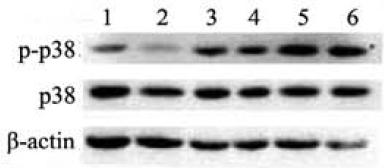
Fenretinide inhibits the proliferation and migration of human liver cancer HepG2 cells by downregulating the activation of myosin light chain kinase through the p38‑MAPK signaling pathway. [Abstract]2018 Jul;40(1):518-526. PMID: 29767236
Fenretinide purchased from MedChemExpress. Usage Cited in: Oncol Rep. 2018 Jul;40(1):518-526. [Abstract]
Western blot analyses reveal that the phosphorylation of p38 is significantly increased. Lane 1, cell control; lane 2, DMSO; lane 3, 5 μM ATRA; lane 4, 10 μM ATRA; lane 5, 5 μM 4-HPR; and lane 6, 10 μM 4-HPR.
-
Clin Exp Med
The association between 4-HPR-mediated LCN2 suppression and reduced intestinal cell senescence in ulcerative colitis. [Abstract]2025 Aug 21;25(1):297. PMID: 40839227 -
J Cancer
Fenretinide-induced Apoptosis of Acute Myeloid Leukemia Cells via NR4A1 Translocation into Mitochondria and Bcl-2 Transformation. [Abstract]2019 Nov 1;10(27):6767-6778. PMID: 31839811 -
Cell Biochem Biophys
Dihydroceramide Desaturase Functions as an Inducer and Rectifier of Apoptosis: Effect of Retinol Derivatives, Antioxidants and Phenolic Compounds. [Abstract]2021 Sep;79(3):461-475. PMID: 33991313 -
Cornea
Fenretinide Inhibits Neutrophil Recruitment and IL-1β Production in Aspergillus fumigatus Keratitis. [Abstract]2018 Dec;37(12):1579-1585. PMID: 30211745
Fenretinide purchased from MedChemExpress. Usage Cited in: Cornea. 2018 Dec;37(12):1579-1585. [Abstract]
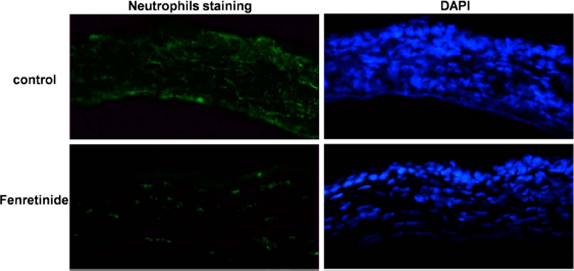
Fenretinide pretreatment reduces neutrophils recruitment and MPO activity in the mouse Aspergillus fumigatus keratitis model. Positive staining (green) of NIMP-R14 in the corneas of pretreated mice is indicative of a decreased presence of neutrophils compared with control mice at 1 day after infection.
Fenretinide purchased from MedChemExpress. Usage Cited in: Cornea. 2018 Dec;37(12):1579-1585. [Abstract]
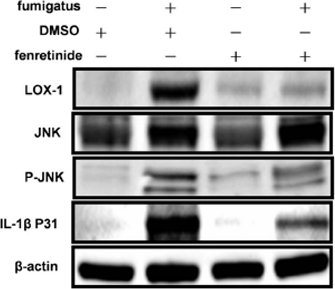
Compared with infected controls, LOX-1, phosphorylated JNK, and pro-IL-1b protein levels in corneas are significantly lower at 1 day after infection in fenretinide-pretreated mice.
Fenretinide purchased from MedChemExpress. Usage Cited in: Cornea. 2018 Dec;37(12):1579-1585. [Abstract]
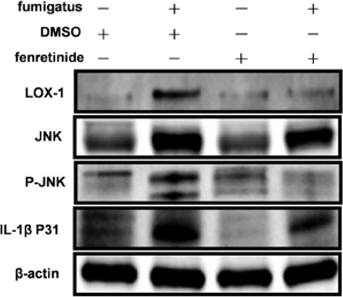
Compared with stimulated controls, LOX-1, JNK, phosphorylated JNK, and pro-IL-1b protein levels in fenretinide-pretreated THP-1 macrophages are significantly lower at 16 hours with A. fumigatus stimulation. JNK was not affected by fenretinide pretreatment.
Fenretinide purchased from MedChemExpress. Usage Cited in: Cornea. 2018 Dec;37(12):1579-1585. [Abstract]
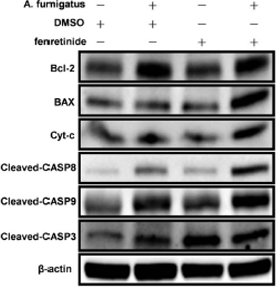
BAX, cytochrome c, cleaved-caspase-8, cleaved-caspase-9, and cleaved-caspase-3 protein levels in fenretinide-pretreated mice corneas are found to be significantly increased.
-
-
Biomed Pharmacother
Fenretinide attenuates lipopolysaccharide (LPS)-induced blood-brain barrier (BBB) and depressive-like behavior in mice by targeting Nrf-2 signaling. [Abstract]2020 May;125:109680. PMID: 32106372 -
-


Solvent & Solubility
In Vitro:
DMSO : ≥ 100 mg/mL (255.40 mM; Hygroscopic DMSO has a significant impact on the solubility of product, please use newly opened DMSO)
* "≥" means soluble, but saturation unknown.
Please refer to the solubility information to select the appropriate solvent. Once prepared, please aliquot and store the solution to prevent product inactivation from repeated freeze-thaw cycles.
Storage method and period of stock solution: -80°C, 2 years; -20°C, 1 year. When stored at -80°C, please use it within 2 years. When stored at -20°C, please use it within 1 year.
Please refer to the solubility information to select the appropriate solvent. Once prepared, please aliquot and store the solution to prevent product inactivation from repeated freeze-thaw cycles.
Storage method and period of stock solution: -80°C, 2 years; -20°C, 1 year. When stored at -80°C, please use it within 2 years. When stored at -20°C, please use it within 1 year.
Concentration (start) × Volume (start) = Concentration (final) × Volume (final)
In Vivo:
Select the appropriate dissolution method based on your experimental animal and administration route.
- For the following dissolution methods, please ensure to first prepare a clear stock solution using an In Vitro approach and then sequentially add co-solvents:
- To ensure reliable experimental results, the clarified stock solution can be appropriately stored based on storage conditions. As for the working solution for In Vivo experiments, it is recommended to prepare freshly and use it on the same day.
- The percentages shown for the solvents indicate their volumetric ratio in the final prepared solution. If precipitation or phase separation occurs during preparation, heat and/or sonication can be used to aid dissolution.
Add each solvent one by one: 10% DMSO 40% PEG300 5% Tween-80 45% Saline
Solubility: ≥ 2.5 mg/mL (6.38 mM); Clear solution
This protocol yields a clear solution of ≥ 2.5 mg/mL (saturation unknown).
Taking 1 mL working solution as an example, add 100 μL DMSO stock solution (25.0 mg/mL) to 400 μL PEG300, and mix evenly; then add 50 μL Tween-80 and mix evenly; then add 450 μL Saline to adjust the volume to 1 mL.
Preparation of Saline: Dissolve 0.9 g sodium chloride in ddH₂O and dilute to 100 mL to obtain a clear Saline solution.
Add each solvent one by one: 10% DMSO 90% (20% SBE-β-CD in Saline)
Solubility: ≥ 2.5 mg/mL (6.38 mM); Clear solution
This protocol yields a clear solution of ≥ 2.5 mg/mL (saturation unknown).
Taking 1 mL working solution as an example, add 100 μL DMSO stock solution (25.0 mg/mL) to 900 μL 20% SBE-β-CD in Saline, and mix evenly.
Preparation of 20% SBE-β-CD in Saline (4°C, storage for one week): 2 g SBE-β-CD powder is dissolved in 10 mL Saline, completely dissolve until clear.
In Vivo Dissolution Calculator
Please enter the basic information of animal experiments:
-
-
-
-
Recommended: Prepare an additional quantity of animals to account for potential losses during experiments.
Please enter your animal formula composition:
-
%DMSO +
Recommended: Keep the proportion of DMSO in working solution below 2% if your animal is weak.
-
%+
-
+%Tween-80 + +
-
%Saline +
The co-solvents required include: DMSO, . All of co-solvents are available by MedChemExpress (MCE). , Tween 80. All of co-solvents are available by MedChemExpress (MCE).
Working solution concentration: 0.22 mg/mL
Method for preparing stock solution: mg drug dissolved in μL DMSO. Stock solution concentration: mg/mL.
1. Take μL DMSO stock solution;
2. Add μL .
μL , mix evenly;
3. Then add μL Tween 80, mix evenly;
4. Then add μL
Please ensure that the stock solution in the first step is dissolved to a clear state, and add co-solvents in sequence. You can use ultrasonic heating (ultrasonic cleaner, recommended frequency 20-40 kHz), vortexing, etc. to assist dissolution.


Purity & Documentation
-
Data Sheet (276 KB)
-
SDS (419 KB)
- English - EN (419 KB)
- Français - FR (419 KB)
- Deutsch - DE (419 KB)
- Norwegian - NO (419 KB)
- Español - ES (419 KB)
- Swedish - SV (419 KB)
- Italian - IT (419 KB)
- Korean - KR (419 KB)
- Portuguese - PT (419 KB)
-
Handling Instructions (2659 KB)
References
[1]. Apraiz, Aintzane., et al. Dihydroceramide accumulation and reactive oxygen species are distinct and nonessential events in 4-HPR-mediated leukemia cell death. Biochemistry and Cell Biology (2012), 90(2), 209-223. [Content Brief]
[2]. Bikman, Benjamin T., et al. Fenretinide Prevents Lipid-induced Insulin Resistance by Blocking Ceramide Biosynthesis. Journal of Biological Chemistry (2012), 287(21), 17426-17437. [Content Brief]
[3]. Cooper JP, et al. Fenretinide metabolism in humans and mice: utilizing pharmacological modulation of its metabolic pathway to increase systemic exposure. Br J Pharmacol. 2011 Jul;163(6):1263-75. [Content Brief]
[4]. Golubkov V, et al. Action of fenretinide (4-HPR) on ovarian cancer and endothelial cells. Anticancer Res. 2005 Jan-Feb;25(1A):249-53. [Content Brief]


Complete Stock Solution Preparation Table
Please refer to the solubility information to select the appropriate solvent. Once prepared, please aliquot and store the solution to prevent product inactivation from repeated freeze-thaw cycles.
Storage method and period of stock solution: -80°C, 2 years; -20°C, 1 year. When stored at -80°C, please use it within 2 years. When stored at -20°C, please use it within 1 year.
| Optional Solvent | Concentration Solvent Mass | 1 mg | 5 mg | 10 mg | 25 mg |
|---|---|---|---|---|---|
| DMSO | 1 mM | 2.5540 mL | 12.7698 mL | 25.5395 mL | 63.8488 mL |
| 5 mM | 0.5108 mL | 2.5540 mL | 5.1079 mL | 12.7698 mL | |
| 10 mM | 0.2554 mL | 1.2770 mL | 2.5540 mL | 6.3849 mL | |
| 15 mM | 0.1703 mL | 0.8513 mL | 1.7026 mL | 4.2566 mL | |
| 20 mM | 0.1277 mL | 0.6385 mL | 1.2770 mL | 3.1924 mL | |
| 25 mM | 0.1022 mL | 0.5108 mL | 1.0216 mL | 2.5540 mL | |
| 30 mM | 0.0851 mL | 0.4257 mL | 0.8513 mL | 2.1283 mL | |
| 40 mM | 0.0638 mL | 0.3192 mL | 0.6385 mL | 1.5962 mL | |
| 50 mM | 0.0511 mL | 0.2554 mL | 0.5108 mL | 1.2770 mL | |
| 60 mM | 0.0426 mL | 0.2128 mL | 0.4257 mL | 1.0641 mL | |
| 80 mM | 0.0319 mL | 0.1596 mL | 0.3192 mL | 0.7981 mL | |
| 100 mM | 0.0255 mL | 0.1277 mL | 0.2554 mL | 0.6385 mL |


Fenretinide Related Classifications
HY-15373 Related Classifications
 Powered by Bioz