



PNGase F
Based on 2 publication(s) in Google Scholar
PNGase F, a glycosidase, catalyzes the cleavage of an internal glycoside bond in an oligosaccharide. PNGase F removes nearly all N-linked oligosaccharides from glycoproteins. PNGase F can release N-glycans from glycoproteins in glycoanalytical workflows.
For research use only. We do not sell to patients.
- CAS No.: 83534-39-8
- Molecular Weight:35 kDa
-
Storage:
Please store the product under the recommended conditions in the Certificate of Analysis.


To place orders, for customer services and technical support, please contact: MedChemExpress USA
Tel: 609-228-6898 E-mail: [email protected] [email protected]


-
 Biological Activity
-
Technical Parameters
-
Chemical Information
-
Solvent & Solubility
- Purity & Documentation
- References
-
 Help & FAQs


-
HY-E70131
Endo H, Streptomyces picatusEndoglycosidases -

HY-P2929A
PNGase F-FastGlycosidase -

HY-P2929C
PNGase F (Lyophilized)Glycosidase -
HY-19332
Kifunensineα-Mannosidases Inhibitor -
HY-B0671
VancomycinAntibiotic -
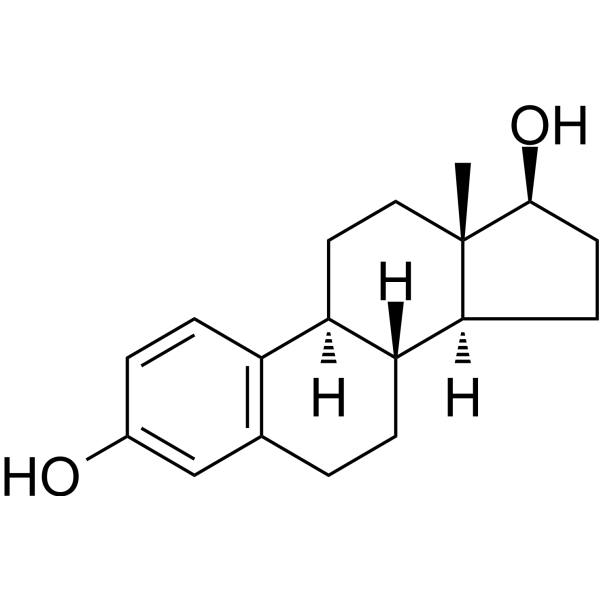
HY-B0141
EstradiolHuman Endogenous Metabolite -
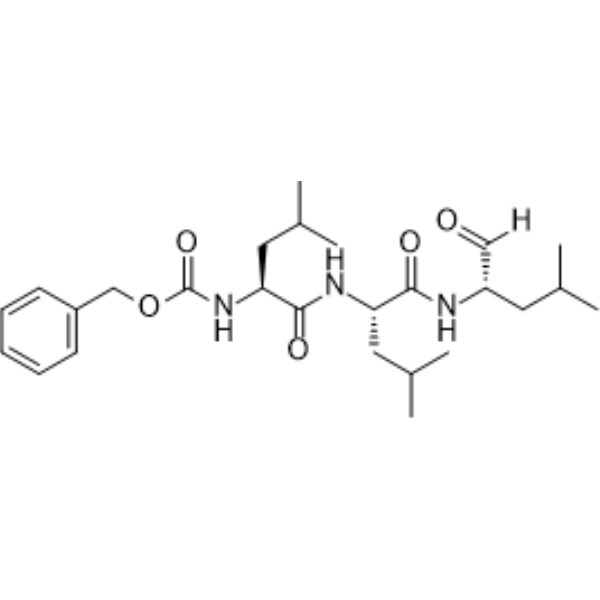
HY-13259
MG-132Proteasome Inhibitor -
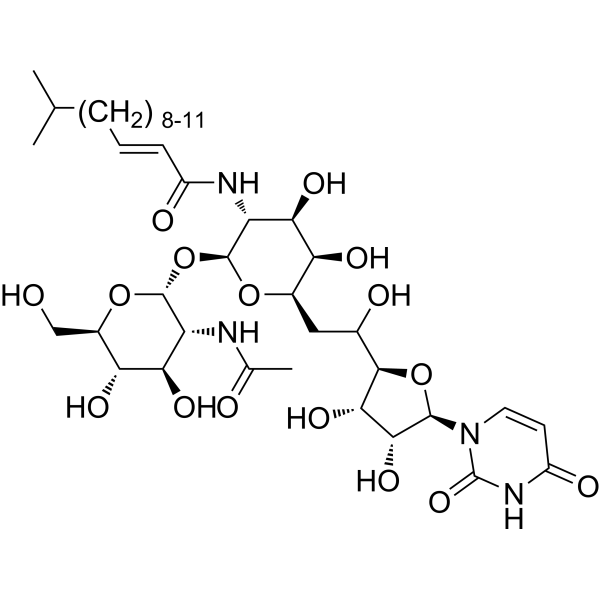
HY-A0098
TunicamycinER Stress Inducer -

HY-P2929D
PNGase F (MS grade)Glycosidase -
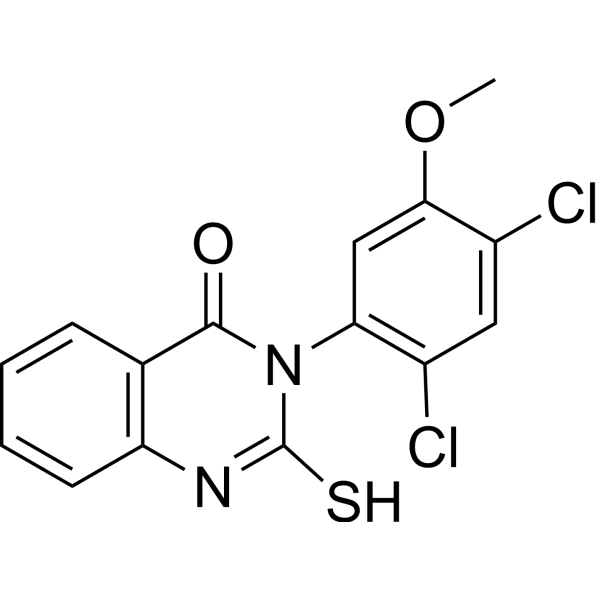
HY-15886
Mdivi-1Drp1 Inhibitor -
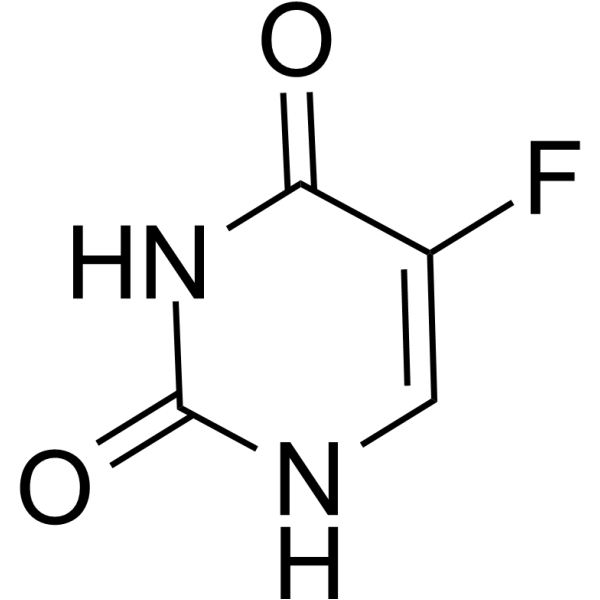
HY-90006
5-FluorouracilThymidylate Synthase Inhibitor -
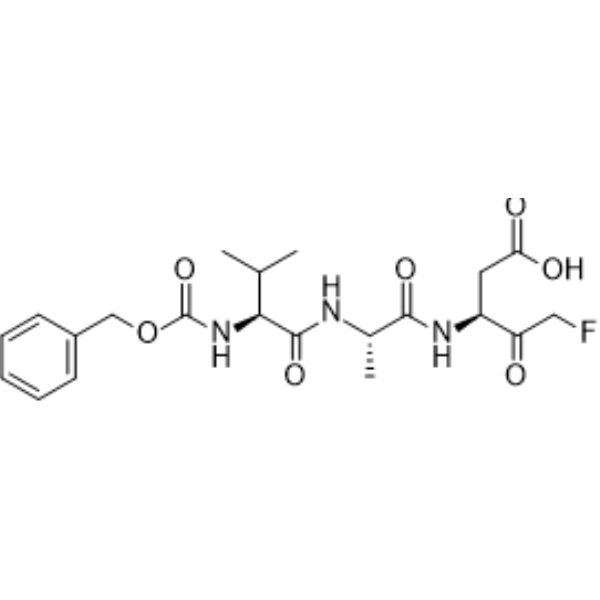
HY-16658B
Z-VAD-FMKPan-Caspase Inhibitor
Publications Citing Use of MedChemExpress (MCE) PNGase F
More

Biological Activity
Description
MCE Validation Data
In Vitro
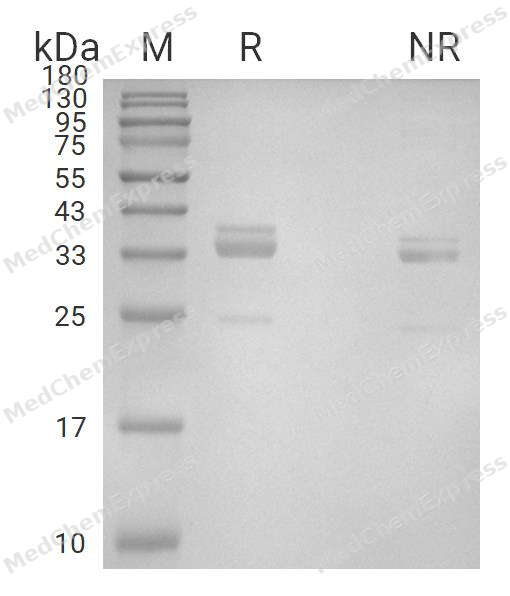
PNGase F (Peptide N-Glycosidase F) is derived from the gene of Elizabethkingia miricola and is expressed in E. coli, with a molecular weight of 35 kDa. PNGase F is an amidase that cleaves N-linked glycans from glycoproteins. It acts upon high-mannose, hybrid, and complex oligosaccharide types. The cleavage site is the glycosidic bond between the innermost N-acetylglucosamine residue and the asparagine residue; it is capable of releasing the vast majority of N-linked glycans (with the exception of those containing a core α-1,3-linked fucose). This enzyme is suitable for the efficient release of N-linked oligosaccharides from glycoproteins in proteomics and glycobiology research. The buffer composition consists of 20 mM Tris-HCl, 200 mM NaCl (pH 7.5), and 10% glycerol.
1. Deglycosylation of Glycoproteins under Denaturing Conditions
1) Dissolve 1-20 µg of glycoprotein in deionized water. Add 1 µL of 10× Glycoprotein Denaturing Buffer, and bring the final volume to 10 µL using deionized water.
2) Incubate at 75°C for 10 minutes.
3) Add 2 µL of 10× GlycoBuffer and 2 µL of 10% NP-40; gently pipette to mix.
4) Add 1-2 µL of PNGase F, bring the final volume to 20 µL using deionized water, and gently pipette to mix.
5) Incubate at 37°C for 1–3 hours.
6) Proceed with SDS-PAGE or HPLC analysis.
2. Glycoprotein Deglycosylation under Non-denaturing Conditions
1) Take 10-100 µg of glycoprotein solution, add 2 µL of 10×Glyco buffer, 2-5 µL of PNGase F (0.1-1 μg), and add purified water to make the total volume of the reaction system 20 µL. Mix gently.
2) Incubate at 37°C for 4-24 hours.
Note: When deglycosylating native glycoproteins, it is recommended to prepare an equal amount of the glycoprotein sample under denaturing conditions and perform a simultaneous enzymatic digestion as a positive control. This allows for the determination of the extent of the deglycosylation reaction under non-denaturing conditions.
| Specification | Type | Components | Volume | Quantity |
| 10 KU | A | PNGase F | 10 KU | 1 |
| 10 KU | B | 10× Glycoprotein Denaturing Buffer | 1 mL | 1 |
| 10 KU | C | 10× GlycoBuffer | 1 mL | 1 |
| 10 KU | D | 10% NP-40 | 1 mL | 1 |
MedChemExpress (MCE) has not independently confirmed the accuracy of these methods. They are for reference only. .
EC Number
3.5.1.52
Specific Activity
≥30000 U/mg protein
Unit Definition
One unit is defined as the amount of enzyme that more than 95% of carbohydrates were removed from denatured 10 μg RNase B at 37°C, reacting 1 hour, in a 10 μL reaction system.

Technical Parameters
-
Source
E.coli
-
Tag
N-terminal His-tag


Chemical Information
-
CAS No. 83534-39-8
-
Appearance Liquid
-
Molecular Weight 35 kDa
-
Color Colorless to light yellow
-
SMILES
[PNGase F]
-
Shipping
Room temperature in continental US; may vary elsewhere.
-
Storage
Please store the product under the recommended conditions in the Certificate of Analysis.


Publications (2)
-
Journal Impact Factor
-
Most Recent


Solvent & Solubility
In Vitro:
H2O : ≥ 100 mg/mL
* "≥" means soluble, but saturation unknown.


Purity & Documentation
-
Data Sheet (272 KB)
-
SDS (418 KB)
- English - EN (418 KB)
- Français - FR (418 KB)
- Deutsch - DE (418 KB)
- Norwegian - NO (418 KB)
- Español - ES (418 KB)
- Swedish - SV (418 KB)
- Italian - IT (418 KB)
- Korean - KR (418 KB)
- Portuguese - PT (418 KB)
-
Handling Instructions (2659 KB)
References
[1]. Vilaj M, et al. Evaluation of different PNGase F enzymes in immunoglobulin G and total plasma N-glycans analysis. Glycobiology. 2021 Jan 9;31(1):2-7. [Content Brief]
[2]. Huang J, et al. Highly Efficient Release of Glycopeptides from Hydrazide Beads by Hydroxylamine Assisted PNGase F Deglycosylation for N-Glycoproteome Analysis. Anal Chem. 2015 Oct 20;87(20):10199-204. [Content Brief]

Calculators
Concentration (start) × Volume (start) = Concentration (final) × Volume (final)


PNGase F Related Classifications
HY-P2929 Related Classifications
 Powered by Bioz