



Riboses
- 1
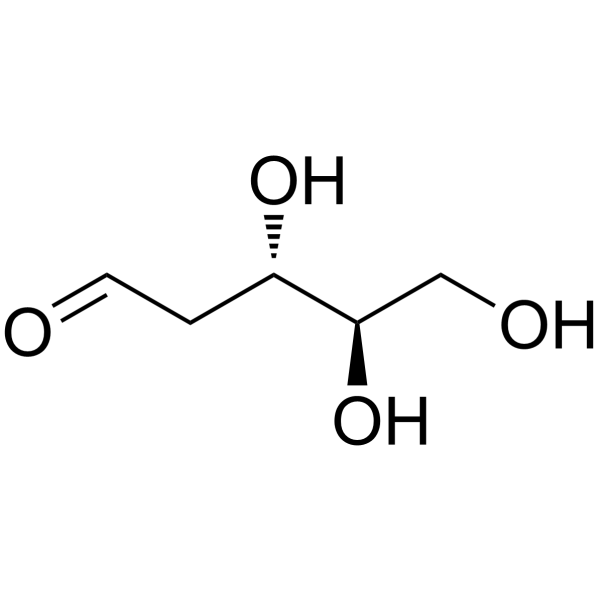
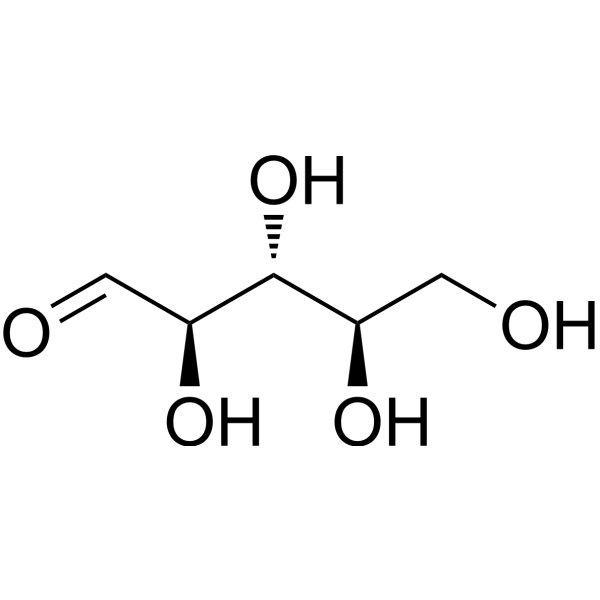
- Formula: C5H10O5
- Molecular Weight: 150.13
D-Ribose(mixture of isomers) is an energy enhancer, and acts as a sugar moiety of ATP, and widely used as a metabolic therapy supplement for chronic fatigue syndrome or cardiac energy metabolism. D-Ribose(mixture of isomers) is active in protein glycation, induces NF-κB inflammation in a RAGE-dependent manner.
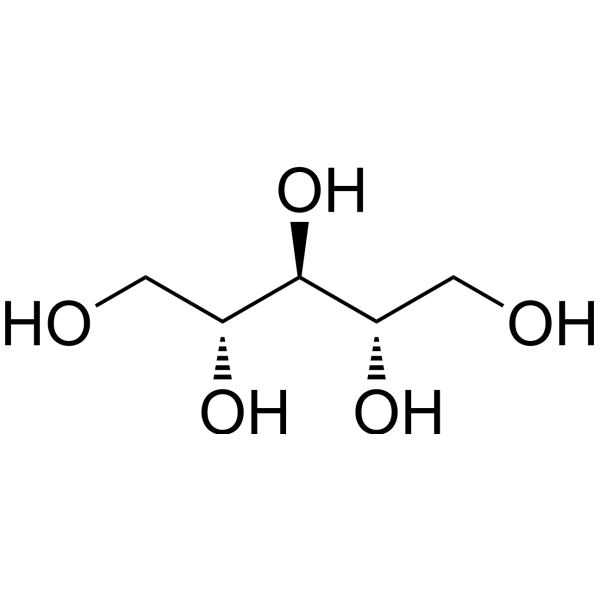
- Formula: C5H12O5
- Molecular Weight: 152.15
Ribitol is a crystalline pentose alcohol formed by the reduction of ribose. Enhancing the flux of D-glucose to the pentose phosphate pathway in Saccharomyces cerevisiae for the production of D-ribose and ribitol.

- Formula: C5H10O5
- Molecular Weight: 150.13
L-Ribose is the enantiomer of D-ribose (HY-113375). L-Ribose replaces D-ribose to synthesize L-ribonucleic acid in cells, leading to erroneous gene transcription. L-Ribose serves as a starting material for L-nucleoside analogs, glycoconjugates and oligonucleotides. L-Ribose can be used in research related to hepatitis B virus infection, hepatitis C virus infection, hepatitis D virus infection, Epstein-Barr virus infection and cytomegalovirus infection.
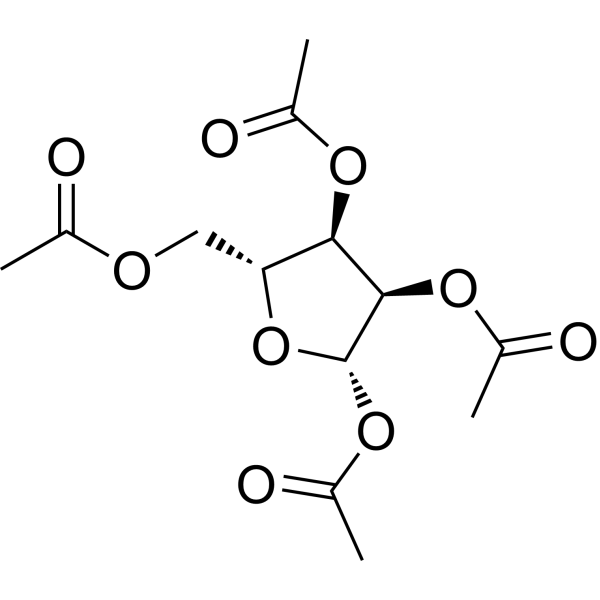
- Formula: C13H18O9
- Molecular Weight: 318.28
Beta-D-Ribofuranose 1,2,3,5-tetraacetate is a biochemical reagent that can be used as a biological material or organic compound for life science related research.
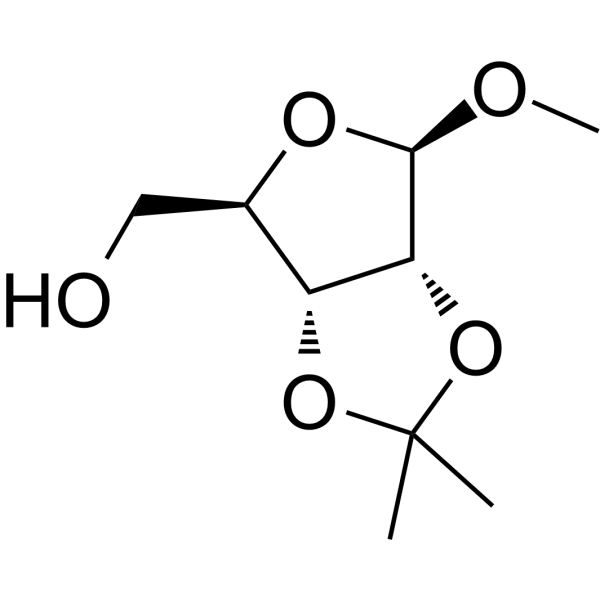
- Formula: C9H16O5
- Molecular Weight: 204.22
Methyl 2,3-O-Isopropylidene-β-D-ribofuranoside is a furanose derivative. Methyl 2,3-O-Isopropylidene-β-D-ribofuranoside serves as an important intermediate for the synthesis of compounds such as arsenic-containing ribosides.

- Formula: C6H12O5
- Molecular Weight: 164.16
Methyl β-D-ribofuranoside is a class of biochemical reagents used in glycobiology research. Glycobiology studies the structure, synthesis, biology, and evolution of sugars. It involves carbohydrate chemistry, enzymology of glycan formation and degradation, protein-glycan recognition, and the role of glycans in biological systems. This field is closely related to basic research, biomedicine, and biotechnology.

- Formula: C19H14F2O6
- Molecular Weight: 376.31
2-Deoxy-2,2-difluoro-D-erythro-pentonic acid γ-Lactone 3,5-dibenzoate is a chemically synthesized fluorinated carbohydrate derivative that can be used in glycobiology research.
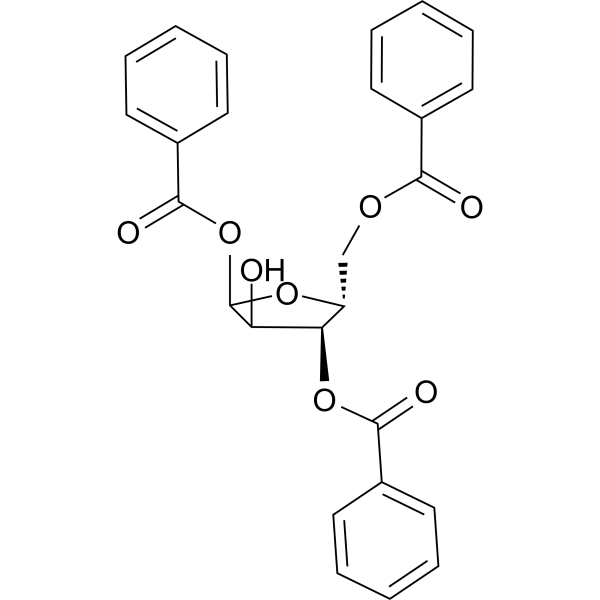
- Formula: C26H22O8
- Molecular Weight: 462.45
1,3,5-Tri-O-benzoyl-a-D-ribofuranose is a purine nucleoside analog. Purine nucleoside analogs have broad antitumor activity targeting indolent lymphoid malignancies. Anticancer mechanisms in this process rely on inhibition of DNA synthesis, induction of apoptosis, etc.

- Formula: C8H12O5
- Molecular Weight: 188.18
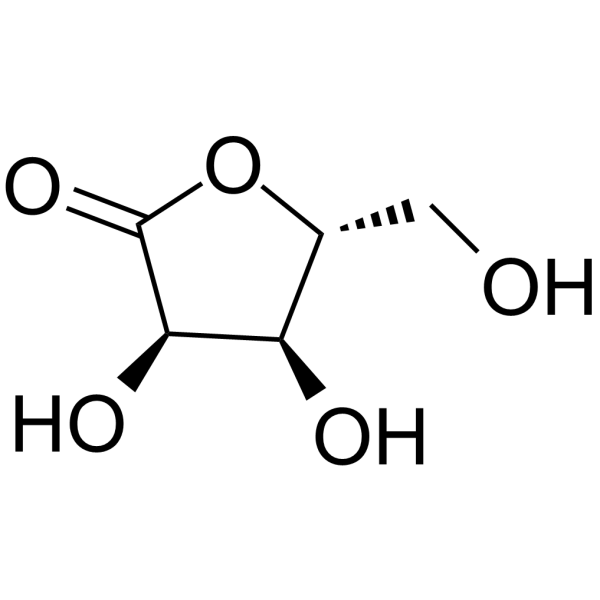
2,3-O-Isopropylidene-D-ribonolactone is an acetonide derivative of d-ribonolactone and an intermediate in organic synthesis.2,3-O-Isopropylidene-D-ribonolactone forms via acid-catalyzed acetalization of d-ribonolactone with acetone.2,3-O-Isopropylidene-D-ribonolactone facilitates production of 1,5-dideoxy-1,5-imino-d-ribitol and 1,5-dideoxy-1,5-imino-l-arabinitol.

- Formula: C8H14O5
- Molecular Weight: 190.19
2,3-O-(1-Methylethylidene)-D-ribose is a class of biochemical reagents used in glycobiology research. Glycobiology studies the structure, synthesis, biology, and evolution of sugars. It involves carbohydrate chemistry, enzymology of glycan formation and degradation, protein-glycan recognition, and the role of glycans in biological systems. This field is closely related to basic research, biomedicine, and biotechnology.
- 1



