






From 11:00 pm to 12:00 pm EST ( 8:00 pm to 9:00 pm PST ) on January 6th, the website will be under maintenance. We are sorry for the inconvenience. Please arrange your schedule properly.
I2959 is widely used as a photoinitiator for photochemical cross-linking of hydrogels, and the combination of I2959 and CMA hydrogel has been used as a bio-ink for biological 3Dprinting applications. In addition, I2959 has a high free radical generation efficiency and is cytotoxic to rapidly dividing cell lines .
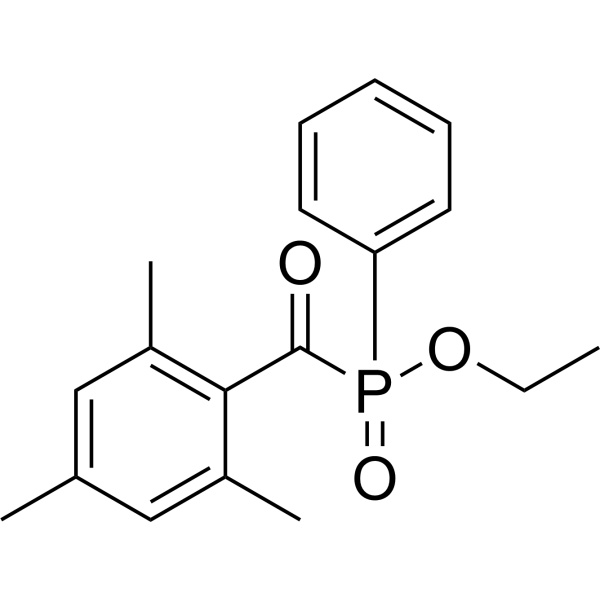
TPO-L is a photoinitiator for the 3Dprinting of resin that promotes two-photon induced polymerization. The two-photon absorption cross-section spectrum of Lucirin TPO-L shows a maximum of 1.2 GM at 610 nm. Despite its small two-photon absorption cross-section, Lucirin TPO-L exhibits high polymerization quantum yields .
Fish Gelatin,suitable for cell culture is an essential natural biopolymer. Fish Gelatin,suitable for cell culture can be isolated from fish processing by-products, such as fish skin, scales, bones and fish maw. Fish Gelatin,suitable for cell culture has been considered as a feasible substitute for mammalian gelatin. Modified Fish gelatin shows significant promise across various industries, including nanomaterials, 3Dprinting, thin films, coatings, and biopharmaceuticals. Fish Gelatin,suitable for cell culture can be used for cell culture .
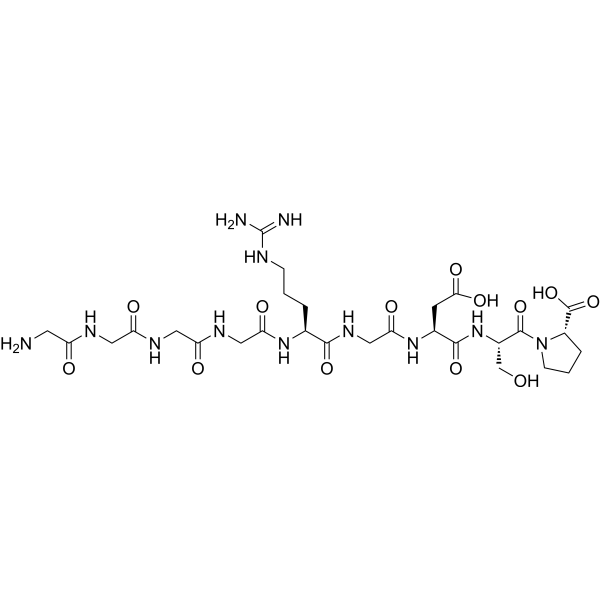
G4RGDSP, Integrin-binding peptide is a cell integrin-binding peptide that targets integrin receptors. G4RGDSP, integrin-binding peptide is coupled to alginate to increase the viability of cells in the scaffold. G4RGDSP, integrin-binding peptide can be used as an extrudable carrier for chondrocyte delivery for the study of 3Dprinting technology
Elastin Methacrylated (ElaMA) elastin recruits and modulates innate immune cells and accelerates angiogenesis at the wound site, thereby improving wound regeneration. Elastin Methacrylated attracts large numbers of neutrophils and primarily M2 macrophages to the wound and induces their penetration into the hydrogel. Elastin Methacrylated has excellent immunomodulatory effects, leading to superior angiogenesis, collagen deposition and dermal regeneration . Elastin Methacrylated needs to self-assemble into fibrous hydrogel under the action of photoinitiator LAP (HY-44076), and target bioactive adhesion sites, play an inherent supporting role for tissue cells and biodegradable activity. Application: cell culture, biological 3Dprinting, tissue engineering, etc.
Heparin Methacrylate (HepMA) is methacrylated heparin and is an ideal tissue engineering scaffold material and 3Dprinting bioink . Heparin Methacrylate needs to self-assemble into fibrous hydrogel under the action of photoinitiator LAP (HY-44076), and target bioactive adhesion sites, play an inherent supporting role for tissue cells and biodegradable activity. Application: cell culture, biological 3Dprinting, tissue engineering, etc.
Alginate Methacryloyl (MW 300000) is a methacryloyl alginate with potential for use as a tissue engineering scaffold and 3Dprinting ink. Alginate Methacryloyl (MW 300000) is biocompatible, non-immunogenic, has low toxicity and is capable of physical cross-linking with divalent cations such as calcium . Alginate Methacryloyl (MW 300000) needs to self-assemble into fibrous hydrogel under the action of photoinitiator LAP (HY-44076), and target bioactive adhesion sites, play an inherent supporting role for tissue cells and biodegradable activity. Application: cell culture, biological 3Dprinting, tissue engineering, etc.
Trimethylolpropane ethoxylate triacrylate (MW 912) (ETPTA (MW 912); TMPETA (MW 912)) is a trifunctional acrylate monomer with multiple acrylate functional groups, which can be used in polymerization and crosslinking reactions. Trimethylolpropane ethoxylate triacrylate (MW 912) is widely used in the preparation of cured resins for 3Dprinting, optical coatings for display devices, and dental composite restorative materials .
Alginate Methacryloyl (MW 50000) is a methacryloyl alginate with potential for use as a tissue engineering scaffold and 3Dprinting ink. Alginate Methacryloyl (MW 50000) is biocompatible, non-immunogenic, has low toxicity and is capable of physical cross-linking with divalent cations such as calcium . Alginate Methacryloyl (MW 50000) needs to self-assemble into fibrous hydrogel under the action of photoinitiator LAP (HY-44076), and target bioactive adhesion sites, play an inherent supporting role for tissue cells and biodegradable activity. Application: cell culture, biological 3Dprinting, tissue engineering, etc.
Methacrylated Type I collagen (Col1MA) is a methacrylated tissue engineering scaffold material that retains the basic properties of natural collagen . Methacrylated Type I collagen needs to self-assemble into fibrous hydrogel under the action of photoinitiator LAP (HY-44076), and target bioactive adhesion sites, play an inherent supporting role for tissue cells and biodegradable activity. Application: cell culture, biological 3Dprinting, tissue engineering, etc.
Hyaluronic acid Methacryloyl (HAMA) is methacrylated hyaluronic acid that is biocompatible. Hyaluronic acid Methacryloyl is also used as a 3Dprinting hydrogel ink, which has the characteristics of fast photosensitive response, fast gelation speed and stable hydrogel performance. Hyaluronic acid Methacryloyl can quickly induce gelation with lithium phenyl-2,4,6-trimethylbenzoylphosphinate (LAP) under UV irradiation. The combination of Hyaluronic acid Methacryloyl and tissue-specific extracellular matrix (ECM) materials (such as pancreatic extracellular matrix (pECM)) will become an important source material for organoid culture .
Hyaluronic acid Methacryloyl (HAMA) MW 150 kDa is methacrylated hyaluronic acid that is biocompatible. Hyaluronic acid Methacryloyl is also used as a 3Dprinting hydrogel ink, which has the characteristics of fast photosensitive response, fast gelation speed and stable hydrogel performance. Hyaluronic acid Methacryloyl can quickly induce gelation with lithium phenyl-2,4,6-trimethylbenzoylphosphinate (LAP) under UV irradiation. The combination of Hyaluronic acid Methacryloyl and tissue-specific extracellular matrix (ECM) materials (such as pancreatic extracellular matrix (pECM)) will become an important source material for organoid culture .
Red Fluorescent Gelatin Methacryloyl (Red Fluorescent GelMA) is methacryloyl gelatin (GelMA) with red fluorescence, which is obtained by "grafting" fluorescent molecules on GelMA. Red Fluorescent Gelatin Methacryloyl acts as a scaffold and can be used to engineer tissue analogs from the vasculature to cartilage and bone, allowing cells to proliferate and spread . GelMA, 30% methacrylation, Red Fluorescent needs to self-assemble into fibrous hydrogel under the action of photoinitiator LAP (HY-44076), and target bioactive adhesion sites, play an inherent supporting role for tissue cells and biodegradable activity. Application: cell culture, biological 3Dprinting, tissue engineering, etc.
Silk Fibroin Methacryloyl (FibMA) is methacrylated silk fibroin with excellent biocompatibility, stable mechanical properties and good processing properties, and was selected as the substrate for multifunctional microneedle (MN) patches. . MN patches made of Silk Fibroin Methacryloyl exhibit excellent biocompatibility, sustained drug release, pro-angiogenic, antioxidant and antibacterial properties depending on the specific drug encapsulated . Silk Fibroin Methacryloyl needs to self-assemble into fibrous hydrogel under the action of photoinitiator LAP (HY-44076), and target bioactive adhesion sites, play an inherent supporting role for tissue cells and biodegradable activity. Application: cell culture, biological 3Dprinting, tissue engineering, etc.
Carboxymethyl chitosan Methacryloyl (CMCSMA) is methacrylated carboxymethyl chitosan with properties as a 3Dprinting ink. A composite hydrogel made of Carboxymethyl chitosan Methacryloyl can effectively accelerate bone healing in an infectious microenvironment after implantation in a rat model of Staphylococcus aureus-infected femoral defect . Carboxymethyl chitosan Methacryloyl needs to self-assemble into fibrous hydrogel under the action of photoinitiator LAP (HY-44076), and target bioactive adhesion sites, play an inherent supporting role for tissue cells and biodegradable activity. Application: cell culture, biological 3Dprinting, tissue engineering, etc.
Chondroitin Sulfate Methacryloyl (CSMA) is methacrylated chondroitin sulfate and is biocompatible. Chondroitin Sulfate Methacryloyl has a higher degree of methacrylation than HAMA (HY-158220), and the degree of methacrylation is closely related to customizable mechanical properties, swelling properties and enzymatic degradability. Chondroitin Sulfate Methacryloyl is a versatile biomaterial suitable for biomimetic hydrogel scaffolds and an ideal 3Dprinting hydrogel ink . Chondroitin Sulfate Methacryloyl needs to self-assemble into fibrous hydrogel under the action of photoinitiator LAP (HY-44076), and target bioactive adhesion sites, play an inherent supporting role for tissue cells and biodegradable activity. Application: cell culture, biological 3Dprinting, tissue engineering, etc.
Poly-L-lysine Methacryloyl (PLMA) is methacrylated polylysine. When Poly-L-lysine Methacryloyl is cross-linked on polyetheretherketone (PEEK) through UV-induced cross-linking, it can improve the hydrophilicity of PEEK and retain its own degradation bioinertness . Poly-L-lysine Methacryloyl needs to self-assemble into fibrous hydrogel under the action of photoinitiator LAP (HY-44076), and target bioactive adhesion sites, play an inherent supporting role for tissue cells and biodegradable activity. Application: cell culture, biological 3Dprinting, tissue engineering, etc.
Green Fluorescent Gelatin Methacryloyl (Green Fluorescent GelMA) is methacryloyl gelatin (GelMA) with green fluorescence, which is obtained by "grafting" fluorescent molecules on GelMA. Green Fluorescent Gelatin Methacryloyl acts as a scaffold and can be used to engineer tissue analogs from the vasculature to cartilage and bone, allowing cells to proliferate and spread . GelMA, 30% methacrylation, Green Fluorescent needs to self-assemble into fibrous hydrogel under the action of photoinitiator LAP (HY-44076), and target bioactive adhesion sites, play an inherent supporting role for tissue cells and biodegradable activity. Application: cell culture, biological 3Dprinting, tissue engineering, etc.
Green Fluorescent Gelatin Methacryloyl (Green Fluorescent GelMA) is methacryloyl gelatin (GelMA) with green fluorescence, which is obtained by "grafting" fluorescent molecules on GelMA. Green Fluorescent Gelatin Methacryloyl acts as a scaffold and can be used to engineer tissue analogs from the vasculature to cartilage and bone, allowing cells to proliferate and spread . GelMA, 60% methacrylation, Green Fluorescent needs to self-assemble into fibrous hydrogel under the action of photoinitiator LAP (HY-44076), and target bioactive adhesion sites, play an inherent supporting role for tissue cells and biodegradable activity. Application: cell culture, biological 3Dprinting, tissue engineering, etc.
Red Fluorescent Gelatin Methacryloyl (Red Fluorescent GelMA) is methacryloyl gelatin (GelMA) with red fluorescence, which is obtained by "grafting" fluorescent molecules on GelMA. Red Fluorescent Gelatin Methacryloyl acts as a scaffold and can be used to engineer tissue analogs from the vasculature to cartilage and bone, allowing cells to proliferate and spread . GelMA, 60% methacrylation, Red Fluorescent needs to self-assemble into fibrous hydrogel under the action of photoinitiator LAP (HY-44076), and target bioactive adhesion sites, play an inherent supporting role for tissue cells and biodegradable activity. Application: cell culture, biological 3Dprinting, tissue engineering, etc.
Red Fluorescent Gelatin Methacryloyl (Red Fluorescent GelMA) is methacryloyl gelatin (GelMA) with red fluorescence, which is obtained by "grafting" fluorescent molecules on GelMA. Red Fluorescent Gelatin Methacryloyl acts as a scaffold and can be used to engineer tissue analogs from the vasculature to cartilage and bone, allowing cells to proliferate and spread . GelMA, 90% methacrylation, Red Fluorescent needs to self-assemble into fibrous hydrogel under the action of photoinitiator LAP (HY-44076), and target bioactive adhesion sites, play an inherent supporting role for tissue cells and biodegradable activity. Application: cell culture, biological 3Dprinting, tissue engineering, etc.
Dextran Methacryloyl (MW 200000) is a methacryloyl dextran that converts into cell matrix gels. Dextran Methacryloyl (MW 200000) formed gels that had no cytotoxic effects on fibroblasts, but cells adhered only inefficiently in long-term experiments . Dextran Methacryloyl (MW 200000) needs to self-assemble into fibrous hydrogel under the action of photoinitiator LAP (HY-44076), and target bioactive adhesion sites, play an inherent supporting role for tissue cells and biodegradable activity. Application: cell culture, biological 3Dprinting, tissue engineering, etc.
Gelatin Methacryloyl (GelMA), 60% methacrylation, blue fluorescent is methacrylated gelatin (GelMA) with blue fluorescence, which is obtained by "grafting" fluorescent molecules on GelMA. Gelatin Methacryloyl, 60% methacrylation, blue fluorescent has a scaffolding effect and can be used to design tissue analogs from vasculature to cartilage and bone, allowing cell proliferation and spreading. Gelatin Methacryloyl, 30% methacrylation, blue fluorescent needs to be self-assembled into fibrous hydrogels under the action of the photoinitiator LAP (HY-44076), and target bioactive adhesion sites, exert inherent support for tissue cells and biodegradation activity. Application direction: cell culture, biological 3Dprinting, tissue engineering, etc.
Gelatin Methacryloyl (GelMA), 30% methacrylation, blue fluorescent is methacrylated gelatin (GelMA) with blue fluorescence, which is obtained by "grafting" fluorescent molecules on GelMA. Gelatin Methacryloyl, 30% methacrylation, blue fluorescent has a scaffolding effect and can be used to design tissue analogs from vasculature to cartilage and bone, allowing cell proliferation and spreading. Gelatin Methacryloyl, 30% methacrylation, blue fluorescent needs to be self-assembled into fibrous hydrogels under the action of the photoinitiator LAP (HY-44076), and target bioactive adhesion sites, exert inherent support for tissue cells and biodegradation activity. Application direction: cell culture, biological 3Dprinting, tissue engineering, etc.
Gelatin Methacryloyl (GelMA), 90% methacrylation, blue fluorescent is methacrylated gelatin (GelMA) with blue fluorescence, which is obtained by "grafting" fluorescent molecules on GelMA. Gelatin Methacryloyl, 90% methacrylation, blue fluorescent has a scaffolding effect and can be used to design tissue analogs from vasculature to cartilage and bone, allowing cell proliferation and spreading. Gelatin Methacryloyl, 30% methacrylation, blue fluorescent needs to be self-assembled into fibrous hydrogels under the action of the photoinitiator LAP (HY-44076), and target bioactive adhesion sites, exert inherent support for tissue cells and biodegradation activity. Application direction: cell culture, biological 3Dprinting, tissue engineering, etc.
Dextran Methacryloyl (MW 500000) is a methacryloyl dextran that converts into cell matrix gels. Dextran Methacryloyl (MW 500000) formed gels that had no cytotoxic effects on fibroblasts, but cells adhered only inefficiently in long-term experiments . Dextran Methacryloyl (MW 500000) needs to self-assemble into fibrous hydrogel under the action of photoinitiator LAP (HY-44076), and target bioactive adhesion sites, play an inherent supporting role for tissue cells and biodegradable activity. Application: cell culture, biological 3Dprinting, tissue engineering, etc.
Green Fluorescent Gelatin Methacryloyl (Green Fluorescent GelMA) is methacryloyl gelatin (GelMA) with green fluorescence, which is obtained by "grafting" fluorescent molecules on GelMA. Green Fluorescent Gelatin Methacryloyl acts as a scaffold and can be used to engineer tissue analogs from the vasculature to cartilage and bone, allowing cells to proliferate and spread . GelMA, 90% methacrylation, Green Fluorescent needs to self-assemble into fibrous hydrogel under the action of photoinitiator LAP (HY-44076), and target bioactive adhesion sites, play an inherent supporting role for tissue cells and biodegradable activity. Application: cell culture, biological 3Dprinting, tissue engineering, etc.
I2959 is widely used as a photoinitiator for photochemical cross-linking of hydrogels, and the combination of I2959 and CMA hydrogel has been used as a bio-ink for biological 3Dprinting applications. In addition, I2959 has a high free radical generation efficiency and is cytotoxic to rapidly dividing cell lines .
TPO-L is a photoinitiator for the 3Dprinting of resin that promotes two-photon induced polymerization. The two-photon absorption cross-section spectrum of Lucirin TPO-L shows a maximum of 1.2 GM at 610 nm. Despite its small two-photon absorption cross-section, Lucirin TPO-L exhibits high polymerization quantum yields .
Fish Gelatin,suitable for cell culture is an essential natural biopolymer. Fish Gelatin,suitable for cell culture can be isolated from fish processing by-products, such as fish skin, scales, bones and fish maw. Fish Gelatin,suitable for cell culture has been considered as a feasible substitute for mammalian gelatin. Modified Fish gelatin shows significant promise across various industries, including nanomaterials, 3Dprinting, thin films, coatings, and biopharmaceuticals. Fish Gelatin,suitable for cell culture can be used for cell culture .
Elastin Methacrylated (ElaMA) elastin recruits and modulates innate immune cells and accelerates angiogenesis at the wound site, thereby improving wound regeneration. Elastin Methacrylated attracts large numbers of neutrophils and primarily M2 macrophages to the wound and induces their penetration into the hydrogel. Elastin Methacrylated has excellent immunomodulatory effects, leading to superior angiogenesis, collagen deposition and dermal regeneration . Elastin Methacrylated needs to self-assemble into fibrous hydrogel under the action of photoinitiator LAP (HY-44076), and target bioactive adhesion sites, play an inherent supporting role for tissue cells and biodegradable activity. Application: cell culture, biological 3Dprinting, tissue engineering, etc.
Heparin Methacrylate (HepMA) is methacrylated heparin and is an ideal tissue engineering scaffold material and 3Dprinting bioink . Heparin Methacrylate needs to self-assemble into fibrous hydrogel under the action of photoinitiator LAP (HY-44076), and target bioactive adhesion sites, play an inherent supporting role for tissue cells and biodegradable activity. Application: cell culture, biological 3Dprinting, tissue engineering, etc.
Alginate Methacryloyl (MW 300000) is a methacryloyl alginate with potential for use as a tissue engineering scaffold and 3Dprinting ink. Alginate Methacryloyl (MW 300000) is biocompatible, non-immunogenic, has low toxicity and is capable of physical cross-linking with divalent cations such as calcium . Alginate Methacryloyl (MW 300000) needs to self-assemble into fibrous hydrogel under the action of photoinitiator LAP (HY-44076), and target bioactive adhesion sites, play an inherent supporting role for tissue cells and biodegradable activity. Application: cell culture, biological 3Dprinting, tissue engineering, etc.
Trimethylolpropane ethoxylate triacrylate (MW 912) (ETPTA (MW 912); TMPETA (MW 912)) is a trifunctional acrylate monomer with multiple acrylate functional groups, which can be used in polymerization and crosslinking reactions. Trimethylolpropane ethoxylate triacrylate (MW 912) is widely used in the preparation of cured resins for 3Dprinting, optical coatings for display devices, and dental composite restorative materials .
Alginate Methacryloyl (MW 50000) is a methacryloyl alginate with potential for use as a tissue engineering scaffold and 3Dprinting ink. Alginate Methacryloyl (MW 50000) is biocompatible, non-immunogenic, has low toxicity and is capable of physical cross-linking with divalent cations such as calcium . Alginate Methacryloyl (MW 50000) needs to self-assemble into fibrous hydrogel under the action of photoinitiator LAP (HY-44076), and target bioactive adhesion sites, play an inherent supporting role for tissue cells and biodegradable activity. Application: cell culture, biological 3Dprinting, tissue engineering, etc.
Methacrylated Type I collagen (Col1MA) is a methacrylated tissue engineering scaffold material that retains the basic properties of natural collagen . Methacrylated Type I collagen needs to self-assemble into fibrous hydrogel under the action of photoinitiator LAP (HY-44076), and target bioactive adhesion sites, play an inherent supporting role for tissue cells and biodegradable activity. Application: cell culture, biological 3Dprinting, tissue engineering, etc.
Hyaluronic acid Methacryloyl (HAMA) is methacrylated hyaluronic acid that is biocompatible. Hyaluronic acid Methacryloyl is also used as a 3Dprinting hydrogel ink, which has the characteristics of fast photosensitive response, fast gelation speed and stable hydrogel performance. Hyaluronic acid Methacryloyl can quickly induce gelation with lithium phenyl-2,4,6-trimethylbenzoylphosphinate (LAP) under UV irradiation. The combination of Hyaluronic acid Methacryloyl and tissue-specific extracellular matrix (ECM) materials (such as pancreatic extracellular matrix (pECM)) will become an important source material for organoid culture .
Hyaluronic acid Methacryloyl (HAMA) MW 150 kDa is methacrylated hyaluronic acid that is biocompatible. Hyaluronic acid Methacryloyl is also used as a 3Dprinting hydrogel ink, which has the characteristics of fast photosensitive response, fast gelation speed and stable hydrogel performance. Hyaluronic acid Methacryloyl can quickly induce gelation with lithium phenyl-2,4,6-trimethylbenzoylphosphinate (LAP) under UV irradiation. The combination of Hyaluronic acid Methacryloyl and tissue-specific extracellular matrix (ECM) materials (such as pancreatic extracellular matrix (pECM)) will become an important source material for organoid culture .
Red Fluorescent Gelatin Methacryloyl (Red Fluorescent GelMA) is methacryloyl gelatin (GelMA) with red fluorescence, which is obtained by "grafting" fluorescent molecules on GelMA. Red Fluorescent Gelatin Methacryloyl acts as a scaffold and can be used to engineer tissue analogs from the vasculature to cartilage and bone, allowing cells to proliferate and spread . GelMA, 30% methacrylation, Red Fluorescent needs to self-assemble into fibrous hydrogel under the action of photoinitiator LAP (HY-44076), and target bioactive adhesion sites, play an inherent supporting role for tissue cells and biodegradable activity. Application: cell culture, biological 3Dprinting, tissue engineering, etc.
Silk Fibroin Methacryloyl (FibMA) is methacrylated silk fibroin with excellent biocompatibility, stable mechanical properties and good processing properties, and was selected as the substrate for multifunctional microneedle (MN) patches. . MN patches made of Silk Fibroin Methacryloyl exhibit excellent biocompatibility, sustained drug release, pro-angiogenic, antioxidant and antibacterial properties depending on the specific drug encapsulated . Silk Fibroin Methacryloyl needs to self-assemble into fibrous hydrogel under the action of photoinitiator LAP (HY-44076), and target bioactive adhesion sites, play an inherent supporting role for tissue cells and biodegradable activity. Application: cell culture, biological 3Dprinting, tissue engineering, etc.
Carboxymethyl chitosan Methacryloyl (CMCSMA) is methacrylated carboxymethyl chitosan with properties as a 3Dprinting ink. A composite hydrogel made of Carboxymethyl chitosan Methacryloyl can effectively accelerate bone healing in an infectious microenvironment after implantation in a rat model of Staphylococcus aureus-infected femoral defect . Carboxymethyl chitosan Methacryloyl needs to self-assemble into fibrous hydrogel under the action of photoinitiator LAP (HY-44076), and target bioactive adhesion sites, play an inherent supporting role for tissue cells and biodegradable activity. Application: cell culture, biological 3Dprinting, tissue engineering, etc.
Chondroitin Sulfate Methacryloyl (CSMA) is methacrylated chondroitin sulfate and is biocompatible. Chondroitin Sulfate Methacryloyl has a higher degree of methacrylation than HAMA (HY-158220), and the degree of methacrylation is closely related to customizable mechanical properties, swelling properties and enzymatic degradability. Chondroitin Sulfate Methacryloyl is a versatile biomaterial suitable for biomimetic hydrogel scaffolds and an ideal 3Dprinting hydrogel ink . Chondroitin Sulfate Methacryloyl needs to self-assemble into fibrous hydrogel under the action of photoinitiator LAP (HY-44076), and target bioactive adhesion sites, play an inherent supporting role for tissue cells and biodegradable activity. Application: cell culture, biological 3Dprinting, tissue engineering, etc.
Poly-L-lysine Methacryloyl (PLMA) is methacrylated polylysine. When Poly-L-lysine Methacryloyl is cross-linked on polyetheretherketone (PEEK) through UV-induced cross-linking, it can improve the hydrophilicity of PEEK and retain its own degradation bioinertness . Poly-L-lysine Methacryloyl needs to self-assemble into fibrous hydrogel under the action of photoinitiator LAP (HY-44076), and target bioactive adhesion sites, play an inherent supporting role for tissue cells and biodegradable activity. Application: cell culture, biological 3Dprinting, tissue engineering, etc.
Green Fluorescent Gelatin Methacryloyl (Green Fluorescent GelMA) is methacryloyl gelatin (GelMA) with green fluorescence, which is obtained by "grafting" fluorescent molecules on GelMA. Green Fluorescent Gelatin Methacryloyl acts as a scaffold and can be used to engineer tissue analogs from the vasculature to cartilage and bone, allowing cells to proliferate and spread . GelMA, 30% methacrylation, Green Fluorescent needs to self-assemble into fibrous hydrogel under the action of photoinitiator LAP (HY-44076), and target bioactive adhesion sites, play an inherent supporting role for tissue cells and biodegradable activity. Application: cell culture, biological 3Dprinting, tissue engineering, etc.
Green Fluorescent Gelatin Methacryloyl (Green Fluorescent GelMA) is methacryloyl gelatin (GelMA) with green fluorescence, which is obtained by "grafting" fluorescent molecules on GelMA. Green Fluorescent Gelatin Methacryloyl acts as a scaffold and can be used to engineer tissue analogs from the vasculature to cartilage and bone, allowing cells to proliferate and spread . GelMA, 60% methacrylation, Green Fluorescent needs to self-assemble into fibrous hydrogel under the action of photoinitiator LAP (HY-44076), and target bioactive adhesion sites, play an inherent supporting role for tissue cells and biodegradable activity. Application: cell culture, biological 3Dprinting, tissue engineering, etc.
Red Fluorescent Gelatin Methacryloyl (Red Fluorescent GelMA) is methacryloyl gelatin (GelMA) with red fluorescence, which is obtained by "grafting" fluorescent molecules on GelMA. Red Fluorescent Gelatin Methacryloyl acts as a scaffold and can be used to engineer tissue analogs from the vasculature to cartilage and bone, allowing cells to proliferate and spread . GelMA, 60% methacrylation, Red Fluorescent needs to self-assemble into fibrous hydrogel under the action of photoinitiator LAP (HY-44076), and target bioactive adhesion sites, play an inherent supporting role for tissue cells and biodegradable activity. Application: cell culture, biological 3Dprinting, tissue engineering, etc.
Red Fluorescent Gelatin Methacryloyl (Red Fluorescent GelMA) is methacryloyl gelatin (GelMA) with red fluorescence, which is obtained by "grafting" fluorescent molecules on GelMA. Red Fluorescent Gelatin Methacryloyl acts as a scaffold and can be used to engineer tissue analogs from the vasculature to cartilage and bone, allowing cells to proliferate and spread . GelMA, 90% methacrylation, Red Fluorescent needs to self-assemble into fibrous hydrogel under the action of photoinitiator LAP (HY-44076), and target bioactive adhesion sites, play an inherent supporting role for tissue cells and biodegradable activity. Application: cell culture, biological 3Dprinting, tissue engineering, etc.
Dextran Methacryloyl (MW 200000) is a methacryloyl dextran that converts into cell matrix gels. Dextran Methacryloyl (MW 200000) formed gels that had no cytotoxic effects on fibroblasts, but cells adhered only inefficiently in long-term experiments . Dextran Methacryloyl (MW 200000) needs to self-assemble into fibrous hydrogel under the action of photoinitiator LAP (HY-44076), and target bioactive adhesion sites, play an inherent supporting role for tissue cells and biodegradable activity. Application: cell culture, biological 3Dprinting, tissue engineering, etc.
Gelatin Methacryloyl (GelMA), 60% methacrylation, blue fluorescent is methacrylated gelatin (GelMA) with blue fluorescence, which is obtained by "grafting" fluorescent molecules on GelMA. Gelatin Methacryloyl, 60% methacrylation, blue fluorescent has a scaffolding effect and can be used to design tissue analogs from vasculature to cartilage and bone, allowing cell proliferation and spreading. Gelatin Methacryloyl, 30% methacrylation, blue fluorescent needs to be self-assembled into fibrous hydrogels under the action of the photoinitiator LAP (HY-44076), and target bioactive adhesion sites, exert inherent support for tissue cells and biodegradation activity. Application direction: cell culture, biological 3Dprinting, tissue engineering, etc.
Gelatin Methacryloyl (GelMA), 30% methacrylation, blue fluorescent is methacrylated gelatin (GelMA) with blue fluorescence, which is obtained by "grafting" fluorescent molecules on GelMA. Gelatin Methacryloyl, 30% methacrylation, blue fluorescent has a scaffolding effect and can be used to design tissue analogs from vasculature to cartilage and bone, allowing cell proliferation and spreading. Gelatin Methacryloyl, 30% methacrylation, blue fluorescent needs to be self-assembled into fibrous hydrogels under the action of the photoinitiator LAP (HY-44076), and target bioactive adhesion sites, exert inherent support for tissue cells and biodegradation activity. Application direction: cell culture, biological 3Dprinting, tissue engineering, etc.
Gelatin Methacryloyl (GelMA), 90% methacrylation, blue fluorescent is methacrylated gelatin (GelMA) with blue fluorescence, which is obtained by "grafting" fluorescent molecules on GelMA. Gelatin Methacryloyl, 90% methacrylation, blue fluorescent has a scaffolding effect and can be used to design tissue analogs from vasculature to cartilage and bone, allowing cell proliferation and spreading. Gelatin Methacryloyl, 30% methacrylation, blue fluorescent needs to be self-assembled into fibrous hydrogels under the action of the photoinitiator LAP (HY-44076), and target bioactive adhesion sites, exert inherent support for tissue cells and biodegradation activity. Application direction: cell culture, biological 3Dprinting, tissue engineering, etc.
Dextran Methacryloyl (MW 500000) is a methacryloyl dextran that converts into cell matrix gels. Dextran Methacryloyl (MW 500000) formed gels that had no cytotoxic effects on fibroblasts, but cells adhered only inefficiently in long-term experiments . Dextran Methacryloyl (MW 500000) needs to self-assemble into fibrous hydrogel under the action of photoinitiator LAP (HY-44076), and target bioactive adhesion sites, play an inherent supporting role for tissue cells and biodegradable activity. Application: cell culture, biological 3Dprinting, tissue engineering, etc.
Green Fluorescent Gelatin Methacryloyl (Green Fluorescent GelMA) is methacryloyl gelatin (GelMA) with green fluorescence, which is obtained by "grafting" fluorescent molecules on GelMA. Green Fluorescent Gelatin Methacryloyl acts as a scaffold and can be used to engineer tissue analogs from the vasculature to cartilage and bone, allowing cells to proliferate and spread . GelMA, 90% methacrylation, Green Fluorescent needs to self-assemble into fibrous hydrogel under the action of photoinitiator LAP (HY-44076), and target bioactive adhesion sites, play an inherent supporting role for tissue cells and biodegradable activity. Application: cell culture, biological 3Dprinting, tissue engineering, etc.
G4RGDSP, Integrin-binding peptide is a cell integrin-binding peptide that targets integrin receptors. G4RGDSP, integrin-binding peptide is coupled to alginate to increase the viability of cells in the scaffold. G4RGDSP, integrin-binding peptide can be used as an extrudable carrier for chondrocyte delivery for the study of 3Dprinting technology
Inquiry Online
Your information is safe with us. * Required Fields.
Western blot analysis of extracts from THP-1(lane 2(20μg), Jurkat (lane 3(20μg) and NIH3T3(lane 4(20μg) using FOXO1A (HY-P80132) Rabbit mAb. Proteins were transferred
to a PVDF membrane and blocked with 5% non-fat milk in TBST for 2 hour at room temperature. The primary antibody (1/1000) and Loading control antibody (Beta Actin, HY-P80438, 1/10000) was
used in 5% non-fat milk in TBST at 4°C overnight. Goat Anti-Mouse/Rabbit IgG-HRP Secondary Antibody (1/10000) was used for 1 hour at room temperature.
Western blot analysis of extracts from THP-1(lane 2(20μg), Jurkat (lane 3(20μg) and NIH3T3(lane 4(20μg) using FOXO1A (HY-P80132) Rabbit mAb. Proteins were transferred
to a PVDF membrane and blocked with 5% non-fat milk in TBST for 2 hour at room temperature. The primary antibody (1/1000) and Loading control antibody (Beta Actin, HY-P80438, 1/10000) was
used in 5% non-fat milk in TBST at 4°C overnight. Goat Anti-Mouse/Rabbit IgG-HRP Secondary Antibody (1/10000) was used for 1 hour at room temperature.
Western blot analysis of extracts from THP-1(lane 2(20μg), Jurkat (lane 3(20μg) and NIH3T3(lane 4(20μg) using FOXO1A (HY-P80132) Rabbit mAb. Proteins were transferred
to a PVDF membrane and blocked with 5% non-fat milk in TBST for 2 hour at room temperature. The primary antibody (1/1000) and Loading control antibody (Beta Actin, HY-P80438, 1/10000) was
used in 5% non-fat milk in TBST at 4°C overnight. Goat Anti-Mouse/Rabbit IgG-HRP Secondary Antibody (1/10000) was used for 1 hour at room temperature.
Western blot analysis of extracts from THP-1(lane 2(20μg), Jurkat (lane 3(20μg) and NIH3T3(lane 4(20μg) using FOXO1A (HY-P80132) Rabbit mAb. Proteins were transferred
to a PVDF membrane and blocked with 5% non-fat milk in TBST for 2 hour at room temperature. The primary antibody (1/1000) and Loading control antibody (Beta Actin, HY-P80438, 1/10000) was
MedchemExpress Validation 03
Western blot analysis of extracts from THP-1(lane 2(20μg), Jurkat (lane 3(20μg) and NIH3T3(lane 4(20μg) using FOXO1A (HY-P80132) Rabbit mAb. Proteins were transferred
MedchemExpress Validation 04
Western blot analysis of extracts from THP-1(lane 2(20μg), Jurkat (lane 3(20μg) and NIH3T3(lane 4(20μg) using FOXO1A (HY-P80132) Rabbit mAb. Proteins were transferred
to a PVDF membrane and blocked with 5% non-fat milk in TBST for 2 hour at room temperature. The primary antibody (1/1000) and Loading control antibody (Beta Actin, HY-P80438, 1/10000) was
used in 5% non-fat milk in TBST at 4°C overnight. Goat Anti-Mouse/Rabbit IgG-HRP Secondary Antibody (1/10000) was used for 1 hour at room temperature.
MedchemExpress Validation
Western blot analysis of extracts from THP-1(lane 2(20μg), Jurkat (lane 3(20μg) and NIH3T3(lane 4(20μg) using FOXO1A (HY-P80132) Rabbit mAb. Proteins were transferred
to a PVDF membrane and blocked with 5% non-fat milk in TBST for 2 hour at room temperature. The primary antibody (1/1000) and Loading control antibody (Beta Actin, HY-P80438, 1/10000) was
used in 5% non-fat milk in TBST at 4°C overnight. Goat Anti-Mouse/Rabbit IgG-HRP Secondary Antibody (1/10000) was used for 1 hour at room temperature.
Western blot analysis of extracts from THP-1(lane 2(20μg), Jurkat (lane 3(20μg) and NIH3T3(lane 4(20μg) using FOXO1A (HY-P80132) Rabbit mAb. Proteins were transferred
to a PVDF membrane and blocked with 5% non-fat milk in TBST for 2 hour at room temperature. The primary antibody (1/1000) and Loading control antibody (Beta Actin, HY-P80438, 1/10000) was
used in 5% non-fat milk in TBST at 4°C overnight. Goat Anti-Mouse/Rabbit IgG-HRP Secondary Antibody (1/10000) was used for 1 hour at room temperature.
MedchemExpress Validation
Western blot analysis of extracts from THP-1(lane 2(20μg), Jurkat (lane 3(20μg) and NIH3T3(lane 4(20μg) using FOXO1A (HY-P80132) Rabbit mAb. Proteins were transferred
to a PVDF membrane and blocked with 5% non-fat milk in TBST for 2 hour at room temperature. The primary antibody (1/1000) and Loading control antibody (Beta Actin, HY-P80438, 1/10000) was
used in 5% non-fat milk in TBST at 4°C overnight. Goat Anti-Mouse/Rabbit IgG-HRP Secondary Antibody (1/10000) was used for 1 hour at room temperature.
MedchemExpress Validation
Western blot analysis of extracts from THP-1(lane 2(20μg), Jurkat (lane 3(20μg) and NIH3T3(lane 4(20μg) using FOXO1A (HY-P80132) Rabbit mAb. Proteins were transferred
to a PVDF membrane and blocked with 5% non-fat milk in TBST for 2 hour at room temperature. The primary antibody (1/1000) and Loading control antibody (Beta Actin, HY-P80438, 1/10000) was
used in 5% non-fat milk in TBST at 4°C overnight. Goat Anti-Mouse/Rabbit IgG-HRP Secondary Antibody (1/10000) was used for 1 hour at room temperature.
MedchemExpress Validation
Western blot analysis of extracts from THP-1(lane 2(20μg), Jurkat (lane 3(20μg) and NIH3T3(lane 4(20μg) using FOXO1A (HY-P80132) Rabbit mAb. Proteins were transferred
to a PVDF membrane and blocked with 5% non-fat milk in TBST for 2 hour at room temperature. The primary antibody (1/1000) and Loading control antibody (Beta Actin, HY-P80438, 1/10000) was
used in 5% non-fat milk in TBST at 4°C overnight. Goat Anti-Mouse/Rabbit IgG-HRP Secondary Antibody (1/10000) was used for 1 hour at room temperature.
MedchemExpress Validation
Western blot analysis of extracts from THP-1(lane 2(20μg), Jurkat (lane 3(20μg) and NIH3T3(lane 4(20μg) using FOXO1A (HY-P80132) Rabbit mAb. Proteins were transferred
to a PVDF membrane and blocked with 5% non-fat milk in TBST for 2 hour at room temperature. The primary antibody (1/1000) and Loading control antibody (Beta Actin, HY-P80438, 1/10000) was
used in 5% non-fat milk in TBST at 4°C overnight. Goat Anti-Mouse/Rabbit IgG-HRP Secondary Antibody (1/10000) was used for 1 hour at room temperature.
MedchemExpress Validation
Western blot analysis of extracts from THP-1(lane 2(20μg), Jurkat (lane 3(20μg) and NIH3T3(lane 4(20μg) using FOXO1A (HY-P80132) Rabbit mAb. Proteins were transferred
to a PVDF membrane and blocked with 5% non-fat milk in TBST for 2 hour at room temperature. The primary antibody (1/1000) and Loading control antibody (Beta Actin, HY-P80438, 1/10000) was
used in 5% non-fat milk in TBST at 4°C overnight. Goat Anti-Mouse/Rabbit IgG-HRP Secondary Antibody (1/10000) was used for 1 hour at room temperature.
MedchemExpress Validation
Western blot analysis of extracts from THP-1(lane 2(20μg), Jurkat (lane 3(20μg) and NIH3T3(lane 4(20μg) using FOXO1A (HY-P80132) Rabbit mAb. Proteins were transferred
to a PVDF membrane and blocked with 5% non-fat milk in TBST for 2 hour at room temperature. The primary antibody (1/1000) and Loading control antibody (Beta Actin, HY-P80438, 1/10000) was
used in 5% non-fat milk in TBST at 4°C overnight. Goat Anti-Mouse/Rabbit IgG-HRP Secondary Antibody (1/10000) was used for 1 hour at room temperature.
MedChemExpress values your privacy and your trust is important to us. We use cookies to enhance your website experience. Some cookies are necessary to run the website.
Privacy and Cookie Policy

