19 Results for "

ADPRS

" in MedChemExpress (MCE) Product Catalog:
Products (19)

19 Results for "ADPRS" in MCE Product Catalog:

1
1 Cited Publications
Cat. No.: HY-150508
CAS No.: 2641484-61-7
Purity:  98.60%
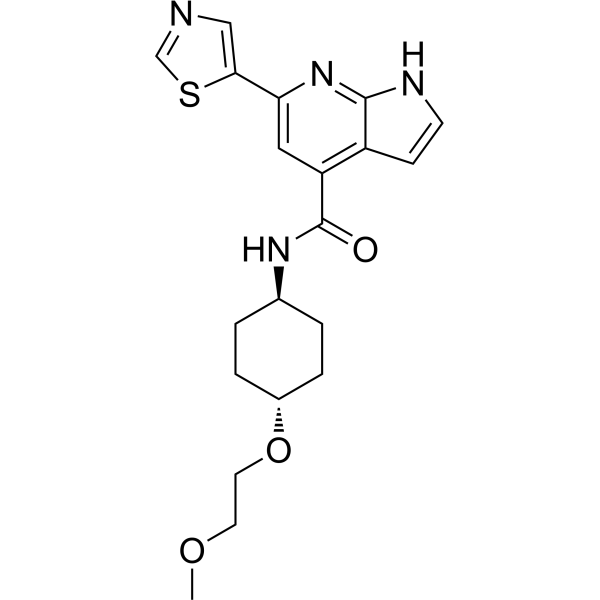
MK-0159 is an orally active, potent and selective CD38 inhibitor, with IC50 values of 22, 3, and 70 nM for human, mouse and rat CD38, respectively. MK-0159 also shows good microsomal stability for human and rodent liver microsomes. MK-0159 increases NAD + (nicotinamide adenine dinucleotide) and reduces ADPR (adenosine diphosphate ribose) in whole blood and heart .
1
1 Cited Publications
Cat. No.: HY-144987
CAS No.: 2597933-17-8
Purity:  98.84%
Target:  

CD38 LAG-3 Tim3 PD-1/PD-L1

Research Areas:  

Inflammation/Immunology Cancer

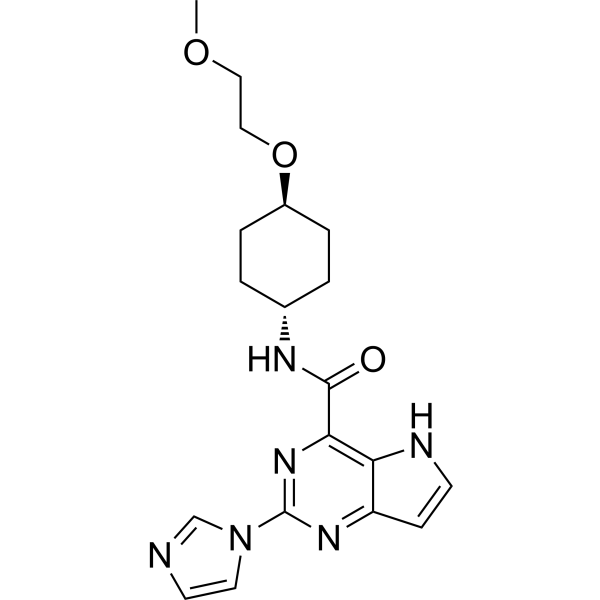
RBN013209 is an orally active small molecule inhibitor of CD38 with an IC50 of 0.01 to 0.1 μM for human CD38. RBN013209 prevents the conversion of extracellular NAD + to ADPR or cADPR in tumor cells and PBMCs. RBN013209 can be used in the study of tumor. In addition, RBN013209 enables CAR-T cells to maintain the naive state and central memory state, and decreases the expression of cell activation markers and exhaustion-related inhibitory receptors .
Cat. No.: HY-146248B
Purity:  98.02%
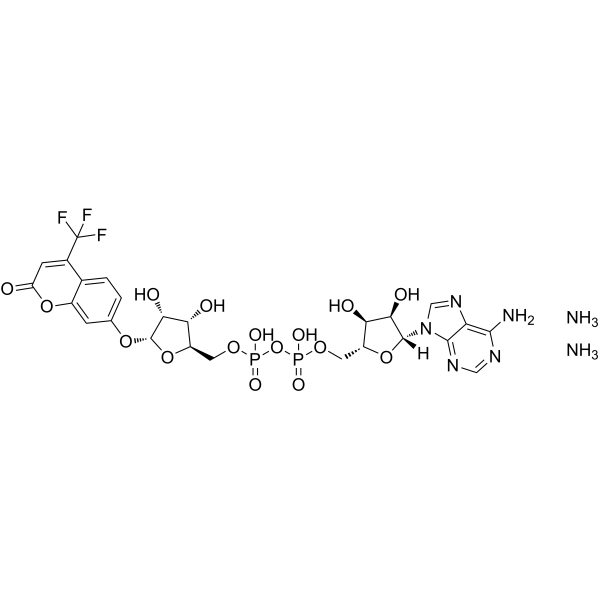
TFMU-ADPr diammonium is a selective reporter substrate of SARS-CoV-2 Macro1 (IC50=0.59 μM), with an excitation wavelength (λEx) of 385 nm, and an emission wavelength (λEm) of 502 nm (or 495 nm). TFMU-ADPr diammonium can also undergo enzymatic hydrolysis with Poly(ADP-ribose) Glycohydrolase (PARG) sourced from human, Tetrahymena thermophila and ADP-ribosylhydrolase 3 from human to release fluorophores, thereby directly reporting total poly (ADP-ribose) hydrolase activity. TFMU-ADPr diammonium binds to the ADPr-binding site of SARS-CoV-2 Macro1, and its TFMU moiety inserts into the narrow hydrophobic groove of this protein. TFMU-ADPr diammonium can thus be used to evaluate small-molecule inhibitors targeting PAR hydrolases under in vitro conditions, to investigate the regulatory mechanisms of ADP-ribosyl catabolic enzymes, or to detect PAR hydrolase activity in whole-cell lysate assays. TFMU-ADPr diammonium is also applicable to COVID-19-related research .
Cat. No.: HY-173679
CAS No.: 2569517-30-0
Research Areas:  

Infection Cancer

RBN012811 is a highly selective PROTAC-based PARP14 degrader. RBN012811 forms a ternary complex with cereblon by binding to the NAD + site of PARP14, and mediates the specific degradation of PARP14 via the ubiquitin-proteasome pathway (IC50=10 nM). RBN012811 effectively depletes endogenous PARP14 in various cell lines and primary human macrophages, thereby downregulating IL-10 production and IFN-β mRNA levels, increasing phosphorylated STAT1 levels to enhance inflammatory signaling, and inhibiting interferon-induced ADPr condensate formation. RBN012811 also modulates viral replication, exhibiting increased HSV1 replication while reducing VSV replication. RBN012811 has important application value in research related to cancer and viral infections .
Cat. No.: HY-146248
CAS No.: 2412923-11-4
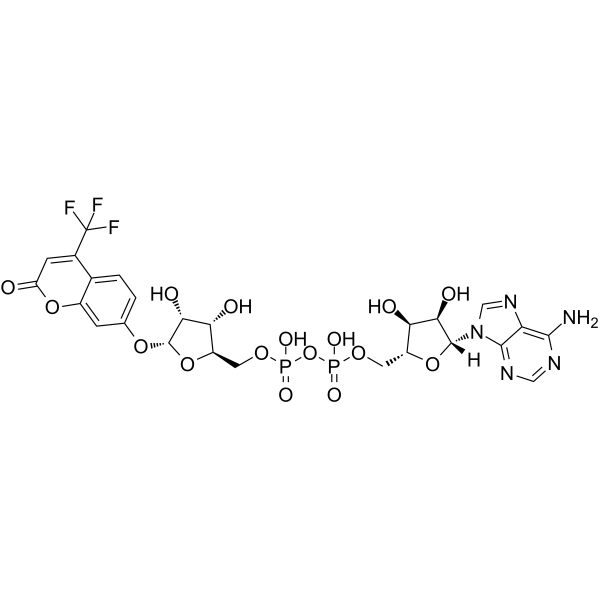
TFMU-ADPr is a selective reporter substrate of SARS-CoV-2 Macro1 (IC50=0.59 μM), with an excitation wavelength (λEx) of 385 nm, and an emission wavelength (λEm) of 502 nm (or 495 nm). TFMU-ADPr can also undergo enzymatic hydrolysis with Poly(ADP-ribose) Glycohydrolase (PARG) sourced from human, Tetrahymena thermophila and ADP-ribosylhydrolase 3 from human to release fluorophores, thereby directly reporting total poly (ADP-ribose) hydrolase activity. TFMU-ADPr binds to the ADPr-binding site of SARS-CoV-2 Macro1, and its TFMU moiety inserts into the narrow hydrophobic groove of this protein. TFMU-ADPr can thus be used to evaluate small-molecule inhibitors targeting PAR hydrolases under in vitro conditions, to investigate the regulatory mechanisms of ADP-ribosyl catabolic enzymes, or to detect PAR hydrolase activity in whole-cell lysate assays. TFMU-ADPr is also applicable to COVID-19-related research .
Cat. No.: HY-171213
CAS No.: 3109123-46-5
Research Areas:  

Neurological Disease

NB-3 is a nicotinamide adenine dinucleotide (NAD) hydrolase SARM1 inhibitor. NB-3 intercepts NAD hydrolysis and undergoes covalent conjugation with the reaction product adenosine diphosphate ribose (ADPR). The resulting small-molecule ADPR adducts are highly potent and confer compelling neuroprotection in neurological injury .
Cat. No.: HY-134354A
Purity:  99.93%
Synonyms: ADP-ribose-pNP disodium
Research Areas:  

Others

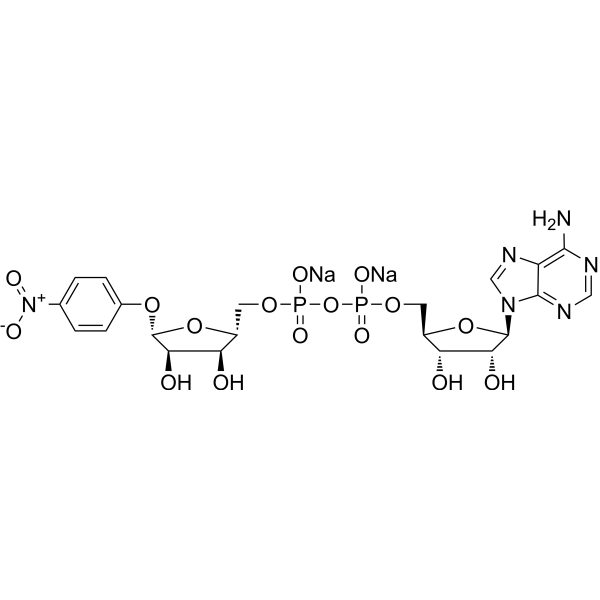
pNP-ADPr disodium is a colorimetric substrate that used for the first continuous Poly(ADP-ribose) glycohydrolase (PARG) and ADP-ribosyl hydrolase 3 (ARH3) activity assays. pNP-ADPr disodium can be used for the research of poly(ADP-ribose)polymerase (PARP) enzymes .
Cat. No.: HY-137704
CAS No.: 111864-49-4
Target:  

TRP Channel

Research Areas:  

Others

2′-Deoxy-ADPR is an agonist for transient receptor potential melastatin 2 channel (TRPM2 channel). 2′-Deoxy-ADPR may acts as the signaling molecule in Jurkat T-lymphocytes .
Cat. No.: HY-146248A
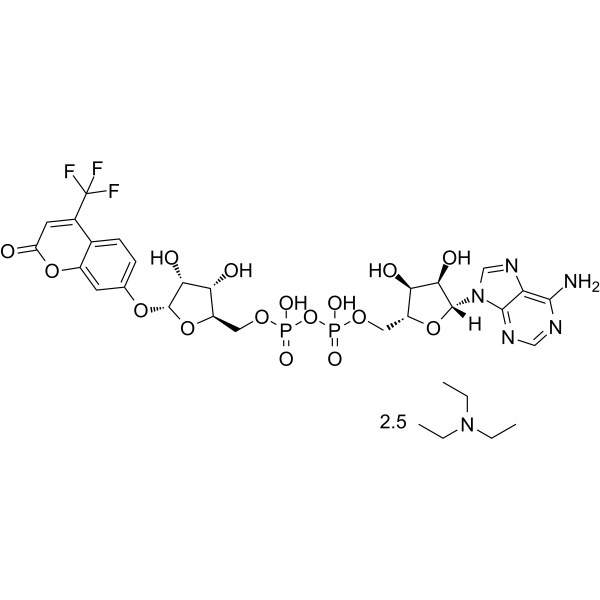
TFMU-ADPr triethylamine is a selective reporter substrate of SARS-CoV-2 Macro1 (IC50=0.59 μM), with an excitation wavelength (λEx) of 385 nm, and an emission wavelength (λEm) of 502 nm (or 495 nm). TFMU-ADPr triethylamine can also undergo enzymatic hydrolysis with Poly(ADP-ribose) Glycohydrolase (PARG) sourced from human, Tetrahymena thermophila and ADP-ribosylhydrolase 3 from human to release fluorophores, thereby directly reporting total poly (ADP-ribose) hydrolase activity. TFMU-ADPr triethylamine binds to the ADPr-binding site of SARS-CoV-2 Macro1, and its TFMU moiety inserts into the narrow hydrophobic groove of this protein. TFMU-ADPr triethylamine can thus be used to evaluate small-molecule inhibitors targeting PAR hydrolases under in vitro conditions, to investigate the regulatory mechanisms of ADP-ribosyl catabolic enzymes, or to detect PAR hydrolase activity in whole-cell lysate assays. TFMU-ADPr triethylamine is also applicable to COVID-19-related research .
Cat. No.: HY-134354
CAS No.: 939028-75-8
Synonyms: ADP-ribose-pNP
Research Areas:  

Others

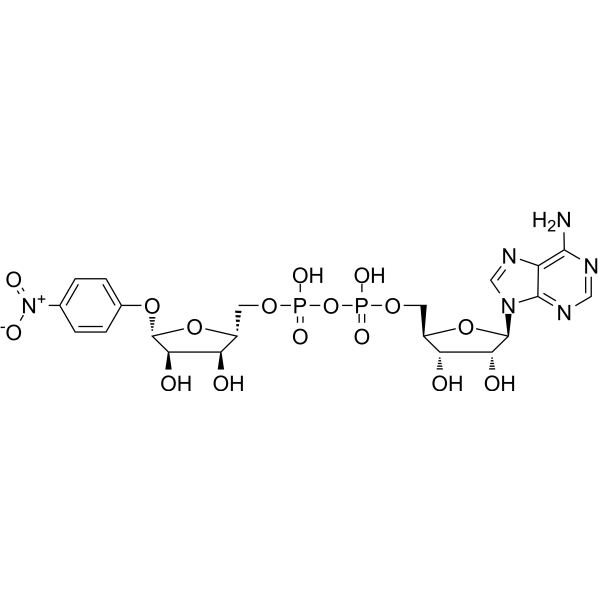
pNP-ADPr is a colorimetric substrate that used for the first continuous Poly(ADP-ribose) glycohydrolase (PARG) and ADP-ribosyl hydrolase 3 (ARH3) activity assays. pNP-ADPr can be used for the research of poly(ADP-ribose)polymerase (PARP) enzymes .
Cat. No.: HY-134268
CAS No.: 1011457-95-6
Synonyms: 8-Bromo-7-deazaadenosine-5'-O-diphosphoribose
8-Br-7-CH-ADPR (8-Bromo-7-deazaadenosine-5'-O-diphosphoribose) is a specific TRPM2 antagonist that inhibits TRPM2 activation by binding to the NUDT9 homology domain of the TRPM2 channel, thereby controlling the influx of cations through the cell membrane channel. 8-Br-7-CH-ADPR can be used to study the role of TRPM2 in pathological processes such as cell death, neurodegenerative diseases, myocardial infarction, and diabetes .
Cat. No.: HY-134261
CAS No.: 59259-77-7
Synonyms: 8-Bromoadenosine-5'-O-diphosphoribose
Target:  

TRP Channel CaMK

Research Areas:  

Metabolic Disease Cancer

8-Br-ADPR (8-Bromoadenosine-5'-O-diphosphoribose) is a TRPM2 inhibitor and ADPR signaling pathway antagonist. 8-Br-ADPR inhibits glucagon-mediated nuclear calcium signaling and downstream CaMKII/CREB phosphorylation by blocking ADPR-induced TRPM2 activation. 8-Br-ADPR significantly reduces gluconeogenic gene expression and blood glucose levels in diabetic models. 8-Br-ADPR effectively blocks ADPR-mediated calcium signal transduction in NK cells, inhibits immune synapse formation, granzyme B release and cytolytic activity against melanoma cells. 8-Br-ADPR is widely used in studies related to diseases such as diabetes, melanoma and lymphoma .
Cat. No.: HY-134261A
Synonyms: 8-Bromoadenosine-5'-O-diphosphoribose disodium
8-Br-ADPR disodium (8-Bromoadenosine-5'-O-diphosphoribose) is a TRPM2 inhibitor and ADPR signaling pathway antagonist. 8-Br-ADPR disodium inhibits glucagon-mediated nuclear calcium signaling and downstream CaMKII/CREB phosphorylation by blocking ADPR-induced TRPM2 activation. 8-Br-ADPR disodium significantly reduces gluconeogenic gene expression and blood glucose levels in diabetic models. 8-Br-ADPR disodium effectively blocks ADPR-mediated calcium signal transduction in NK cells, inhibits immune synapse formation, granzyme B release and cytolytic activity against melanoma cells. 8-Br-ADPR disodium is widely used in studies related to diseases such as diabetes, melanoma and lymphoma .
Cat. No.: HY-RS00407
Research Areas:  

Others

ADPRS Human Pre-designed siRNA Set A contains three designed siRNAs for ADPRS gene (Human), as well as a negative control, a positive control, and a FAM-labeled negative control.

Cat. No.: HY-184206
Target:  

CD38

A-3190 is an orally active, blood-brain barrier permeable CD38 inhibitor, with an IC50 of 7.25 nM against human CD38 and 1.24 nM against mouse CD38. A-3190 is a derivative of A-8531 (HY-184021), and it forms covalent adducts with NAD + in the presence of CD38. A-3190 acts as an inducer of NAD + levels and an inhibitor of NAM and ADPR levels. A-3190 increases NAD + levels in the skin, lung, liver and brain of rodents, while reducing NAM and ADPR levels in brain tissues. A-3190 can be used in research related to multiple sclerosis, Parkinson's disease and Alzheimer's disease .
Cat. No.: HY-181543
CAS No.: 2925663-26-7
Target:  

CD38

Research Areas:  

Neurological Disease

CVN14 is a potent, selective and brain-penetrant CD38 inhibitor with human IC50 19 nM, mouse IC50 2.4 nM. CVN14 binds uncompetitively to form a complex with CD38 and ADPR, and inhibits CD38 enzymatic activity. CVN14 can be used for the research of neurodegenerative diseases .
Cat. No.: HY-186178
CAS No.: 2766686-04-6
Target:  

CD38

CD38-IN-6 is an orally active CD38 inhibitor. CD38-IN-6 regulates NAD + metabolite levels in the liver of aged obese mice by increasing NAD + and NMN levels, and decreasing NAM and ADPR levels. CD38-IN-6 alleviates inflammatory responses in mice. CD38-IN-6 can be used for research related to obesity and inflammation .
Cat. No.: HY-184021
Target:  

CD38

Research Areas:  

Neurological Disease

A-8531 is an orally active CD38 inhibitor with IC50 values of 1.10 nM against human CD38, IC50 values of 2.93 nM against mouse CD38, and a human Ka of 0.32 nM. A-8531 exerts its inhibitory activity via its 4-pyridine reactive warhead interacting with the CD38 substrate NAD +, and binds stably to CD38 only in the presence of NAD +, with a binding KD of 0.32 nM as detected by SPR. A-8531 dose-dependently increases NAD + levels in mouse skin, lung and liver tissues, while simultaneously reducing the contents of NAM and ADPR in these tissues. A-8531 derivative A-3190 (HY-184206) has blood-brain barrier penetration. A-8531 can be used in studies related to neurodegenerative diseases .
Cat. No.: HY-W154247
CAS No.: 103313-38-8
Target:  

Bacterial

Research Areas:  

Infection

IP6C is a specific inhibitor and phage sensitizer targeting type II Thoeris systems. IP6C competitively binds to histidine in the catalytic pocket of ThsB, blocks the production of the His-ADPR alarm signal and inhibits ThsA activation, thereby relieving bacterial stasis of phage replication. IP6C selectively resensitizes drug-resistant bacteria carrying type II Thoeris systems (such as Pseudomonas aeruginosa) to phage lysis, without affecting other bacteria, and shows no toxicity to mice and human cell lines. IP6C significantly improves the survival rate of infected mice, and can be used to overcome bacterial phage defense mechanisms and study Pseudomonas aeruginosa infections .
Thoeris system: (named after the Egyptian goddess of fertility and protection), is a widespread anti-phage immune defense system in bacteria and archaea. Thoeris system belongs to the "Abortion Infection (Abi)" mechanism of bacteria: when an individual bacterium detects phage invasion, it initiates a suicide program and dies, thereby blocking phage replication and spread, and protecting the surrounding bacterial population from infection.
  • 1

