7 Results for "

Cellulose Synthase

" in MedChemExpress (MCE) Product Catalog:
Products (7)

7 Results for "Cellulose Synthase" in MCE Product Catalog:

Cat. No.: HY-W744966
CAS No.: 374726-62-2
Research Areas:  

Infection

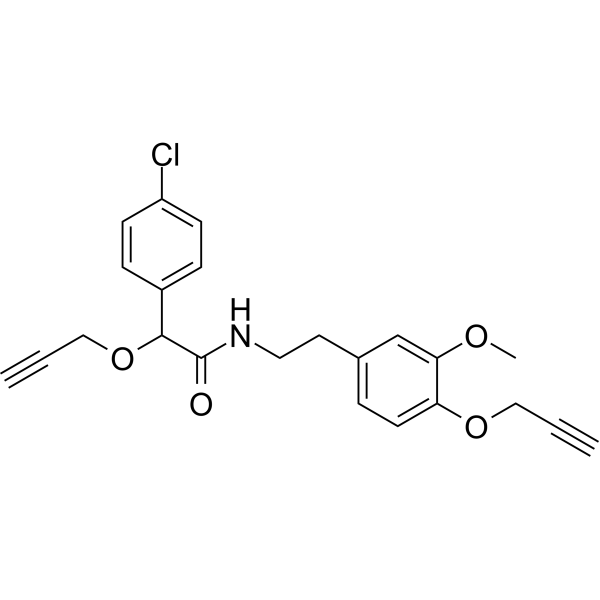
Mandipropamid is a cellulose synthase (CesA3) inhibitor and fungicide, with an IC50 of 19.8 nM against Phytophthora infestans. Mandipropamid inhibits the synthesis of crystalline cellulose on the cell surface, disrupts the cell wall structure of oomycetes, and induces germ tube tip swelling and growth arrest in Phytophthora infestans. S-Mandipropamid, an isomer of Mandipropamid, exhibits enantioselective acute toxicity to zebrafish embryos and larvae. Mandipropamid is applicable to studies related to plant infections .
loading...
    loading...
Cat. No.: HY-E70425
CAS No.: 9030-05-1
Target:  

Glycosyltransferase

Research Areas:  

Metabolic Disease

Sucrose synthase belongs to glycosyltransferases and is a reversible catalyst present in plants, which catalyzes the conversion of sucrose into fructose and UDP-G or ADP-G. Sucrose synthase localizes to the cytoplasm, plasma membrane, cell wall, vacuole and mitochondria of plants. Sucrose synthase regulates sugar metabolism, supports the development of taproots, fruits, seeds and vascular tissues, drives the synthesis of starch, cellulose and callose, and enhances nitrogen fixation capacity. Sucrose synthase mediates signal transduction in plant meristems. Sucrose synthase is associated with plant growth, anaerobic stress tolerance, as well as shoot apical meristem and leaf morphology; overexpression of this enzyme promotes plant growth, increases xylem size, and elevates cellulose and starch contents .
loading...
    loading...
Cat. No.: HY-122228
CAS No.: 671181-94-5
Target:  

Cellulose Synthase

Research Areas:  

Others

Cestrin is a plant cellulose synthase complex (CESA) trafficking inhibitor. Cestrin selectively blocks the sustained trafficking of cellulose synthase complexes (CSCs) and the interaction between CSC and POM2, which indirectly causes secondary destabilization of cortical microtubules (MTs). Cestrin reduces cellulose content, inhibits anisotropic cell growth, induces cell swelling and decreases cell elongation. Cestrin is applicable to plant cell biology research .
loading...
    loading...
Cat. No.: HY-122127
CAS No.: 380201-24-1
Target:  

Cellulose Synthase

Research Areas:  

Infection Neurological Disease

Acetobixan is an inhibitor of Cellulose Synthase A6 (CESA6). Acetobixan inhibits cellulose components of Pythium insidiosum cell walls. Acetobixan can be used for the research of Pythium insidiosum keratitis .
loading...
    loading...
Cat. No.: HY-W744966R
CAS No.: 374726-62-2
Research Areas:  

Infection

Mandipropamid (Standard) is the analytical standard of Mandipropamid (HY-W744966). This product is intended for research and analytical applications. Mandipropamid is a cellulose synthase (CesA3) inhibitor and fungicide, with an IC50 of 19.8 nM against Phytophthora infestans. Mandipropamid inhibits the synthesis of crystalline cellulose on the cell surface, disrupts the cell wall structure of oomycetes, and induces germ tube tip swelling and growth arrest in Phytophthora infestans. S-Mandipropamid, an isomer of Mandipropamid, exhibits enantioselective acute toxicity to zebrafish embryos and larvae. Mandipropamid is applicable to studies related to plant infections .
loading...
    loading...
Cat. No.: HY-163279
CAS No.: 885902-66-9
Target:  

Glycosidase

Research Areas:  

Others

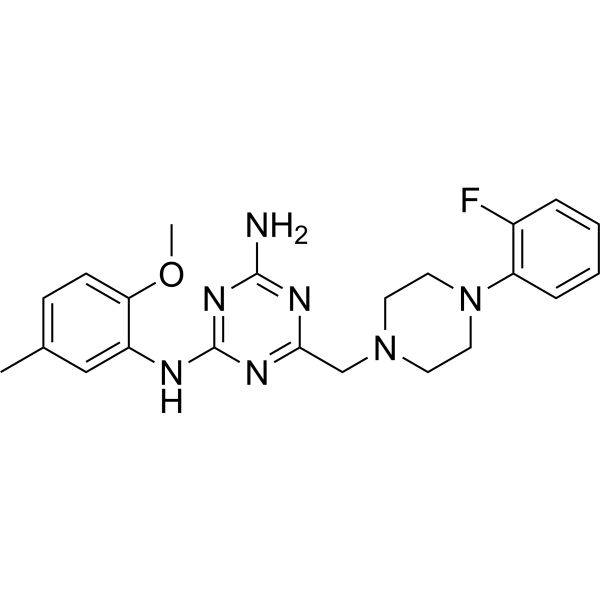
Fluopipamine is an antagonist for Cellulose Synthase 1 (CESA1) with an IC50 of 0.78 μM. Fluopipamine leads a decrease in glucose uptake into cellulose and hyperaccumulation of CESAs at the PM in etiolated Arabidopsis seedlings .
loading...
    loading...
Cat. No.: HY-W720329
CAS No.: 950782-86-2
Research Areas:  

Others

Indaziflam is an alkyltriazine herbicide. Indaziflam targets the cellulose synthase complex and inhibits cellulose biosynthesis in plant cell walls. Indaziflam induces radial swelling of plants, ectopic lignification, inhibition of root and hypocotyl elongation, abnormal root and cell morphology, and also induces DNA strand breaks and micronucleus formation in HepG2 cells. Indaziflam can be used for research on monocot weed control .
loading...
    loading...

