15 Results for "

Flavan

" in MedChemExpress (MCE) Product Catalog:
Products (15)

15 Results for "Flavan" in MCE Product Catalog:

Cat. No.: HY-W032915
CAS No.: 2270-20-4
Synonyms: 5-Phenylpentanoic acid
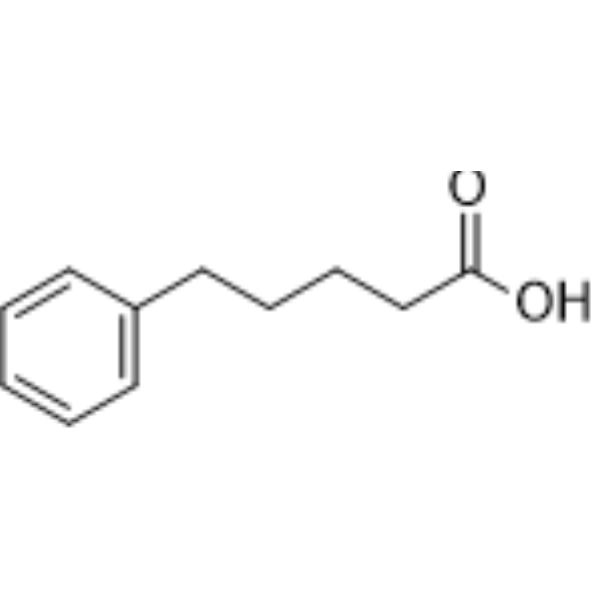
5-Phenylvaleric acid (5-Phenylpentanoic acid) is a major metabolite produced by the gut microbiota during the metabolism of flavan-3-ols and can serve as a biomarker for flavan-3-ol intake. 5-Phenylvaleric acid can also be used as a raw material for the synthesis of polyhydroxyalkanoates .
Cat. No.: HY-N1773
CAS No.: 97914-19-7
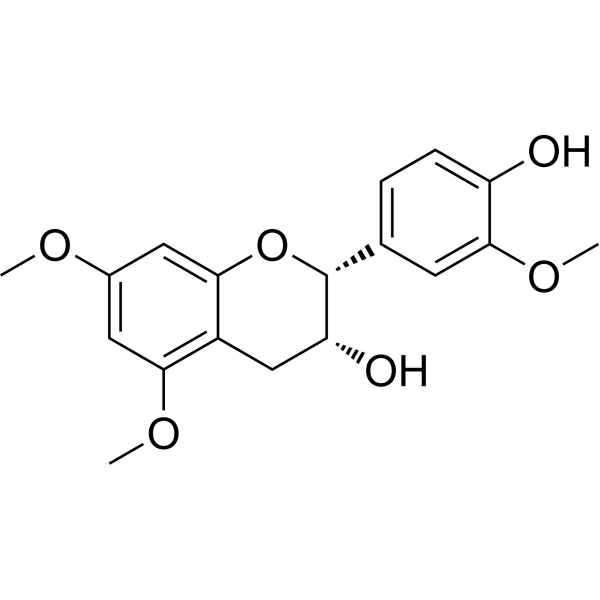
5,7,3' -tri-O-Methyl (-)-epicatechin (Compound 13) is a phospholipase Cγ1 (PLCγ1) inhibitor. 5,7,3' -tri-o-methyl (-)-epicatechin has a methylene dioxy benzene ring and can express inhibitory activity against PLCγ1. 5,7,3' -tri-O-Methyl (-)-epicatechin can be used in the study of chemotherapy and chemopexic agents for cancer .
Cat. No.: HY-W165608
CAS No.: 21618-91-7
Synonyms: 3′-OH-PVL
5-(3'-Hydroxyphenyl)-γ-valerolactone is a flavan-3-ols metabolitec of human faecal microbiota .
Cat. No.: HY-N3426
CAS No.: 99624-27-8
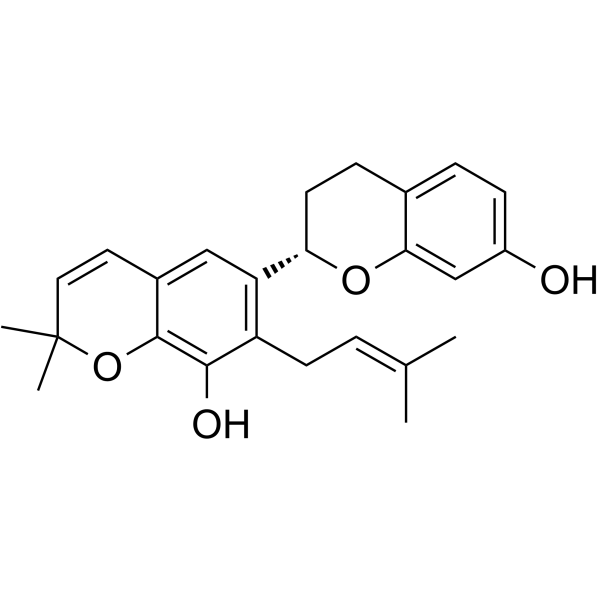
Kazinol B, a prenylated flavan with a dimethyl pyrane ring, is an inhibitor of nitric oxide (NO) production. Kazinol B improves insulin sensitivity by enhancing glucose uptake via the insulin-Akt signaling pathway and AMPK activation. Kazinol B has the potential for diabetes mellitus research .
Cat. No.: HY-N10789
CAS No.: 27348-54-5
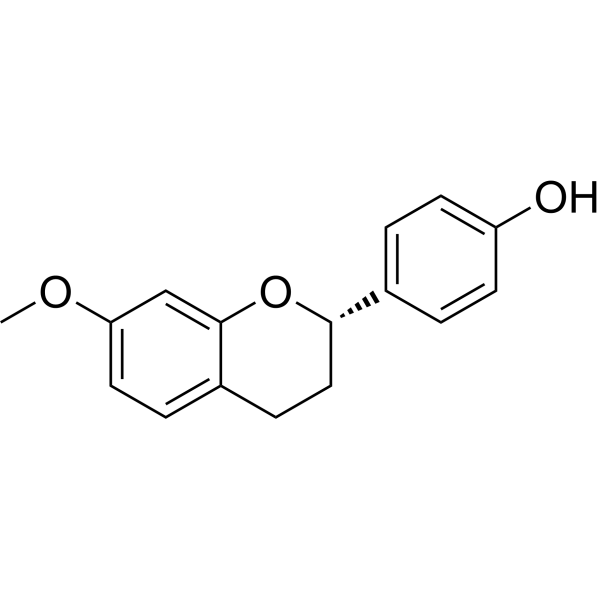
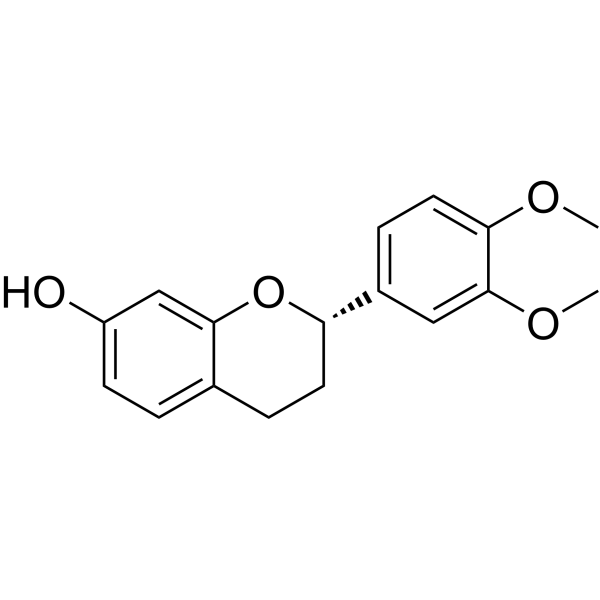
(2S)-4'-Hydroxy-7-methoxyflavan is a Flavan. Flavan (4′-hydroxy-7-methoxyflavan) showed an important cytotoxic effect on human leukemic Molt 4 cells .
Cat. No.: HY-N7288
CAS No.: 1443218-16-3
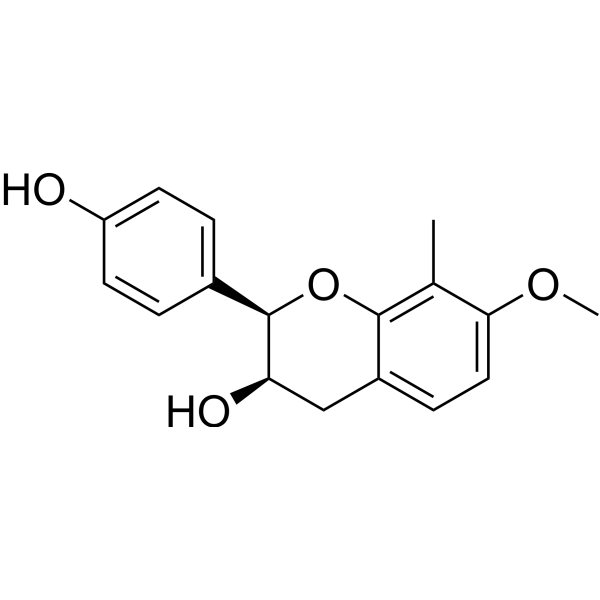
Trilepisflavan is a flavan, which can be isolated from Trilepisium madagascariense. Trilepisflavan derivates serval analogues with anti-cancer activity against human cancer cells .
Cat. No.: HY-W032915R
CAS No.: 2270-20-4
Synonyms: 5-Phenylpentanoic acid (Standard)
5-Phenylvaleric acid (Standard) is an analytical standard for 5-Phenylvaleric acid (HY-W032915). This product is used for research and analytical applications. 5-Phenylvaleric acid (5-Phenylpentanoic acid) is a major metabolite produced by the gut microbiota during the metabolism of flavan-3-ols and can serve as a biomarker for flavan-3-ol intake. 5-Phenylvaleric acid can also be used as a raw material for the synthesis of polyhydroxyalkanoates.
Cat. No.: HY-N7481
CAS No.: 497142-88-8
Tupichinol A is a natural flavan found in the underground parts of Tupistra chinensis .
Cat. No.: HY-N1768
CAS No.: 116384-26-0
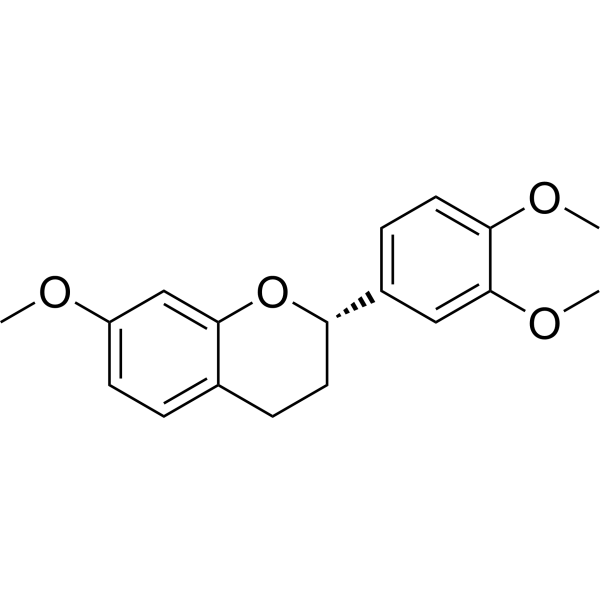
(2S)-3',4',7-Trimethoxyflavan is a flavan, exhibits weak cytotoxicities against HCT116 and HepG2 with IC50 values 34.36 μg/mL and 38.51 μg/mL, respectively .
Cat. No.: HY-N3553
CAS No.: 103630-03-1
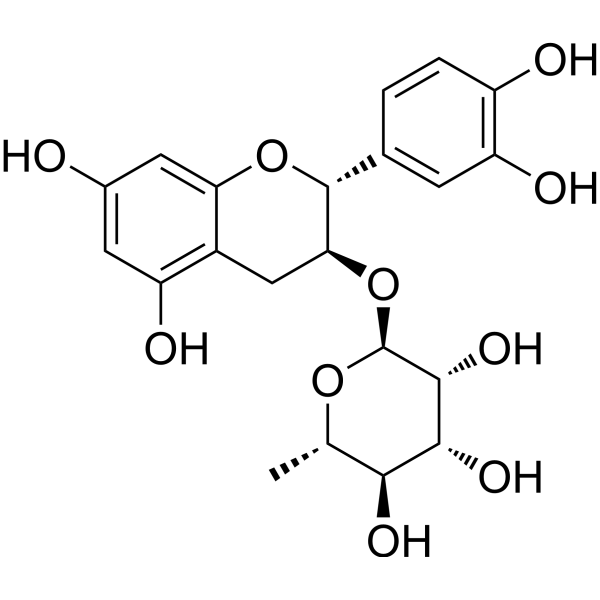
Catechin 3-O-α-L-rhamnopyranoside is a natural product that can be isolated from the twigs of Artocarpus lakoocha .
Cat. No.: HY-N13130
CAS No.: 967-27-1
(+)-Mollisacacidin is a flavan compound found in the root bark of Albizia glaberrima. (+)-Mollisacacidin exhibits no significant antiproliferative effect on cancer cells .
Cat. No.: HY-W751044
CAS No.: 97914-20-0
4'-O-Methylepicatechin is a flavan-3-ol methyl ether that can be found in the bark of Cinnamomum cassia .
Cat. No.: HY-W032915S
CAS No.: 767627-97-4
Synonyms: 5-Phenylpentanoic acid-13
5-Phenylvaleric acid-d13 (5-Phenylpentanoic acid-d13) is the deuterium labeled 5-Phenylvaleric acid (HY-W032915). 5-Phenylvaleric acid (5-Phenylpentanoic acid) is a major metabolite produced by the gut microbiota during the metabolism of flavan-3-ols and can serve as a biomarker for flavan-3-ol intake. 5-Phenylvaleric acid can also be used as a raw material for the synthesis of polyhydroxyalkanoates .
Cat. No.: HY-N16849
CAS No.: 145904-69-4
Synonyms: YM 26567-1
Myristinin A (YM 26567-1) is a trans-isomer flavan compound found in Horsfieldia amygdaline and Myristica cinnamomea. Myristinin A can selectively inhibit COX-2 activity with an IC50 of 16.9 μg/mL. Myristinin A can reduce the production of prostaglandin E2 (PGE2) and inhibit phospholipase A2 (PLA2), thereby blocking the release of inflammatory mediators. Myristinin A can inhibit Candida albicans with an IC50 of 8.8 μg/mL. Myristinin A can be used for the research of inflammation and infection, such as rheumatoid arthritis .
Cat. No.: HY-N16865
Myristinin B/C is a mixture of Myristinin B and Myristinin C. Myristinin B/C is a flavan compound found in Horsfieldia amygdaline and Myristica cinnamomea. Myristinin B/C can selectively inhibit COX-2 activity with an IC50 of 2.1 μg/mL. Myristinin B/C can reduce the production of prostaglandin E2 (PGE2) and inhibit phospholipase A2 (PLA2), thereby blocking the release of inflammatory mediators. Myristinin B/C can inhibit Candida albicans with an IC50 of 6 μg/mL. Myristinin B/C can be used for the research of inflammation and infection, such as rheumatoid arthritis .
  • 1

