



Kazinol B
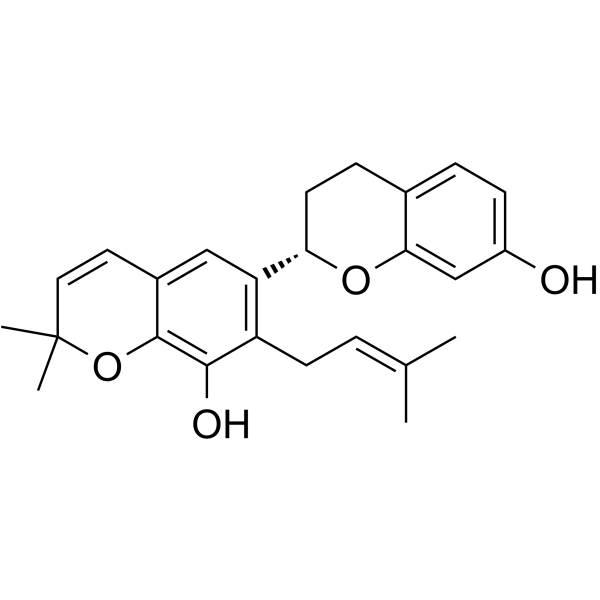
Kazinol B, a prenylated flavan with a dimethyl pyrane ring, is an inhibitor of nitric oxide (NO) production. Kazinol B improves insulin sensitivity by enhancing glucose uptake via the insulin-Akt signaling pathway and AMPK activation. Kazinol B has the potential for diabetes mellitus research.
연구목적의 판매만을 진행합니다. 환자를 대상으로 한 판매는 하지 않습니다.
- CAS No.: 99624-27-8
- 화학식: C25H28O4
- 분자량:392.49
-
보관:
Please store the product under the recommended conditions in the Certificate of Analysis.

To place orders, for customer services and technical support, please contact: MedChemExpress USA
Tel: 609-228-6898 E-mail: [email protected] [email protected]


-
 Biological Activity
-
Chemical Information
- Protocol
- 순도&문서
- References
-
 Help & FAQs


-
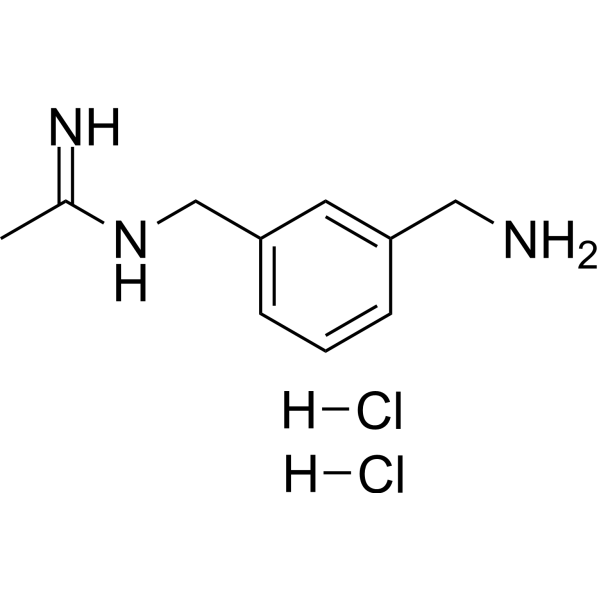
HY-18731
1400W DihydrochlorideNO Synthase Inhibitor -
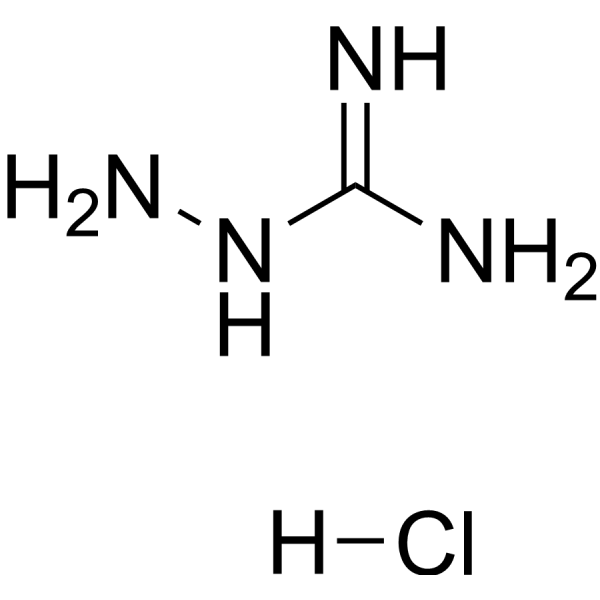
HY-B1041
Aminoguanidine hydrochlorideDiamine Oxidase/NO Synthase Inhibitor -
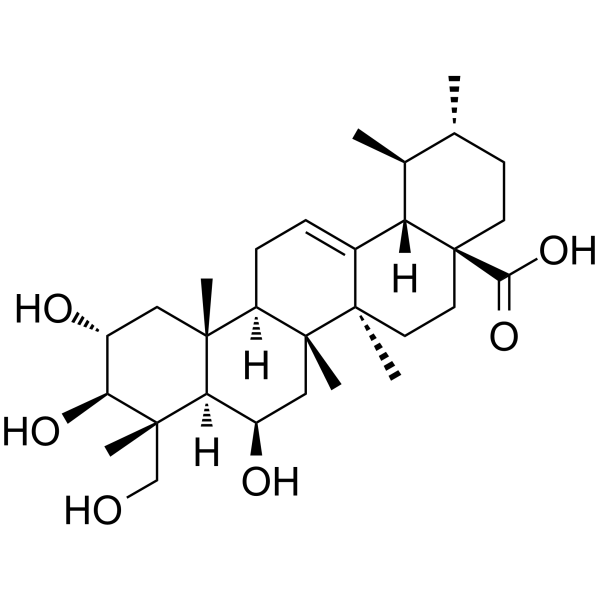
HY-N0569
Madecassic acidNO Synthase Inhibitor -
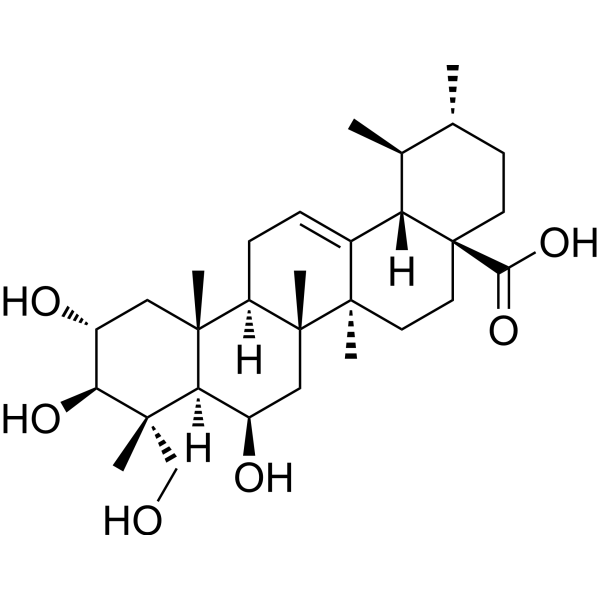
HY-N0569R
Madecassic acid (Standard) -
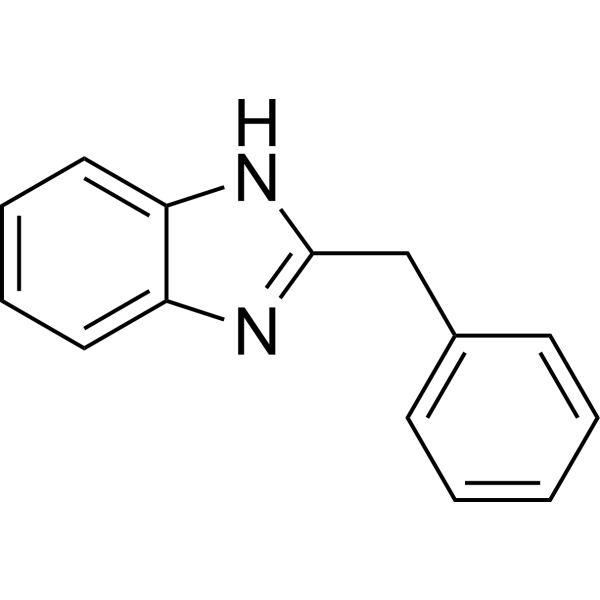
HY-B2141
BendazolNO Synthase Activator -
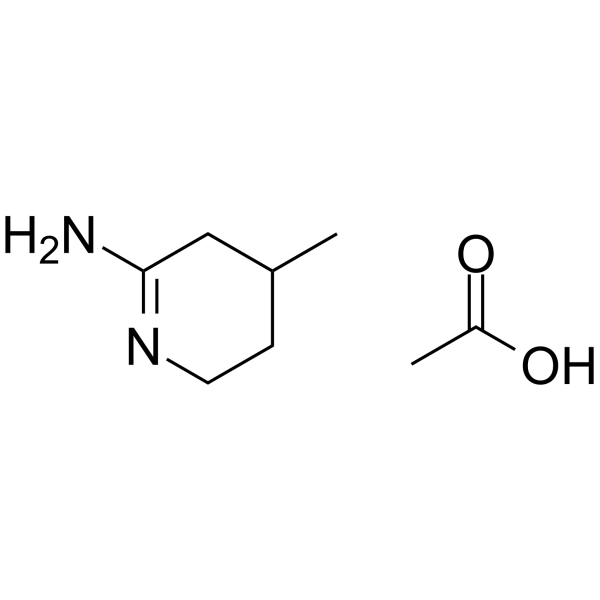
HY-138564
NOS-IN-1NO Synthase Inhibitor -

HY-B1041R
Aminoguanidine hydrochloride (Standard)Diamine Oxidase/NO Synthase Inhibitor -

HY-18731R
1400W Dihydrochloride (Standard)NO Synthase Inhibitor
All AMPK Isoforms
More

Biological Activity
제품 설명
IC50 & Target
[1]|
AMPK |
Cellular Effect
|
Cell Line

|
Type | Value | Description | References |
|---|---|---|---|---|
| A549 | IC50 |
>100 μM
Compound: (-)-4
|
Cytotoxicity against human A549 cells by MTT assay
Cytotoxicity against human A549 cells by MTT assay
|
[PMID: 28371676] |
| Hep 3B2 | IC50 |
39 μM
Compound: (-)-4
|
Cytotoxicity against human Hep3B cells by MTT assay
Cytotoxicity against human Hep3B cells by MTT assay
|
[PMID: 28371676] |
| HepG2 | IC50 |
58.4 μM
Compound: (-)-4
|
Cytotoxicity against human HepG2 cells by MTT assay
Cytotoxicity against human HepG2 cells by MTT assay
|
[PMID: 28371676] |
| MCF7 | IC50 |
>100 μM
Compound: (-)-4
|
Cytotoxicity against human MCF7 cells by MTT assay
Cytotoxicity against human MCF7 cells by MTT assay
|
[PMID: 28371676] |
| Platelet | IC50 |
32.6 μM
Compound: 12
|
Antiplatelet activity against rabbit platelets assessed as arachidonic acid-induced platelet aggregation by turbidimetric method
Antiplatelet activity against rabbit platelets assessed as arachidonic acid-induced platelet aggregation by turbidimetric method
|
[PMID: 8864236] |
| RAW264.7 | IC50 |
29.31 μM
Compound: 168
|
Antiinflammatory activity against mouse RAW264.7 cells assessed as reduction of LPS-induced NO production
Antiinflammatory activity against mouse RAW264.7 cells assessed as reduction of LPS-induced NO production
|
[PMID: 37683361] |
In Vitro
Kazinol B (2, 10 and 20 μM; 72 hours) shows no toxicity to adipocytes in 3T3-L1 cells[1].
Kazinol B (2-20 μM; 72 hours) dose-dependently increases lipid accumulation by 2.4-fold (at 20 μM) treatment as compared with MDI-treated cells[1].
Kazinol B (2-20 μM; 5 days) dose-dependently increases PPARγ and C/EBPα protein and mRNA levels in MDI-treated 3T3-L1 adipocytes. Kazinol B increases the mRNA level of adiponectin in a dose-dependent manner[1].
Kazinol B (2-20 μM; 24 hours) increases the retained 2?NBDG-fluorescence in cells in a dose-dependent manner in differentiated 3T3-L1 adipocytes and C2C12 myoblasts. Kazinol B dependently increases the MDI-stimulated GLUT4 mRNA level up to 4.7-fold as compared with MDI-only treated cells[1].
Kazinol B (10-20 μM; pre-treated for 1 h followed by 1 h insulin) dose-dependently increases insulin-dependent Akt phosphorylation. Kazinol B alone strongly induces Akt phosphorylation compared with untreated cells. Kazinol B also increased insulin-stimulated AMPK phosphorylation[1].
Kazinol B (6.25, 12.5, 25, 50 μM; 18 hours) dose-dependently reduces amounts of iNOS protein in macrophages (RAW 264.7 cells) activated by LPS (1 ug/mL)[2].
MedChemExpress (MCE) has not independently confirmed the accuracy of these methods. They are for reference only.


Chemical Information
-
CAS No. 99624-27-8
-
분자량 392.49
-
화학식 C25H28O4
-
SMILES
C/C(C)=C/CC1=C([C@H]2OC3=CC(O)=CC=C3CC2)C=C4C(OC(C)(C)C=C4)=C1O
-
Structure Classification
-
Initial Source
-
선적
Room temperature in continental US; may vary elsewhere.
-
보관
Please store the product under the recommended conditions in the Certificate of Analysis.


순도&문서
References
[1]. Hyejin Lee, et al. Kazinol B from Broussonetia kazinoki improves insulin sensitivity via Akt and AMPK activation in 3T3-L1 adipocytes. Fitoterapia. 2016 Jul;112:90-6. [Content Brief]
[2]. Jae-Ha Ryu, et al. Fitoterapia. 2003 Jun;74(4):350-4.Inhibition of nitric oxide production on LPS-activated macrophages by kazinol B from Broussonetia kazinoki. [Content Brief]

Calculators
Concentration (start) × Volume (start) = Concentration (final) × Volume (final)


Kazinol B Related Classifications
HY-N3426 Related Classifications
 Powered by Bioz