19 Results for "

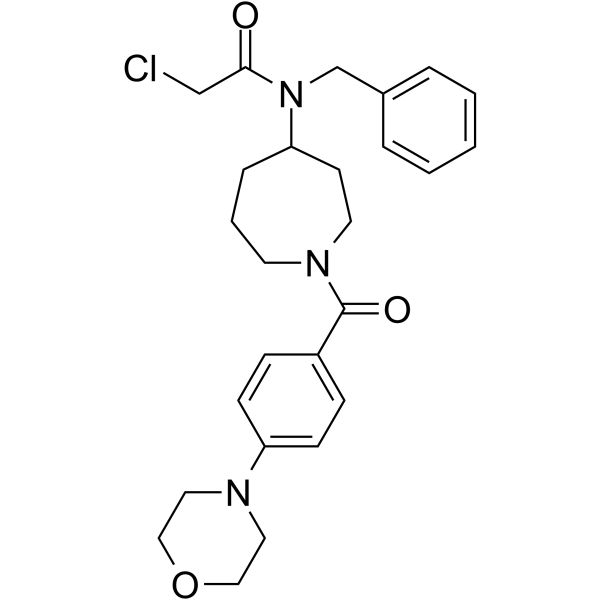
Keap1-IN-1

" in MedChemExpress (MCE) Product Catalog:
Products (19)

19 Results for "Keap1-IN-1" in MCE Product Catalog:

Cat. No.: HY-170301
Research Areas:  

Others

Keap1-IN-1 (Compound 27) is the inhibitor for Keap1, that covalently modifys the Cys151 site in the BTB domain of KEAP1, and interfers with the interaction between Keap-Nrf. Keap1-IN-1 upregulates the mRNA expression of the antioxidant stress element (ARE)-dependent gene NQO1 with an EC50 of 160 nM. Keap1-IN-1 exhibits cytotoxicity in cell U2OS with an EC50 of 527 nM .
loading...
    loading...
23
23 Publications Verification
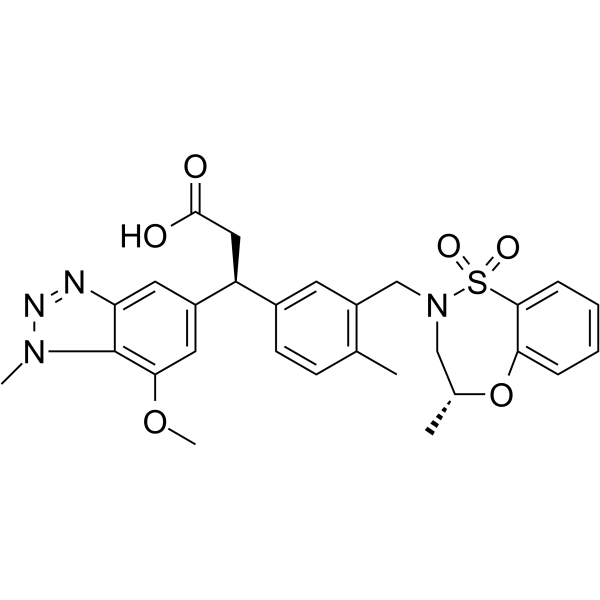
Cat. No.: HY-101140
CAS No.: 1799974-70-1
Purity:  98.67%
Research Areas:  

Inflammation/Immunology

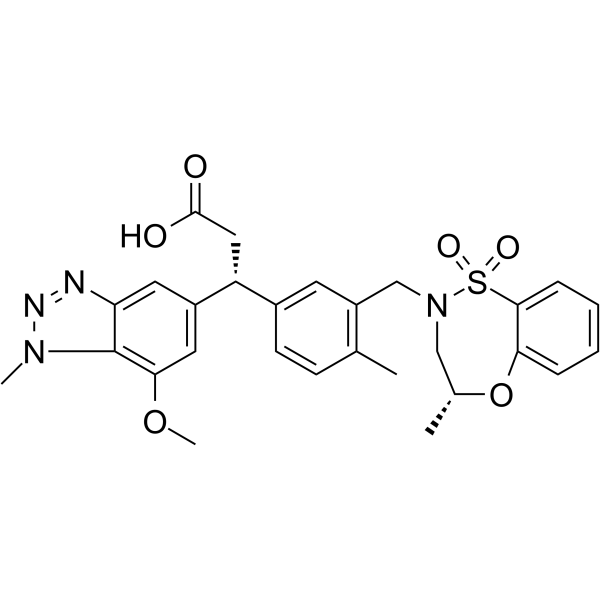
KI696 is a selective KEAP1/NRF2 protein-protein interaction inhibitor with a human Kd value of 1.3 nM. KI696 acts by competitively occupying the NRF2-binding pocket of the KEAP1 Kelch domain. KI696 blocks KEAP1-mediated ubiquitination and degradation of NRF2, promotes the translocation of NRF2 to the nucleus, activates the expression of downstream antioxidant genes, increases intracellular glutathione levels, and alleviates oxidative stress-induced cell damage and inflammatory cell infiltration in the lungs. KI696 reduces ozone-induced pulmonary oxidative damage and inflammatory cell accumulation in rats, and upregulates pulmonary antioxidant genes. KI696 can be used in research related to chronic obstructive pulmonary disease, oxidative stress and inflammation .
loading...
    loading...
2
2 Cited Publications
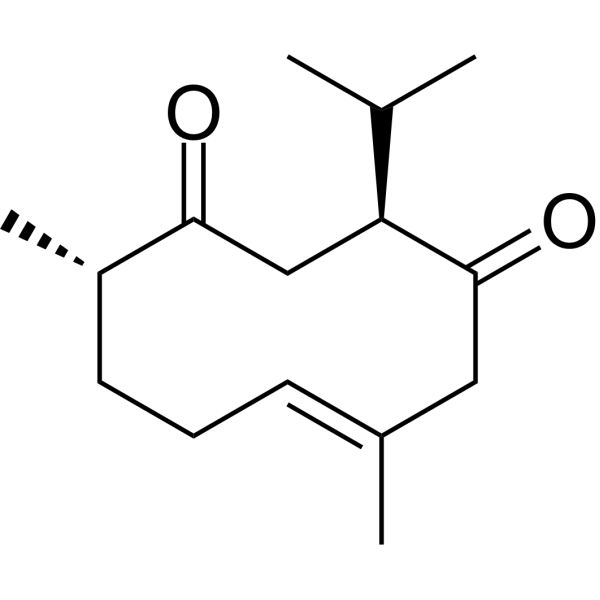
Cat. No.: HY-N0353
CAS No.: 13657-68-6
Synonyms: (+)-Curdione
Curdione ((+)-Curdione) is an orally active sesquiterpenoid. Curdione inhibits platelet aggregation. Curdione induces ferroptosis in colorectal cancer via m6A methylation mediated by METTL14 and YTHDF2. Curdione inhibits ferroptosis in Isoproterenol (HY-B0468)-induced myocardial infarction by regulating the Keap1/Trx1/GPX4 signaling pathway, suppressing oxidative stress (ROS) and apoptosis. Curdione ameliorates Doxorubicin (HY-15142)-induced cardiotoxicity by inhibiting oxidative stress (ROS) and activating the Nrf2/HO-1 pathway. Curdione ameliorates sepsis-induced lung injury by inhibiting platelet-mediated neutrophil extracellular trap formation. Curdione ameliorates Bleomycin (HY-17565A)-induced pulmonary fibrosis by inhibiting TGF-β-induced fibroblast-to-myofibroblast differentiation. Curdione exhibits neuroprotective effects against focal cerebral ischemia-reperfusion injury in rats. Curdione exerts antiproliferative effects against human uterine leiomyosarcoma by targeting IDO1. Curdione protects vascular endothelial cells and atherosclerosis by regulating DNMT1-mediated ERBB4 promoter methylation. Curdione inhibits inducible prostaglandin E2 production (IC50 = 1.1 μM) and cyclooxygenase 2 expression [11] .
loading...
    loading...
1
1 Cited Publications
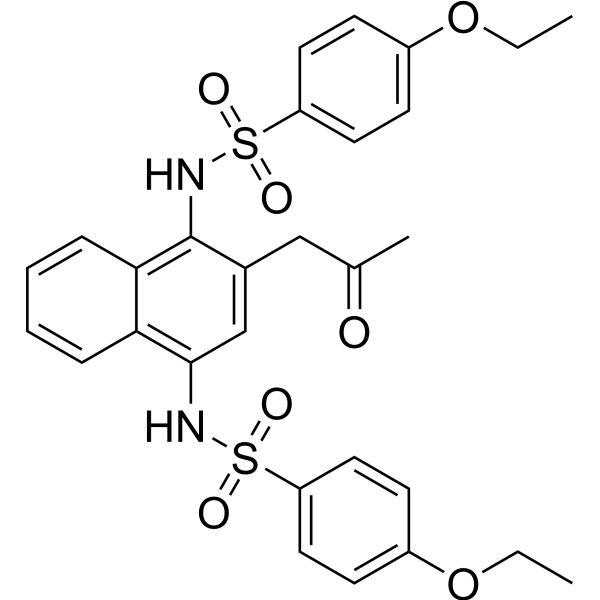
Cat. No.: HY-111126
CAS No.: 2046250-48-8
Purity:  98.26%
Target:  

p62 Keap1-Nrf2

Research Areas:  

Cancer

K67 is a selective the interaction between Keap1 and S349 phosphorylated p62 inhibitor, with an IC50 of 1.5 μM. K67 has a weaker inhibitory effect on the interaction between Keap1 and Nrf2 (IC50 is 6.2 μM). K67 competitively binds to the binding site of Keap1 with p-p62, blocking the abnormal activation of the p62-dependent Nrf2 pathway. K67 inhibits tumor cell proliferation and enhances the sensitivity of hepatocellular carcinoma (HCC) to chemotherapeutic drugs by restoring Keap1-mediated ubiquitination and degradation of Nrf2 .
loading...
    loading...
1
1 Cited Publications
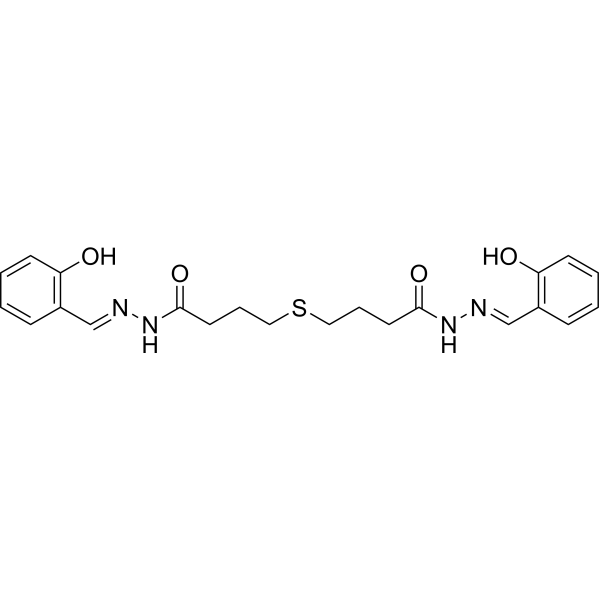
Cat. No.: HY-149508
CAS No.: 6325-13-9
Purity:  99.19%
Research Areas:  

Cancer

Nrf2-IN-3 (Compound R16) is a small-molecule NRF2 inhibitor and increases reactive oxygen species (ROS) production. Nrf2-IN-3 selectively binds KEAP1 mutants and restores their NRF2-inhibitory function by repairing the disrupted KEAP1/NRF2 interactions, leading to proteasome-dependent NRF2 degradation in cells. Nrf2-IN-3 sensitizes KEAP1-mutated tumor cells to Cisplatin (HY-17394), Gefitinib (HY-50895), and KEAP1 G333C-mutated xenograft to Cisplatin .
loading...
    loading...
1
1 Cited Publications
Cat. No.: HY-151362
CAS No.: 1928782-31-3
Purity:  98.08%
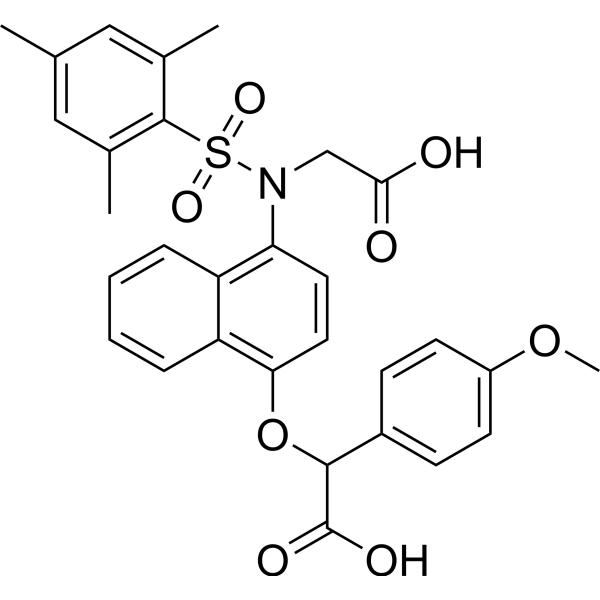
Keap1-Nrf2-IN-14 (compound 20c) is a KEAP1-NRF2 inhibitor that effectively disrupts the KEAP1-NRF2 interaction (IC50=75 nM) with a Kd value of 24 nM for KEAP1. Keap1-Nrf2-IN-14 induces the expression of NRF2 target genes and enhances the downstream antioxidant and anti-inflammatory activities. Keap1-Nrf2-IN-14 can be used in the study of oxidative stress-related inflammation .
loading...
    loading...
Cat. No.: HY-101140A
CAS No.: 1799974-69-8
Purity:  99.32%
Target:  

Drug Isomer

Research Areas:  

Inflammation/Immunology

KI696 isomer is an isomer of KI696 (HY-101140). KI696 is a selective KEAP1/NRF2 protein-protein interaction inhibitor with a human Kd value of 1.3 nM. KI696 acts by competitively occupying the NRF2-binding pocket of the KEAP1 Kelch domain. KI696 blocks KEAP1-mediated ubiquitination and degradation of NRF2, promotes the translocation of NRF2 to the nucleus, activates the expression of downstream antioxidant genes, increases intracellular glutathione levels, and alleviates oxidative stress-induced cell damage and inflammatory cell infiltration in the lungs. KI696 reduces ozone-induced pulmonary oxidative damage and inflammatory cell accumulation in rats, and upregulates pulmonary antioxidant genes. KI696 can be used in research related to chronic obstructive pulmonary disease, oxidative stress and inflammation .
loading...
    loading...
Cat. No.: HY-122054A
CAS No.: 2444815-73-8
Purity:  99.19%
Target:  

Keap1-Nrf2

Research Areas:  

Cancer

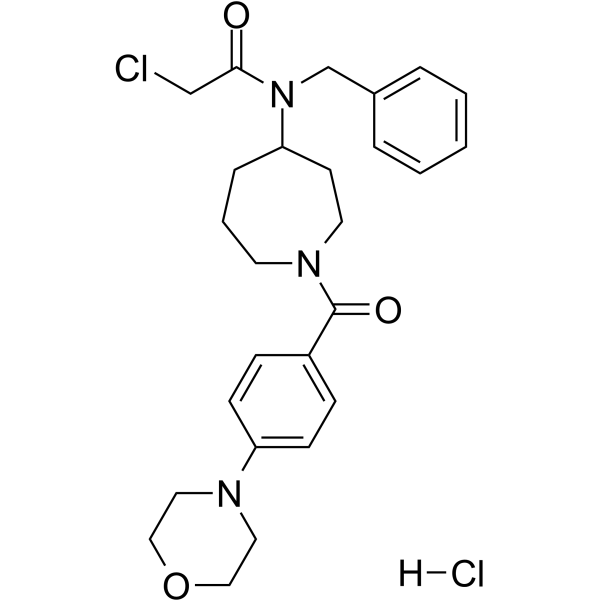
BPK-29 hydrochloride is a specific ligand that disrupts the atypical orphan nuclear receptor NR0B1-protein (such RBM45 and SNW1) interactions by covalently modifying C274. BPK-29 hydrochloride impairs the anchorage-independent growth of KEAP1-mutant cancer cells .
loading...
    loading...
Cat. No.: HY-160876
CAS No.: 1358617-36-3
Research Areas:  

Inflammation/Immunology

BC-1901S is a proteasome-independent NRF2 activator and stabilizer. BC-1901S binds to DCAF1 (E3 ligase subunit) and disrupts NRF2/DCAF1 interaction, and activates NRF2 by inhibiting NRF2 ubiquitination in a KEAP1-independent manner. BC-1901S shows anti-inflammatory effect in a murine model of LPS-induced acute lung injury .
loading...
    loading...
Cat. No.: HY-139620
CAS No.: 2762181-19-9
Research Areas:  

Cancer

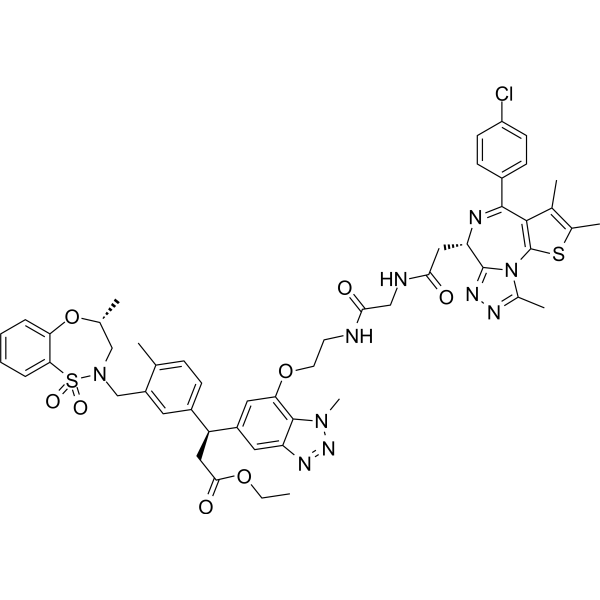
MS83 is a selective degrader of BRD4/BRD3 belonging to the PROTAC class. MS83 hijacks the KEAP1-dependent CUL3 ligase complex by binding to KEAP1 and forming a ternary complex with BRD4/BRD3. MS83 induces polyubiquitination and degradation of BRD4/BRD3 in a concentration-, time- and ubiquitin-proteasome system-dependent manner. MS83 inhibits c-MYC protein levels and suppresses the proliferation of triple-negative breast cancer cells .
loading...
    loading...
Cat. No.: HY-122054
CAS No.: 2143467-62-1
Purity:  99.4%
Target:  

Keap1-Nrf2

Research Areas:  

Cancer

BPK-29 is a specific ligand that disrupts the atypical orphan nuclear receptor NR0B1-protein (such RBM45 and SNW1) interactions by covalently modifying C274. BPK-29 impairs the anchorage-independent growth of KEAP1-mutant cancer cells .
loading...
    loading...
Cat. No.: HY-169766
CAS No.: 3034876-85-9
Research Areas:  

Cancer

VVD 065 is an orally active KEAP1-dependent NRF2 molecular glue degrader with a KEAP1 KD of 65 nM. VVD 065 covalently engages KEAP1 at Cys151, allosterically stabilizes KEAP1-CUL3 complex formation and enhances NRF2 polyubiquitination and proteasomal degradation. VVD 065 can be used for the research of esophageal squamous cell carcinoma, lung cancer, head-and-neck cancer, uterine cancers .
loading...
    loading...
Cat. No.: HY-168065
CAS No.: 2955083-85-7
Target:  

Keap1-Nrf2

Research Areas:  

Inflammation/Immunology

Keap1-Nrf2-IN-22 (compound 19) is a Keap1-Nrf2 inhibitor, with a KD2 value of 42.2 nM for Keap1. Keap1-Nrf2-IN-22 can be used for the study of acute lung injury (ALI) and cerebral ischemia/reperfusion (I/R) injury .
loading...
    loading...
Cat. No.: HY-174287
CAS No.: 3066895-41-5
Target:  

Keap1-Nrf2

Research Areas:  

Inflammation/Immunology

Keap1-IN-2 (Compound 164) is a KEAP1 inhibitor (IC50: 2 nM). Keap1-IN-2 indirectly activates Nrf2 by inhibiting KEAP1, thereby enhancing the antioxidant capacity of cells. Keap1-IN-2 promotes the accumulation and nuclear translocation of Nrf2 by blocking KEAP1-mediated Nrf2 degradation. Keap1-IN-2 can be used to study diseases associated with oxidative stress, such as inflammatory bowel disease, Crohn's disease, and immune diseases such as ulcerative colitis .
loading...
    loading...
Cat. No.: HY-N0353R
CAS No.: 13657-68-6
Synonyms: (+)-Curdione (Standard)
Curdione (Standard) is the analytical standard of Curdione. This product is intended for research and analytical applications. Curdione ((+)-Curdione) is an orally active sesquiterpenoid. Curdione inhibits platelet aggregation. Curdione induces ferroptosis in colorectal cancer via m6A methylation mediated by METTL14 and YTHDF2. Curdione inhibits ferroptosis in Isoproterenol (HY-B0468)-induced myocardial infarction by regulating the Keap1/Trx1/GPX4 signaling pathway, suppressing oxidative stress (ROS) and apoptosis. Curdione ameliorates Doxorubicin (HY-15142)-induced cardiotoxicity by inhibiting oxidative stress (ROS) and activating the Nrf2/HO-1 pathway. Curdione ameliorates sepsis-induced lung injury by inhibiting platelet-mediated neutrophil extracellular trap formation. Curdione ameliorates Bleomycin (HY-17565A)-induced pulmonary fibrosis by inhibiting TGF-β-induced fibroblast-to-myofibroblast differentiation. Curdione exhibits neuroprotective effects against focal cerebral ischemia-reperfusion injury in rats. Curdione exerts antiproliferative effects against human uterine leiomyosarcoma by targeting IDO1. Curdione protects vascular endothelial cells and atherosclerosis by regulating DNMT1-mediated ERBB4 promoter methylation. Curdione inhibits inducible prostaglandin E2 production (IC50 = 1.1 μM) and cyclooxygenase 2 expression [11] .
loading...
    loading...
Cat. No.: HY-181908
Target:  

HyT

Research Areas:  

Inflammation/Immunology

5-Norbornene-2-methylamine-C10-NH2 is a Keap1-targeting hydrophobic tag (HyT)-linker conjugates, containing a HyT (HY-W022007) and a linker (HY-W014831). 5-Norbornene-2-methylamine-C10-NH2 can be used for synthesis of NBE5 (HY-181907) .
loading...
    loading...
Cat. No.: HY-111126R
CAS No.: 2046250-48-8
Research Areas:  

Cancer

K67 (Standard) is the analytical standard of K67 (HY-111126). This product is intended for research and analytical applications. K67 is a selective the interaction between Keap1 and S349 phosphorylated p62 inhibitor, with an IC50 of 1.5 μM. K67 has a weaker inhibitory effect on the interaction between Keap1 and Nrf2 (IC50 is 6.2 μM). K67 competitively binds to the binding site of Keap1 with p-p62, blocKing the abnormal activation of the p62-dependent Nrf2 pathway. K67 inhibits tumor cell proliferation and enhances the sensitivity of hepatocellular carcinoma (HCC) to chemotherapeutic drugs by restoring Keap1-mediated ubiquitination and degradation of Nrf2 .
loading...
    loading...
Cat. No.: HY-101140R
CAS No.: 1799974-70-1
KI696 (Standard) is the analytical standard of KI696 (HY-101140). This product is intended for research and analytical applications. KI696 is a selective KEAP1/NRF2 protein-protein interaction inhibitor with a human Kd value of 1.3 nM. KI696 acts by competitively occupying the NRF2-binding pocket of the KEAP1 Kelch domain. KI696 blocks KEAP1-mediated ubiquitination and degradation of NRF2, promotes the translocation of NRF2 to the nucleus, activates the expression of downstream antioxidant genes, increases intracellular glutathione levels, and alleviates oxidative stress-induced cell damage and inflammatory cell infiltration in the lungs. KI696 reduces ozone-induced pulmonary oxidative damage and inflammatory cell accumulation in rats, and upregulates pulmonary antioxidant genes. KI696 can be used in research related to chronic obstructive pulmonary disease, oxidative stress and inflammation .
loading...
    loading...
Cat. No.: HY-101140AR
CAS No.: 1799974-69-8
Research Areas:  

Inflammation/Immunology

KI696 isomer (Standard) is the analytical standard of KI696 isomer (HY-101140A). This product is intended for research and analytical applications. KI696 isomer is an isomer of KI696 (HY-101140). KI696 is a selective KEAP1/NRF2 protein-protein interaction inhibitor with a human Kd value of 1.3 nM. KI696 acts by competitively occupying the NRF2-binding pocket of the KEAP1 Kelch domain. KI696 blocks KEAP1-mediated ubiquitination and degradation of NRF2, promotes the translocation of NRF2 to the nucleus, activates the expression of downstream antioxidant genes, increases intracellular glutathione levels, and alleviates oxidative stress-induced cell damage and inflammatory cell infiltration in the lungs. KI696 reduces ozone-induced pulmonary oxidative damage and inflammatory cell accumulation in rats, and upregulates pulmonary antioxidant genes. KI696 can be used in research related to chronic obstructive pulmonary disease, oxidative stress and inflammation .
loading...
    loading...
  • 1

