



41 Results for "

PACS

" in MedChemExpress (MCE) Product Catalog:
Products (41)

41 Results for "PACS" in MCE Product Catalog:

7
7 Publications Verification
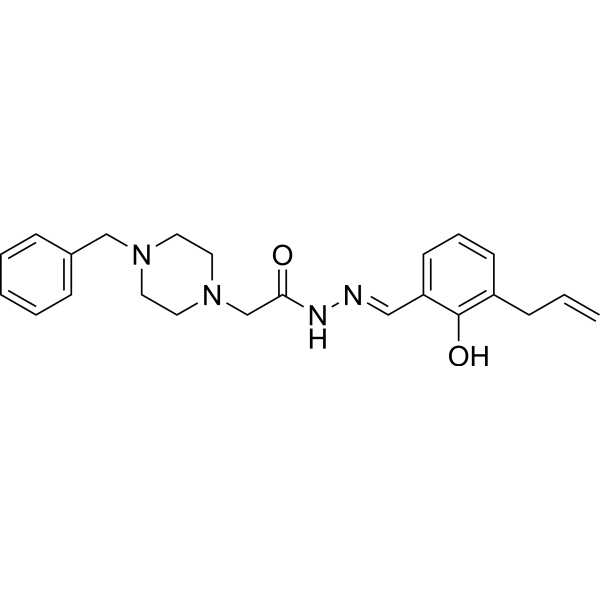
Cat. No.: HY-13523
CAS No.: 315183-21-2
Purity:  99.93%
Synonyms: Procaspase activating compound 1
Research Areas:  

Cancer

PAC-1 is a procaspase-3 activator that induces apoptosis in cancer cells with an EC50 of 2.08 μM.
5
5 Cited Publications
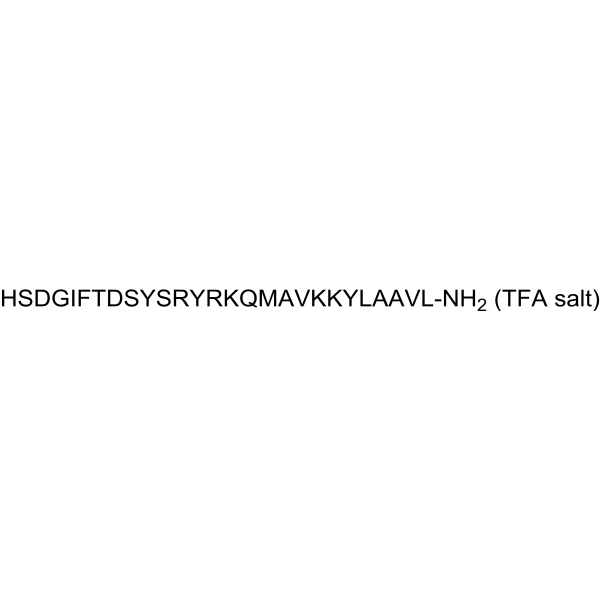
Cat. No.: HY-P0221
CAS No.: 137061-48-4
Synonyms: Pituitary Adenylate Cyclase Activating Polypeptide 38
PACAP (1-38), human, ovine, rat is a PAC1 receptor agonist. PACAP (1-38), human, ovine, rat binds to PACAP type I receptor, PACAP type II receptor VIP1, and PACAP type II receptor VIP2 with IC50s of 4 nM, 2 nM, and 1 nM, respectively. PACAP (1-38), human, ovine, rat increases the α-secretase activity. PACAP (1-38), human, ovine, rat elevates cytosolic Ca 2+, increases proliferation and increases phosphorylation of extracellular regulates kinase (ERK) and the epidermal growth factor receptor (EGFR). PACAP (1-38), human, ovine, rat demonstrates potent, efficacious, and sustained stimulatory effects on sympathetic neuronal NPY and catecholamine production. PACAP (1-38), human, ovine, rat can be used for neurotrophic and neuroprotective research .
3
3 Cited Publications
Cat. No.: HY-P0176
CAS No.: 127317-03-7
Synonyms: PACAP 1-27
Target:  

PACAP Receptor

PACAP (1-27), human, ovine, rat (PACAP 1-27) is the N-terminal fragment of PACAP-38, and is a potent PACAP receptor agonist with IC50s of 3 nM, 2 nM and 5 nM for rat PAC1, rat VPAC1 and human VPAC2, respectively .
3
3 Cited Publications
Cat. No.: HY-P0176A
Synonyms: PACAP 1-27 TFA
Target:  

PACAP Receptor

PACAP (1-27), human, ovine, rat TFA (PACAP 1-27 TFA) is the N-terminal fragment of PACAP-38, and is a potent PACAP receptor agonist with IC50s of 3 nM, 2 nM and 5 nM for rat PAC1, rat VPAC1 and human VPAC2, respectively .
2
2 Cited Publications
Cat. No.: HY-133529
CAS No.: 878437-15-1
Purity:  97.00%
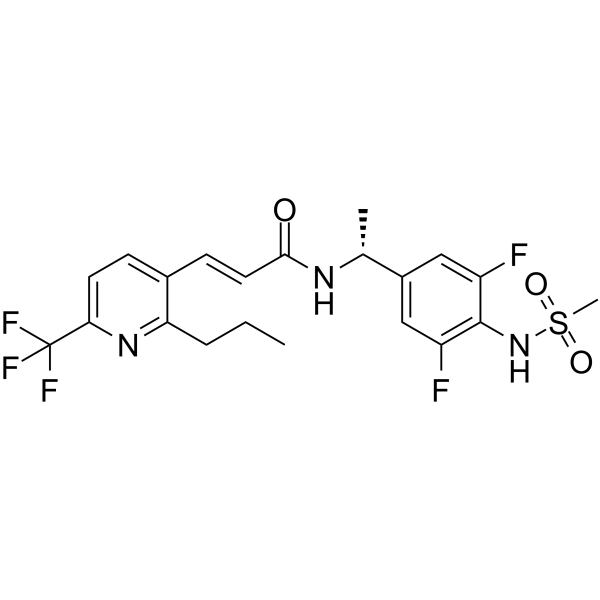
PA-8 is a potent, selective and orally active PACAP type I (PAC1) receptor antagonist. PA-8 inhibits the phosphorylation of CREB induced by PACAP in PAC1-, but not VPAC1- or VPAC2-receptor. PA-8 also inhibits PACAP-induced cAMP elevation with an IC50 of 2 nM .
1
1 Cited Publications
Cat. No.: HY-12777
CAS No.: 1005168-10-4
Purity:  95.76%
Synonyms: PAC-14028
Target:  

TRP Channel

Research Areas:  

Inflammation/Immunology

Asivatrep (PAC-14028) is a potent and selective transient receptor potential vanilloid type I (TRPV1) antagonist.
1
1 Cited Publications
Cat. No.: HY-147557
CAS No.: 2305204-24-2
Purity:  99.17%
Synonyms: PAC1R antagonist 1
Target:  

PACAP Receptor

Research Areas:  

Neurological Disease

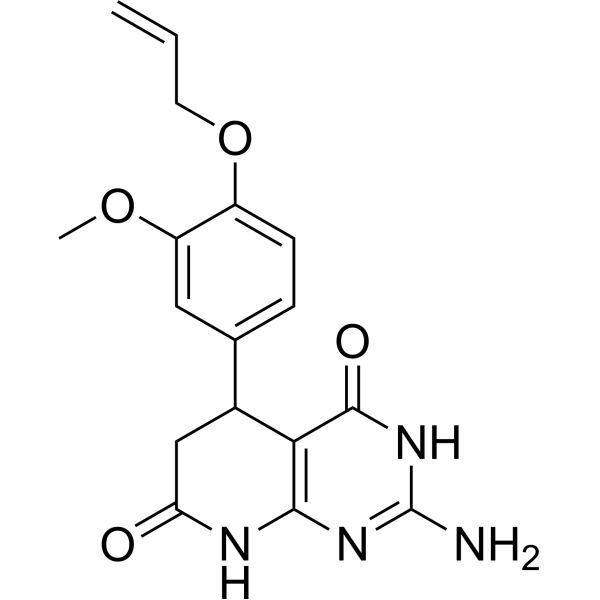
PA-915 (PAC1R antagonist 1) is a potent and orally active antagonist of PAC1 receptor. PA-915 inhibits pituitary adenylate cyclase-activating polypeptide (PACAP)-induced CREB phosphorylation. PA-915 can inhibit PACAP- and nerve injury-induced allodynia. PA-915 can be used for the research of neuropathic pain .
Cat. No.: HY-P99509
CAS No.: 2225850-33-7
Synonyms: AMG-301

Target:  

Adenylate Cyclase

Research Areas:  

Neurological Disease

Zelminemab (AMG-301) is a humanized monoclonal antibody that inhibits PACAP type I (PAC1) receptor .
Cat. No.: HY-P0221C
CAS No.: 129405-61-4
Target:  

PACAP Receptor

Research Areas:  

Metabolic Disease

PACAP (1-38) free acid is a desamido-PACAP (1-38), human, ovine, rat (HY-P0221). PACAP (1-38) free acid can activate the human PAC1 receptor. PACAP (1-38) free acid induces cyclic AMP (cAMP) generation in both NS-1 neuroendocrine cells and non-neuroendocrine HEK293 cells .
Cat. No.: HY-133736
CAS No.: 2704602-92-4
Purity:  99.73%
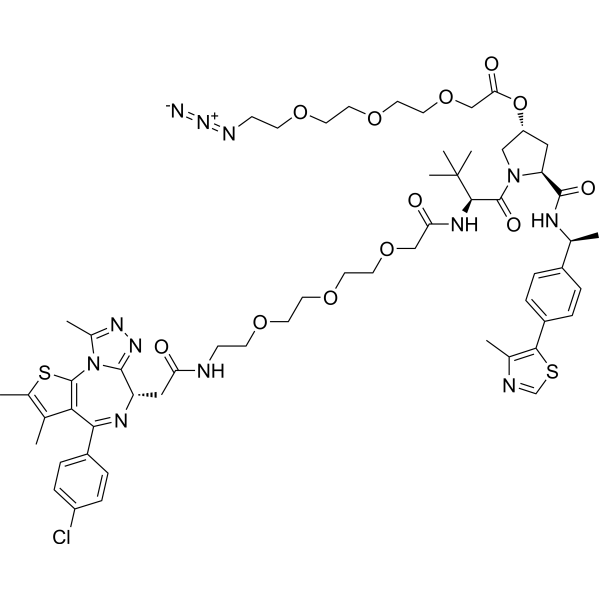
PROTAC BRD4 Degrader-5-CO-PEG3-N3 is a PROTAC-linker Conjugate for PAC, comprises the BRD4 degrader (MZ 1 (HY-107425) analog) and PEG-based linker. PROTAC BRD4 Degrader-5-CO-PEG3-N3 is a click chemistry reagent, it contains an Azide group and can undergo copper-catalyzed azide-alkyne cycloaddition reaction (CuAAc) with molecules containing Alkyne groups. It can also undergo strain-promoted alkyne-azide cycloaddition (SPAAC) reactions with molecules containing DBCO or BCN groups. PROTAC BRD4 Degrader-5-CO-PEG3-N3 can be used for the research of HER2-positive breast cancer .
Cat. No.: HY-112100
CAS No.: 2158322-33-7
Purity:  98.96%
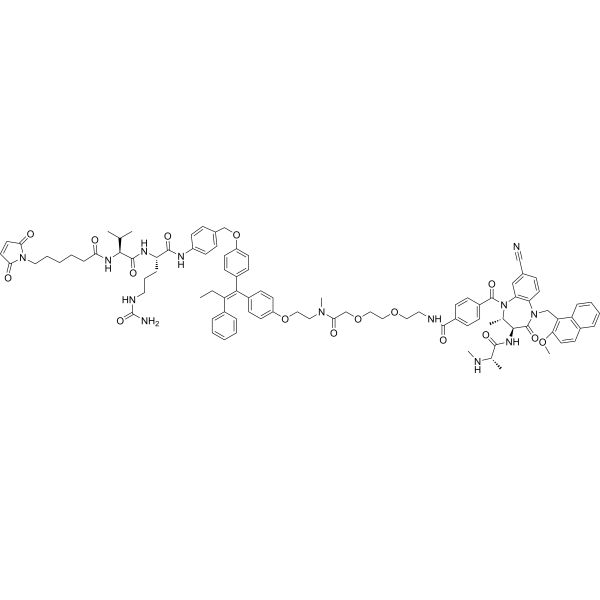
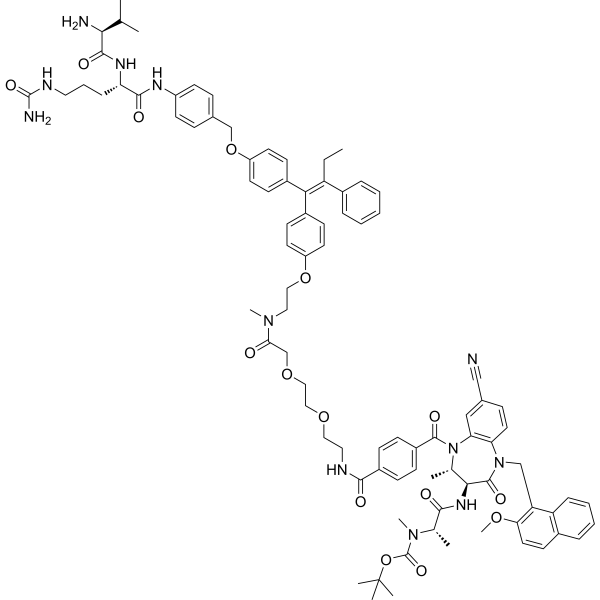
MC-Val-Cit-PAB-PROTAC ERα Degrader-1 (compound LP2) consists an ADC linker and a PROTAC, whcih can be conjugated to an antibody to form PACs. MC-Val-Cit-PAB-PROTAC ERα Degrader-1 conjugated to an antibody is a more marked estrogen receptor-alpha (ERα) degrader compared to PROTAC (without Ab) .
Cat. No.: HY-129938
CAS No.: 2417370-39-7
Purity:  99.61%
Research Areas:  

Cancer

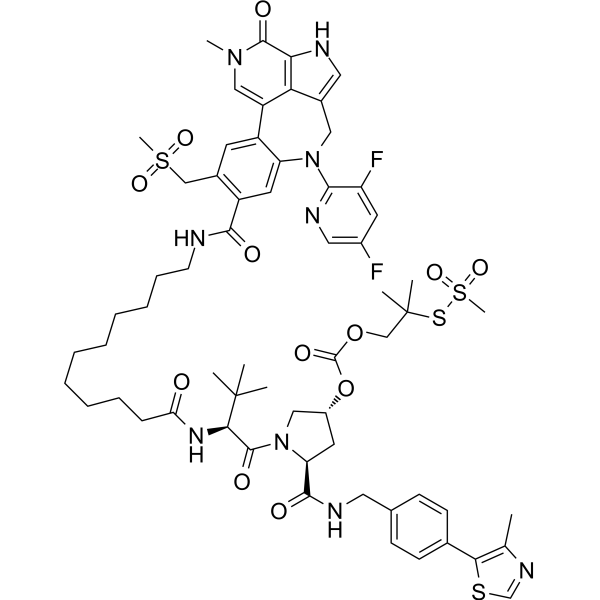
GNE-987 GSH linker-1, a PROTAC-linker Conjugate for PAC, comprises the chimeric BET degrader GNE-987 (HY-129937A) and disulfide-containing linker. GNE-987 GSH linker-1 remains inactive as a degrader until intracellular release of GNE-987 via disulfide reduction and linker self-immolation. GNE-987 GSH linker-1 can be used for the research of acute myeloid leukemia .
Cat. No.: HY-138581
CAS No.: 110543-74-3
Purity:  98.75%
Research Areas:  

Infection Cancer

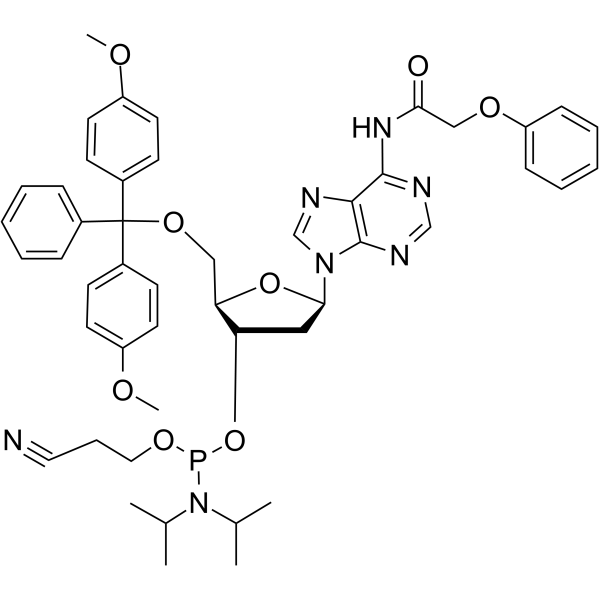
DMT-dA(PAc) Phosphoramidite is a dIPhosphoramidite and can be used for DNA or RNA synthesis.
Cat. No.: HY-129421
CAS No.: 1436004-46-4
Purity:  99.73%
PA-9 is a pituitary adenylate cyclase-activating polypeptide (PACAP) type I (PAC1) receptor antagonist. PA-9 dose dependently inhibits PACAP-induced cAMP elevation with an IC50 of 5.6 nM. PA-9 can be used for the research of neuropathic and/or inflammatory pain .
Cat. No.: HY-138606
CAS No.: 110522-82-2
Purity:  99.62%
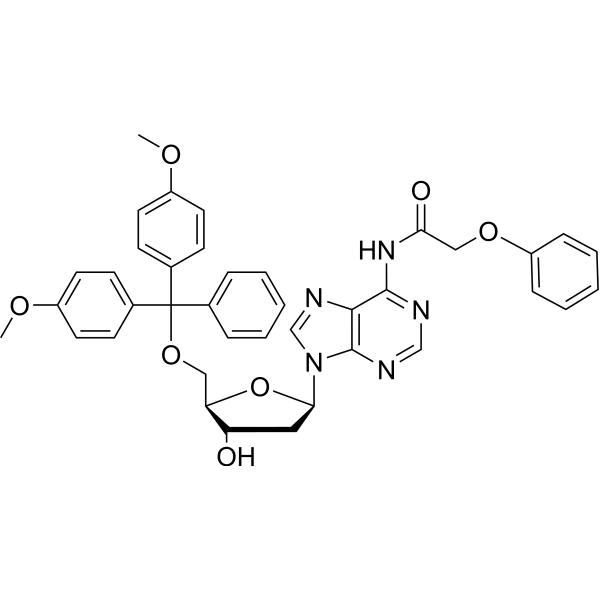
5'-O-DMT-PAC-dA can be used in the synthesis of oligoribonucleotides .
Cat. No.: HY-P3483
CAS No.: 135374-80-0
Maxadilan is a specific irreversible PAC1 receptor agonist and a potent vasodilator peptide present in the salivary glands of sand flies. Maxadilan exhibits anti-apoptotic activity in hADSCs. Maxadilan inhibits pro-inflammatory cytokines (TNF-α) and enhances anti-inflammatory mediators (IL-10). Maxadilan can activate leukocytes and inhibit vascular permeability through PAC1 receptors. Maxadilan promotes neural differentiation of human adipose-derived stem cells. Maxadilan can be used to study endotoxin shock, atherosclerosis, and neurodegenerative diseases [1] [2] [3] [4] [5].
Cat. No.: HY-160694
CAS No.: 2417369-73-2
Synonyms: cBu-Cit-PROTAC BRD4 Degrader-5
cBu-Cit-GAL-02-221 is a PROTAC that degrades BRD4 by association with cBu-Cit. cBu-Cit-GAL-02-221 can effectively inhibit BRD4 in HER2 positive and negative breast cancer cell lines. cBu-Cit-GAL-02-221 has a single bond and can be conjugated to an ADC antibody to form a PAC .
Cat. No.: HY-128527
CAS No.: 2158322-29-1
PROTAC ER Degrader-3 is an intermediate for synthesis of PAC. PAC, consists the ADCs linker and PROTACs, conjugated to an antibody. PAC extracts from patent WO2017201449A1, compound LP2. PAC conjugated to an antibody is a more marked estrogen receptor-alpha (ERα) degrader compared to PROTAC (without Ab) .
Cat. No.: HY-13523S
CAS No.: 1287241-26-2
Synonyms: Procaspase activating compound 1-d8
PAC-1-d8 (Procaspase activating compound 1-d8) is the deuterium labeled PAC-1 (HY-13523). PAC-1 is a procaspase-3 activator that induces apoptosis in cancer cells with an EC50 of 2.08 μM.
Cat. No.: HY-128528
PROTAC ER Degrader-2 is an intermediate for synthesis of PAC. PAC, consists the ADCs linker and PROTACs, conjugated to an antibody. PAC extracts from patent WO2017201449A1, compound LP2. PAC conjugated to an antibody is a more marked estrogen receptor-alpha (ERα) degrader compared to PROTAC (without Ab) .

