5 Results for "

Pro-xylane

" in MedChemExpress (MCE) Product Catalog:
Products (5)

5 Results for "Pro-xylane" in MCE Product Catalog:

1
1 Cited Publications
Cat. No.: HY-108036
CAS No.: 439685-79-7
Purity:  ≥98.0%
Synonyms: HydroxyPropyl tetrahydropyrantriol (30% in water)
Research Areas:  

Metabolic Disease

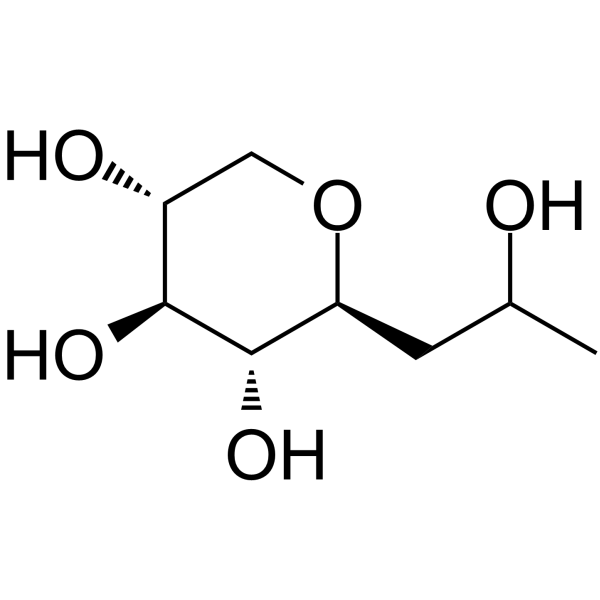
Pro-xylane (30% in water) (Hydroxypropyl tetrahydropyrantriol) is a bioactive C-glycoside that targets the biosynthesis pathway of glycosaminoglycans/mucopolysaccharides (GAGs) in the skin matrix and can be absorbed transdermally. Pro-xylane (30% in water) stimulates the biosynthesis of GAGs in fibroblasts, enhances the structural stability of the skin extracellular matrix, improves skin elasticity and moisturizing ability, and delays wrinkle formation. Pro-xylane (30% in water) can effectively promote the synthesis of collagen fibers and hyaluronic acid in the dermis. Pro-xylane (30% in water) is used in the field of anti-aging cosmetics to improve skin hydration and elasticity. Pro-xylane (30% in water) is eco-friendly and biodegradable .
loading...
    loading...
1
1 Cited Publications
Cat. No.: HY-108036B
CAS No.: 439685-79-7
Purity:  ≥98.0%
Synonyms: HydroxyPropyl tetrahydropyrantriol
Research Areas:  

Metabolic Disease

Pro-xylane (Hydroxypropyl tetrahydropyrantriol) is a bioactive C-glycoside that targets the biosynthesis pathway of glycosaminoglycans/mucopolysaccharides (GAGs) in the skin matrix and can be absorbed transdermally. Pro-xylane stimulates the biosynthesis of GAGs in fibroblasts, enhances the structural stability of the skin extracellular matrix, improves skin elasticity and moisturizing ability, and delays wrinkle formation. Pro-xylane can effectively promote the synthesis of collagen fibers and hyaluronic acid in the dermis. Pro-xylane is used in the field of anti-aging cosmetics to improve skin hydration and elasticity. Pro-xylane is eco-friendly and biodegradable .
loading...
    loading...
Cat. No.: HY-108036A
CAS No.: 868156-46-1
Purity:  ≥98.0%
Synonyms: (S)-HydroxyPropyl tetrahydropyrantriol
Research Areas:  

Metabolic Disease

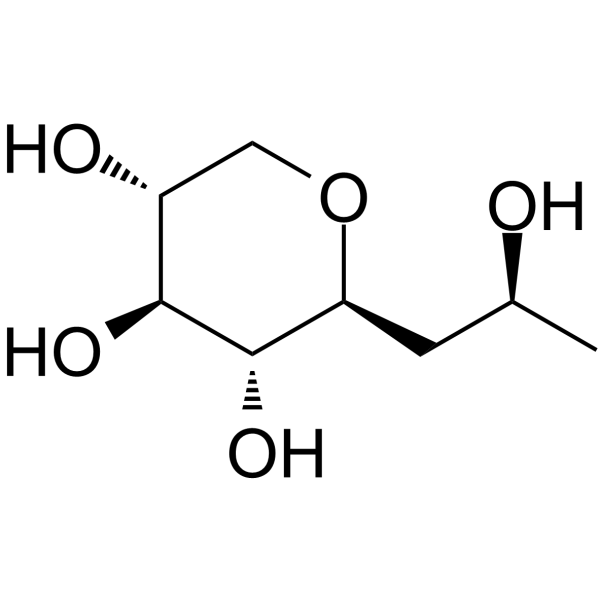
(S)-Pro-xylane ((S)-Hydroxypropyl tetrahydropyrantriol) is a bioactive C-glycoside that targets the biosynthesis pathway of glycosaminoglycans/mucopolysaccharides (GAGs) in the skin matrix and can be absorbed transdermally. (S)-Pro-xylane stimulates the biosynthesis of GAGs in fibroblasts, enhances the structural stability of the skin extracellular matrix, improves skin elasticity and moisturizing ability, and delays wrinkle formation. (S)-Pro-xylane can effectively promote the synthesis of collagen fibers and hyaluronic acid in the dermis. (S)-Pro-xylane is used in the field of anti-aging cosmetics to improve skin hydration and elasticity. (S)-Pro-xylane is eco-friendly and biodegradable .
loading...
    loading...
Cat. No.: HY-108036AR
CAS No.: 868156-46-1
Synonyms: (S)-HydroxyPropyl tetrahydropyrantriol (Standard)
(S)-Pro-xylane (Standard) is the analytical standard of (S)-Pro-xylane (HY-108036A). This product is intended for research and analytical applications. (S)-Pro-xylane ((S)-Hydroxypropyl tetrahydropyrantriol) is a bioactive C-glycoside that targets the biosynthesis pathway of glycosaminoglycans/mucopolysaccharides (GAGs) in the sKin matrix and can be absorbed transdermally. (S)-Pro-xylane stimulates the biosynthesis of GAGs in fibroblasts, enhances the structural stability of the sKin extracellular matrix, improves sKin elasticity and moisturizing ability, and delays wrinkle formation. (S)-Pro-xylane can effectively promote the synthesis of collagen fibers and hyaluronic acid in the dermis. (S)-Pro-xylane is used in the field of anti-aging cosmetics to improve sKin hydration and elasticity. (S)-Pro-xylane is eco-friendly and biodegradable .
loading...
    loading...
Cat. No.: HY-N9362R
CAS No.: 491-60-1
Synonyms: EmodAN (Standard)
Pro-xylane (Standard) is the analytical standard of Pro-xylane. This product is intended for research and analytical applications. Emodinanthrone (EmodAn) is a MARCH7 stabilizer that inhibits ferroptosis (EC50=70 nM). Emodinanthrone is also a precursor to Emodin (HY-14393) and possesses antibiotic activity. Emodinanthrone directly binds to MARCH7 and blocks its ubiquitination-mediated degradation at the K608 site; this action enhances MARCH7-mediated K48 ubiquitination and degradation of NCOA4, as well as its regulation of the intracellular localization of TFR1 via K63 ubiquitination, thereby reducing the intracellular labile iron pool and blocking ferroptosis. Emodinanthrone demonstrates in vivo cardioprotective effects and exhibits a favorable safety profile. Emodinanthrone is applicable to research on ferroptosis-related cardiovascular diseases, including Doxorubicin (HY-15142A)-induced cardiomyopathy and myocardial ischemia-reperfusion injury .
loading...
    loading...

