1. Search Result
Search Result
Results for "

Rice selectivity

" in MedChemExpress (MCE) Product Catalog:

11

Inhibitors & Agonists

1

Natural
Products

2

Isotope-Labeled Compounds

Cat. No. Product Name Target Research Areas Chemical Structure
  • HY-N6642

    PPAR Apoptosis Inflammation/Immunology Cancer
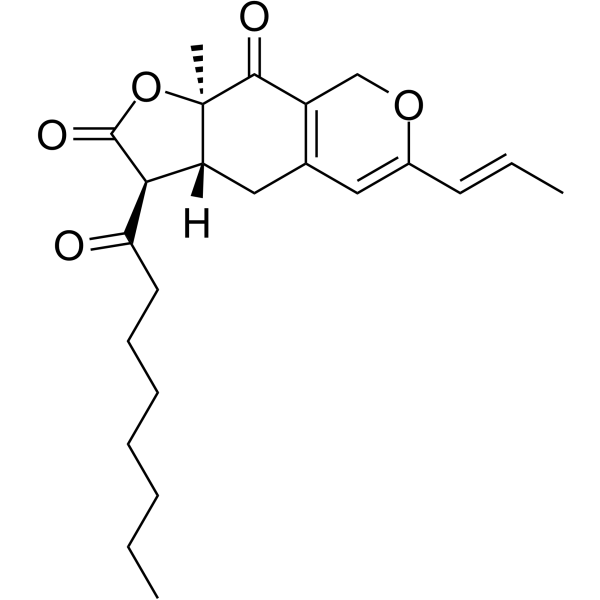
    Ankaflavin, isolated from Monascus-Fermented red rice, is an orally active PPARγ agonist. Ankaflavin exhibits selective cytotoxic effect and induces cell death through apoptosis on cancer cells. Ankaflavin has anti-inflammatory, anti-cancer, antiatherosclerotic, and hypolipidemic effects .
    Ankaflavin
  • HY-B0869A

    Environmental Pollutants SOD Acetolactate Synthase (ALS) Herbicide Metabolic Disease
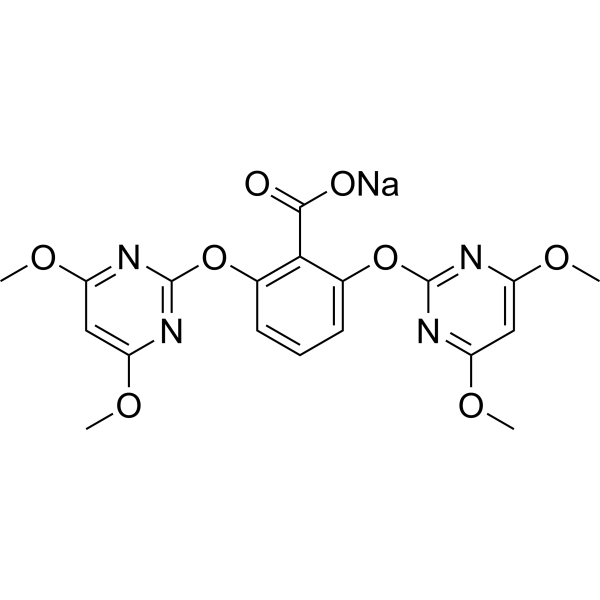
    Bispyribac sodium is a selective, orally active, systemic and post-emergence herbicide. Bispyribac sodium reduces SOD levels and inhibits ALS activity. Bispyribac sodium blocks the biosynthesis of branched-chain amino acids, resulting in growth retardation, chlorosis and necrosis of weeds. Bispyribac sodium exerts herbicidal activity against grass, sedge and broadleaf weeds in rice fields. Bispyribac sodium is hepatotoxic and genotoxic .
    Bispyribac sodium
  • HY-111957

    HPPD Others
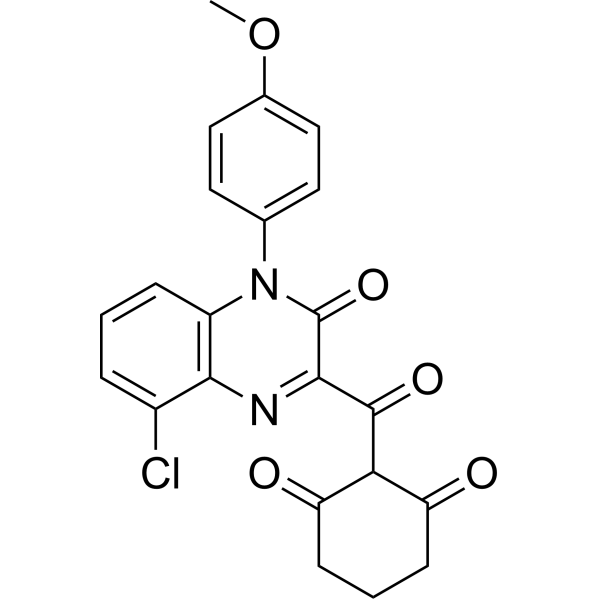
    Fenquinotrione is a 4-hydroxyphenylpyruvate dioxygenase (HPPD) inhibitor with IC50s of 27.2 and 44.7nM against rice and Arabidopsis thaliana HPPD, respectively. Fenquinotrione is an herbicide that can control a wide range of broadleaf and sedge weeds with excellent rice selectivity .
    Fenquinotrione
  • HY-P2802B

    Glycosidase Metabolic Disease
    α-Glucosidase, rice is a GH31 glycoside hydrolase in rice seeds, with high selectivity for α-1,4-glycosidic bonds. α-Glucosidase, rice can be inhibited by rice husk extracts (IC50 = 1.25 μg/mL) and steroidal components (IC50 = 1.83 μg/mL). α-Glucosidase, rice exists in two major isoforms, among which isoform II is more sensitive to inhibitors. α-Glucosidase, rice can directly bind to and degrade starch granules in rice seeds. α-Glucosidase, rice can form ONG2-I and ONG2-II via post-translational proteolysis. α-Glucosidase, rice can be used in type 2 diabetes research .
    α-Glucosidase, rice
  • HY-175641

    HPPD Others
    HPPD-IN-6 (Compound IIy) is a HPPD inhibitor with high rice selectivity. HPPD-IN-6 has potent herbicidal activities against Echinochloa crus-galli and Leymus chinensis, including the herbicide-resistant biotypes with EC50s of 19.62-33.26 g of ai/ha. HPPD-IN-6 effectively controls the weeds in rice fields at 90-150 g of ai/ha. HPPD-IN-6 can be used for the development of herbicide .
    HPPD-IN-6
  • HY-B2039

    Herbicide Others
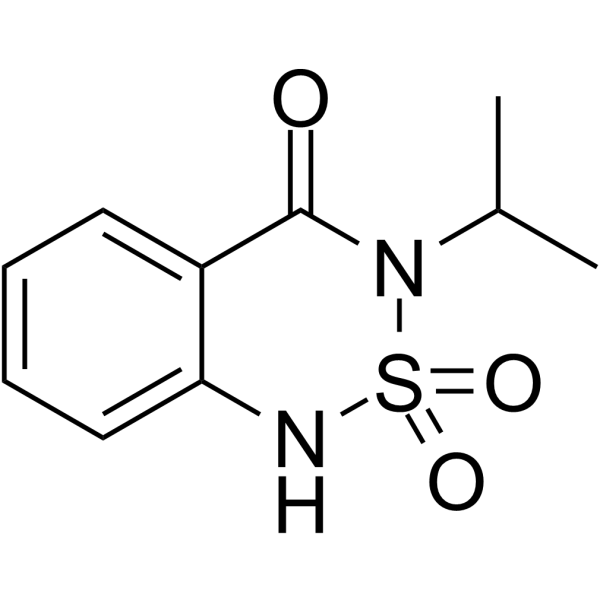
    Bentazone is a post-emergence herbicide used for selective control of broadleaf weeds and sedges in beans, rice, corn, peanuts, mint and others. It acts by interfering with photosynthesis .
    Bentazone
  • HY-B2039S1

    Isotope-Labeled Compounds Others
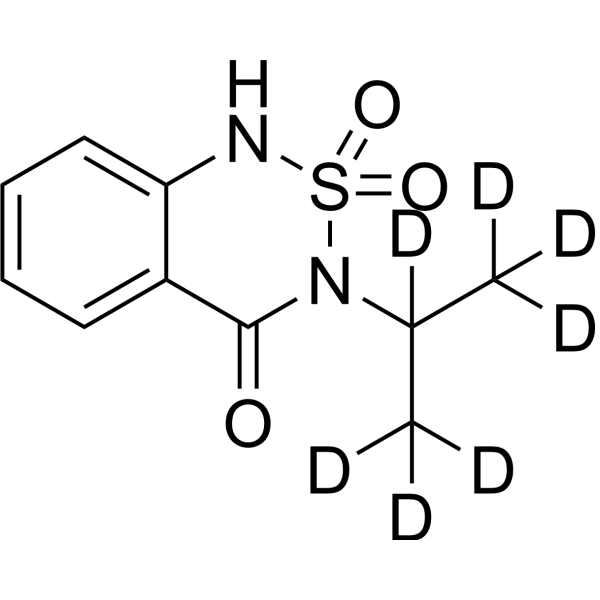
    Bentazone-d7 is the deuterium labeled Bentazone . Bentazone is a post-emergence herbicide used for selective control of broadleaf weeds and sedges in beans, rice, corn, peanuts, mint and others. It acts by interfering with photosynthesis .
    Bentazone-d7
  • HY-B2039R

    Herbicide Reference Standards Others
    Bentazone (Standard) is the analytical standard of Bentazone. This product is intended for research and analytical applications. Bentazone is a post-emergence herbicide used for selective control of broadleaf weeds and sedges in beans, rice, corn, peanuts, mint and others. It acts by interfering with photosynthesis .
    Bentazone (Standard)
  • HY-B2039S

    Isotope-Labeled Compounds Others
    Bentazone- 13C10, 15N is the 13C-labeled and 15N-labeled Bentazone. Bentazone is a post-emergence herbicide used for selective control of broadleaf weeds and sedges in beans, rice, corn, peanuts, mint and others. It acts by interfering with photosynthesis .
    Bentazone-13C10,15N
  • HY-B0869AR

    Reference Standards Acetolactate Synthase (ALS) SOD Metabolic Disease
    Bispyribac (sodium) (Standard) is the analytical standard of Bispyribac sodium (HY-B0869A). This product is intended for research and analytical applications. Bispyribac sodium is a selective, orally active, systemic and post-emergence herbicide. Bispyribac sodium reduces SOD levels and inhibits ALS activity. Bispyribac sodium blocks the biosynthesis of branched-chain amino acids, resulting in growth retardation, chlorosis and necrosis of weeds. Bispyribac sodium exerts herbicidal activity against grass, sedge and broadleaf weeds in rice fields. Bispyribac sodium is hepatotoxic and genotoxic .
    Bispyribac sodium (Standard)
  • HY-W721333

    Herbicide Acetolactate Synthase (ALS) Others
    Pyrimisulfan is a potent acetolactate synthase (ALS) inhibitor and a broad‑spectrum herbicide. Pyrimisulfan selectively inhibits plant acetolactate synthase. Pyrimisulfan controls a wide spectrum of paddy weeds including annual grasses, sedges, broadleaf weeds, and sulfonylurea‑resistant biotypes pre‑ and postemergence, with long residual activity and excellent rice safety. Pyrimisulfan can be used for research on paddy herbicides .
    Pyrimisulfan

Inquiry Online

Your information is safe with us. * Required Fields.

Salutation


Country or Region *

Applicant Name *


Organization Name *

Department *


Email Address *


Product Name *

Cat. No.


Requested quantity *

Phone Number *


Remarks

Inquiry Online

Inquiry Information

Product Name:
Cat. No.:
Quantity:
MCE Japan Authorized Agent:

