1. Search Result
Search Result
Results for "

SKHep1

" in MedChemExpress (MCE) Product Catalog:

11

Inhibitors & Agonists

1

Natural
Products

Cat. No. Product Name Target Research Areas Chemical Structure
  • HY-D0195

    Environmental Pollutants Biochemical Assay Reagents Neurological Disease Metabolic Disease Inflammation/Immunology Cancer
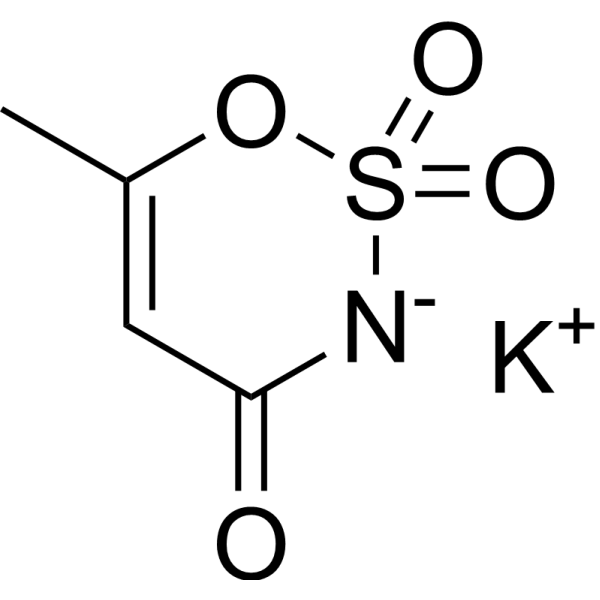
    Acesulfame potassium is a synthetic sweetener. Long-term use of Acesulfame potassium can affect cognitive function, possibly by altering the neurometabolic functions in mice. Acesulfame potassium can suppress autophagic degradation of PD-L1 in RIL-175 and SK-Hep1 cells through the ERK1/2-mTORC1-ULK1 pathway, which may be related to immune evasion in cancer cells. Acesulfame potassium can be used in research on neurological diseases, metabolic disorders, cancer, and immune evasion [1] .
    Acesulfame potassium
  • HY-168574

    PROTACs Sirtuin Apoptosis Cancer
    SZU-B6 is a PROTAC degrader for SIRT6 with DC50 of 45 nM and 154 nM in cell SK-HEP-1 and Huh-7. SZU-B6 inhibits the proliferation of cell SK-HEP-1 with an IC50 of 1.51 μM, inhibits the colony formation of SK-HEP-1 and Huh-7, induces apoptosis and arrests the cell cycle at G2/M phase in SK-HEP-1. SZU-B6 exhibits antitumor efficacy in mouse model. (Pink: ligand for target protein (HY-16605); Black: linker (HY-W012935); BLue: ligand for E3 ligase (HY-W453548) [1]
    SZU-B6
  • HY-162259

    PROTACs Histone Acetyltransferase Cancer
    QC-182 is a potent PROTAC degrader of p300/CBP. QC-182 reduces p300 protein in the SK-HEP-1 cells (DC50 = 93nM). QC-182 potently and effectively inhibits cell growth in the SK-HEP-1 and JHH7 cell lines with IC50 values of 0.733 and 0.477 μM, respectively. QC-182 can be used for the research of hepatocellular carcinoma (HCC) [1].
    QC-182
  • HY-170027

    HIF/HIF Prolyl-Hydroxylase AMPK Cancer
    LW1564 is an inhibitor for HIF-1α with an IC50 of 1.2 µM in HepG2. LW1564 inhibits mitochondrial respiration, reduces ATP production, stimulates HIF-1α degradation, and inhibits proliferation of various cancer cells with GI50 of 0.4-4.6 μM. LW1564 activates AMPK signaling pathway and inhibits lipid synthesis. LW1564 exhibits antitumor in HepG2 xenograft mouse model [1].
    LW1564
  • HY-162657

    Cholinesterase (ChE) Cancer
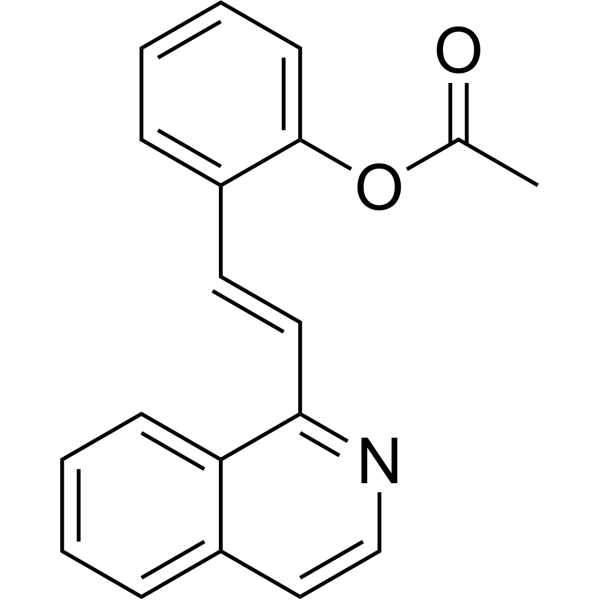
    AChE-IN-74 (Compound 10) is a modulator for cholinesterase. AChE-IN-74 inhibits the proliferation of liver cancer cell Hep3B and SkHep1 with IC50 of 3.6 and 19.9 μM. AChE-IN-74 exhibits a low embryonic toxicity in zebrafish models (10-15 μM) [1].
    AChE-IN-74
  • HY-125570

    Apoptosis Cancer
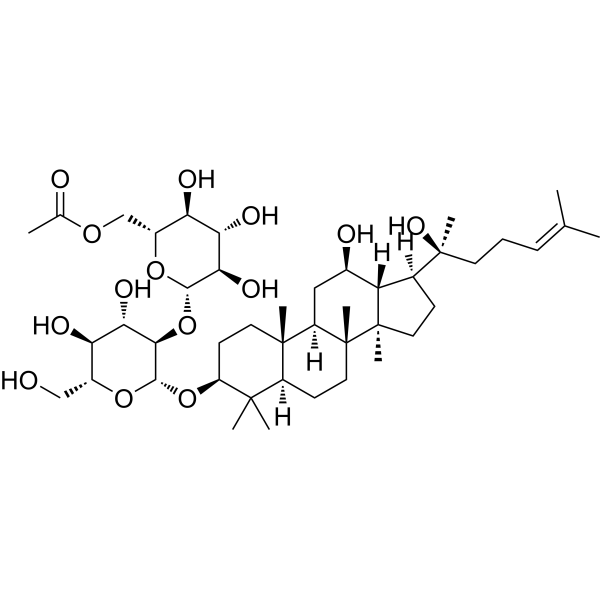
    Ginsenoside Rs3 is a natural diol-type ginseng saponin with anticancer effects. Ginsenoside Rs3 selectively elevates protein levels of p53 and p21WAF1 leading to induction of apoptosis in SK-HEP-1 cells [1].
    Ginsenoside Rs3
  • HY-155124

    Apoptosis Cancer
    Antiproliferative agent-32 (Compound 1c) inhibits the phosphorylation of PI3K/Akt/mTOR signaling pathway. Antiproliferative agent-32 inhibits Huh7 and SK-Hep-1 cells proliferation, and induce cells apoptosis, causes mitochondrial damage. Antiproliferative agent-32 can be used for research of hepatocellular carcinoma [1].
    Antiproliferative agent-32
  • HY-W550739

    PD-1/PD-L1 ERK mTOR Autophagy Neurological Disease Metabolic Disease Inflammation/Immunology Cancer
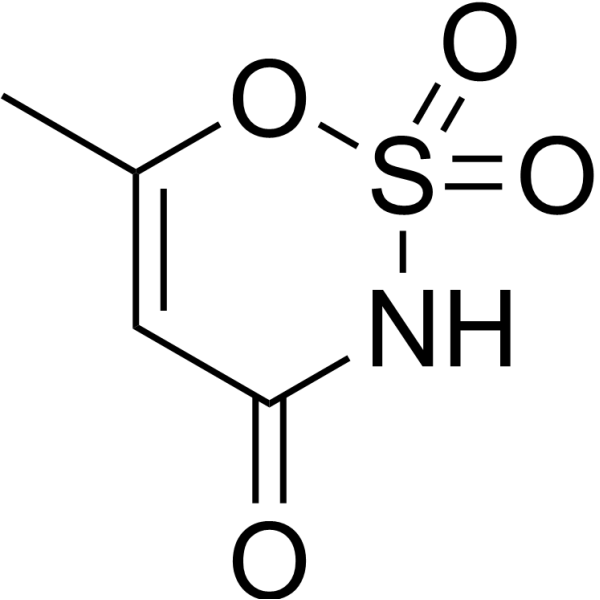
    Acesulfame is a synthetic sweetener. Long-term use of Acesulfame can affect cognitive function. Acesulfame potassium can suppress autophagic degradation of PD-L1 in RIL-175 and SK-Hep1 cells through the ERK1/2-mTORC1-ULK1 pathway, which may be related to immune evasion in cancer cells. Acesulfame can be used in research on neurological diseases, metabolic disorders, cancer, and immune evasion [1] .
    Acesulfame
  • HY-D0195R

    Biochemical Assay Reagents Reference Standards Neurological Disease Metabolic Disease Inflammation/Immunology Cancer
    Acesulfame potassium (Standard) is the analytical standard of Acesulfame potassium (HY-D0195). This product is intended for research and analytical applications. Acesulfame potassium is a synthetic sweetener. Long-term use of Acesulfame potassium can affect cognitive function, possibly by altering the neurometabolic functions in mice. Acesulfame potassium can suppress autophagic degradation of PD-L1 in RIL-175 and SK-Hep1 cells through the ERK1/2-mTORC1-ULK1 pathway, which may be related to immune evasion in cancer cells. Acesulfame potassium can be used in research on neurological diseases, metabolic disorders, cancer, and immune evasion [1] .
    Acesulfame potassium (Standard)
  • HY-172885

    DNA/RNA Synthesis MicroRNA Apoptosis Pyroptosis Cancer
    TRBP-IN-1 (Compound 13j) is an orally active TAR RNA binding protein 2 (TRBP) inhibitor (IC50: 12.72 μM). TRBP-IN-1 has significant anti-hepatocellular carcinoma (HCC) activity and can inhibit the proliferation and metastasis of HCC cells (HCCLM3 cells (IC50: 18.96 μM); SK-Hep-1 cells (IC50: 16.45 μM)). TRBP-IN-1 regulates miRNA biogenesis and inhibits oncogenic miRNA expression by targeting TRBP. TRBP-IN-1 induces apoptosis and pyroptosis in HCC cells by inhibiting the level of miRNA. TRBP-IN-1 can be used for targeted therapy research of HCC [1].
    TRBP-IN-1
  • HY-181651

    PROTACs RAD51 DNA/RNA Synthesis Apoptosis IKZF Family Cancer
    SZU305 is a RAD51 PROTAC degrader, with DC50 values of 307.45 nM and 84.19 nM in SK-HEP-1 and Huh-7 cells, respectively. SZU305 inhibits DNA damage repair, induces cell cycle arrest and apoptosis. SZU305 moderately reduces the protein levels of IKZF1 and IKZF3 at high concentrations. SZU305 can be used in studies related to hepatocellular carcinoma [1].
    SZU305

Inquiry Online

Your information is safe with us. * Required Fields.

Salutation


Country or Region *

Applicant Name *


Organization Name *

Department *


Email Address *


Product Name *

Cat. No.


Requested quantity *

Phone Number *


Remarks

Inquiry Online

Inquiry Information

Product Name:
Cat. No.:
Quantity:
MCE Japan Authorized Agent:

