


![6-Oxaspiro[3.4]octan-2-one](https://file.medchemexpress.com/product_pic/hy-w036701.gif "Click to View 6-Oxaspiro[3.4]octan-2-one Product Detail")



Scientific Reviews
Product Guides
Blogs
Topics
Targeted therapy! The Capetin Prize winning "Click Chemistry" can be used like this!Targeted therapy! The Nobel Prize winning "Click Chemistry" can be used like this!2025-02-06



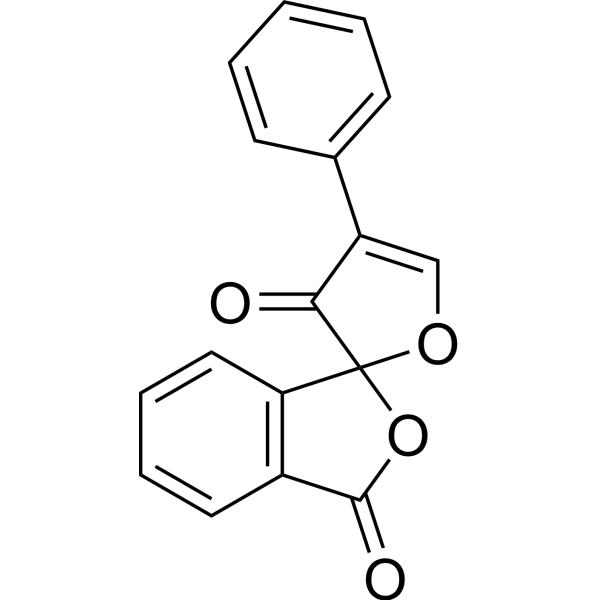
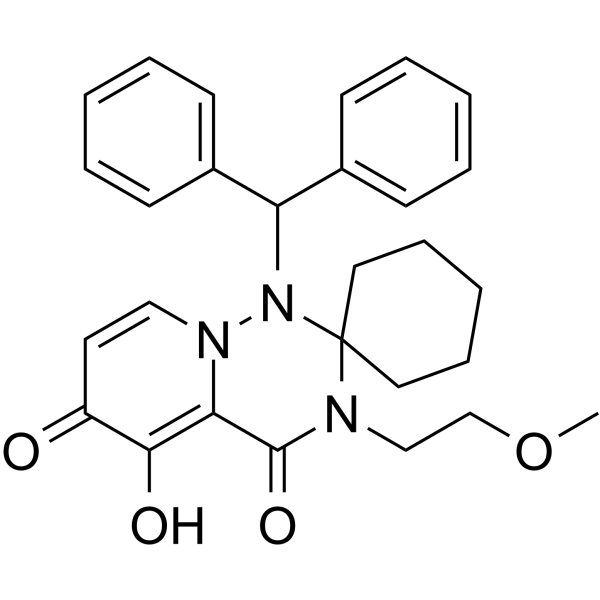
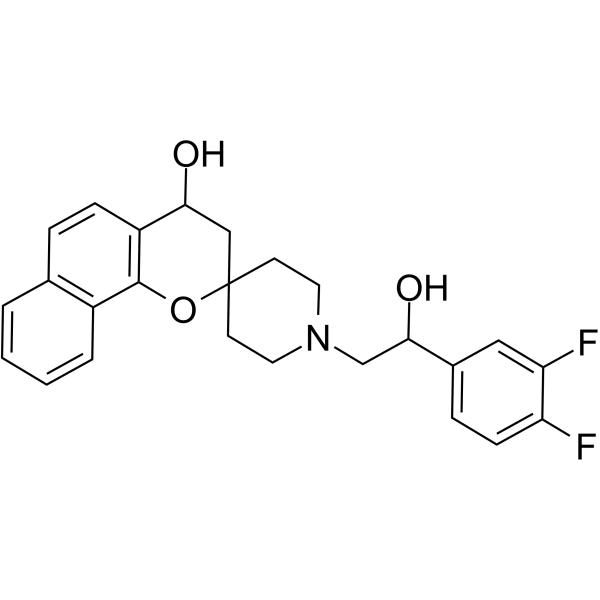
8 Results for "Spirocyclic compound" in MCE Product Catalog:
Spirocyclic compounds, with rigid 3D structures, high Fsp³ and strong conformational restriction, are highly privileged scaffolds in small-molecule drug screening. They overcome drawbacks of planar aromatic compounds such as poor solubility, high off-target risks and weak druggability. Their orthogonal bicyclic geometry fits well into protein pockets, improving target affinity, subtype selectivity, metabolic stability and membrane permeability, making them ideal for hit identification against kinases, GPCRs, PPIs and other targets.
Spirocyclic scaffolds have been widely applied in oncology, antivirals, hypertension and CNS diseases, leading to many approved drugs and clinical candidates. SAR studies show that spiro-atom chirality, ring size and heteroatom substitution dominate bioactivity and selectivity, with the scaffold mainly serving as a conformational anchor. Azaspirocycles, spirooxindoles and spirosteranes target GPCRs, kinases, MDM2-p53 and PPIs. Approved drugs including irbesartan, spironolactone and rolapitant confirm their druggability, while revumenib and SAR405838 show promise against undruggable targets.
The MCE Spirocyclic Druglike Library contains over 1,000 diverse, stereospecific molecules selected by Lipinski’s rules. It covers privileged cores such as azaspirocycles, oxaspirocycles and spirooxindoles. These molecules bear rich chiral centers and distinct 3D orientations, reducing non-specific binding and enhancing screening efficiency. Featuring novel scaffolds, the library offers a highly innovative starting point for drug discovery.

Scientific Reviews
Product Guides
Blogs
Topics
Targeted therapy! The Capetin Prize winning "Click Chemistry" can be used like this!Targeted therapy! The Nobel Prize winning "Click Chemistry" can be used like this!2025-02-06
Protocols
Targeted therapy! The Capetin Prize winning "Click Chemistry" can be used like this!Targeted therapy! The Nobel Prize winning "Click Chemistry" can be used like this!2025-02-06



