4 Results for "

Wistar-Han rats

" in MedChemExpress (MCE) Product Catalog:
Products (4)

4 Results for "Wistar-Han rats" in MCE Product Catalog:

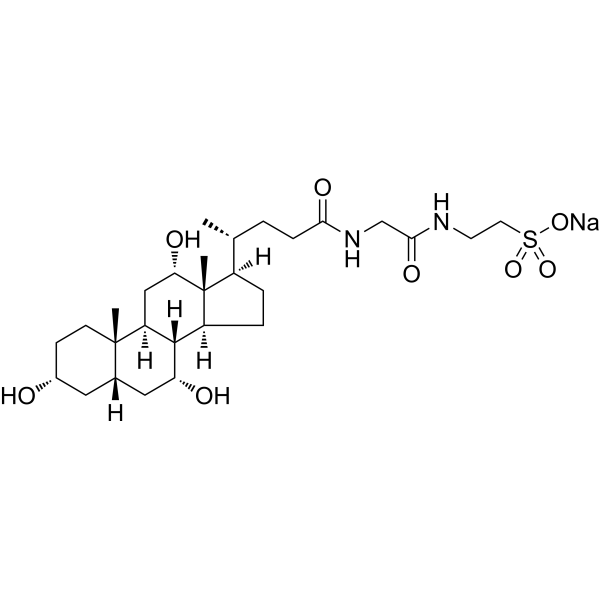
Cat. No.: HY-B2119
CAS No.: 41945-48-6
Synonyms: Tauroglycocholic acid sodium salt
Research Areas:  

Metabolic Disease

Sodium tauroglycocholate (Tauroglycocholic acid sodium salt) is a multifunctional surfactant and penetration enhancer that can serve as a cholegraphic contrast agent. In organic solvents, Sodium tauroglycocholate embeds and stabilizes invertase by forming reverse micelles, and prolongs its active lifespan. In terms of transdermal absorption, Sodium tauroglycocholate effectively regulates the flux of aminophylline through snake slough by binding to keratin filaments, disrupting keratinocytes and altering lipid components of the stratum corneum. It exhibits rapid penetration characteristics without lag time at a concentration of 100 μg/mL. Sodium tauroglycocholate does not interfere with the hepatic uptake of Gd-EOB-DTPA by the bile acid transport system in rat hepatocytes .
loading...
    loading...
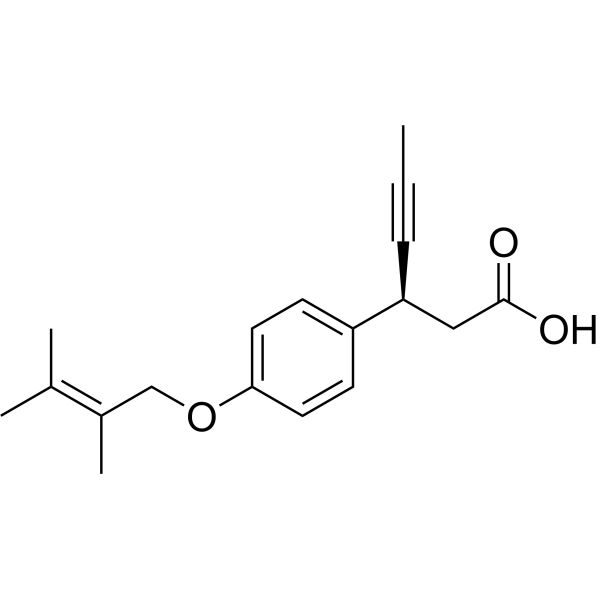
Cat. No.: HY-160602
CAS No.: 2361497-72-3
Research Areas:  

Metabolic Disease

CPL207280 is an orally active GPR40/FFA1 agonist with an antidiabetic effect. CPL207280 can effectively enhance glucose-stimulated insulin secretion and improve glucose tolerance in MIN6 pancreatic β-cells as well as in healthy Wistar Han rats and diabetic rat models. CPL207280 can be used for the research of type 2 diabetes .
loading...
    loading...
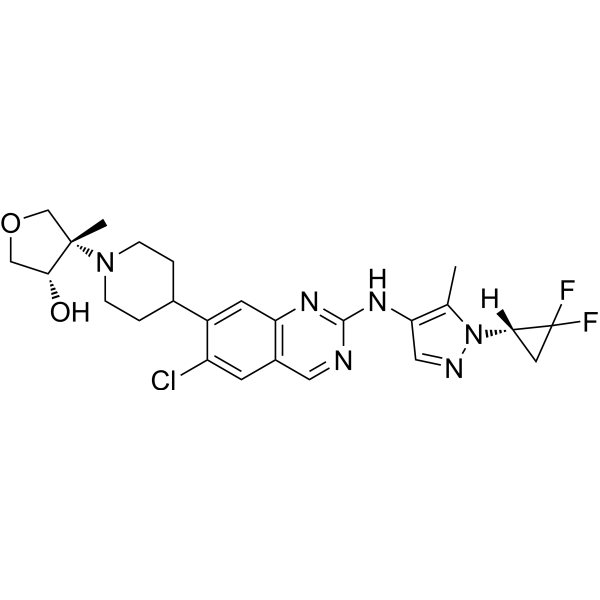
Cat. No.: HY-144074
CAS No.: 2641054-59-1
Target:  

LRRK2

Research Areas:  

Neurological Disease

LRRK2-IN-4 is a potent, selective, CNS-penetran and orally active leucine-rich repeat kinase 2 (LRRK2) inhobitor with an IC50 of 2.6 nM. LRRK2-IN-4 has the potential for the research of Parkinson’s disease .
loading...
    loading...
Cat. No.: HY-175420
CAS No.: 2696409-13-7
Research Areas:  

Metabolic Disease

K-757 is an orally active, gut-targeted GPR40 agonist with EC50 values of 2.1 nM, 5.6 nM, 4.2 nM and 166 nM in humans, mice, rats and dogs, respectively. K-757 activates nutrient receptors co-expressed on pancreatic β cells and intestinal enteroendocrine cells. K-757 mediates and induces the secretion of satiety hormones GLP-1 and PYY in multiple in vitro and in vivo models. When used in combination with GPR119 agonist K-833, K-757 acts as a potentiator to elevate circulating levels of satiety hormones. K-757 can be used in the research of type 2 diabetes, weight loss and other related metabolic disorders .
loading...
    loading...

