12 Results for "

cardiovascular pathologies

" in MedChemExpress (MCE) Product Catalog:
Products (12)

12 Results for "cardiovascular pathologies" in MCE Product Catalog:

2
2 Cited Publications
Cat. No.: HY-122537A
CAS No.: 68377-92-4
Purity:  99.93%
Research Areas:  

Cardiovascular Disease

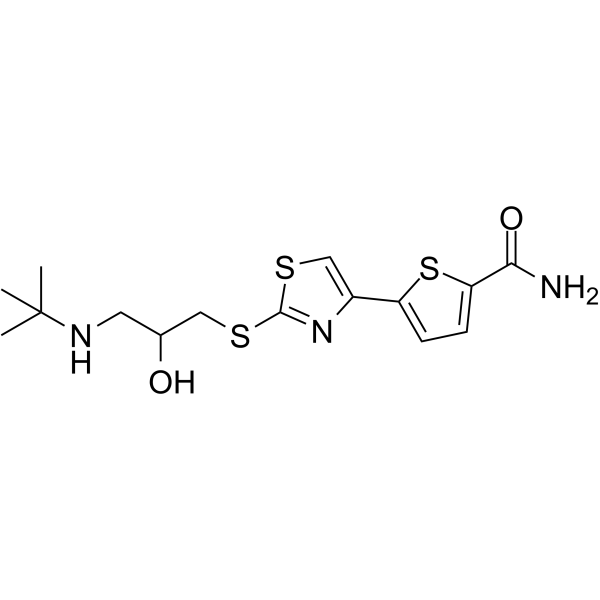
Arotinolol is a nonselective α/β-adrenergic receptor blocker and a vasodilating β-blocker . Arotinolol also shows potency for inhibiting the binding of the radioligand 125I-ICYP to 5HT1B-serotonergic receptor sites . Arotinolol is an antihypertensive agent for the treatment of a variety of cardiovascular pathologies as well as non-cardiovascular diseases .
loading...
    loading...
2
2 Cited Publications
Cat. No.: HY-122537
CAS No.: 68377-91-3
Research Areas:  

Cardiovascular Disease

Arotinolol hydrochloride is a nonselective α/β-adrenergic receptor blocker and a vasodilating β-blocker . Arotinolol hydrochloride also shows potency for inhibiting the binding of the radioligand 125I-ICYP to 5HT1B-serotonergic receptor sites . Arotinolol hydrochloride is an antihypertensive agent for the treatment of a variety of cardiovascular pathologies as well as non-cardiovascular diseases .
loading...
    loading...
1
1 Cited Publications
Cat. No.: HY-W017540
CAS No.: 35404-50-3
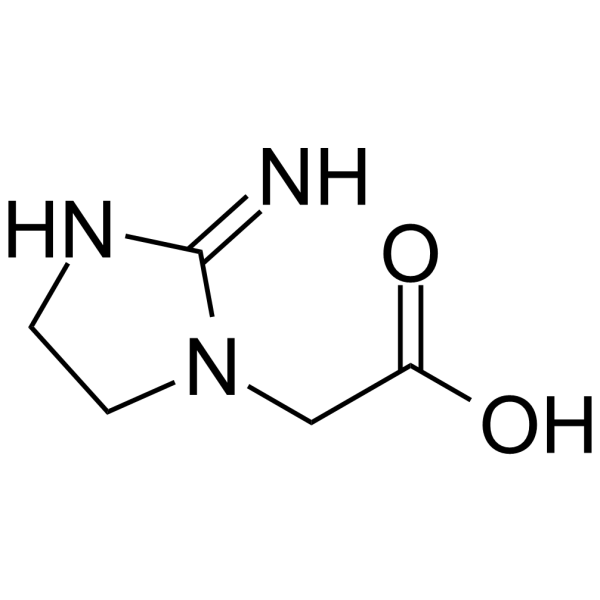
Cyclocreatine, a creatine analogue, acts as a brain-penetrant and potent bioenergetic protective agent by providing high levels of ATP. Cyclocreatine can be phosphorylated and dephosphorylated by creatine kinases. Cyclocreatine suppresses creatine metabolism ameliorating the cognitive, autistic and epileptic phenotype in a mouse model of creatine transporter defciency. Cyclocreatine protects against ischemic injury and enhances cardiac recovery during early reperfusion in dogs and rats. Cyclocreatine decreases plaque-adjacent neuronal dystrophy in TREM2-deficient mice with amyloid-β pathology. Cyclocreatine is proming for research of ischemic heart disease, cardiovascular diseases, Alzheimer’s disease and other neurodegenerative diseases associated with microglial dysfunction, prostate cancer .
loading...
    loading...
Cat. No.: HY-W017540R
CAS No.: 35404-50-3
Cyclocreatine, a creatine analogue, acts as a brain-penetrant and potent bioenergetic protective agent by providing high levels of ATP. Cyclocreatine can be phosphorylated and dephosphorylated by creatine kinases. Cyclocreatine suppresses creatine metabolism ameliorating the cognitive, autistic and epileptic phenotype in a mouse model of creatine transporter defciency. Cyclocreatine protects against ischemic injury and enhances cardiac recovery during early reperfusion in dogs and rats. Cyclocreatine decreases plaque-adjacent neuronal dystrophy in TREM2-deficient mice with amyloid-β pathology. Cyclocreatine is proming for research of ischemic heart disease, cardiovascular diseases, Alzheimer’s disease and other neurodegenerative diseases associated with microglial dysfunction, prostate cancer .
loading...
    loading...
Cat. No.: HY-122537AR
CAS No.: 68377-92-4
Arotinolol (Standard) is the analytical standard of Arotinolol. This product is intended for research and analytical applications. Arotinolol is a nonselective α/β-adrenergic receptor blocker and a vasodilating β-blocker . Arotinolol also shows potency for inhibiting the binding of the radioligand 125I-ICYP to 5HT1B-serotonergic receptor sites . Arotinolol is an antihypertensive agent for the treatment of a variety of cardiovascular pathologies as well as non-cardiovascular diseases .
loading...
    loading...
Cat. No.: HY-W653969
CAS No.: 2514848-16-7
Arotinolol-d5 (hydrochloride) is deuterium labeled Arotinolol. Arotinolol is a nonselective α/β-adrenergic receptor blocker and a vasodilating β-blocker . Arotinolol also shows potency for inhibiting the binding of the radioligand 125I-ICYP to 5HT1B-serotonergic receptor sites. Arotinolol is an antihypertensive agent for the treatment of a variety of cardiovascular pathologies as well as non-cardiovascular diseases .
loading...
    loading...
Cat. No.: HY-131384
CAS No.: 34262-64-1
Synonyms: 8,11,14-Icosatriynoic acid
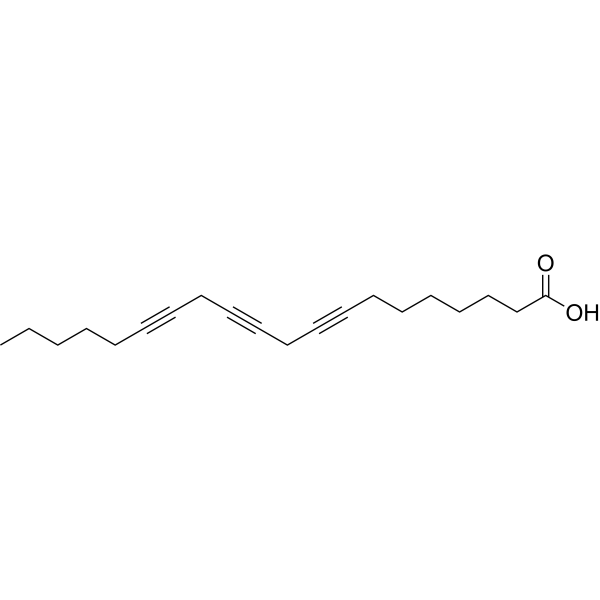
8,11,14-Eicosatriynoic Acid, as an inhibitor of prostaglandin, leukotriene biosynthesis, and arachidonic acid-induced platelet aggregation, blocks human 12-lipoxygenase (12-LO), cyclooxygenase (COX)and 5-lipoxygenase (5-LO) with IC50 values of 0.46 μM, 14 μMand 25 μM, respectively. In addition, 8,11,14-Eicosatriynoic Acid inhibits the action of slow-reacting substances of allergic reactions, with IC50 value of 10 μM. Lipoxygenase is widely found in fungi, plants and animals. 12-LO involves in many important disease states and may play a role in oxidative glutamate toxicity. COX enzymes play complex roles in human physiology and pathology involving the neuronal, immune, renal, cardiovascular, gastrointestinal and reproductive systems. COX enzymes are blocked by aspirin and a variety of other NSAIDs, which makes them clinically important. 5-LO involves in cancer pathology. It is expressed by a variety of cancer cells, including colon, lung, breast, and prostate cancers, and promotes cancer cell growth and neovascularization . 8,11,14-Eicosatriynoic acid is a click chemistry reagent, it contains an Alkyne group and can undergo copper-catalyzed azide-alkyne cycloaddition (CuAAc) with molecules containing Azide groups.
loading...
    loading...
Cat. No.: HY-W017540S
Cyclocreatine- 13C3 is the 13C-labeled Cyclocreatine (HY-W017540). Cyclocreatine, a creatine analogue, acts as a brain-penetrant and potent bioenergetic protective agent by providing high levels of ATP. Cyclocreatine can be phosphorylated and dephosphorylated by creatine kinases. Cyclocreatine suppresses creatine metabolism ameliorating the cognitive, autistic and epileptic phenotype in a mouse model of creatine transporter defciency. Cyclocreatine protects against ischemic injury and enhances cardiac recovery during early reperfusion in dogs and rats. Cyclocreatine decreases plaque-adjacent neuronal dystrophy in TREM2-deficient mice with amyloid-β pathology. Cyclocreatine is proming for research of ischemic heart disease, cardiovascular diseases, Alzheimer’s disease and other neurodegenerative diseases associated with microglial dysfunction, prostate cancer .
loading...
    loading...
Cat. No.: HY-L072
56 compounds

Exosomes are small membrane vesicles of endocytic origin that are secreted by most cells in culture. Exosomes contain nucleic acids, proteins, lipids, amino acids, and metabolites, etc. Their diverse constituents can reflect their cell of origin. Exosomes are associated with immune responses, viral pathogenicity, pregnancy, cardiovascular diseases, central nervous system-related diseases, and cancer progression. Proteins, metabolites, and nucleic acids delivered by exosomes into recipient cells effectively alter their biological response. Such exosome-mediated responses can be disease promoting or restraining.

The biology of exosomes in disease is still emerging, and the number of studies addressing their utility in the diagnosis and treatment of various pathologies has increased substantially. MCE supplies a unique collection of 56 compounds with the activity of inhibiting or stimulating exsomes secretion/biosynthesis. MCE Exosomes Compound Library is a useful tool for exsomes research.

Cat. No.: HY-L210
1,983 compounds

Rheumatoid Arthritis (RA) is a autoimmune disease characterized by persistent joint inflammation. The pathology of RA includes immune cell infiltration, synovial lining proliferation, pannus formation, and the destruction of joint cartilage and bone, which is highly disabling. Due to long-term chronic inflammation, RA not only severely affects the quality of life of patients but can also damage multiple organs, leading to lung diseases, cardiovascular diseases, and malignant tumors. The pathogenesis of RA is complex, involving genetic, environmental, and immune factors. With the advancement of high-throughput screening technology, screening for compounds targeting JAK, CCR, MEK, MMP targets may contribute to the development of more effective drugs against Rheumatoid Arthritis (RA).

MCE has collected 1,983 small molecule compounds with definite or potential anti-rheumatoid arthritis activity. This library is of significant value for researching the anti-RA drugs.

Cat. No.: HY-L078
474 compounds

Accumulating evidence has revealed that intestinal microbiota play an important role in human health and disease, including cardiovascular diseases, inflammatory bowel disease, diabetes, obesity, cancer, and depression, etc. Changes in the composition of gut microbiota associated with disease, referred to as dysbiosis, have been linked to pathologies. Indeed, the gut microbiome functions like an endocrine organ, generating bioactive metabolites which play important roles in human metabolism, health, and disease. Gut microbiome has become a novel therapeutic target for many diseases. Analysis and identification of gut microbial metabolite will contribute to the development of therapeutic methods.

In order to meet the need of gut microbiome research, MCE carefully selected a unique collection of 474 gut microbial metabolites. MCE gut microbial metabolite library is a powerful tool for gut microbiome research and gut microbiome -related drug discovery.

Cat. No.: HY-L012
7,257 compounds

Metabolism is the set of life-sustaining chemical reactions in organisms. Metabolic pathways are enzyme-mediated biochemical reactions that lead to biosynthesis (anabolism) or breakdown (catabolism) of natural product small molecules within a cell or tissue. Acting as catalysts, enzymes are crucial to metabolism - they allow a reaction to proceed more rapidly - and they also allow the regulation of the rate of a metabolic reaction. Proteases are used throughout an organism for various metabolic processes. Proteases control a great variety of physiological processes that are critical for life, including the immune response, cell cycle, cell death, wound healing, food digestion, and protein and organelle recycling. Imbalances in metabolic activities have been found to be critical in a number of pathologies, such as cardiovascular diseases, inflammation, cancer, and neurodegenerative diseases.

MCE designs a unique collection of 7,257 Metabolism/Protease-related small molecules that act as a useful tool for drug discovery of metabolism-related diseases.

  • 1

