1. Search Result
Search Result
Results for "

cryoprotectant

" in MedChemExpress (MCE) Product Catalog:

5

Inhibitors & Agonists

3

Biochemical Assay Reagents

1

Peptides

Cat. No. Product Name Target Research Areas Chemical Structure
  • HY-Y0320D

    DMSO, cryoprotectant vitrification agent; Dimethyl sulfoxide vitrification agent

    Environmental Pollutants Bacterial Cholinesterase (ChE) Others
    Dimethyl sulfoxide, cryoprotectant vitrification agent (DMSO, cryoprotectant vitrification agent) is a biochemical reagent that can be used as a biological material or organic compound for life science related research . This product has been sterilized and has no endotoxin. It can be used for long-term cell cryopreservation and will not affect the normal growth of cells.
    Dimethyl sulfoxide, cryoprotectant vitrification agent
  • HY-B0400B

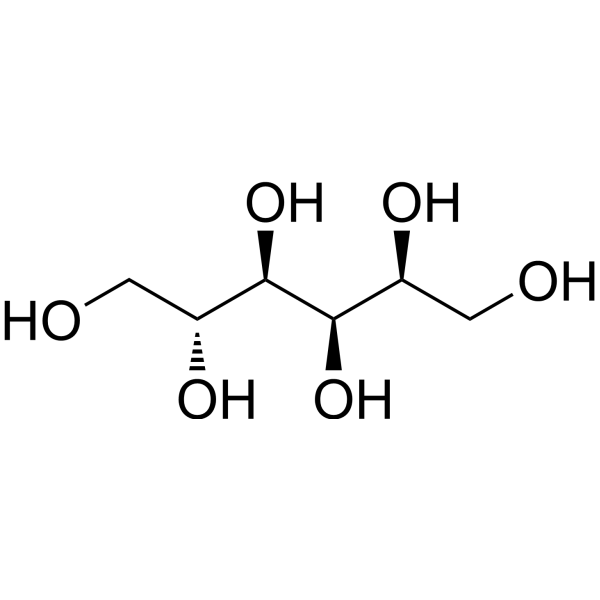
    Sorbito, for cell culture; D-Glucitol, for cell culture

    Environmental Pollutants Biochemical Assay Reagents Others
    D-Sorbitol (D-Glucitol), for cell culture is a six-carbon sugar alcohol that can be used as a sugar substitute. D-Sorbitol, for cell culture serves as an osmotic regulator, cryoprotectant and carbon source in various plant and microbial cell culture media .
    D-Sorbitol, for cell culture
  • HY-W105634

    Endogenous Metabolite Others
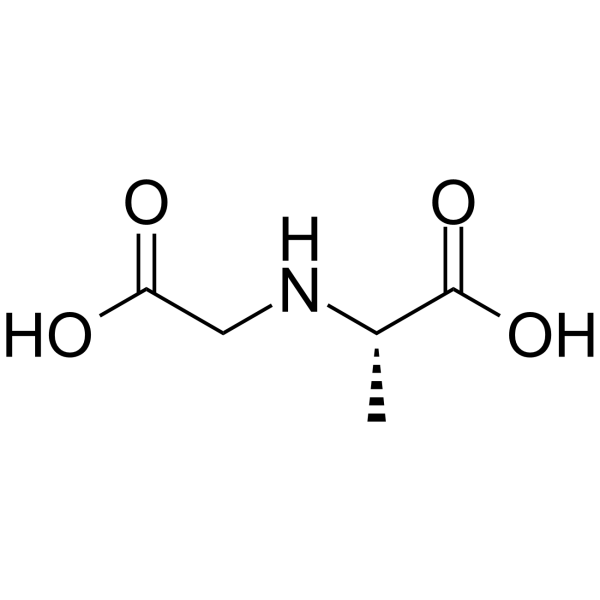
    Strombine is a imino acid produced by a dehydrogenase. Strombine is a compound present in the hemolymph that is capable of cryoprotection .
    Strombine
  • HY-119431

    2-Hydroxypropanamide

    Biochemical Assay Reagents Others
    Lactamide (2-Hydroxypropanamide) is an amide compound. Lactamide can be used as a cryoprotectant and is employed in experiments for the cryopreservation of white rabbit sperm .
    Lactamide
  • HY-171722

    Asc-C9

    Insecticide PGC-1α Infection Cancer
    Ascr#10 (Asc-C9) is an orally active thermogenesis inducer and insecticide that can be obtained from Monochamus alternatus. Ascr#10 binds to the insect adipokinetic hormone (AKH) receptor (Ka=272 µM) and stimulates mitochondrial biogenesis via the PGC1α-UCP4 axis. Consequently, Ascr#10 induces UCP4-mediated uncoupled respiration, reduces the ATP/ADP ratio and accelerates lipid mobilization, thereby driving the thermogenesis process. Ascr#10 delays pupation and exerts specific chemotaxis toward dispersive fourth-stage pinewood nematode LIV larvae. Ascr#10 promotes cold acclimation of Monochamus alternatus larvae through metabolic inhibition and cryoprotectant accumulation, enhancing their survival rate under cold stress. Ascr#10 also induces browning of white adipose tissue and activates brown adipose tissue in mice, thereby helping the body resist cold and tumor growth. Ascr#10 can be widely applied to research related to pine wilt disease, lung tumors and cold stress .
    Ascr#10

Inquiry Online

Your information is safe with us. * Required Fields.

Salutation


Country or Region *

Applicant Name *


Organization Name *

Department *


Email Address *


Product Name *

Cat. No.


Requested quantity *

Phone Number *


Remarks

Inquiry Online

Inquiry Information

Product Name:
Cat. No.:
Quantity:
MCE Japan Authorized Agent:

