9 Results for "

intercellular signal molecule

" in MedChemExpress (MCE) Product Catalog:
Products (9)

9 Results for "intercellular signal molecule" in MCE Product Catalog:

3
3 Cited Publications
Cat. No.: HY-W001132
CAS No.: 120-72-9
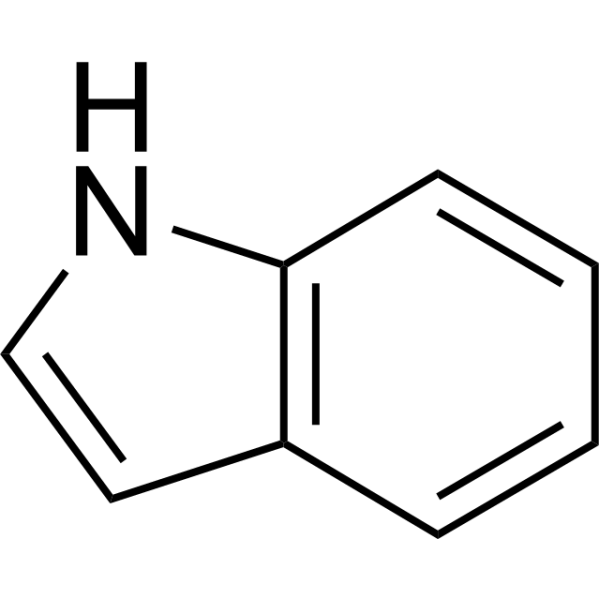
Indole is an aromatic, heterocyclic, organic compound which widely distributed in the natural environment and can be produced by a variety of bacteria. Indole regulates various aspects of bacterial physiology, including spore formation, plasmid stability, resistance to drugs, biofilm formation, and virulence as an intercellular signal molecule .
loading...
    loading...
Cat. No.: HY-133685
CAS No.: 147852-83-3
Purity:  98.82%
Synonyms: C6-HSL
Target:  

Bacterial

Research Areas:  

Infection Metabolic Disease

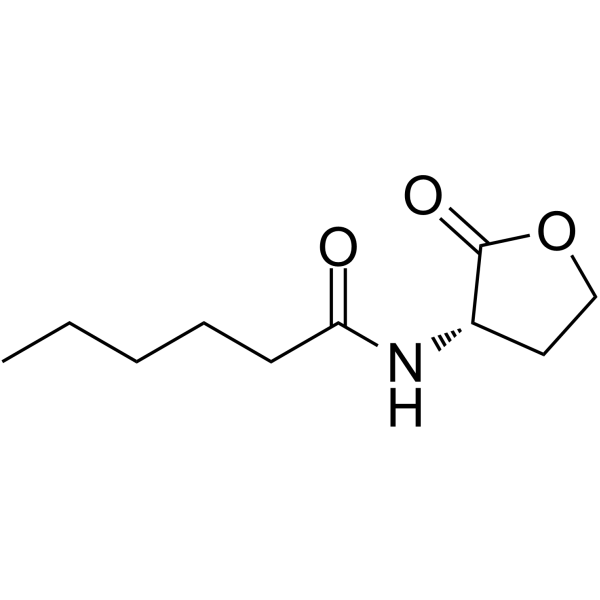
N-Hexanoyl-L-homoserine lactone is a short-chained N-acyl homoserine lactone (AHL). N-hexanoyl-L-homoserine lactone is also a mediator of bacterial quorum-sensing regulation. N-hexanoyl-L-homoserine lactone promotes lipid accumulation in algae. AHL is an intercellular communication signal molecule in the quorum sensing system of Gram-negative bacteria and a medium for mediating information exchange between eukaryotic plants and prokaryotic bacteria. AHL can affect bacteria activities, such as biofilm formation, pigment synthesis, and antibiotic synthesis .
loading...
    loading...
Cat. No.: HY-W001132R
CAS No.: 120-72-9
Indole (Standard) is the analytical standard of Indole. This product is intended for research and analytical applications. Indole is an aromatic, heterocyclic, organic compound which widely distributed in the natural environment and can be produced by a variety of bacteria. Indole regulates various aspects of bacterial physiology, including spore formation, plasmid stability, resistance to drugs, biofilm formation, and virulence as an intercellular signal molecule .
loading...
    loading...
Cat. No.: HY-133685R
CAS No.: 147852-83-3
Synonyms: C6-HSL (Standard)
Research Areas:  

Infection Metabolic Disease

N-Hexanoyl-L-homoserine lactone (Standard) is the analytical standard of N-Hexanoyl-L-homoserine lactone (HY-133685). This product is intended for research and analytical applications. N-Hexanoyl-L-homoserine lactone is a short-chained N-acyl homoserine lactone (AHL). N-hexanoyl-L-homoserine lactone is also a mediator of bacterial quorum-sensing regulation. N-hexanoyl-L-homoserine lactone promotes lipid accumulation in algae. AHL is an intercellular communication signal molecule in the quorum sensing system of Gram-negative bacteria and a medium for mediating information exchange between eukaryotic plants and prokaryotic bacteria. AHL can affect bacteria activities, such as biofilm formation, pigment synthesis, and antibiotic synthesis.
loading...
    loading...
Cat. No.: HY-114505
CAS No.: 1046789-93-8
Target:  

Bacterial

Research Areas:  

Infection

3-Hydroxypentadecane-4-one (LAI-1; Legionella autoinducer-1) is a quorum sensing signaling molecule by Legionella pneumophila. 3-Hydroxypentadecane-4-one is an autoinducer, which affects the intercellular communication between bacteria through sensor kinases, LqsS, LqsT and LqsR .
loading...
    loading...
Cat. No.: HY-W713126
CAS No.: 73509-22-5
Indole-d4 is the deuterium labeled Indole (HY-W001132). Indole is an aromatic, heterocyclic, organic compound which widely distributed in the natural environment and can be produced by a variety of bacteria. Indole regulates various aspects of bacterial physiology, including spore formation, plasmid stability, resistance to drugs, biofilm formation, and virulence as an intercellular signal molecule .
loading...
    loading...
Cat. No.: HY-147063R
CAS No.: 31281-59-1
Indole (Standard) is the analytical standard of Indole. This product is intended for research and analytical applications. Indole is an aromatic, heterocyclic, organic compound which widely distributed in the natural environment and can be produced by a variety of bacteria. Indole regulates various aspects of bacterial physiology, including spore formation, plasmid stability, resistance to drugs, biofilm formation, and virulence as an intercellular signal molecule .
loading...
    loading...
Cat. No.: HY-L149
7,931 compounds

A membrane protein is a protein molecule that is attached to or associated with the membrane of a cell or an organelle. Membrane proteins can be classified into two groups based on how the protein is associated with the membrane: integral membrane proteins and peripheral membrane proteins. In humans, about 30% genome encodes membrane proteins. Membrane proteins perform a variety of functions vital to the survival of organisms, for example, signal transduction, molecules or ion transportation, enzymatic catalysis, and intercellular communication. Membrane proteins also play important roles in drug discovery. As reported, more than 60% of current drug targets are membrane proteins.

MCE supplies a unique collection of 7,931 compounds targeting a variety of membrane proteins. MCE Membrane Protein-targeted Compound Library can be used for membrane protein-focused screening and drug discovery.

Cat. No.: HY-158813
CAS No.: 2364639-42-7
Research Areas:  

Cancer

S-Geranylgeranyl-L-glutathione is a P2RY8 inhibitor and intercellular signaling molecule that exists endogenously in human bone marrow interstitial fluid. S-Geranylgeranyl-L-glutathione promotes the internalization of P2RY8 and antagonizes chemokine-induced activation of pAkt. S-Geranylgeranyl-L-glutathione negatively regulates the migration of B cells and T cells to the bone marrow, inhibits chemokine-mediated migration of germinal center B cells and follicular helper T cells, participates in lymphocyte guidance regulation, and modulates the germinal center response process. S-Geranylgeranyl-L-glutathione can be used in research related to diffuse large B-cell lymphoma and Burkitt lymphoma .
loading...
    loading...

