



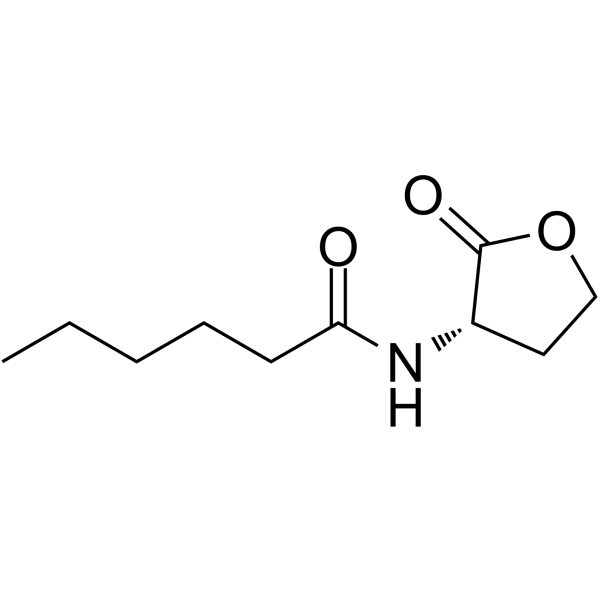
N-Hexanoyl-L-homoserine lactone

Based on 1 Customer Validation
N-Hexanoyl-L-homoserine lactone is a short-chained N-acyl homoserine lactone (AHL). N-hexanoyl-L-homoserine lactone is also a mediator of bacterial quorum-sensing regulation. N-hexanoyl-L-homoserine lactone promotes lipid accumulation in algae. AHL is an intercellular communication signal molecule in the quorum sensing system of Gram-negative bacteria and a medium for mediating information exchange between eukaryotic plants and prokaryotic bacteria. AHL can affect bacteria activities, such as biofilm formation, pigment synthesis, and antibiotic synthesis.
For research use only. We do not sell to patients.
- Purity : 99.00%
- CAS No.: 147852-83-3
- Formula: C10H17NO3
- Molecular Weight:199.25
-
Storage:Powder -20°C, 3 years , 4°C, 2 years ; In solvent -80°C, 6 months , -20°C, 1 month

To place orders, for customer services and technical support, please contact: MedChemExpress USA
Tel: 609-228-6898 E-mail: [email protected] [email protected]


-
 Biological Activity
-
Chemical Information
-
Solvent & Solubility
- Purity & Documentation
- References
-
 Help & FAQs


-
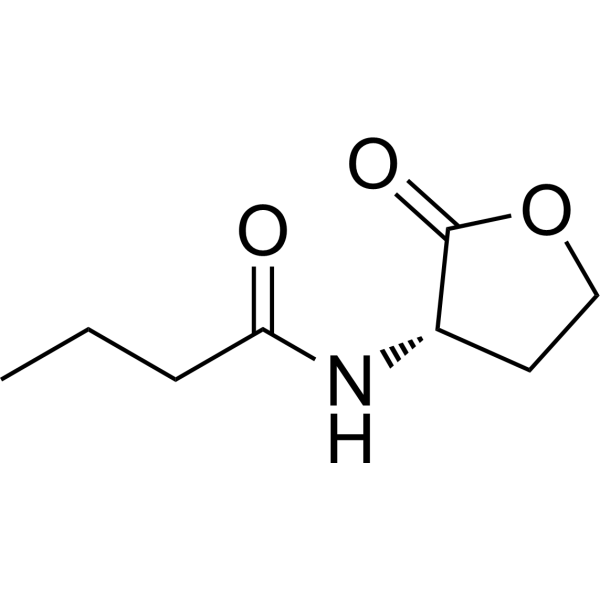
HY-114816
N-Butanoyl-L-homoserine lactone -
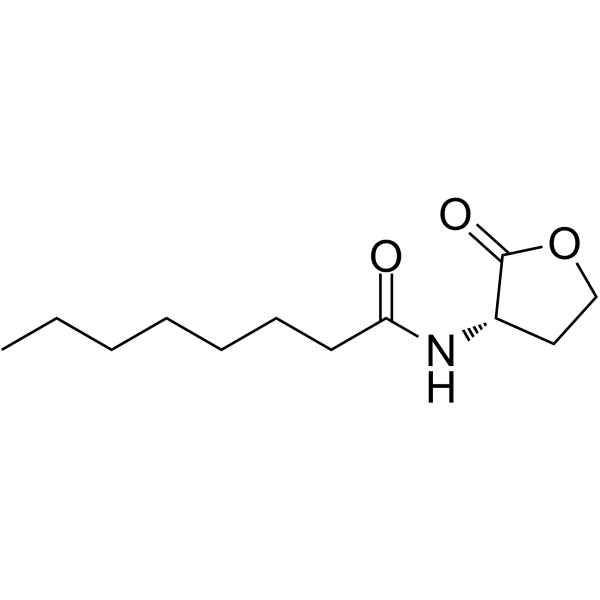
HY-124237A
N-Octanoyl-L-homoserine lactone -
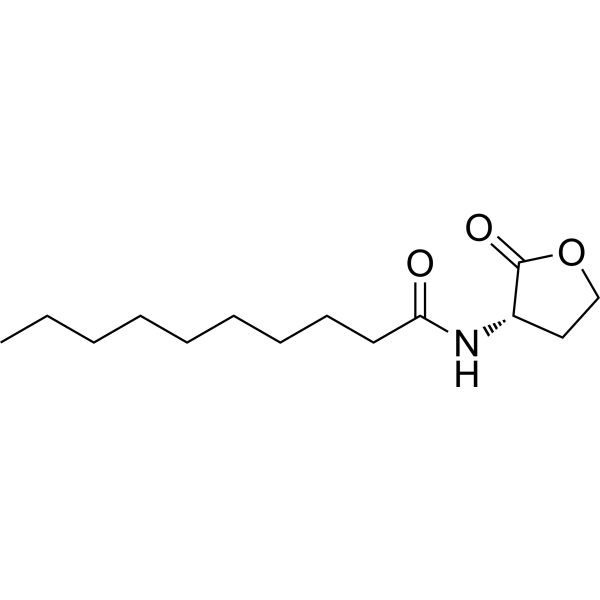
HY-136409
N-Decanoyl-L-homoserine lactone -
HY-W008806
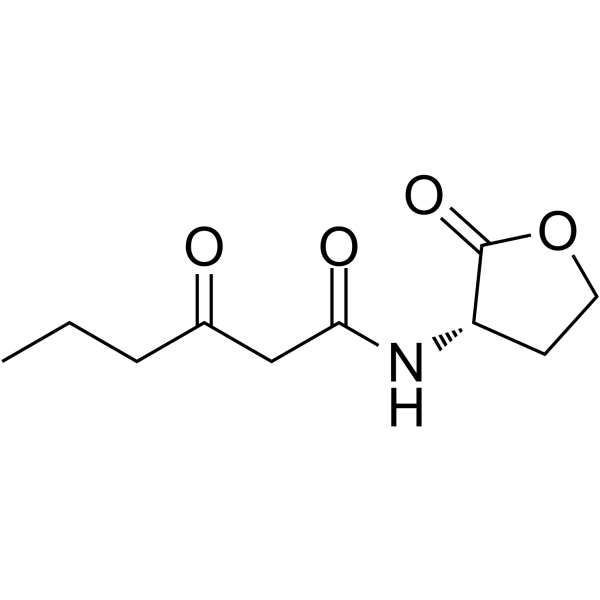
N-(3-Oxohexanoyl)-L-homoserine lactone -
HY-118697
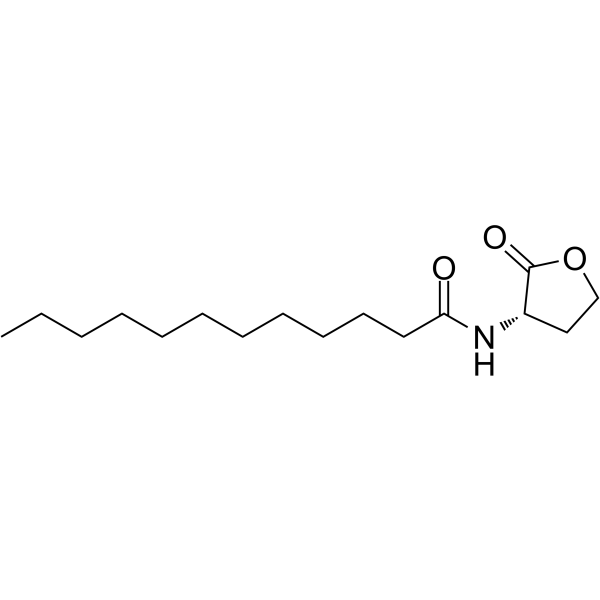
N-dodecanoyl-L-Homoserine lactone -

HY-114816R
N-Butanoyl-L-homoserine lactone (Standard) -

HY-133685R
N-Hexanoyl-L-homoserine lactone (Standard) -

HY-124237AR
N-Octanoyl-L-homoserine lactone (Standard) -
HY-114544A
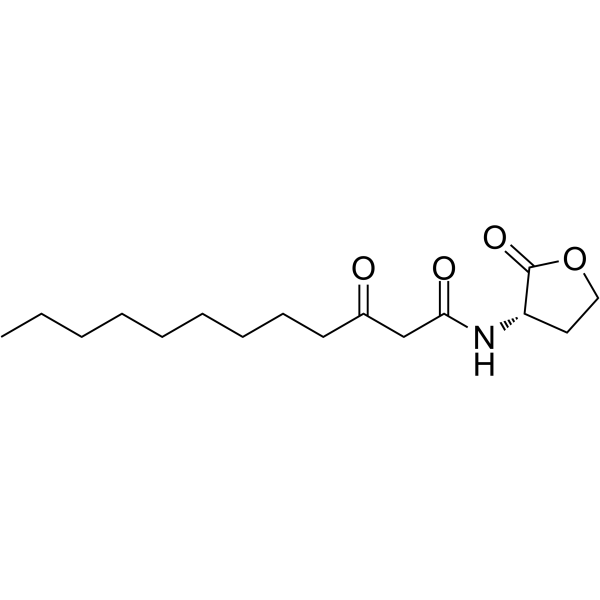
N-3-oxo-dodecanoyl-L-homoserine lactone -
HY-100579
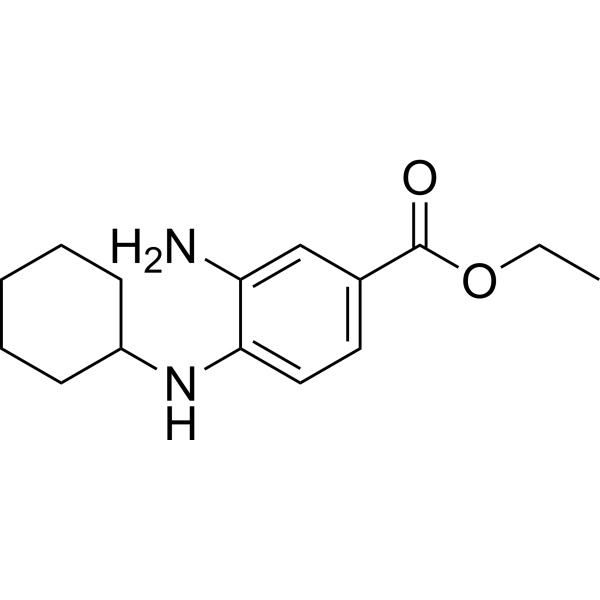
Ferrostatin-1 -
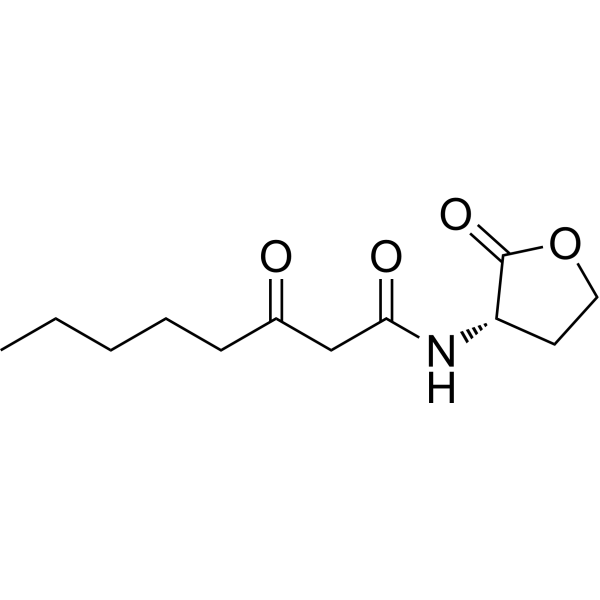
HY-108700
N-3-Oxo-octanoyl-L-homoserine lactone -
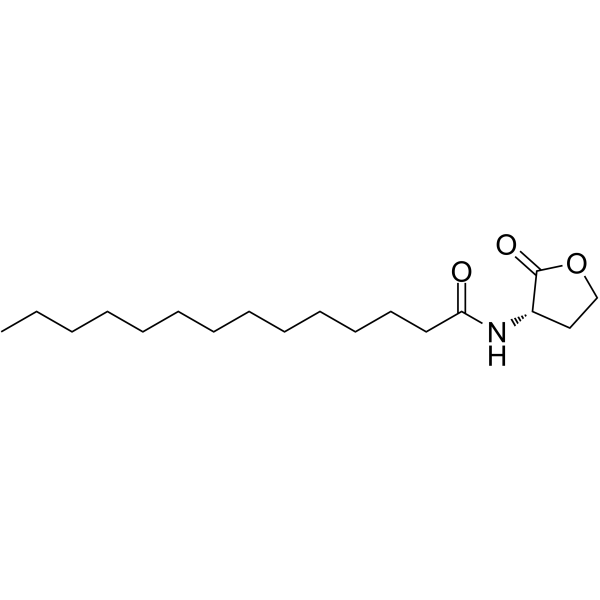
HY-133684
N-Tetradecanoyl-L-homoserine lactone


Biological Activity
Description
In Vitro
N-hexanoyl-L-homoserine lactone (400 nM) effectively promotes the accumulation of lipid concentration in algae cells in the mixed culture system of Chlorella vulgaris and Chlamydomonas[2].
N-hexanoyl-L-homoserine lactone (72 h) is undetectable in the root system of Lotus[3].
N-hexanoyl-L-homoserine lactone (50 μM) facilitates electron utilization by cathodic homoacetogens for CO2 reduction[4].
MedChemExpress (MCE) has not independently confirmed the accuracy of these methods. They are for reference only.


Chemical Information
-
CAS No. 147852-83-3
-
Appearance Solid
-
Molecular Weight 199.25
-
Formula C10H17NO3
-
Color White to light yellow
-
SMILES
CCCCCC(N[C@@H]1C(OCC1)=O)=O
-
Synonyms
C6-HSL
-
Shipping
Room temperature in continental US; may vary elsewhere.
-
Storage
Powder -20°C 3 years 4°C 2 years In solvent -80°C 6 months -20°C 1 month


Solvent & Solubility
In Vitro:
DMSO : 100 mg/mL (501.88 mM; Need ultrasonic; Hygroscopic DMSO has a significant impact on the solubility of product, please use newly opened DMSO)
Please refer to the solubility information to select the appropriate solvent. Once prepared, please aliquot and store the solution to prevent product inactivation from repeated freeze-thaw cycles.
Storage method and period of stock solution: -80°C, 6 months; -20°C, 1 month. When stored at -80°C, please use it within 6 months. When stored at -20°C, please use it within 1 month.
Please refer to the solubility information to select the appropriate solvent. Once prepared, please aliquot and store the solution to prevent product inactivation from repeated freeze-thaw cycles.
Storage method and period of stock solution: -80°C, 6 months; -20°C, 1 month. When stored at -80°C, please use it within 6 months. When stored at -20°C, please use it within 1 month.
Concentration (start) × Volume (start) = Concentration (final) × Volume (final)
In Vivo:
Select the appropriate dissolution method based on your experimental animal and administration route.
- For the following dissolution methods, please ensure to first prepare a clear stock solution using an In Vitro approach and then sequentially add co-solvents:
- To ensure reliable experimental results, the clarified stock solution can be appropriately stored based on storage conditions. As for the working solution for In Vivo experiments, it is recommended to prepare freshly and use it on the same day.
- The percentages shown for the solvents indicate their volumetric ratio in the final prepared solution. If precipitation or phase separation occurs during preparation, heat and/or sonication can be used to aid dissolution.
Add each solvent one by one: 10% DMSO 40% PEG300 5% Tween-80 45% Saline
Solubility: ≥ 2.5 mg/mL (12.55 mM); Clear solution
This protocol yields a clear solution of ≥ 2.5 mg/mL (saturation unknown).
Taking 1 mL working solution as an example, add 100 μL DMSO stock solution (25.0 mg/mL) to 400 μL PEG300, and mix evenly; then add 50 μL Tween-80 and mix evenly; then add 450 μL Saline to adjust the volume to 1 mL.
Preparation of Saline: Dissolve 0.9 g sodium chloride in ddH₂O and dilute to 100 mL to obtain a clear Saline solution.
Add each solvent one by one: 10% DMSO 90% (20% SBE-β-CD in Saline)
Solubility: ≥ 2.5 mg/mL (12.55 mM); Clear solution
This protocol yields a clear solution of ≥ 2.5 mg/mL (saturation unknown).
Taking 1 mL working solution as an example, add 100 μL DMSO stock solution (25.0 mg/mL) to 900 μL 20% SBE-β-CD in Saline, and mix evenly.
Preparation of 20% SBE-β-CD in Saline (4°C, storage for one week): 2 g SBE-β-CD powder is dissolved in 10 mL Saline, completely dissolve until clear.
In Vivo Dissolution Calculator
Please enter the basic information of animal experiments:
-
-
-
-
Recommended: Prepare an additional quantity of animals to account for potential losses during experiments.
Please enter your animal formula composition:
-
%DMSO +
Recommended: Keep the proportion of DMSO in working solution below 2% if your animal is weak.
-
%+
-
+%Tween-80 + +
-
%Saline +
The co-solvents required include: DMSO, . All of co-solvents are available by MedChemExpress (MCE). , Tween 80. All of co-solvents are available by MedChemExpress (MCE).
Working solution concentration: 0.22 mg/mL
Method for preparing stock solution: mg drug dissolved in μL DMSO. Stock solution concentration: mg/mL.
1. Take μL DMSO stock solution;
2. Add μL .
μL , mix evenly;
3. Then add μL Tween 80, mix evenly;
4. Then add μL
Please ensure that the stock solution in the first step is dissolved to a clear state, and add co-solvents in sequence. You can use ultrasonic heating (ultrasonic cleaner, recommended frequency 20-40 kHz), vortexing, etc. to assist dissolution.


Purity & Documentation
-
Data Sheet (272 KB)
-
SDS (394 KB)
- English - EN (394 KB)
- Français - FR (394 KB)
- Deutsch - DE (394 KB)
- Norwegian - NO (394 KB)
- Español - ES (394 KB)
- Swedish - SV (394 KB)
- Italian - IT (394 KB)
- Korean - KR (394 KB)
- Portuguese - PT (394 KB)
-
Handling Instructions (2659 KB)
References
[1]. Frederike Stock,et al. Distinctive Growth and Transcriptional Changes of the Diatom Seminavis robusta in Response to Quorum Sensing Related Compounds. Front Microbiol. 2020 Jun 9;11:1240. [Content Brief]
[2]. Liao L, et al. Effect of the N-hexanoyl-L-homoserine Lactone on the Carbon Fixation Capacity of the Algae-Bacteria System. Int J Environ Res Public Health. 2023 Mar 13;20(6):5047. [Content Brief]
[3]. Delalande L, et al. N-hexanoyl-L-homoserine lactone, a mediator of bacterial quorum-sensing regulation, exhibits plant-dependent stability and may be inactivated by germinating Lotus corniculatus seedlings. FEMS Microbiol Ecol. 2005 Mar 1;52(1):13-20. [Content Brief]
[4]. Zhou M, et al. Enhanced CO2 reduction and acetate synthesis in autotrophic biocathode by N-Hexanoyl-L-homoserine lactone (C6HSL)-based quorum-sensing regulation. Sci Total Environ. 2022 Aug 25;836:155724. [Content Brief]


Complete Stock Solution Preparation Table
Please refer to the solubility information to select the appropriate solvent. Once prepared, please aliquot and store the solution to prevent product inactivation from repeated freeze-thaw cycles.
Storage method and period of stock solution: -80°C, 6 months; -20°C, 1 month. When stored at -80°C, please use it within 6 months. When stored at -20°C, please use it within 1 month.
| Optional Solvent | Concentration Solvent Mass | 1 mg | 5 mg | 10 mg | 25 mg |
|---|---|---|---|---|---|
| DMSO | 1 mM | 5.0188 mL | 25.0941 mL | 50.1882 mL | 125.4705 mL |
| 5 mM | 1.0038 mL | 5.0188 mL | 10.0376 mL | 25.0941 mL | |
| 10 mM | 0.5019 mL | 2.5094 mL | 5.0188 mL | 12.5471 mL | |
| 15 mM | 0.3346 mL | 1.6729 mL | 3.3459 mL | 8.3647 mL | |
| 20 mM | 0.2509 mL | 1.2547 mL | 2.5094 mL | 6.2735 mL | |
| 25 mM | 0.2008 mL | 1.0038 mL | 2.0075 mL | 5.0188 mL | |
| 30 mM | 0.1673 mL | 0.8365 mL | 1.6729 mL | 4.1824 mL | |
| 40 mM | 0.1255 mL | 0.6274 mL | 1.2547 mL | 3.1368 mL | |
| 50 mM | 0.1004 mL | 0.5019 mL | 1.0038 mL | 2.5094 mL | |
| 60 mM | 0.0836 mL | 0.4182 mL | 0.8365 mL | 2.0912 mL | |
| 80 mM | 0.0627 mL | 0.3137 mL | 0.6274 mL | 1.5684 mL | |
| 100 mM | 0.0502 mL | 0.2509 mL | 0.5019 mL | 1.2547 mL |


N-Hexanoyl-L-homoserine lactone Related Classifications
HY-133685 Related Classifications
 Powered by Bioz