7 Results for "

surviving

" in MedChemExpress (MCE) Product Catalog:
Products (7)

7 Results for "surviving" in MCE Product Catalog:

12
12 Cited Publications
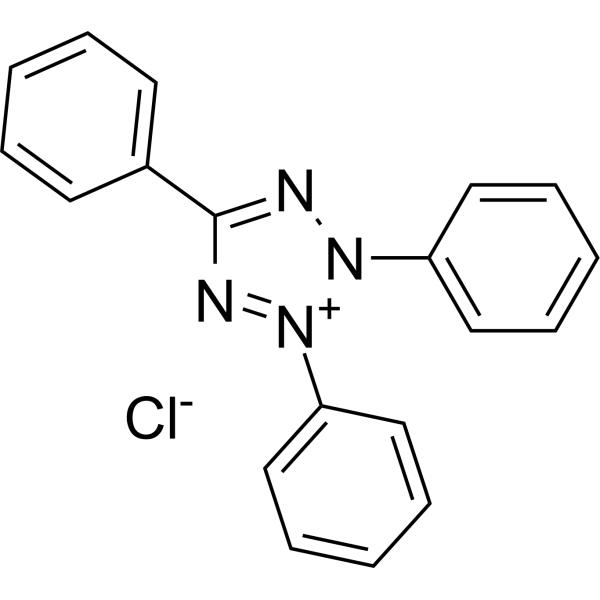
Cat. No.: HY-D0714
CAS No.: 298-96-4
Synonyms: 2,3,5-Triphenyltetrazolium chloride; TPTZ; TTC
Tetrazolium Red (2,3,5-Triphenyltetrazolium chloride; TTC) is a not brain-penetrant, colorless, water-soluble dye that is reduced by mitochondrial enzymes to a deep red, water-insoluble compound (formazan) mainly in the mitochondria of living cells. Tetrazolium Red is used to observe the activity of dehydrogenase, and it turns colorless to red when exposed to hydrogen. Tetrazolium Red distinguishes between surviving and infarcted brain tissue after stroke. Tetrazolium Red has been used to stain heart tissue to measure the extent of acute lesions and also used to stain brain tissue to detect the size of the infarcted area. The absorption wavelength of Tetrazolium Red is 570 nm .
loading...
    loading...
4
4 Cited Publications
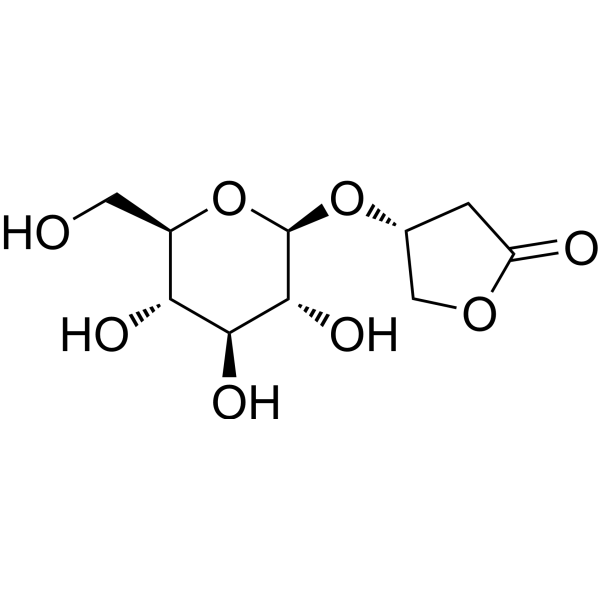
Cat. No.: HY-N2292
CAS No.: 151870-74-5
Kinsenoside is the main active ingredient of the genus plant, and has various biological activities. Kinsenoside and Nrf2 depend on the protection of nuclear cells (NPCs), which significantly reduces their ability to survive. Kinsenoside Active NPC Medium AKT-ERK1/2-Nrf2 Signal passage, Prevent physical decline, aging, harmonious physical function impairment. Kinsenoside can improve the puncture guide model for intermediate vertebral wall discharge (IDD).
loading...
    loading...
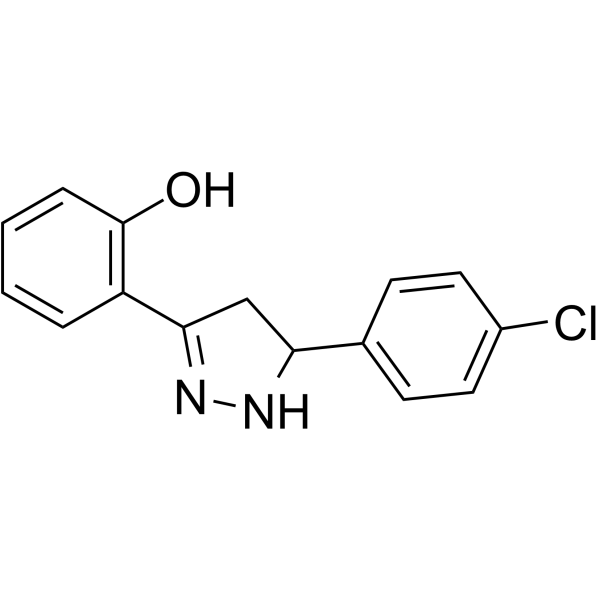
Cat. No.: HY-145301
CAS No.: 65840-95-1
Target:  

Bacterial

Research Areas:  

Infection

Mycobactin-IN-1, a pyrazoline analogue, is a mycobactin biosynthesis inhibitor against mycobacteria. Mycobactin-IN-1 binds to salicyl-AMP ligase (MbtA), a key enzyme in the mycobactin biosynthetic pathway. Mycobactin-IN-1 inhibits whole-cell drug efflux pumps in M. smegmatis. Mycobactin-IN-1 eradicates intracellularly surviving mycobacteria. Mycobactin-IN-1 shows an excellent in vivo pharmacokinetic profile. Mycobactin-IN-1 can be used for the research of tuberculosis .
loading...
    loading...
Cat. No.: HY-N12173
CAS No.: 1623153-14-9
Synonyms: SF002-96-1
Target:  

Survivin

Isonanangenine B (SF002-96-1) is a selective survivin inhibitor (IC50=1.6 µM). Isonanangenine B blocks the binding of key transcription factors, such as Stat3 and NF-κB, to the survivin promoter. Isonanangenine B is promising for research of cancers .
loading...
    loading...
Cat. No.: HY-117947
CAS No.: 1809336-19-3
Research Areas:  

Cancer

(R)-OR-S1 is an isomer of OR-S1. The dual ZH1/2 inhibitors OR-S1 and OR-S2 exhibit strong inhibitory activity against both EZH1 and EZH2. OR-S1 and OR-S2 are highly selective methyltransferase inhibitors against EZH1 and EZH2, and they have very similar molecular features. Therefore, we investigated the effect of OR-S1 on acute myeloid leukemia (AML). We found that OR-S1 was able to induce cell differentiation and apoptosis in AML cells. These findings encouraged us to investigate whether functional LT-HSCs could survive PRC2-targeted therapy with OR-S1 or OR-S1 combined with cytarabine. The results showed that OR-S1 did not cause significant myelosuppression, and BM cells treated with the combination therapy were able to undergo normal hematopoiesis even 4 months after treatment. Therefore, temporary inhibition of EZH1 and EZH2 is clinically tolerable, making this combination therapy suitable for AML patients. AML is generally believed to originate from myeloid progenitor cells that inherit a large number of biological properties.
loading...
    loading...
Cat. No.: HY-187528
Target:  

Parasite

Research Areas:  

Infection

GPCR antagonist-2 is a GPCR antagonist with macrofilaricidal activity. GPCR antagonist-2 shows inhibitory effects on Brugia pahangi adult females and males (IC50 = 3.9 μM and 2.8 μM, respectively) and Onchocerca ochengi adult females and males (IC50 = 0.35 μM and 1.7 μM, respectively). GPCR antagonist-2 reduces B. pahangi worm burden and affects female fecundity and embryogenesis, downregulates GPCR expression in surviving adult female worms and can be used for the study of filarial infections, including onchocerciasis (river blindness) .
loading...
    loading...
Cat. No.: HY-L025
11,167 compounds

Cancer is the second leading cause of death globally and seriously threatens human health. A neoplasm and malignant tumor are other common names for cancer. Disruption of the normal regulation of cell-cycle progression and division lies at the heart of the events leading to cancer. Target therapy, which targets proteins that control how cancer cells grow, divide and spread, plays an important role in cancer treatment. Recent studies mainly focus on targeting the key proteins for cancer surviving, cancer stem cells, the tumor microenvironment, tumor immunology, etc.

MCE designs a unique collection of 11,167 anti-cancer compounds that target kinases, cell cycle key components, tumorigenesis related signaling pathways, etc. MCE Anti-cancer compound library is a useful tool for anti-cancer drug screening.

