
15 Results for "

variability

" in MedChemExpress (MCE) Product Catalog:
Products (15)

15 Results for "variability" in MCE Product Catalog:

6
6 Publications Verification
Cat. No.: HY-B1018A
CAS No.: 156-51-4
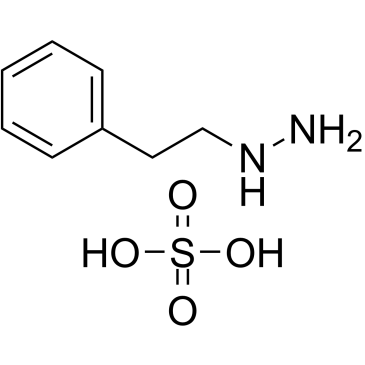
Phenelzine sulfate, an antidepressant agent, is an irreversible and orally active monoamine oxidase (MAO-A and MAO-B) inhibitor. Phenelzine sulfate inhibits GABA transaminase and primary amine oxidase (PrAO), and sequester reactive aldehydes. Phenelzine sulfate also inhibits LSD1 (Ki: 5.6 μM) and suppresses oxidative stress and lipogenesis. Phenelzine sulfate elevates neurotransmitters (serotonin, norepinephrine, dopamine). Phenelzine sulfate is studied in neurological, metabolic and cancer diseases for depression and anxiety disorders, stroke, spinal cord injury, traumatic brain injury, multiple sclerosis, Parkinson’s disease, Alzheimer’s disease, inflammatory pain, obesity and prostate cancer .
2
2 Cited Publications
Cat. No.: HY-14744A
CAS No.: 150566-71-5
Purity:  99.84%
Synonyms: (S)-Amlodipine besylate; Levoamlodipine besylate
Target:  

Calcium Channel MMP

Research Areas:  

Cardiovascular Disease

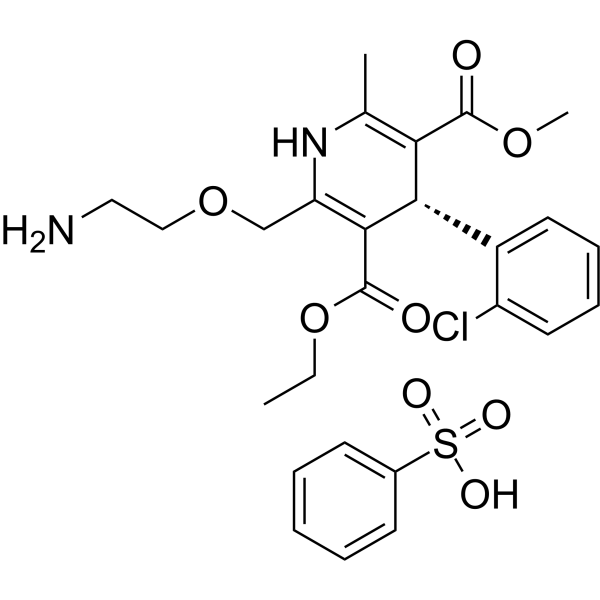
Levamlodipine ((S)-Amlodipine; Levoamlodipin) besylate is an orally active L-type calcium channel blocker and MMP-9 modulator with high permeability and retention properties. Levamlodipine besylate significantly enhances plaque stability and improves lipid profiles by reducing blood pressure, decreasing systolic blood pressure variability, and inhibiting MMP-9 expression in atherosclerotic plaques. Levamlodipine besylate not only alleviates cardiac and aortic hypertrophy and prevents renal atrophy, but also produces synergistic effects in blood pressure reduction and organ protection when combined with bisoprolol (HY-129029). Levamlodipine besylate exerts no significant inhibitory effect on abdominal aortic intimal hyperplasia. When excessively accumulated in the epidermis, Levamlodipine besylate may induce changes in keratin structure, impair the skin barrier and trigger inflammation; long-term use further exacerbates skin irritation caused by local administration. Levamlodipine besylate can be used in research related to hypertension and atherosclerosis .
2
2 Cited Publications
Cat. No.: HY-14744
CAS No.: 103129-82-4
Purity:  98.53%
Synonyms: (S)-Amlodipine; Levoamlodipine
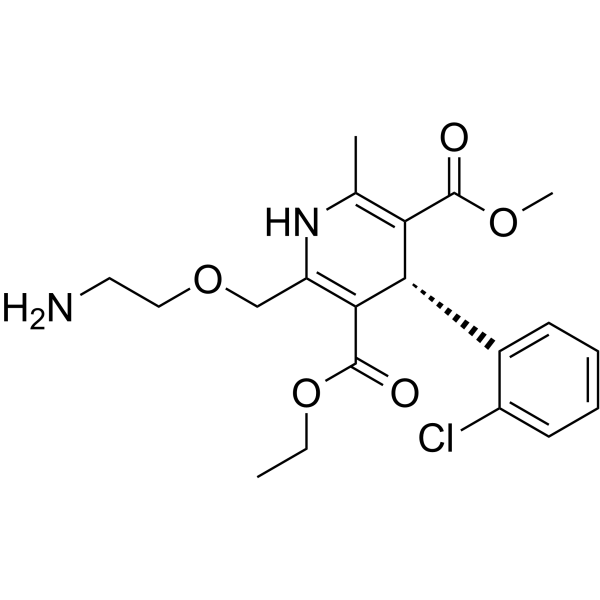
Levamlodipine ((S)-Amlodipine; Levoamlodipin) is an orally active L-type calcium channel blocker and MMP-9 modulator with high permeability and retention properties. Levamlodipine significantly enhances plaque stability and improves lipid profiles by reducing blood pressure, decreasing systolic blood pressure variability, and inhibiting MMP-9 expression in atherosclerotic plaques. Levamlodipine not only alleviates cardiac and aortic hypertrophy and prevents renal atrophy, but also produces synergistic effects in blood pressure reduction and organ protection when combined with bisoprolol (HY-129029). Levamlodipine exerts no significant inhibitory effect on abdominal aortic intimal hyperplasia. When excessively accumulated in the epidermis, Levamlodipine may induce changes in keratin structure, impair the skin barrier and trigger inflammation; long-term use further exacerbates skin irritation caused by local administration. Levamlodipine can be used in research related to hypertension and atherosclerosis .
Cat. No.: HY-P99750
CAS No.: 1443004-16-7
Synonyms: CT-P23

Target:  

Influenza Virus

Research Areas:  

Infection

Navivumab (CT-P23) is a monoclonal antibody targeting the hemagglutinin (HA) of influenza A virus. Navivumab binds to the HA2 stem fusion domain and the low-variability HA2 region of influenza viruses. Navivumab neutralizes influenza A viruses of subtypes H1, H2, H5, and H9. Navivumab is applicable to research related to influenza and influenza A .
Cat. No.: HY-113327
CAS No.: 5415-44-1
Purity:  99.99%
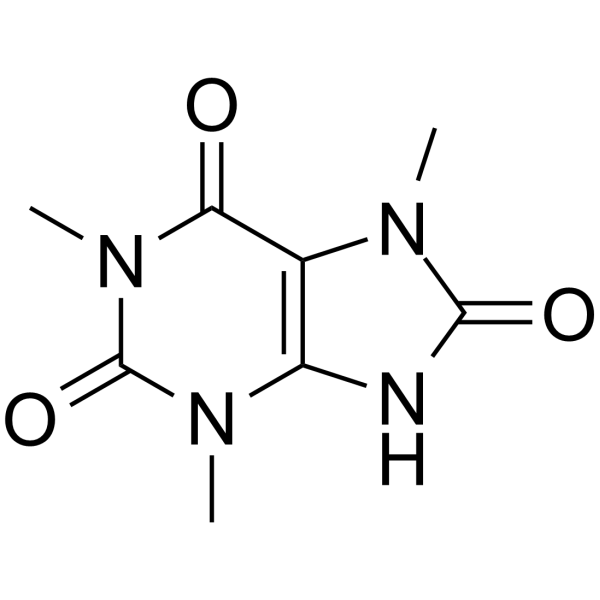
1,3,7-Trimethyluric acid is the metabolite of caffeine. The metabolic ratio 1,3,7-Trimethyluric acid to caffeine can be evaluated as a biomarker to describe variability in CYP3A activity in a cohort .
Cat. No.: HY-144863
CAS No.: 1631164-25-4
Purity:  99.8%
Target:  

GnRH Receptor

Research Areas:  

Cancer

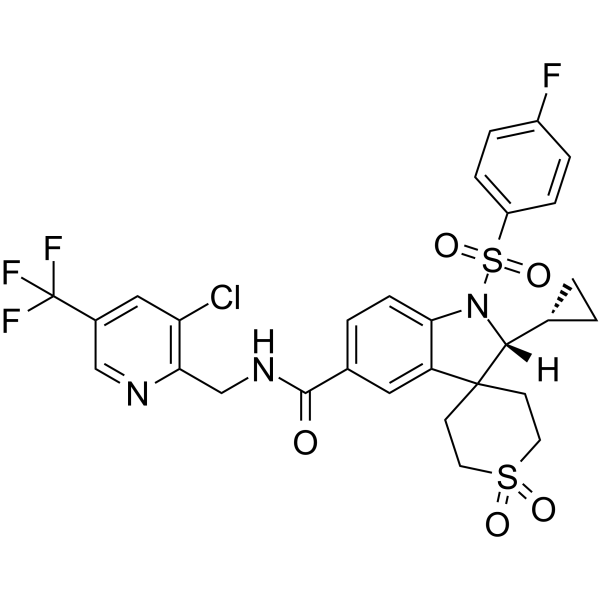
BAY 1214784 is a potent, selective, and orally active antagonist of the human gonadotropin-releasing hormone receptor (hGnRH-R). BAY 1214784 is a spiroindoline derivative compound. BAY 1214784 effectively lowers plasma luteinizing hormone levels by up to 49%, at the same time being associated with low pharmacokinetic variability and good tolerability. BAY 1214784 has the potential for the research of uterine fibroids .
Cat. No.: HY-14744D
CAS No.: 884648-62-8
Levamlodipine besylate Hemipentahydrate is an orally active L-type calcium channel blocker and MMP-9 modulator with high permeability and retention properties. Levamlodipine besylate Hemipentahydrate significantly enhances plaque stability and improves lipid profiles by reducing blood pressure, decreasing systolic blood pressure variability, and inhibiting MMP-9 expression in atherosclerotic plaques. Levamlodipine besylate Hemipentahydrate not only alleviates cardiac and aortic hypertrophy and prevents renal atrophy, but also produces synergistic effects in blood pressure reduction and organ protection when combined with bisoprolol (HY-129029). Levamlodipine besylate Hemipentahydrate exerts no significant inhibitory effect on abdominal aortic intimal hyperplasia. When excessively accumulated in the epidermis, Levamlodipine besylate Hemipentahydrate may induce changes in keratin structure, impair the skin barrier and trigger inflammation; long-term use further exacerbates skin irritation caused by local administration. Levamlodipine besylate Hemipentahydrate can be used in research related to hypertension and atherosclerosis .
Cat. No.: HY-W424918
CAS No.: 316-07-4
Target:  

Dopamine Receptor

Research Areas:  

Neurological Disease

Opromazine hydrochloride is an antipsychotic medication that exhibits sedative and antiemetic pharmacological effects, making it effective for treating psychiatric disorders such as schizophrenia and psychosis. Opromazine hydrochloride functions by reducing dopaminergic activity through the blockade of dopamine receptors in the brain. Opromazine hydrochloride has been analyzed for its metabolites in various microsomal enzymes, revealing differences in formation rates that underscore the variability of drug-metabolizing enzymes in human liver and placenta microsomes.
Cat. No.: HY-114881
CAS No.: 29119-03-7
Synonyms: NSC 246118
Frequentin, a secondary metabolite produced by Penicillium janthinellum, is influenced by environmental conditions such as cadmium nitrate and sodium chloride concentrations. In cadmium nitrate-free medium, P. janthinellum produces cyclopenin, carlosic acid, erythroskyrin, kojic acid, and patulin. At 100 ppm cadmium nitrate, it produces cyclopenin, carlosic acid, frequentin, and islandicin. In the presence of sodium chloride, frequentin is produced at 2% and 3% concentrations. These findings indicate that frequentin production is sensitive to specific environmental stressors, highlighting its potential variability under different growth conditions .
Cat. No.: HY-14744B
CAS No.: 865430-76-8
Synonyms: (S)-Amlodipine hydrochloride; Levoamlodipine hydrochloride
Target:  

Calcium Channel MMP

Research Areas:  

Cardiovascular Disease

Levamlodipine ((S)-Amlodipine; Levoamlodipin) hydrochloride is an orally active L-type calcium channel blocker and MMP-9 modulator with high permeability and retention properties. Levamlodipine hydrochloride significantly enhances plaque stability and improves lipid profiles by reducing blood pressure, decreasing systolic blood pressure variability, and inhibiting MMP-9 expression in atherosclerotic plaques. Levamlodipine hydrochloride not only alleviates cardiac and aortic hypertrophy and prevents renal atrophy, but also produces synergistic effects in blood pressure reduction and organ protection when combined with bisoprolol (HY-129029). Levamlodipine hydrochloride exerts no significant inhibitory effect on abdominal aortic intimal hyperplasia. When excessively accumulated in the epidermis, Levamlodipine hydrochloride may induce changes in keratin structure, impair the skin barrier and trigger inflammation; long-term use further exacerbates skin irritation caused by local administration. Levamlodipine hydrochloride can be used in research related to hypertension and atherosclerosis .
Cat. No.: HY-14744S
CAS No.: 1346617-19-3
Purity:  99.74%
Synonyms: (S)-Amlodipine-d4; Levoamlodipine-d4
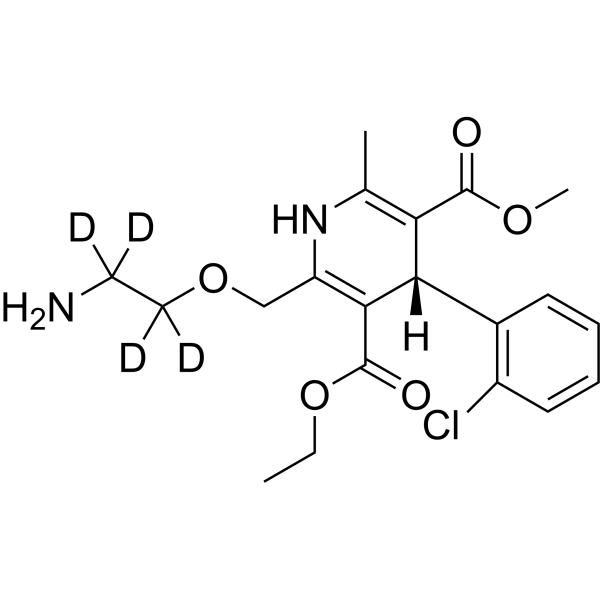
Levamlodipine-d4 is the deuterium labeled Levamlodipine. Levamlodipine ((S)-Amlodipine; Levoamlodipin) is an orally active L-type calcium channel blocker and MMP-9 modulator with high permeability and retention properties. Levamlodipine significantly enhances plaque stability and improves lipid profiles by reducing blood pressure, decreasing systolic blood pressure variability, and inhibiting MMP-9 expression in atherosclerotic plaques. Levamlodipine not only alleviates cardiac and aortic hypertrophy and prevents renal atrophy, but also produces synergistic effects in blood pressure reduction and organ protection when combined with bisoprolol (HY-129029). Levamlodipine exerts no significant inhibitory effect on abdominal aortic intimal hyperplasia. When excessively accumulated in the epidermis, Levamlodipine may induce changes in keratin structure, impair the skin barrier and trigger inflammation; long-term use further exacerbates skin irritation caused by local administration. Levamlodipine can be used in research related to hypertension and atherosclerosis .
Cat. No.: HY-14744C
CAS No.: 865430-78-0
Synonyms: (S)-Amlodipine hydrobromide; Levoamlodipine hydrobromide
Target:  

Calcium Channel MMP

Research Areas:  

Cardiovascular Disease Others

Levamlodipine ((S)-Amlodipine; Levoamlodipin) hydrobromide is an orally active L-type calcium channel blocker and MMP-9 modulator with high permeability and retention properties. Levamlodipine hydrobromide significantly enhances plaque stability and improves lipid profiles by reducing blood pressure, decreasing systolic blood pressure variability, and inhibiting MMP-9 expression in atherosclerotic plaques. Levamlodipine hydrobromide not only alleviates cardiac and aortic hypertrophy and prevents renal atrophy, but also produces synergistic effects in blood pressure reduction and organ protection when combined with bisoprolol (HY-129029). Levamlodipine hydrobromide exerts no significant inhibitory effect on abdominal aortic intimal hyperplasia. When excessively accumulated in the epidermis, Levamlodipine hydrobromide may induce changes in keratin structure, impair the skin barrier and trigger inflammation; long-term use further exacerbates skin irritation caused by local administration. Levamlodipine hydrobromide can be used in research related to hypertension and atherosclerosis .
Cat. No.: HY-120174
CAS No.: 184003-14-3
Target:  

Endogenous Metabolite

Research Areas:  

Others

SU200 is a TRPV1 agonist with the activity of regulating intracellular calcium ion concentration. SU200 can induce different calcium ion response modes, showing significant reaction potential and maximum reaction effect. There is obvious response delay and variability in the effects of SU200 in different cells. The use of SU200 may provide pharmacological development opportunities .
Cat. No.: HY-113327S1
CAS No.: 1173022-55-3
1,3,7-Trimethyluric acid- 13C4, 15N3 is the 13C and 15N labeled 1,3,7-Trimethyluric acid . 1,3,7-Trimethyluric acid is the metabolite of caffeine. The metabolic ratio 1,3,7-Trimethyluric acid to caffeine can be evaluated as a biomarker to describe variability in CYP3A activity in a cohort .
Cat. No.: HY-L061
5,335 compounds

Most of the drugs that are available in the marketplace are administered via the oral route, which is a convenient and cost effective route of administration. Thus, oral bioavailability is one of the key considerations in drug design and development. A high oral bioavailability reduces the amount of an administered drug necessary to achieve a desired pharmacological effect and therefore could reduce the risk of side-effects and toxicity. A poor oral bioavailability can result in low efficacy and higher inter-individual variability and therefore can lead to unpredictable response to a drug. Low oral bioavailability in clinical trials is a major reason for drug candidates failing to reach the market.

MCE offers a unique collection of 5,335 compounds with confirmed high oral bioavailability. MCE Orally Active Compound Library is a useful tool for discovering new drugs with oral bioavailability.

  • 1

