



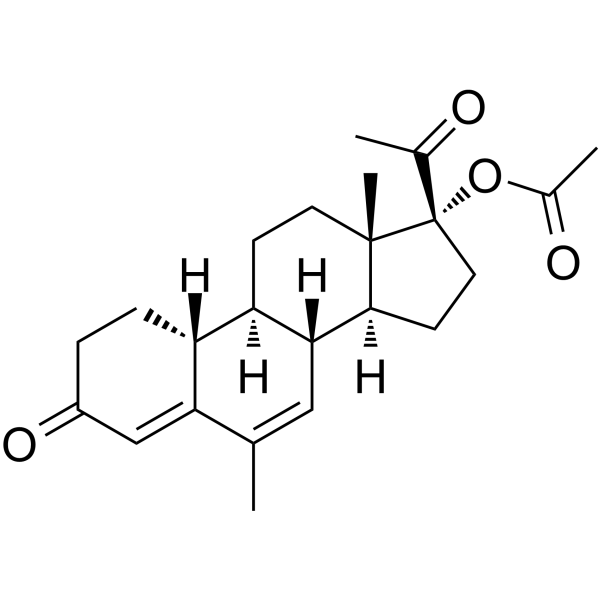
Chlormadinone acetate
Based on 1 publication(s) in Google Scholar
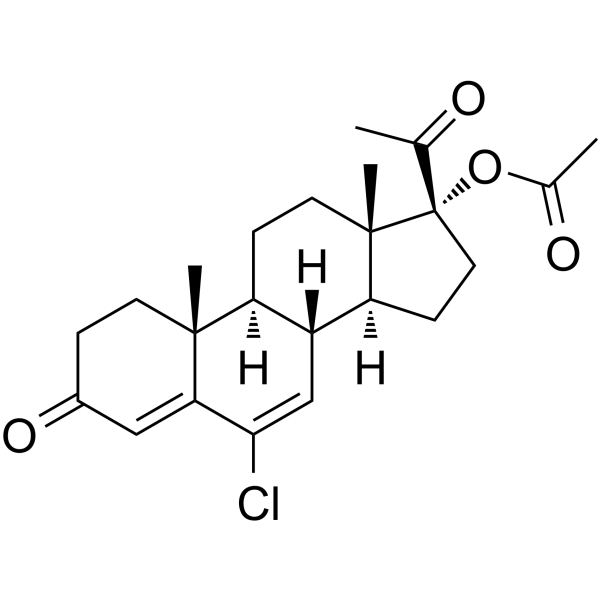
Chlormadinone acetate is a progestogen with potent progestogenic activity and antiandrogenic effects. Chlormadinone acetate acts on glucocorticoid receptor, progesterone receptor, androgen receptor, and GABAA receptor. Chlormadinone acetate induces endometrial proliferation in estrogen-pretreated rabbits, inhibits testosterone-stimulated growth of the prostate and seminal vesicles in castrated rats, and reduces the thymus and adrenal weights in juvenile rats. Chlormadinone acetate is applicable to research related to diseases such as depression and reproductive metabolic disorders.
For research use only. We do not sell to patients.
- Purity : 98.0%
- CAS No.: 302-22-7
- Formula: C23H29ClO4
- Molecular Weight:404.93
-
Storage:Powder -20°C, 3 years , 4°C, 2 years ; In solvent -80°C, 2 years , -20°C, 1 year

To place orders, for customer services and technical support, please contact: MedChemExpress USA
Tel: 609-228-6898 E-mail: [email protected] [email protected]


-
 Biological Activity
-
Chemical Information
-
Solvent & Solubility
- Protocols
- Purity & Documentation
- References
-
 Help & FAQs


-
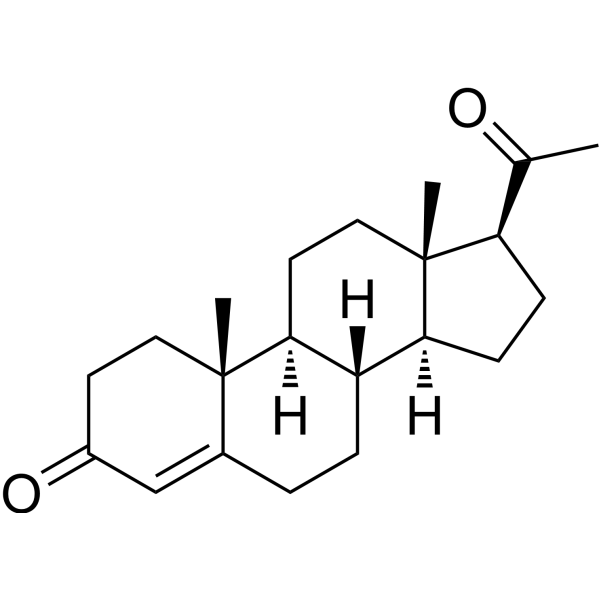
HY-N0437R
Progesterone (Standard) -
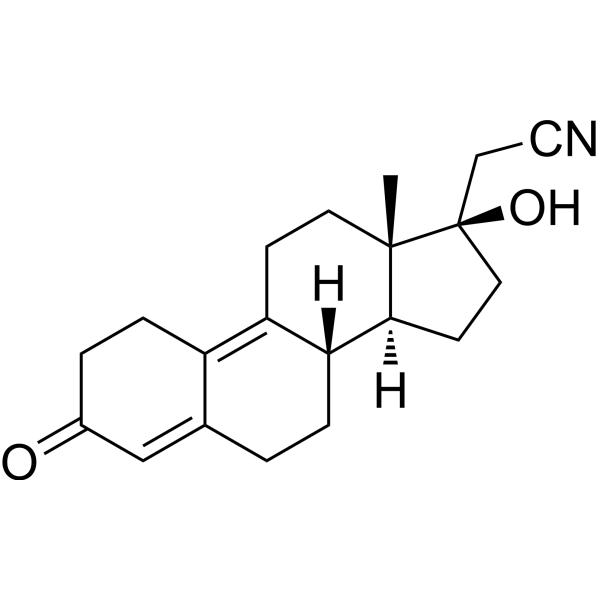
HY-B0084
DienogestProgesterone Receptor Agonist -
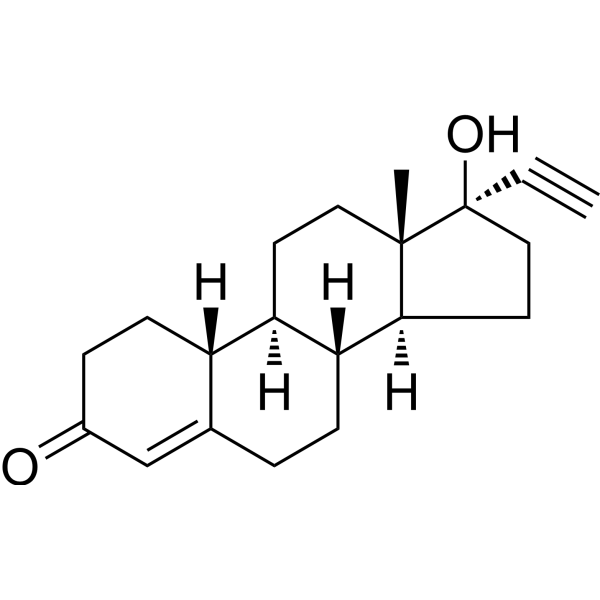
HY-B0554
NorethindroneProgestin -
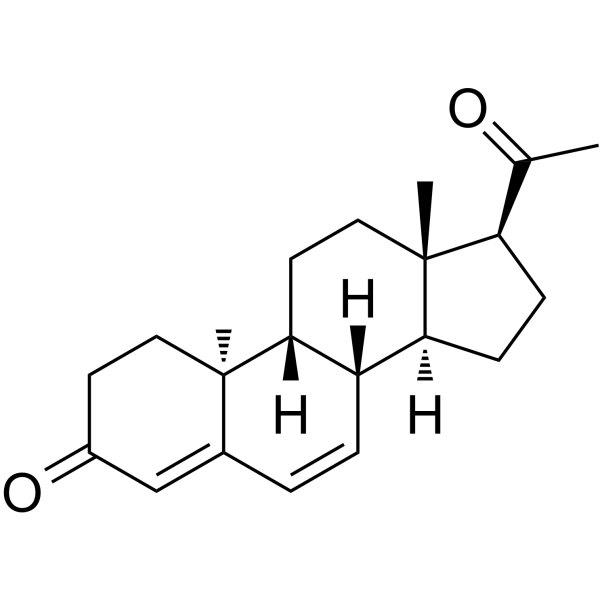
HY-B0257A
DydrogesteroneProgestogen -
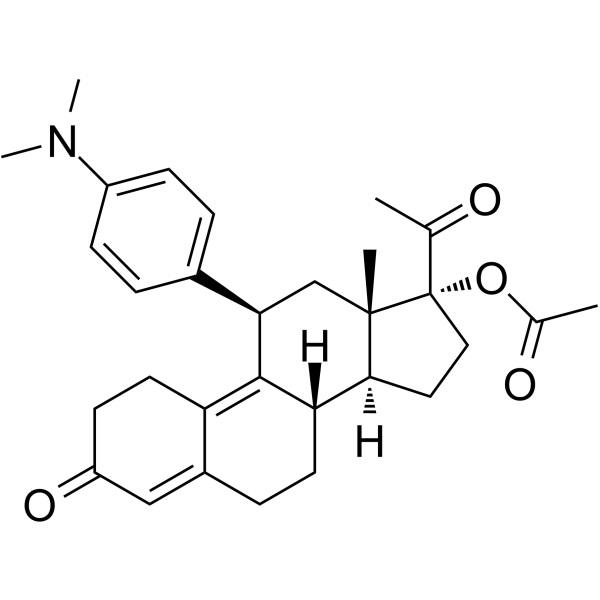
HY-16508
Ulipristal acetateSelective Progesterone Receptor Modulator -
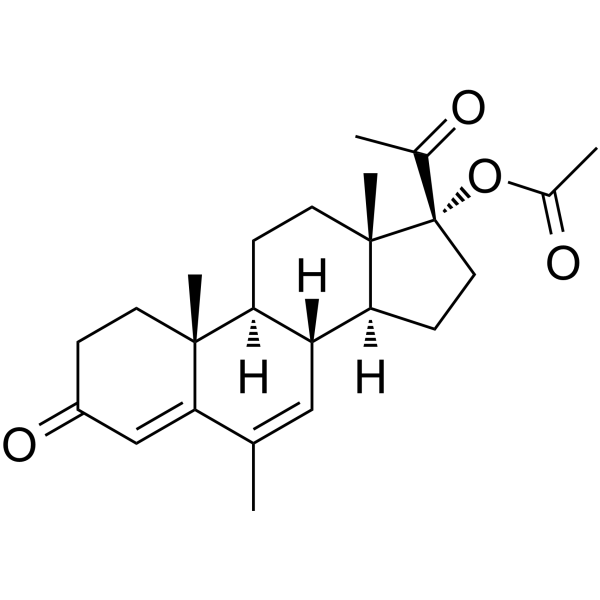
HY-13676
Megestrol acetateProgesteronal Agent -
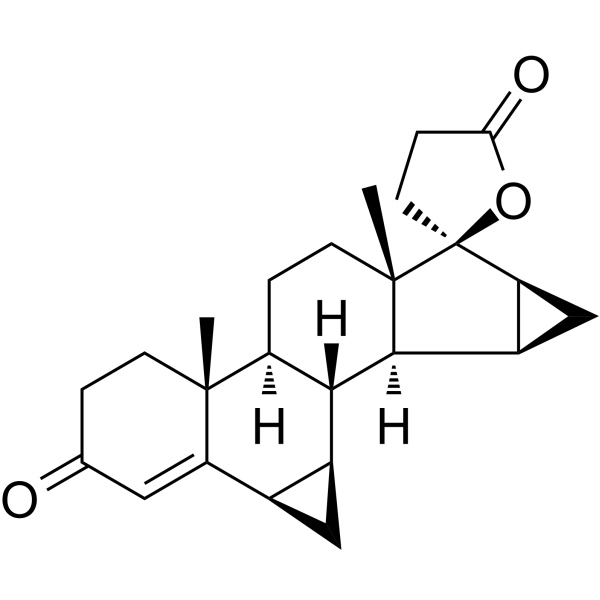
HY-B0111
DrospirenoneProgesterone Receptor Agonist -
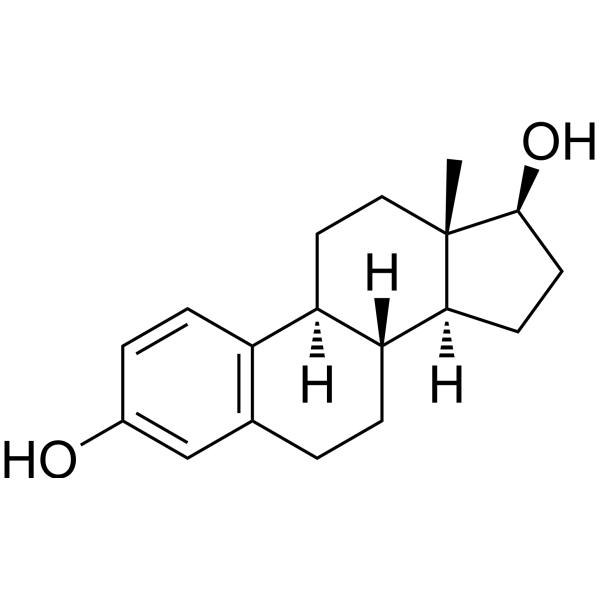
HY-B0141R
Estradiol (Standard) -
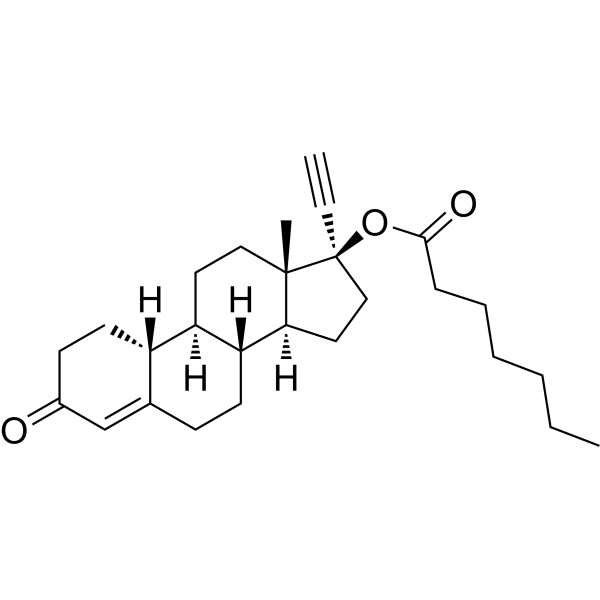
HY-A0285
Norethisterone enanthateParenteral Progestogen -
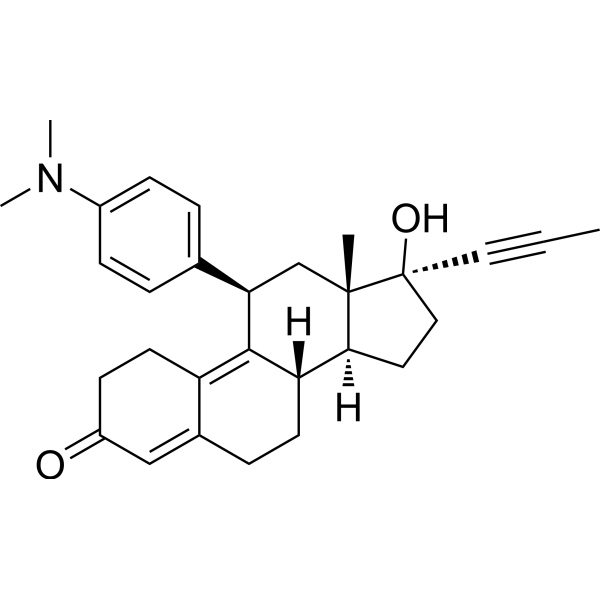
HY-13683
MifepristoneProgesterone Receptor Antagonist -
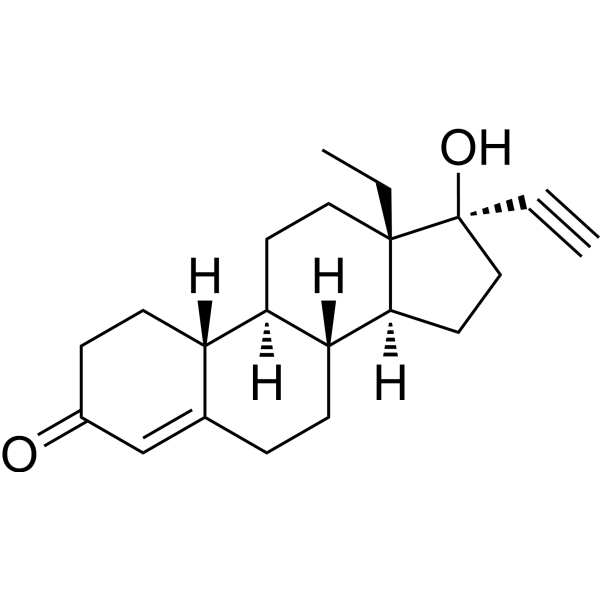
HY-B0257
LevonorgestrelProgesterone Inhibitor -
HY-105634A
Nomegestrol acetateProgesterone Receptor Agonist
Publications Citing Use of MedChemExpress (MCE) Chlormadinone acetate
More

Biological Activity
Description
In Vitro
Chlormadinone acetate binds to the human progesterone receptor in MCF-7 cell cytosol with a Ki value of 2.5 nM[1].
Chlormadinone acetate binds to the human androgen receptor in LNCaP cell cytosol with a Ki value of 3.8 nM[1].
Chlormadinone acetate binds to the human glucocorticoid receptor in IM-9 cell cytosol with a Ki value of 16 nM[1].
MedChemExpress (MCE) has not independently confirmed the accuracy of these methods. They are for reference only.
In Vivo
Chlormadinone acetate (4.64-21.5 mg/kg; p.o.; once daily; for 7 consecutive days) exhibits dose-dependent antiandrogenic activity in testosterone-treated castrated rats[1].
Chlormadinone acetate (21.5-100 mg/kg; p.o.; once daily; for 6 consecutive days) exhibits dose-dependent glucocorticoid activity in immature rats[1].
MedChemExpress (MCE) has not independently confirmed the accuracy of these methods. They are for reference only.
-
Animal Model:White New Zealand rabbits (female, ~1000 g, β-estradiol primed for cycle synchronization)[1]
-
Dosage:5 μg/kg; 45 μg/kg
-
Administration:p.o.; daily; 5 days
-
Result:Induced a median histological endometrial transformation score of 1.42 and a relative uterus weight of 1.72 ± 0.52 g/1000 g body weight at 5 μg/kg.
Induced a median histological score of 1.92 and a statistically significant relative uterus weight of 2.67 ± 0.54 g/1000 g body weight, along with marked thickened uterine walls, endometrial hyperplasia with increased secretory glands, and a papillary surface epithelium pattern at 45 μg/kg.
-
Animal Model:Sprague-Dawley rats (male, 140-180 g, castrated, testosterone treated)[1]
-
Dosage:4.64 mg/kg; 21.5 mg/kg
-
Administration:p.o.; daily; 7 days
-
Result:Caused an insignificant reduction in prostate weight, but significantly reduced seminal vesicle weights relative to testosterone-treated controls at both doses.
Reduced seminal vesicle weights by a maximum 40% at 21.5 mg/kg.
Reduced total accessory gland weights significantly at both doses relative to testosterone-treated controls, following the same pattern as seminal vesicle weights.
-
Animal Model:Wistar rats (male, immature, 50-70 g)[1]
-
Dosage:21.5 mg/kg; 100 mg/kg
-
Administration:p.o.; daily; 6 days
-
Result:Reduced thymus weight at 21.5 mg/kg.
Caused a statistically significant 19% reduction in thymus weight relative to vehicle controls at 100 mg/kg.
Reduced adrenal gland weight significantly by 36% at the 100 mg/kg dose relative to vehicle controls.
Clinical Trial
| NCT Number | Sponsor | Condition | Start Date |
Phase

|
|---|---|---|---|---|
| NCT01329991 | 2011-05 | PHASE1 |


Chemical Information
-
CAS No. 302-22-7
-
Appearance Solid
-
Molecular Weight 404.93
-
Formula C23H29ClO4
-
Color Light yellow to yellow
-
SMILES
CC([C@@]1(OC(C)=O)CC[C@@]2([H])[C@]3([H])C=C(Cl)C4=CC(CC[C@]4(C)[C@@]3([H])CC[C@]12C)=O)=O
-
Shipping
Room temperature in continental US; may vary elsewhere.
-
Storage
Powder -20°C 3 years 4°C 2 years In solvent -80°C 2 years -20°C 1 year


Publications (1)
-
Journal Impact Factor
-
Most Recent
-
BMC Cancer
PCDH1, a poor prognostic biomarker and potential target for pancreatic adenocarcinoma metastatic therapy. [Abstract]2023 Nov 13;23(1):1102. PMID: 37957639


Solvent & Solubility
In Vitro:
DMSO : 10 mg/mL (24.70 mM; Need ultrasonic; Hygroscopic DMSO has a significant impact on the solubility of product, please use newly opened DMSO)
H2O : < 0.1 mg/mL (insoluble)
Please refer to the solubility information to select the appropriate solvent. Once prepared, please aliquot and store the solution to prevent product inactivation from repeated freeze-thaw cycles.
Storage method and period of stock solution: -80°C, 2 years; -20°C, 1 year. When stored at -80°C, please use it within 2 years. When stored at -20°C, please use it within 1 year.
Please refer to the solubility information to select the appropriate solvent. Once prepared, please aliquot and store the solution to prevent product inactivation from repeated freeze-thaw cycles.
Storage method and period of stock solution: -80°C, 2 years; -20°C, 1 year. When stored at -80°C, please use it within 2 years. When stored at -20°C, please use it within 1 year.
Concentration (start) × Volume (start) = Concentration (final) × Volume (final)
In Vivo:
Select the appropriate dissolution method based on your experimental animal and administration route.
- For the following dissolution methods, please ensure to first prepare a clear stock solution using an In Vitro approach and then sequentially add co-solvents:
- To ensure reliable experimental results, the clarified stock solution can be appropriately stored based on storage conditions. As for the working solution for In Vivo experiments, it is recommended to prepare freshly and use it on the same day.
- The percentages shown for the solvents indicate their volumetric ratio in the final prepared solution. If precipitation or phase separation occurs during preparation, heat and/or sonication can be used to aid dissolution.
Add each solvent one by one: 10% DMSO 40% PEG300 5% Tween-80 45% Saline
Solubility: ≥ 1 mg/mL (2.47 mM); Clear solution
This protocol yields a clear solution of ≥ 1 mg/mL (saturation unknown).
Taking 1 mL working solution as an example, add 100 μL DMSO stock solution (10.0 mg/mL) to 400 μL PEG300, and mix evenly; then add 50 μL Tween-80 and mix evenly; then add 450 μL Saline to adjust the volume to 1 mL.
Preparation of Saline: Dissolve 0.9 g sodium chloride in ddH₂O and dilute to 100 mL to obtain a clear Saline solution.
Add each solvent one by one: 10% DMSO 90% (20% SBE-β-CD in Saline)
Solubility: ≥ 1 mg/mL (2.47 mM); Clear solution
This protocol yields a clear solution of ≥ 1 mg/mL (saturation unknown).
Taking 1 mL working solution as an example, add 100 μL DMSO stock solution (10.0 mg/mL) to 900 μL 20% SBE-β-CD in Saline, and mix evenly.
Preparation of 20% SBE-β-CD in Saline (4°C, storage for one week): 2 g SBE-β-CD powder is dissolved in 10 mL Saline, completely dissolve until clear.
In Vivo Dissolution Calculator
Please enter the basic information of animal experiments:
-
-
-
-
Recommended: Prepare an additional quantity of animals to account for potential losses during experiments.
Please enter your animal formula composition:
-
%DMSO +
Recommended: Keep the proportion of DMSO in working solution below 2% if your animal is weak.
-
%+
-
+%Tween-80 + +
-
%Saline +
The co-solvents required include: DMSO, . All of co-solvents are available by MedChemExpress (MCE). , Tween 80. All of co-solvents are available by MedChemExpress (MCE).
Working solution concentration: 0.22 mg/mL
Method for preparing stock solution: mg drug dissolved in μL DMSO. Stock solution concentration: mg/mL.
1. Take μL DMSO stock solution;
2. Add μL .
μL , mix evenly;
3. Then add μL Tween 80, mix evenly;
4. Then add μL
Please ensure that the stock solution in the first step is dissolved to a clear state, and add co-solvents in sequence. You can use ultrasonic heating (ultrasonic cleaner, recommended frequency 20-40 kHz), vortexing, etc. to assist dissolution.


Purity & Documentation
-
Data Sheet (283 KB)
-
SDS (419 KB)
- English - EN (419 KB)
- Français - FR (419 KB)
- Deutsch - DE (419 KB)
- Norwegian - NO (419 KB)
- Español - ES (419 KB)
- Swedish - SV (419 KB)
- Italian - IT (419 KB)
- Korean - KR (419 KB)
- Portuguese - PT (419 KB)
-
Handling Instructions (2659 KB)
References
[1]. Schneider J, et al. Comparative effects of chlormadinone acetate and its 3alpha- and 3beta-hydroxy metabolites on progesterone, androgen and glucocorticoid receptors. Pharmacology. 2009;84(2):74-81. [Content Brief]
[2]. Du X, et al. PCDH1, a poor prognostic biomarker and potential target for pancreatic adenocarcinoma metastatic therapy. BMC Cancer. 2023;23(1):1102. Published 2023 Nov 13. [Content Brief]
[3]. Huber JC, et al. Effect of an oral contraceptive with chlormadinone acetate on depressive mood : analysis of data from four observational studies. Clin Drug Investig. 2008;28(12):783-791. [Content Brief]


Complete Stock Solution Preparation Table
Please refer to the solubility information to select the appropriate solvent. Once prepared, please aliquot and store the solution to prevent product inactivation from repeated freeze-thaw cycles.
Storage method and period of stock solution: -80°C, 2 years; -20°C, 1 year. When stored at -80°C, please use it within 2 years. When stored at -20°C, please use it within 1 year.
| Optional Solvent | Concentration Solvent Mass | 1 mg | 5 mg | 10 mg | 25 mg |
|---|---|---|---|---|---|
| DMSO | 1 mM | 2.4696 mL | 12.3478 mL | 24.6956 mL | 61.7391 mL |
| 5 mM | 0.4939 mL | 2.4696 mL | 4.9391 mL | 12.3478 mL | |
| 10 mM | 0.2470 mL | 1.2348 mL | 2.4696 mL | 6.1739 mL | |
| 15 mM | 0.1646 mL | 0.8232 mL | 1.6464 mL | 4.1159 mL | |
| 20 mM | 0.1235 mL | 0.6174 mL | 1.2348 mL | 3.0870 mL |


Chlormadinone acetate Related Classifications
HY-B1095 Related Classifications
 Powered by Bioz
Keywords
- Chlormadinone
- 302-22-7
- Progesterone Receptor
- Androgen Receptor
- Glucocorticoid Receptor
- GABA Receptor
- hippocampal allopregnanolone
- Panc-0813 pancreatic adenocarcinoma cells
- human androgen receptor
- GABAA receptor
- human glucocorticoid receptor
- estradiol valerate
- MCF-7 cell cytosol
- human progesterone receptor
- Inhibitor
- inhibitor
- inhibit