



GSK2256294A
Based on 2 publication(s) in Google Scholar
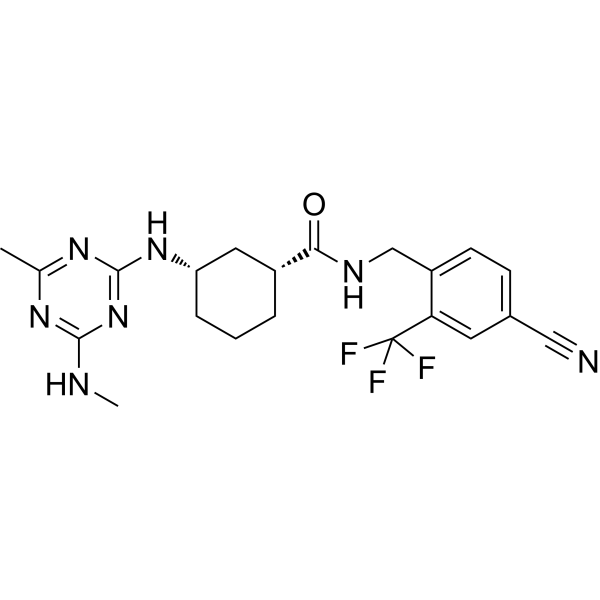
GSK2256294A (GSK 2256294) is a selective and orally active inhibitor of soluble epoxide hydrolase (sEH). GSK2256294A inhibits recombinant human sEH, rat sEH orthologs and murine sEH orthologs with IC50s of 27, 61 and 189 pM, respectively. GSK2256294A can be used for the research of chronic obstructive pulmonary disease (COPD) and cardiovascular disease.
Nos produits utilisent uniquement pour la recherche. Nous ne vendons pas aux patients.
- Pureté : 99.84%
- CAS No.: 1142090-23-0
- Formule: C21H24F3N7O
- Masse moléculaire:447.46
-
Stockage:Powder -20°C, 3 years , 4°C, 2 years ; In solvent -80°C, 2 years , -20°C, 1 year

To place orders, for customer services and technical support, please contact: MedChemExpress USA
Tel: 609-228-6898 E-mail: [email protected] [email protected]


-
 Activité biologique
-
Chemical Information
-
Solvant et solubilité
- Protocole
- Pureté et documentation
- Références
-
 Help & FAQs


-
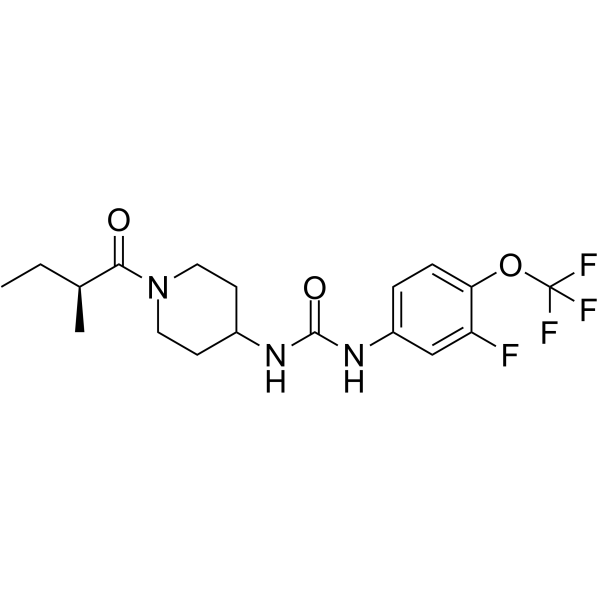
HY-135653
EC5026sEH Inhibitor -
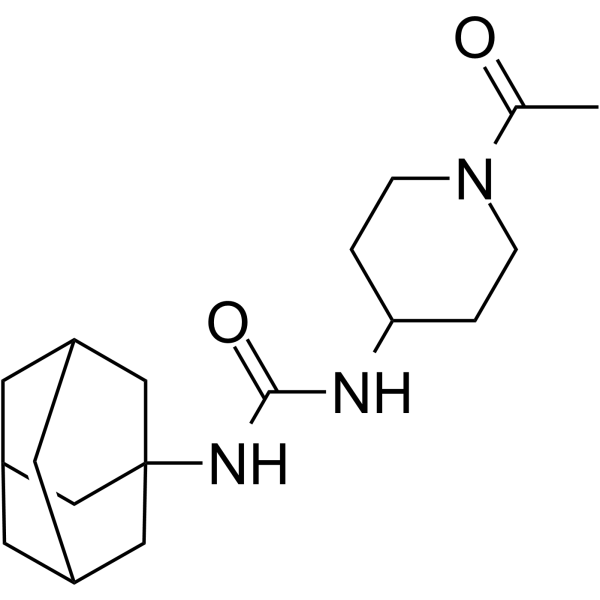
HY-111151
AR-9281s-EH Inhibitor -
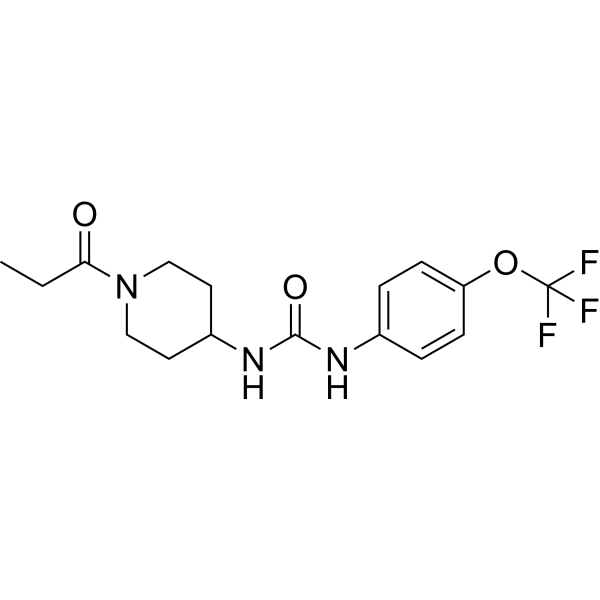
HY-101294
TPPUsEH Inhibitor -
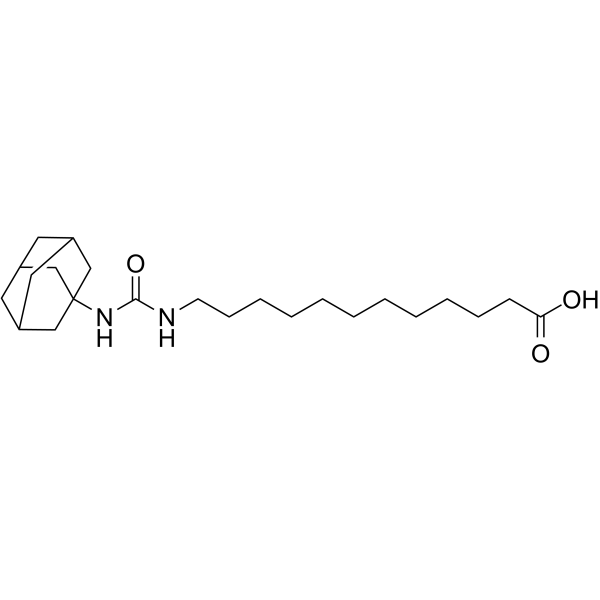
HY-108570
AUDAsEH Inhibitor -

HY-101294R
TPPU (Standard)sEH Inhibitor -
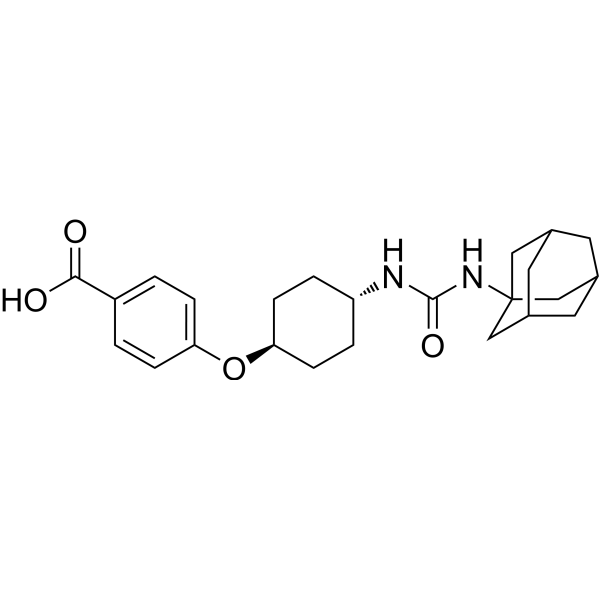
HY-113974
trans-AUCBsEH Inhibitor -
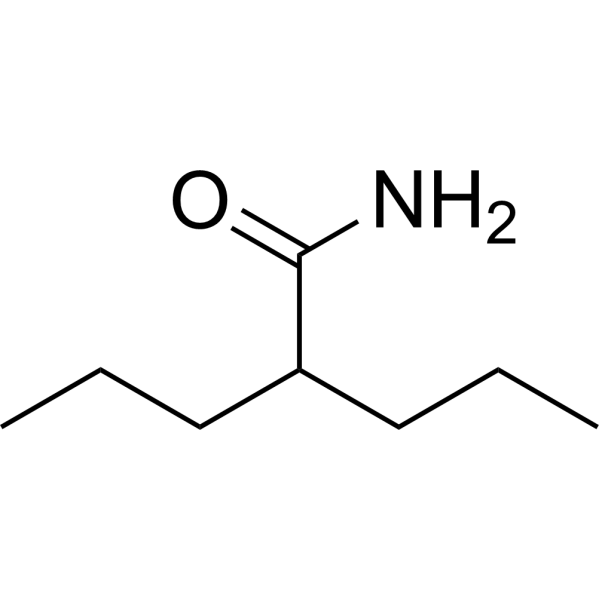
HY-B2117
ValpromideAntiepileptic Agent -
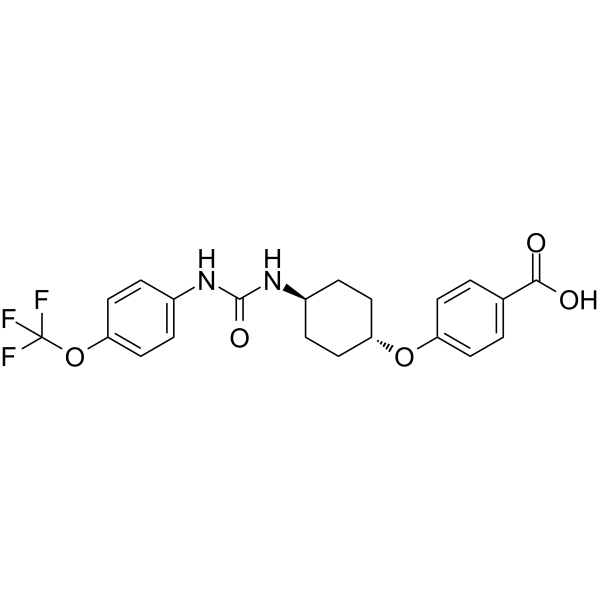
HY-114266
UC-1728Epoxide Hydrolase Inhibitor -

HY-111151R
AR-9281 (Standard)s-EH Inhibitor -
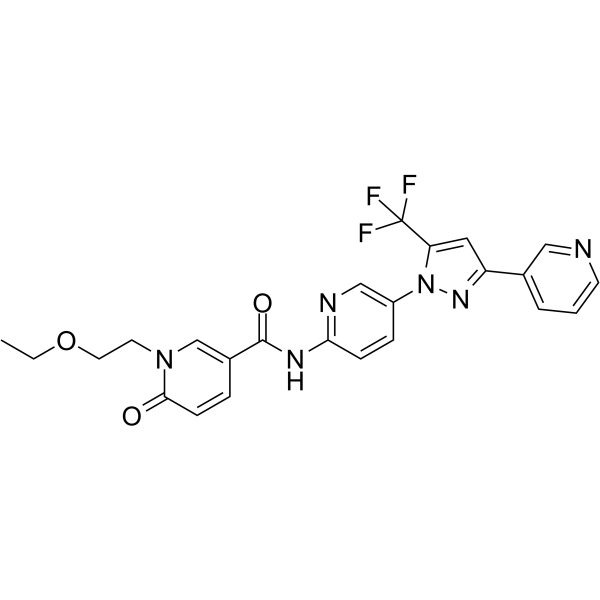
HY-124063
BI-1935sEH Inhibitor -

HY-108570R
AUDA (Standard)sEH Inhibitor -
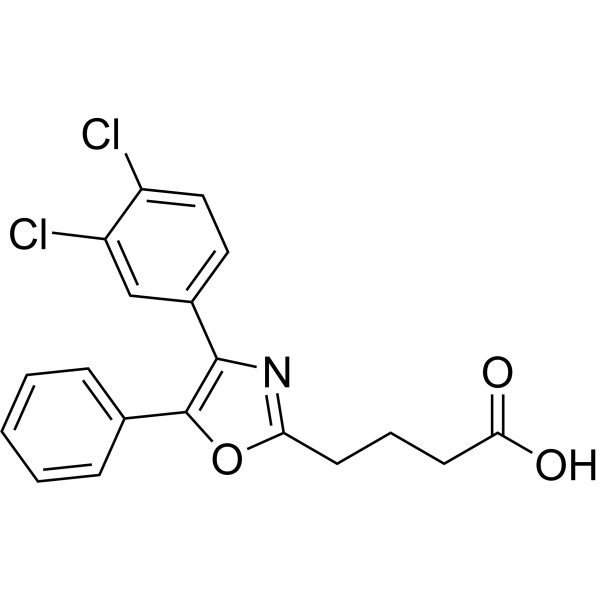
HY-126326
SWE101Epoxide Hydrolase Inhibitor
Publications Citing Use of MedChemExpress (MCE) GSK2256294A
More

Activité biologique
Description
IC50 & Target
IC50: 27 pM (recombinant human sEH), 61 pM (rat sEH orthologs), 189 pM (murine sEH orthologs)[1]
Cellular Effect
|
Cell Line

|
Type | Value | Description | References |
|---|---|---|---|---|
| HEK293 | IC50 |
0.66 nM
Compound: 96; GSK2256294
|
Inhibition of recombinant human soluble epoxide hydrolase expressed in HEK293 cells
Inhibition of recombinant human soluble epoxide hydrolase expressed in HEK293 cells
|
[PMID: 32039601] |
In Vitro
GSK2256294A (300 pM-10 μM; 2 h) inhibits the conversion of 14,15-EET-d11 to 14,15-DHET-d11 in human, rat and mouse whole blood[1].
MedChemExpress (MCE) has not independently confirmed the accuracy of these methods. They are for reference only. Further protocols information, click here.
In Vivo
MedChemExpress (MCE) has not independently confirmed the accuracy of these methods. They are for reference only.
-
Animal Model:Mice exposed to cigarette smoke 5 days/week for 2 weeks[1]
-
Dosage:5 and 30 mg/kg
-
Administration:Oral gavage; 5 and 30 mg/kg twice daily 5 days/week; for 2 weeks
-
Result:Dose-dependently inhibited numbers of BAL fluid total cells, neutrophils, macrophages and the keratinocyte chemoattractant (KC) levels in lung tissue.
-
Animal Model:Mice exposed to cigarette smoke 5 days/week for 2 weeks[1]
-
Dosage:30 mg/kg
-
Administration:Oral gavage; 30 mg/kg twice daily; for 8 days
-
Result:Significantly reduced neutrophils, macrophages and pulmonary inflammation in cigarette smoke-exposed mice.
Essai clinique
| NCT Number | Sponsor | Condition | Start Date |
Phase
|
|---|---|---|---|---|
| NCT01329991 | Plexxikon| | 2011-05 | PHASE1 |


Chemical Information
-
CAS No. 1142090-23-0
-
Appearance Solid
-
Masse moléculaire 447.46
-
Formule C21H24F3N7O
-
Color White to off-white
-
SMILES
O=C([C@H]1C[C@@H](NC2=NC(NC)=NC(C)=N2)CCC1)NCC3=CC=C(C#N)C=C3C(F)(F)F
-
Synonyms
GSK 2256294
-
Livraison
Room temperature in continental US; may vary elsewhere.
-
Stockage
Powder -20°C 3 years 4°C 2 years In solvent -80°C 2 years -20°C 1 year


Publications (2)
-
Journal Impact Factor
-
Most Recent
-
Diabetes
Inhibition of Soluble Epoxide Hydrolase 2 Ameliorates Diabetic Keratopathy and Impaired Wound Healing in Mouse Corneas. [Abstract]2018 Jun;67(6):1162-1172. PMID: 29615440 -


Solvant et solubilité
In Vitro:
DMSO : ≥ 47 mg/mL (105.04 mM; Hygroscopic DMSO has a significant impact on the solubility of product, please use newly opened DMSO)
* "≥" means soluble, but saturation unknown.
Please refer to the solubility information to select the appropriate solvent. Once prepared, please aliquot and store the solution to prevent product inactivation from repeated freeze-thaw cycles.
Storage method and period of stock solution: -80°C, 2 years; -20°C, 1 year. When stored at -80°C, please use it within 2 years. When stored at -20°C, please use it within 1 year.
Please refer to the solubility information to select the appropriate solvent. Once prepared, please aliquot and store the solution to prevent product inactivation from repeated freeze-thaw cycles.
Storage method and period of stock solution: -80°C, 2 years; -20°C, 1 year. When stored at -80°C, please use it within 2 years. When stored at -20°C, please use it within 1 year.
Concentration (start) × Volume (start) = Concentration (final) × Volume (final)
In Vivo:
Select the appropriate dissolution method based on your experimental animal and administration route.
- For the following dissolution methods, please ensure to first prepare a clear stock solution using an In Vitro approach and then sequentially add co-solvents:
- To ensure reliable experimental results, the clarified stock solution can be appropriately stored based on storage conditions. As for the working solution for In Vivo experiments, it is recommended to prepare freshly and use it on the same day.
- The percentages shown for the solvents indicate their volumetric ratio in the final prepared solution. If precipitation or phase separation occurs during preparation, heat and/or sonication can be used to aid dissolution.
Add each solvent one by one: 10% DMSO 40% PEG300 5% Tween-80 45% Saline
Solubility: ≥ 2.08 mg/mL (4.65 mM); Clear solution
This protocol yields a clear solution of ≥ 2.08 mg/mL (saturation unknown).
Taking 1 mL working solution as an example, add 100 μL DMSO stock solution (20.8 mg/mL) to 400 μL PEG300, and mix evenly; then add 50 μL Tween-80 and mix evenly; then add 450 μL Saline to adjust the volume to 1 mL.
Preparation of Saline: Dissolve 0.9 g sodium chloride in ddH₂O and dilute to 100 mL to obtain a clear Saline solution.
Add each solvent one by one: 10% DMSO 90% (20% SBE-β-CD in Saline)
Solubility: ≥ 2.08 mg/mL (4.65 mM); Clear solution
This protocol yields a clear solution of ≥ 2.08 mg/mL (saturation unknown).
Taking 1 mL working solution as an example, add 100 μL DMSO stock solution (20.8 mg/mL) to 900 μL 20% SBE-β-CD in Saline, and mix evenly.
Preparation of 20% SBE-β-CD in Saline (4°C, storage for one week): 2 g SBE-β-CD powder is dissolved in 10 mL Saline, completely dissolve until clear.
In Vivo Dissolution Calculator
Please enter the basic information of animal experiments:
-
-
-
-
Recommended: Prepare an additional quantity of animals to account for potential losses during experiments.
Please enter your animal formula composition:
-
%DMSO +
Recommended: Keep the proportion of DMSO in working solution below 2% if your animal is weak.
-
%+
-
+%Tween-80 + +
-
%Saline +
The co-solvents required include: DMSO, . All of co-solvents are available by MedChemExpress (MCE). , Tween 80. All of co-solvents are available by MedChemExpress (MCE).
Working solution concentration: 0.22 mg/mL
Method for preparing stock solution: mg drug dissolved in μL DMSO. Stock solution concentration: mg/mL.
1. Take μL DMSO stock solution;
2. Add μL .
μL , mix evenly;
3. Then add μL Tween 80, mix evenly;
4. Then add μL
Please ensure that the stock solution in the first step is dissolved to a clear state, and add co-solvents in sequence. You can use ultrasonic heating (ultrasonic cleaner, recommended frequency 20-40 kHz), vortexing, etc. to assist dissolution.

Protocole
-
Research Protocol for Cardiovascular Diseases
Cardiovascular disease can be modeled as maladaptive cardiac remodeling, where ischemic injury or pressure overload activates inflammatory signaling, fibroblast activation, extracellular-matrix deposition, cardiomyocyte hypertrophy, vascular remodeling, and progressive ventricular dysfunction. The TGF-β/SMAD axis is a central profibrotic pathway after myocardial injury and pressure overload, while innate immune and cytokine pathways regulate leukocyte recruitment, scar formation, and adverse remodeling. Key unresolved questions include which inflammatory signals are reparative versus harmful, when fibrosis is protective versus maladaptive, and whether pathway inhibition improves function without weakening necessary infarct healing or compensatory remodeling.


Pureté et documentation
-
Fiche technique (272 KB)
-
SDS (252 KB)
- English - EN (252 KB)
- Français - FR (252 KB)
- Deutsch - DE (252 KB)
- Norwegian - NO (252 KB)
- Español - ES (252 KB)
- Swedish - SV (252 KB)
- Italian - IT (252 KB)
- Korean - KR (252 KB)
- Portuguese - PT (252 KB)
-
Instruction de manipulation (2659 KB)
Références


Complete Stock Solution Preparation Table
Please refer to the solubility information to select the appropriate solvent. Once prepared, please aliquot and store the solution to prevent product inactivation from repeated freeze-thaw cycles.
Storage method and period of stock solution: -80°C, 2 years; -20°C, 1 year. When stored at -80°C, please use it within 2 years. When stored at -20°C, please use it within 1 year.
| Optional Solvent | Concentration Solvent Mass | 1 mg | 5 mg | 10 mg | 25 mg |
|---|---|---|---|---|---|
| DMSO | 1 mM | 2.2348 mL | 11.1742 mL | 22.3484 mL | 55.8709 mL |
| 5 mM | 0.4470 mL | 2.2348 mL | 4.4697 mL | 11.1742 mL | |
| 10 mM | 0.2235 mL | 1.1174 mL | 2.2348 mL | 5.5871 mL | |
| 15 mM | 0.1490 mL | 0.7449 mL | 1.4899 mL | 3.7247 mL | |
| 20 mM | 0.1117 mL | 0.5587 mL | 1.1174 mL | 2.7935 mL | |
| 25 mM | 0.0894 mL | 0.4470 mL | 0.8939 mL | 2.2348 mL | |
| 30 mM | 0.0745 mL | 0.3725 mL | 0.7449 mL | 1.8624 mL | |
| 40 mM | 0.0559 mL | 0.2794 mL | 0.5587 mL | 1.3968 mL | |
| 50 mM | 0.0447 mL | 0.2235 mL | 0.4470 mL | 1.1174 mL | |
| 60 mM | 0.0372 mL | 0.1862 mL | 0.3725 mL | 0.9312 mL | |
| 80 mM | 0.0279 mL | 0.1397 mL | 0.2794 mL | 0.6984 mL | |
| 100 mM | 0.0223 mL | 0.1117 mL | 0.2235 mL | 0.5587 mL |


GSK2256294A Related Classifications
HY-19644 Related Classifications
 Powered by Bioz