



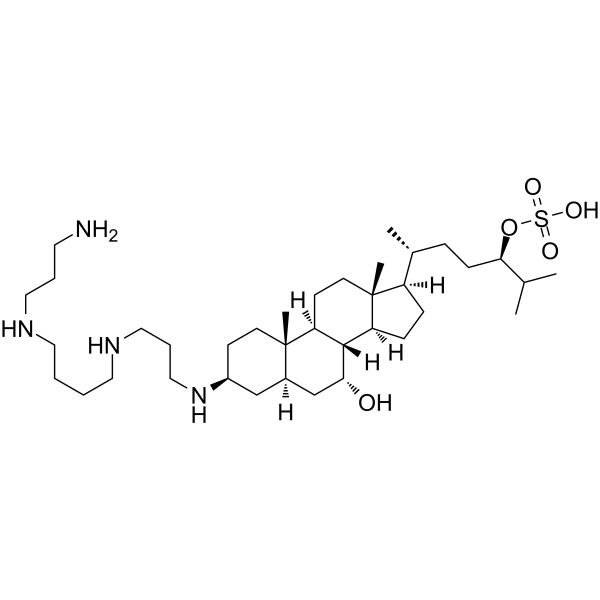
MSI-1436
Based on 8 publication(s) in Google Scholar
MSI-1436 is a selective, non-competitive inhibitor of the enzyme protein-tyrosine phosphatase 1B (PTP1B), with an IC50 of appr 1 μM, 200-fold preference over TCPTP (IC50, 224 μM).
For research use only. We do not sell to patients.
- CAS No.: 186139-09-3
- Formula: C37H72N4O5S
- Molecular Weight:685.06
-
Storage:Powder -20°C, 3 years , 4°C, 2 years ; In solvent -80°C, 6 months , -20°C, 1 month

To place orders, for customer services and technical support, please contact: MedChemExpress USA
Tel: 609-228-6898 E-mail: [email protected] [email protected]


-
 Biological Activity
-
Chemical Information
- Protocols
- Purity & Documentation
- References
-
 Help & FAQs


-
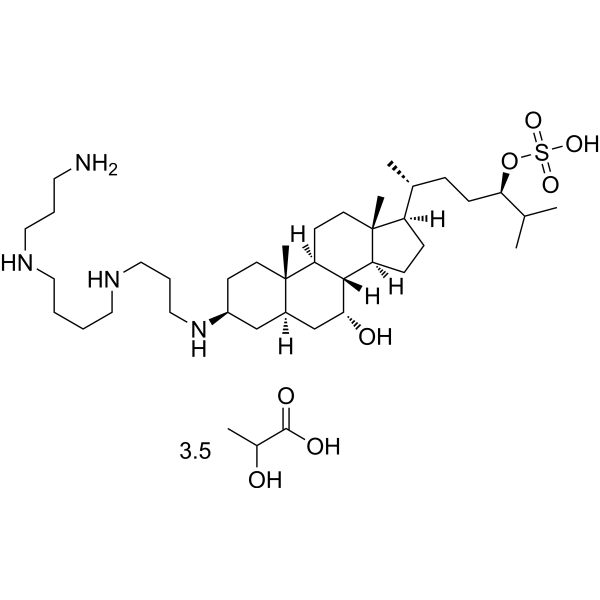
HY-12219A
MSI-1436 lactatePTP1B Inhibitor -
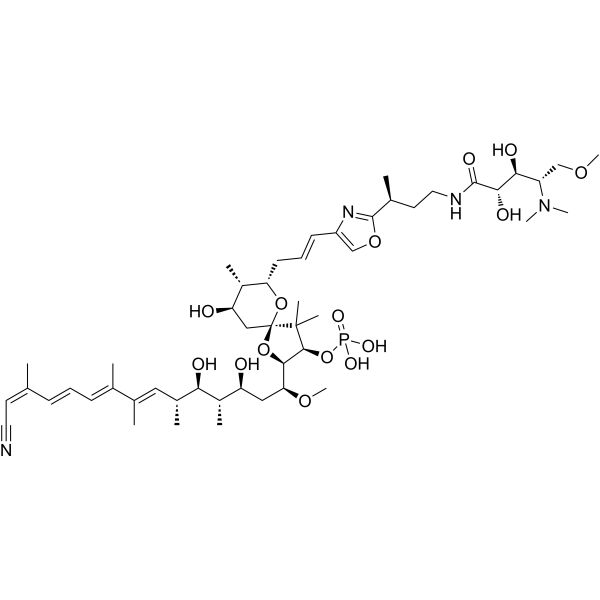
HY-18983
Calyculin APhosphatase Inhibitor -
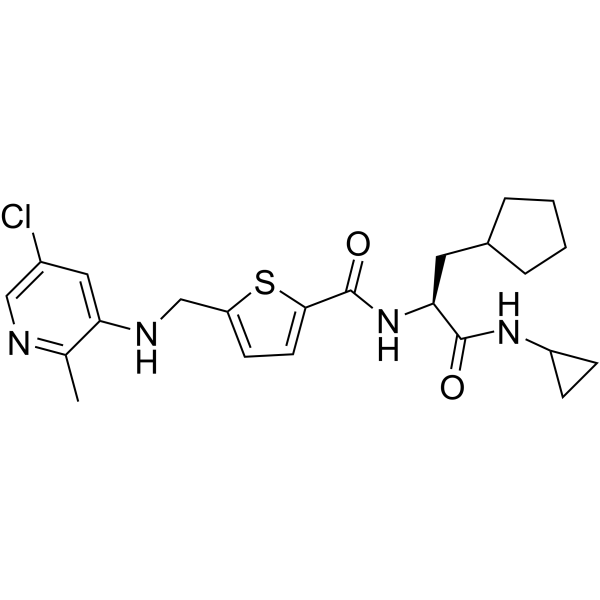
HY-15832
GSK 2830371Wip1 Phosphatase Inhibitor -
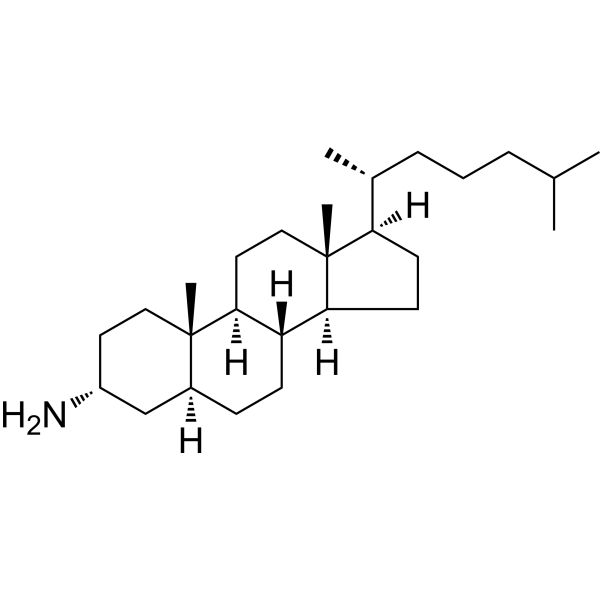
HY-19776
3α-AminocholestanePhosphatase Inhibitor -
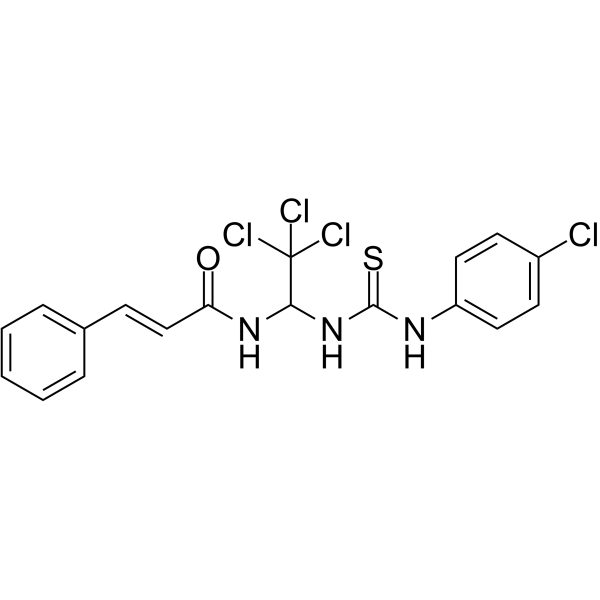
HY-15969
Sal003eIF2α Phophatase Inhibitor -
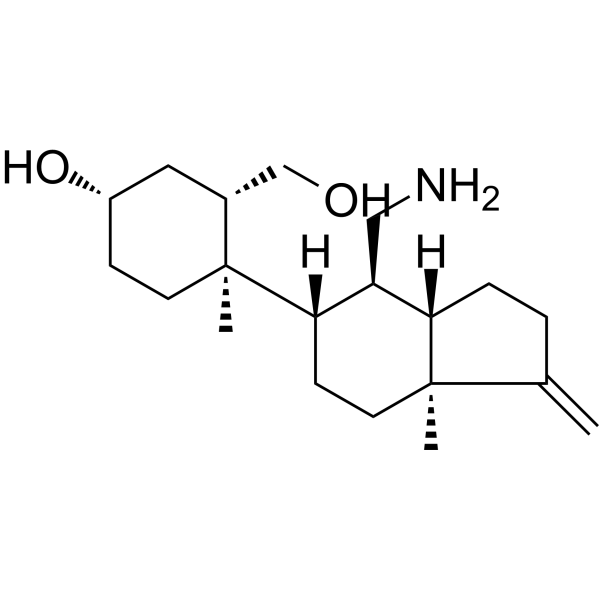
HY-109011
RosiptorSHIP1 Activator -
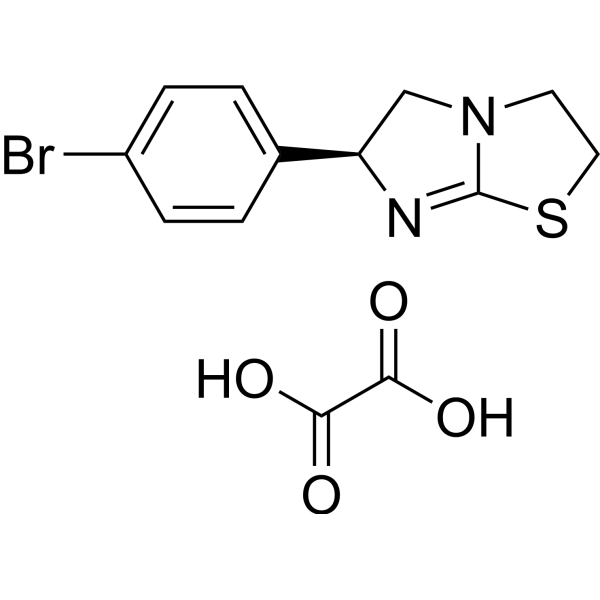
HY-19695
(-)-p-Bromotetramisole oxalateAlkaline Phosphatase Inhibitor -
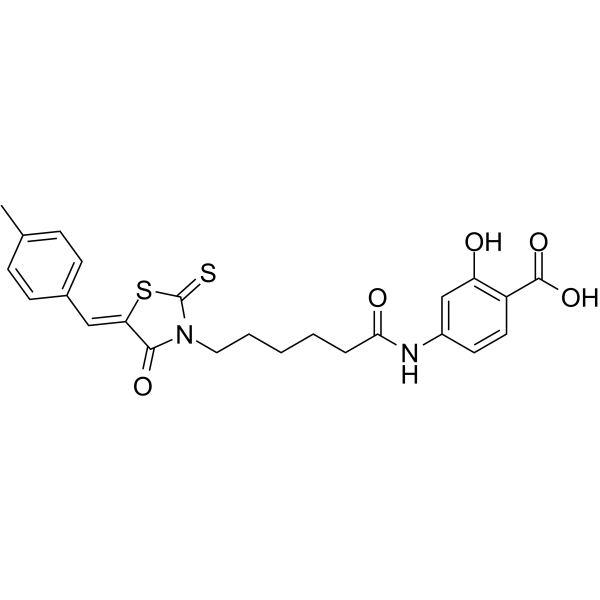
HY-101510
F1063-0967DUSP26 Inhibitor -
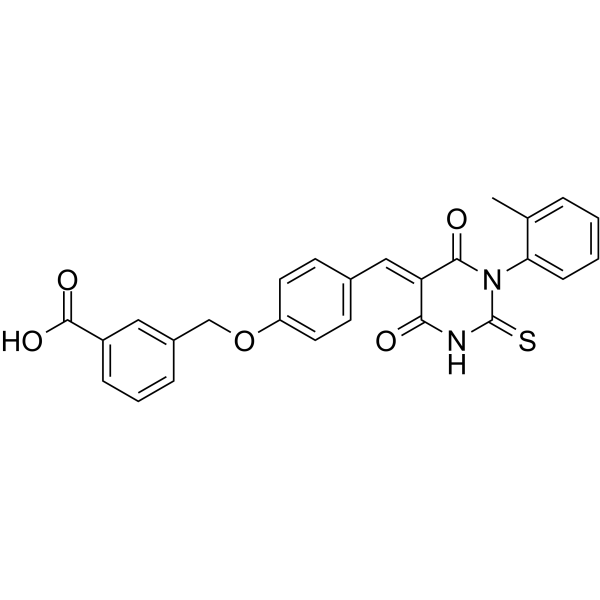
HY-18667
LTV-1LYP Inhibitor -
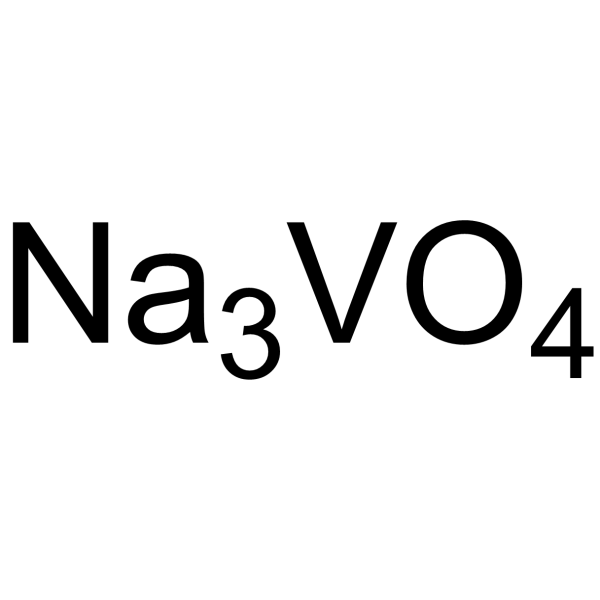
HY-D0852
Sodium orthovanadateProtein Tyrosine/Alkaline Phosphatase Inhibitor -
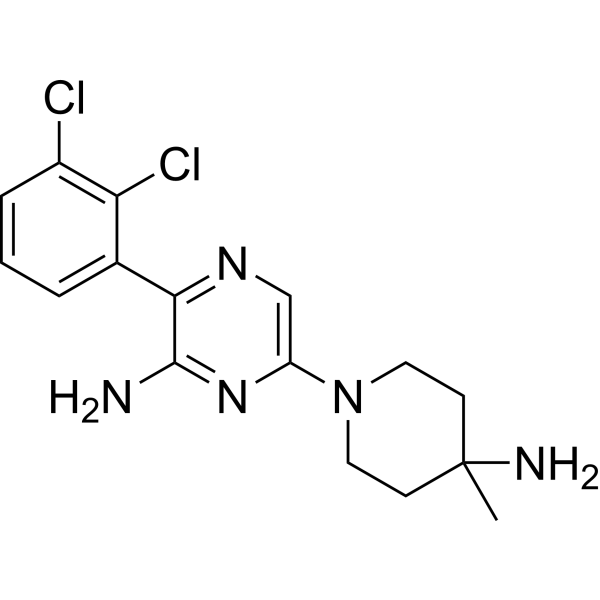
HY-100388
SHP099SHP2 Inhibitor
Publications Citing Use of MedChemExpress (MCE) MSI-1436
More- Nature. 2024 Jul;631(8020):415-423. [Abstract]
- J Ginseng Res. 2025 Nov;49(6):652-662. [Abstract]
- Commun Biol. 2021 Feb 24;4(1):248. [Abstract]
- Exp Neurol. 2025 Mar:385:115115. [Abstract]
- Spectrochim Acta A Mol Biomol Spectrosc. 2025 Feb 15:327:125394. [Abstract]
- Oncol Rep. 2024 Nov;52(5):149. [Abstract]
- J Leukoc Biol. 2024 Sep 2;116(3):565-578. [Abstract]
- Biomed Pharmacother. 2026 Jan:194:118951. [Abstract]


Biological Activity
Description
IC50 & Target
IC50: 1 μM (PTB1B), 224 μM (TCPTP)[1]
In Vitro
In HepG2, MSI-1436 (10 μM, 30 min) alone has no effect on phosphorylation of IRβ, but in conjunction with 100 nM insulin, MSI-1436 increases p-IRβ 18-fold over untreated cells and by approximately threefold over cells treated with insulin alone. MSI-1436's inhibition of TCPTP is approximately two logs less than the effect on PTP1B activity, with a resulting IC50 value of 224 μM[1]. MSI-1436 (Trodusquemine, 10 μM) restores ERK phosphorylation in response to mGluR1/5 agonist DHPG in F11 neuronal cells. MSI-1436 (10 uM) rescues DHPG-induced holding currents and restores DSI in LMO4KO BLA neurons[2]. MSI-1436 (0.1-100 μM) blocks PTP1B activity, has insulin-mimetic effects in cultured neuronal cells[3].
MedChemExpress (MCE) has not independently confirmed the accuracy of these methods. They are for reference only. Further protocols information, click here.
In Vivo
MedChemExpress (MCE) has not independently confirmed the accuracy of these methods. They are for reference only.
Clinical Trial
| NCT Number | Sponsor | Condition | Start Date |
Phase

|
|---|---|---|---|---|
| NCT01329991 | Plexxikon| | 2011-05 | PHASE1 |


Chemical Information
-
CAS No. 186139-09-3
-
Appearance Solid
-
Molecular Weight 685.06
-
Formula C37H72N4O5S
-
Color White to yellow
-
SMILES
NCCCNCCCCNCCCN[C@@H]1C[C@@](C[C@@H](O)[C@]2([H])[C@]3([H])CC[C@@]4(C)[C@@]2([H])CC[C@@]4([C@H](C)CC[C@@H](OS(=O)(O)=O)C(C)C)[H])([H])[C@]3(C)CC1
-
Synonyms
Trodusquemine; Aminosterol-1436
-
Shipping
Room temperature in continental US; may vary elsewhere.
-
Storage
Powder -20°C 3 years 4°C 2 years In solvent -80°C 6 months -20°C 1 month


Publications (8)
-
Journal Impact Factor
-
Most Recent
-
Nature
2024 Jul;631(8020):415-423. PMID: 38867038 -
J Ginseng Res
(20S)-protopanaxatriol attenuates Ang II-induced renal injury via PTPN1-mediated AMPK/mTOR signaling pathway. [Abstract]2025 Nov;49(6):652-662. PMID: 41268307 -
Commun Biol
βA1-crystallin regulates glucose metabolism and mitochondrial function in mouse retinal astrocytes by modulating PTP1B activity. [Abstract]2021 Feb 24;4(1):248. PMID: 33627831 -
Exp Neurol
Pharmacological PTP1B inhibition rescues motor learning, neuroinflammation, and hyperglycaemia in a mouse model of Alzheimer's disease. [Abstract]2025 Mar:385:115115. PMID: 39672227 -
Spectrochim Acta A Mol Biomol Spectrosc
A novel fluorescent probe with Aggregation-Induced emission characteristics for PTP1B activity sensing and inhibitor screening. [Abstract]2025 Feb 15:327:125394. PMID: 39520822 -
Oncol Rep
The combination of a PTP1B inhibitor, TNFR2 blocker, and PD‑1 antibody suppresses the progression of non‑small cell lung cancer tumors by enhancing immunocompetence. [Abstract]2024 Nov;52(5):149. PMID: 39301655 -
J Leukoc Biol
Combination of microparticles vaccine with MSI-1436 exerts a strong immune response for hepatocellular carcinoma. [Abstract]2024 Sep 2;116(3):565-578. PMID: 39012079 -
Biomed Pharmacother
Multi-target mechanisms of glabrone in ulcerative colitis: Synergistic restoration of mucosal barrier and inhibition of inflammation through SRC/HSP90 Co-modulation. [Abstract]2026 Jan:194:118951. PMID: 41496348

Protocols
-
Cell Cytotoxicity Assay
Cytotoxicity assays are usually based on the assessment of cell membrane damage, which can also be indirectly detected by measuring cell viability. Detection methods include MTT assay, CKK-8 assay, LDH assay and ATP assay, etc.


Purity & Documentation
-
Data Sheet (275 KB)
-
SDS (393 KB)
- English - EN (393 KB)
- Français - FR (393 KB)
- Deutsch - DE (393 KB)
- Norwegian - NO (393 KB)
- Español - ES (393 KB)
- Swedish - SV (393 KB)
- Italian - IT (393 KB)
- Korean - KR (393 KB)
- Portuguese - PT (393 KB)
-
Handling Instructions (2659 KB)
References
[1]. Lantz KA, et al. Inhibition of PTP1B by trodusquemine (MSI-1436) causes fat-specific weight loss in diet-induced obese mice. Obesity (Silver Spring). 2010 Aug;18(8):1516-1523. [Content Brief]
[2]. Qin Z, et al. Chronic stress induces anxiety via an amygdalar intracellular cascade that impairs endocannabinoid signaling. Neuron. 2015 Mar 18;85(6):1319-31. [Content Brief]
[3]. Qin Z, et al. Functional properties of Claramine: a novel PTP1B inhibitor and insulin-mimetic compound. Biochem Biophys Res Commun. 2015 Feb 27;458(1):21-7. [Content Brief]

Calculators
Concentration (start) × Volume (start) = Concentration (final) × Volume (final)


MSI-1436 Related Classifications
HY-12219 Related Classifications
 Powered by Bioz