



Ranirestat
Based on 1 publication(s) in Google Scholar
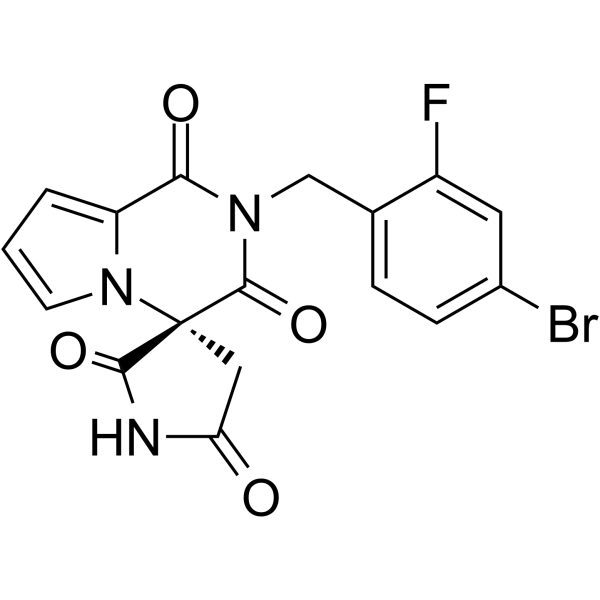
Ranirestat (AS-3201) potent and orally active aldose reductase (AR) inhibitor with IC50s of 11 nM and 15 nM for rat lens AR and recombinant human AR, respectively, and a Ki of 0.38 nM for recombinant human AR. Ranirestat has the potential for diabetic sensorimotor polyneuropathy treatment. Ranirestat also has a neuroprotective effect on diabetic retinas.
For research use only. We do not sell to patients.
- Purity : 96.10%
- CAS No.: 147254-64-6
- Formula: C17H11BrFN3O4
- Molecular Weight:420.19
-
Storage:Powder -20°C, 3 years , 4°C, 2 years ; In solvent -80°C, 2 years , -20°C, 1 year

To place orders, for customer services and technical support, please contact: MedChemExpress USA
Tel: 609-228-6898 E-mail: [email protected] [email protected]


-
 Biological Activity
-
Chemical Information
-
Solvent & Solubility
- Purity & Documentation
- References
-
 Help & FAQs


-
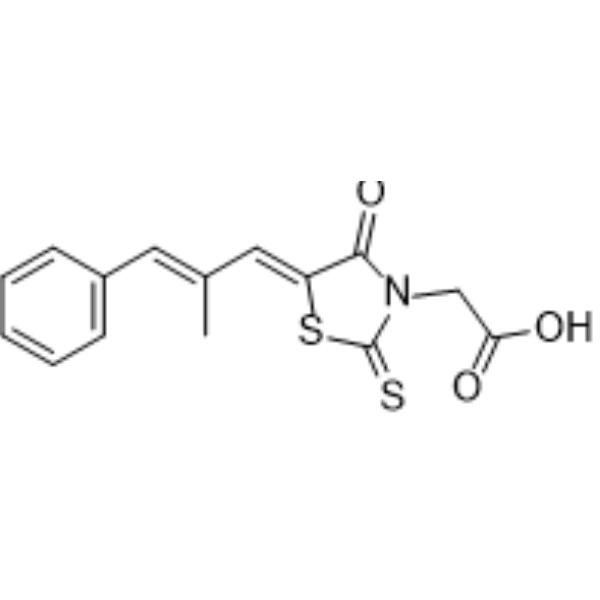
HY-66009
EpalrestatAldose Reductase Inhibitor -
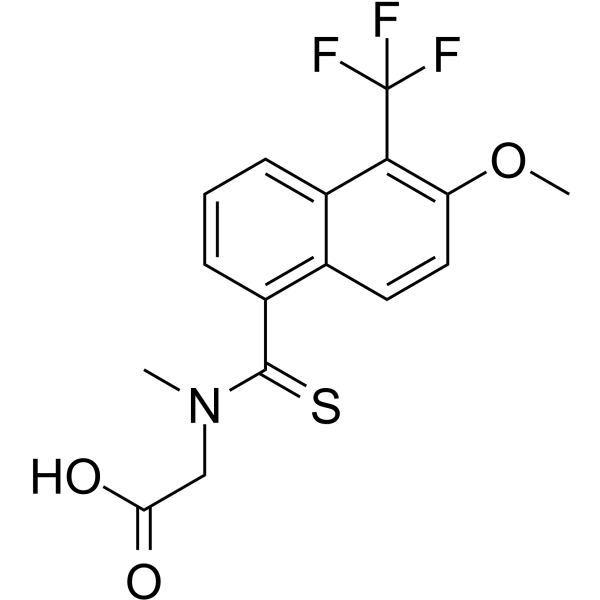
HY-16500
TolrestatAldose Reductase Inhibitor -
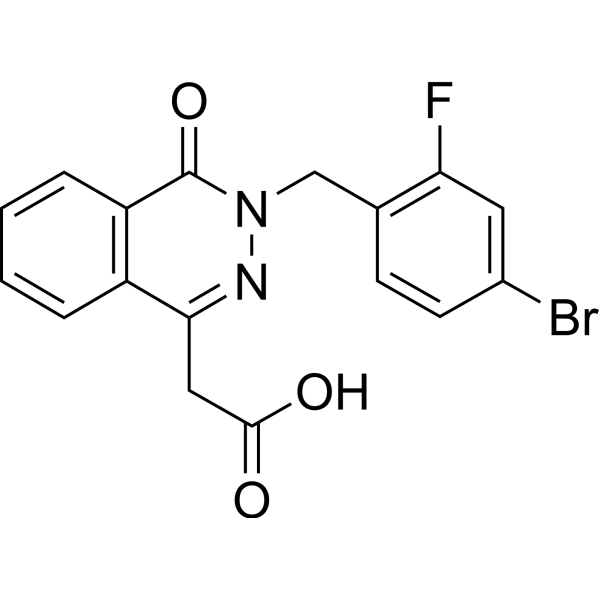
HY-106697
PonalrestatAldose Reductase Inhibitor -
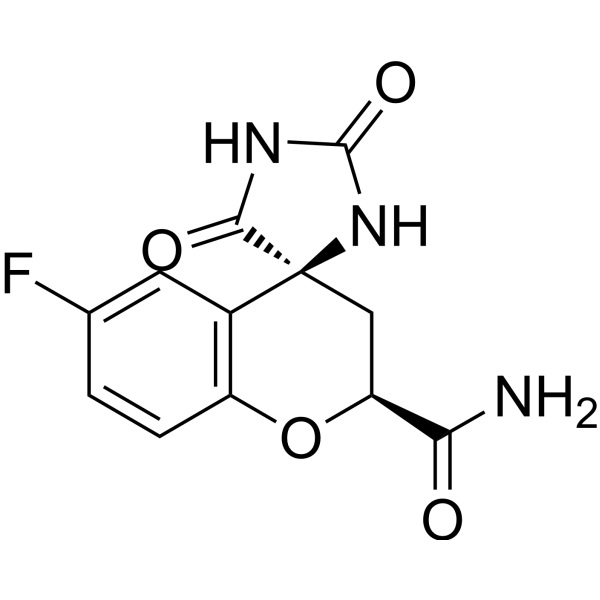
HY-105185
FidarestatAldose Reductase Inhibitor -
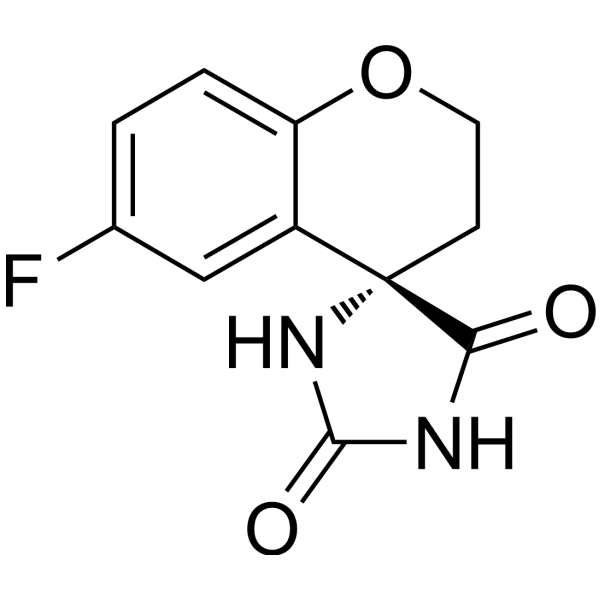
HY-50289
SorbinilAldose Reductase Inhibitor -
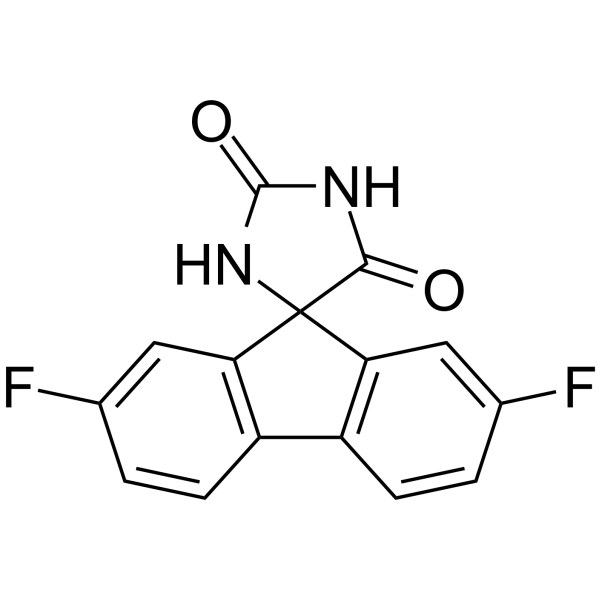
HY-16255
ImirestatAldose Reductase Inhibitor -
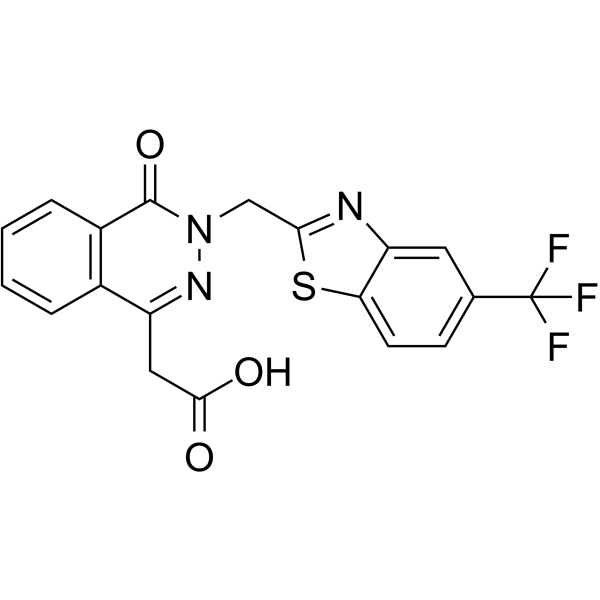
HY-19687
ZopolrestatAldose Reductase Inhibitor -
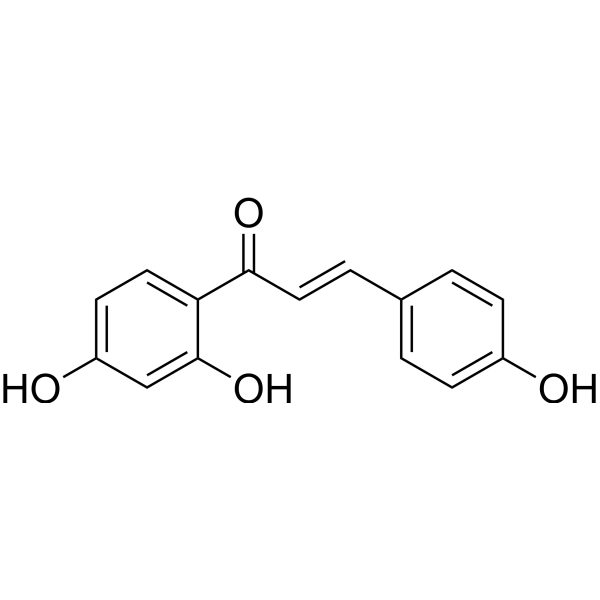
HY-N0102
IsoliquiritigeninAutophagy Inducer -

HY-16500R
Tolrestat (Standard)Aldose Reductase Inhibitor -
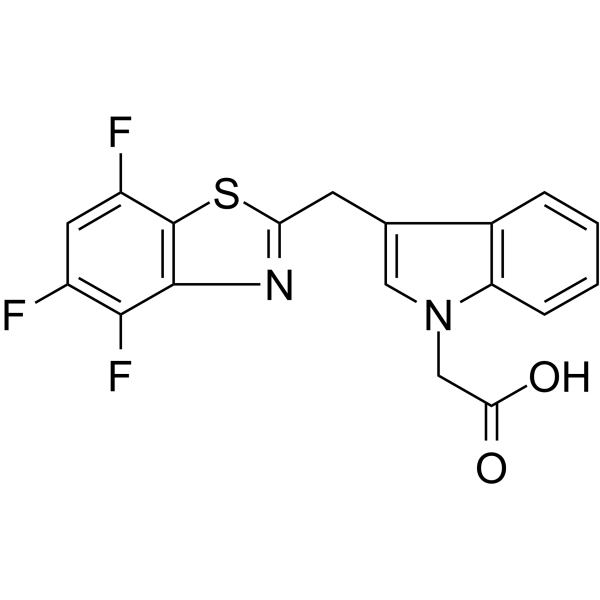
HY-106198
LidorestatAldose Reductase Inhibitor -

HY-66009R
Epalrestat (Standard)Aldose Reductase Inhibitor -
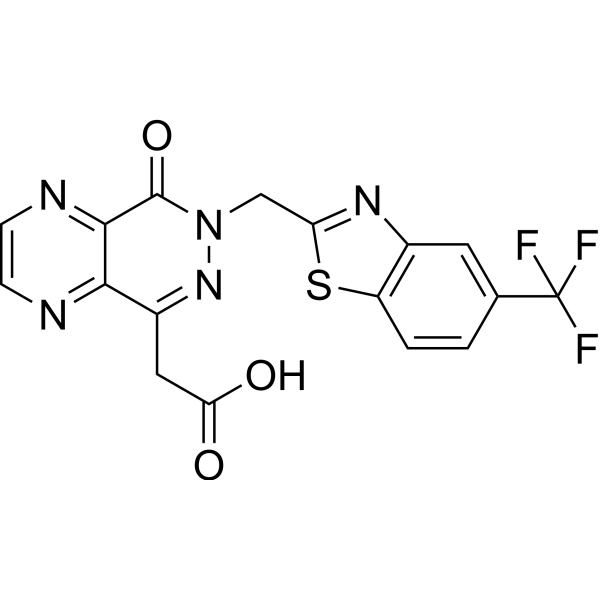
HY-18967
CaficrestatAldose Reductase Inhibitor
Publications Citing Use of MedChemExpress (MCE) Ranirestat
More

Biological Activity
Description
IC50 & Target
IC50: 11 nM (Rat lens aldose reductase) and 15 nM (Recombinant humanaldose reductase)[1]
Ki: 0.38 nM (Recombinant humanaldose reductase)[1]
In Vitro
Ranirestat concentration-dependently inhibits sorbitol accumulation in rat erythrocytes and sciatic nerves incubated in the high concentration (500 mg/dl) of glucose. The potency of Ranirestat inhibition of sorbitol accumulation is similar between rat erythrocytes and sciatic nerves with IC50 values of 0.010 μM and 0.041 μM, respectively[1].
MedChemExpress (MCE) has not independently confirmed the accuracy of these methods. They are for reference only.
In Vivo
MedChemExpress (MCE) has not independently confirmed the accuracy of these methods. They are for reference only.
-
Animal Model:Male STD-Wistar rats aged about (12-week-old; 260-290 g) injected with Streptozotocin (STZ)[1]
-
Dosage:0.03 mg/kg, 0.1 mg/kg, 0.3 mg/kg, 1 mg/kg
-
Administration:Oral administration; once daily; for 3 weeks
-
Result:Dose-dependently decreased the elevated sorbitol and fructose levels in the rat sciatic nerves without affecting blood glucose level.
Clinical Trial
| NCT Number | Sponsor | Condition | Start Date |
Phase

|
|---|---|---|---|---|
| NCT01329991 | 2011-05 | PHASE1 |


Chemical Information
-
CAS No. 147254-64-6
-
Appearance Solid
-
Molecular Weight 420.19
-
Formula C17H11BrFN3O4
-
Color Off-white to pink
-
SMILES
O=C(N1CC2=CC=C(Br)C=C2F)C3=CC=CN3[C@]4(C(NC(C4)=O)=O)C1=O
-
Synonyms
AS-3201
-
Shipping
Room temperature in continental US; may vary elsewhere.
-
Storage
Powder -20°C 3 years 4°C 2 years In solvent -80°C 2 years -20°C 1 year


Publications (1)
-
Journal Impact Factor
-
Most Recent
-
J Transl Med
Novel role for epalrestat: protecting against NLRP3 inflammasome-driven NASH by targeting aldose reductase. [Abstract]2023 Oct 7;21(1):700. PMID: 37805545


Solvent & Solubility
In Vitro:
DMSO : ≥ 50 mg/mL (118.99 mM; Hygroscopic DMSO has a significant impact on the solubility of product, please use newly opened DMSO)
* "≥" means soluble, but saturation unknown.
Please refer to the solubility information to select the appropriate solvent. Once prepared, please aliquot and store the solution to prevent product inactivation from repeated freeze-thaw cycles.
Storage method and period of stock solution: -80°C, 2 years; -20°C, 1 year. When stored at -80°C, please use it within 2 years. When stored at -20°C, please use it within 1 year.
Please refer to the solubility information to select the appropriate solvent. Once prepared, please aliquot and store the solution to prevent product inactivation from repeated freeze-thaw cycles.
Storage method and period of stock solution: -80°C, 2 years; -20°C, 1 year. When stored at -80°C, please use it within 2 years. When stored at -20°C, please use it within 1 year.
Concentration (start) × Volume (start) = Concentration (final) × Volume (final)
In Vivo:
Select the appropriate dissolution method based on your experimental animal and administration route.
- For the following dissolution methods, please ensure to first prepare a clear stock solution using an In Vitro approach and then sequentially add co-solvents:
- To ensure reliable experimental results, the clarified stock solution can be appropriately stored based on storage conditions. As for the working solution for In Vivo experiments, it is recommended to prepare freshly and use it on the same day.
- The percentages shown for the solvents indicate their volumetric ratio in the final prepared solution. If precipitation or phase separation occurs during preparation, heat and/or sonication can be used to aid dissolution.
Add each solvent one by one: 10% DMSO 40% PEG300 5% Tween-80 45% Saline
Solubility: ≥ 2.5 mg/mL (5.95 mM); Clear solution
This protocol yields a clear solution of ≥ 2.5 mg/mL (saturation unknown).
Taking 1 mL working solution as an example, add 100 μL DMSO stock solution (25.0 mg/mL) to 400 μL PEG300, and mix evenly; then add 50 μL Tween-80 and mix evenly; then add 450 μL Saline to adjust the volume to 1 mL.
Preparation of Saline: Dissolve 0.9 g sodium chloride in ddH₂O and dilute to 100 mL to obtain a clear Saline solution.
Add each solvent one by one: 10% DMSO 90% (20% SBE-β-CD in Saline)
Solubility: ≥ 2.5 mg/mL (5.95 mM); Clear solution
This protocol yields a clear solution of ≥ 2.5 mg/mL (saturation unknown).
Taking 1 mL working solution as an example, add 100 μL DMSO stock solution (25.0 mg/mL) to 900 μL 20% SBE-β-CD in Saline, and mix evenly.
Preparation of 20% SBE-β-CD in Saline (4°C, storage for one week): 2 g SBE-β-CD powder is dissolved in 10 mL Saline, completely dissolve until clear.
In Vivo Dissolution Calculator
Please enter the basic information of animal experiments:
-
-
-
-
Recommended: Prepare an additional quantity of animals to account for potential losses during experiments.
Please enter your animal formula composition:
-
%DMSO +
Recommended: Keep the proportion of DMSO in working solution below 2% if your animal is weak.
-
%+
-
+%Tween-80 + +
-
%Saline +
The co-solvents required include: DMSO, . All of co-solvents are available by MedChemExpress (MCE). , Tween 80. All of co-solvents are available by MedChemExpress (MCE).
Working solution concentration: 0.22 mg/mL
Method for preparing stock solution: mg drug dissolved in μL DMSO. Stock solution concentration: mg/mL.
1. Take μL DMSO stock solution;
2. Add μL .
μL , mix evenly;
3. Then add μL Tween 80, mix evenly;
4. Then add μL
Please ensure that the stock solution in the first step is dissolved to a clear state, and add co-solvents in sequence. You can use ultrasonic heating (ultrasonic cleaner, recommended frequency 20-40 kHz), vortexing, etc. to assist dissolution.


Purity & Documentation
-
Data Sheet (280 KB)
-
SDS (393 KB)
- English - EN (393 KB)
- Français - FR (393 KB)
- Deutsch - DE (393 KB)
- Norwegian - NO (393 KB)
- Español - ES (393 KB)
- Swedish - SV (393 KB)
- Italian - IT (393 KB)
- Korean - KR (393 KB)
- Portuguese - PT (393 KB)
-
Handling Instructions (2659 KB)
References
[1]. Matsumoto T, et al. Improvement of motor nerve conduction velocity in diabetic rats requires normalization of the polyol pathway metabolites flux. J Pharmacol Sci. 2009 Feb;109(2):203-10. [Content Brief]
[2]. Toyoda F, et al. Effect of ranirestat, a new aldose reductase inhibitor, on diabetic retinopathy in SDT rats. J Diabetes Res. 2014;2014:672590. [Content Brief]


Complete Stock Solution Preparation Table
Please refer to the solubility information to select the appropriate solvent. Once prepared, please aliquot and store the solution to prevent product inactivation from repeated freeze-thaw cycles.
Storage method and period of stock solution: -80°C, 2 years; -20°C, 1 year. When stored at -80°C, please use it within 2 years. When stored at -20°C, please use it within 1 year.
| Optional Solvent | Concentration Solvent Mass | 1 mg | 5 mg | 10 mg | 25 mg |
|---|---|---|---|---|---|
| DMSO | 1 mM | 2.3799 mL | 11.8994 mL | 23.7988 mL | 59.4969 mL |
| 5 mM | 0.4760 mL | 2.3799 mL | 4.7598 mL | 11.8994 mL | |
| 10 mM | 0.2380 mL | 1.1899 mL | 2.3799 mL | 5.9497 mL | |
| 15 mM | 0.1587 mL | 0.7933 mL | 1.5866 mL | 3.9665 mL | |
| 20 mM | 0.1190 mL | 0.5950 mL | 1.1899 mL | 2.9748 mL | |
| 25 mM | 0.0952 mL | 0.4760 mL | 0.9520 mL | 2.3799 mL | |
| 30 mM | 0.0793 mL | 0.3966 mL | 0.7933 mL | 1.9832 mL | |
| 40 mM | 0.0595 mL | 0.2975 mL | 0.5950 mL | 1.4874 mL | |
| 50 mM | 0.0476 mL | 0.2380 mL | 0.4760 mL | 1.1899 mL | |
| 60 mM | 0.0397 mL | 0.1983 mL | 0.3966 mL | 0.9916 mL | |
| 80 mM | 0.0297 mL | 0.1487 mL | 0.2975 mL | 0.7437 mL | |
| 100 mM | 0.0238 mL | 0.1190 mL | 0.2380 mL | 0.5950 mL |


Ranirestat Related Classifications
HY-15314 Related Classifications
 Powered by Bioz