



SB-649868

Based on 1 Customer Validation
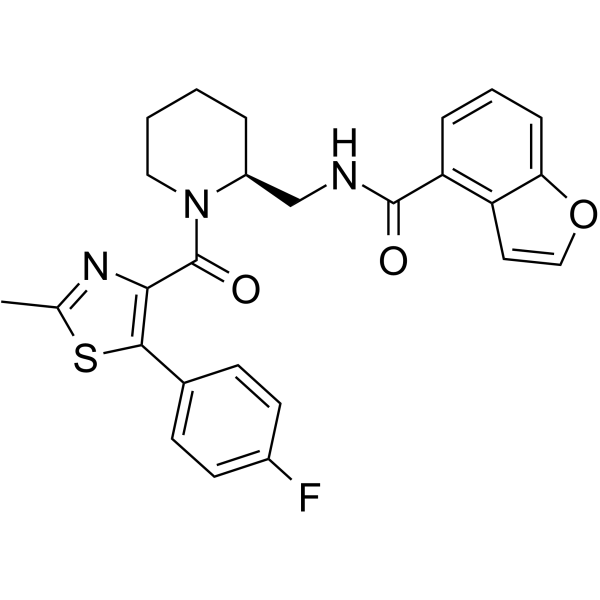
SB-649868 is a potent and selective orally active orexin (OX) 1 and OX2 receptor antagonist (pKi =9.4 and 9.5 at the OX1 and OX2 receptor, respectively).
For research use only. We do not sell to patients.
- Purity : 99.45%
- CAS No.: 380899-24-1
- Formula: C26H24FN3O3S
- Molecular Weight:477.55
-
Storage:Powder -20°C, 3 years , 4°C, 2 years ; In solvent -80°C, 2 years , -20°C, 1 year

To place orders, for customer services and technical support, please contact: MedChemExpress USA
Tel: 609-228-6898 E-mail: [email protected] [email protected]


-
 Biological Activity
-
Chemical Information
-
Solvent & Solubility
- Purity & Documentation
- References
-
 Help & FAQs


-
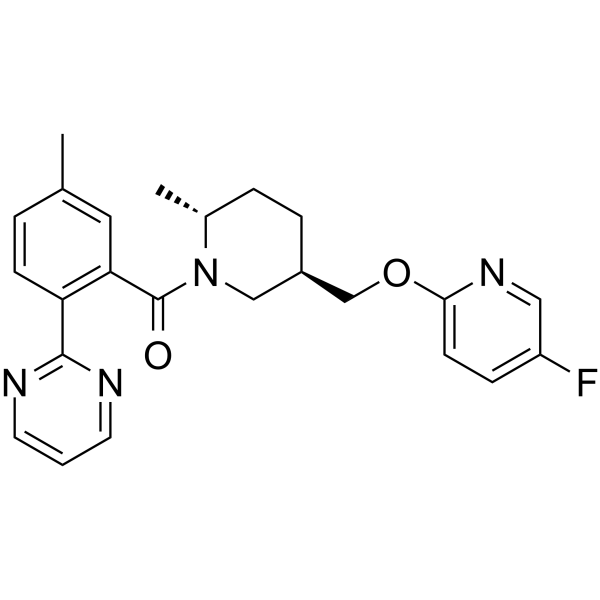
HY-15653
FilorexantOX Receptor Antagonist -
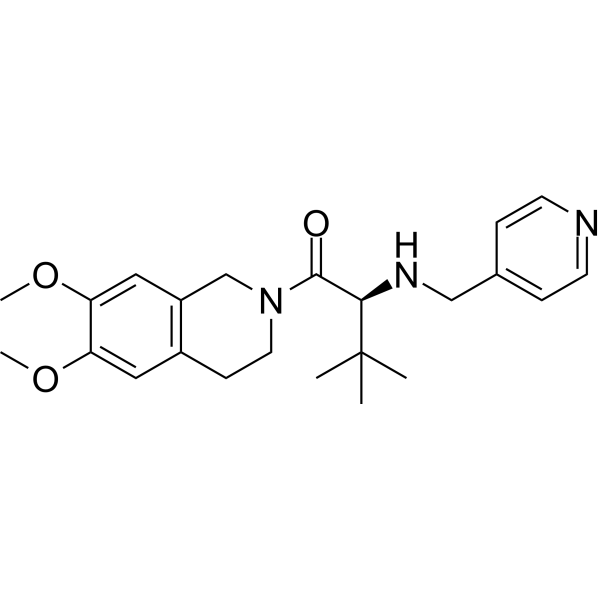
HY-100452
TCS-OX2-29OX2R Antagonist -
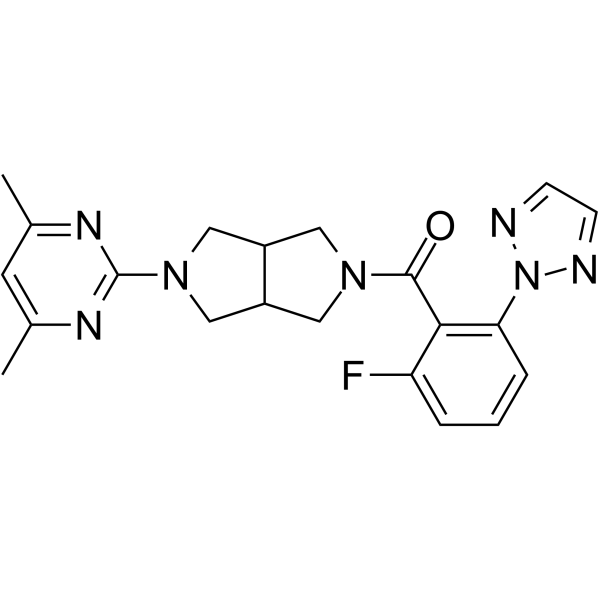
HY-109012
SeltorexantOrexin-2 Receptor Antagonist -
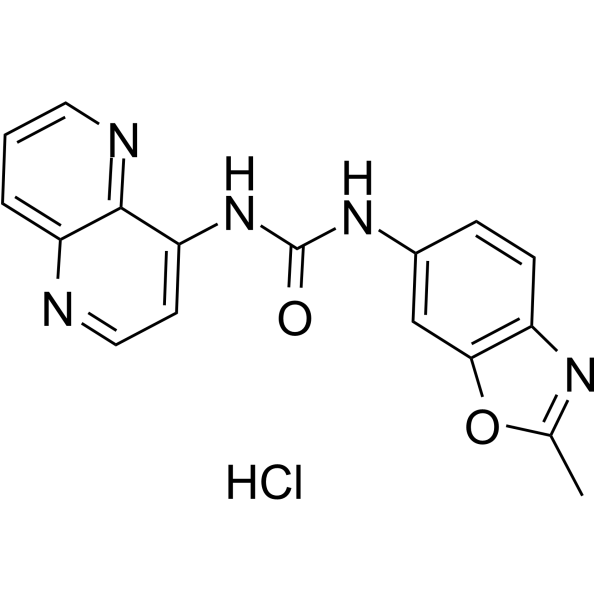
HY-10895
SB-334867OX1 Receptor Antagonist -
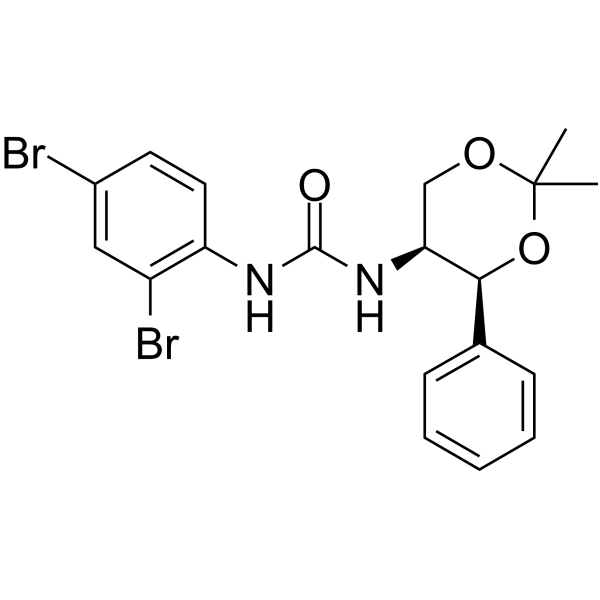
HY-10896
JNJ-10397049OX2R Antagonist -
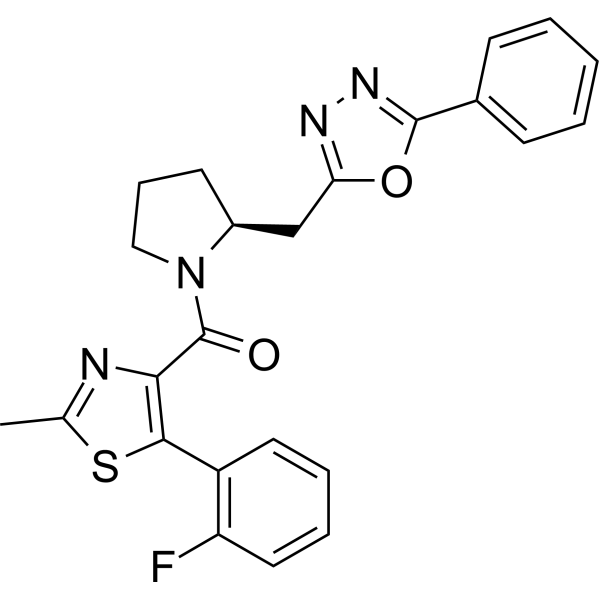
HY-10898
SB-674042OX1 Receptor Antagonist -
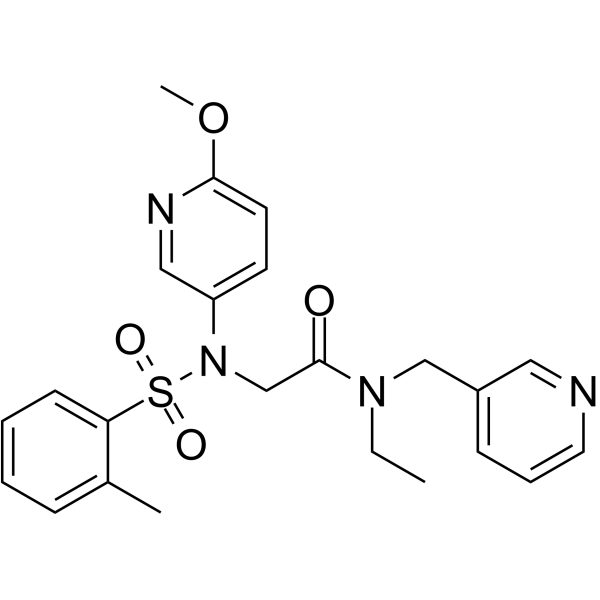
HY-108682
EMPAOX Receptor Antagonist -
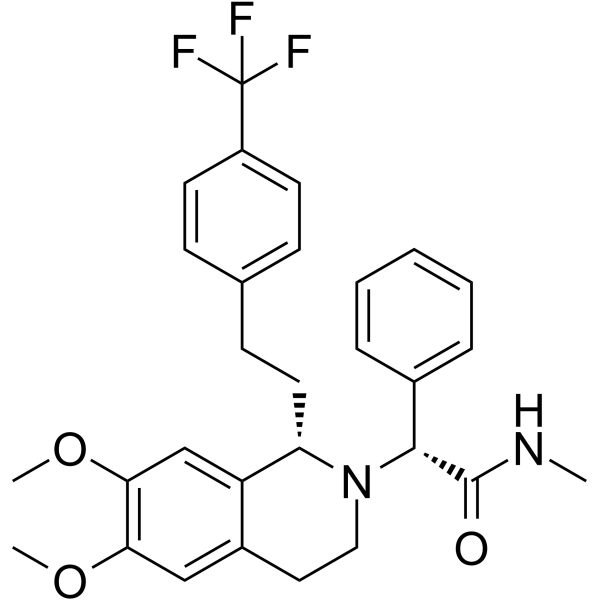
HY-10805
AlmorexantOrexin Receptor Antagonist -
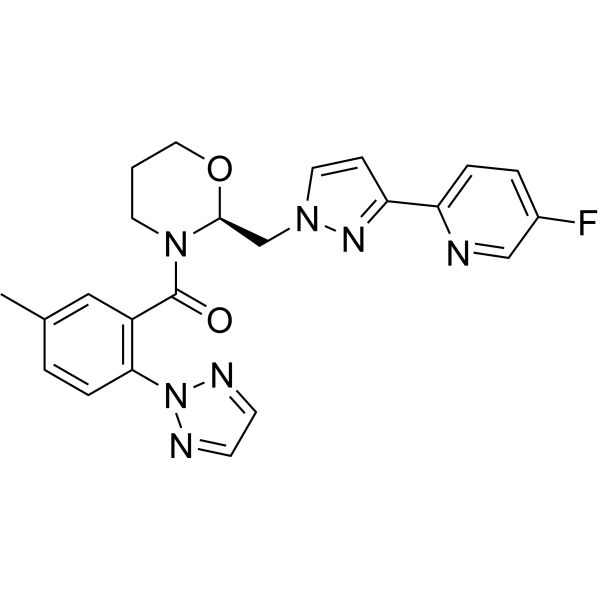
HY-139559
VornorexantOX1R/OX2R Antagonist -
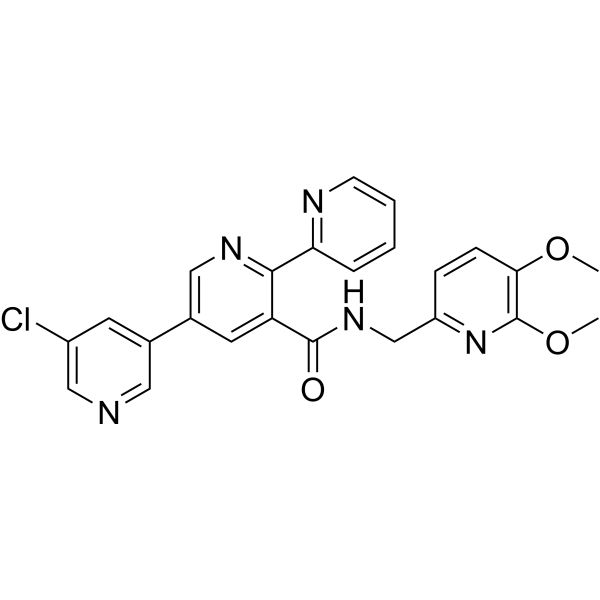
HY-19914
MK-1064OX2R Antagonist -
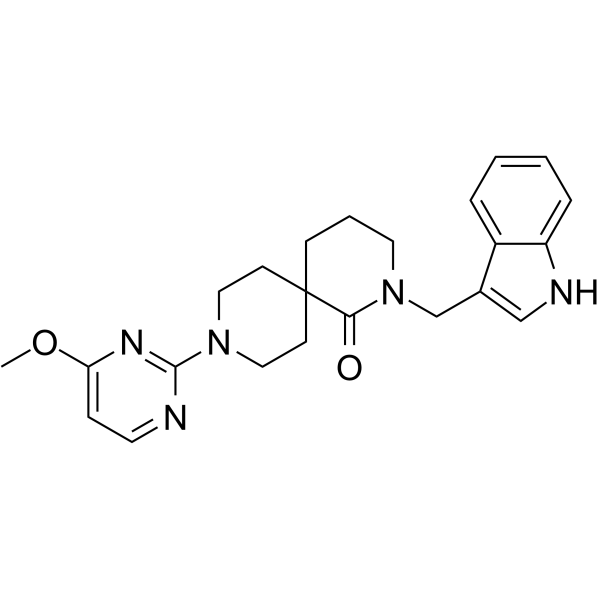
HY-13796
IPSU -
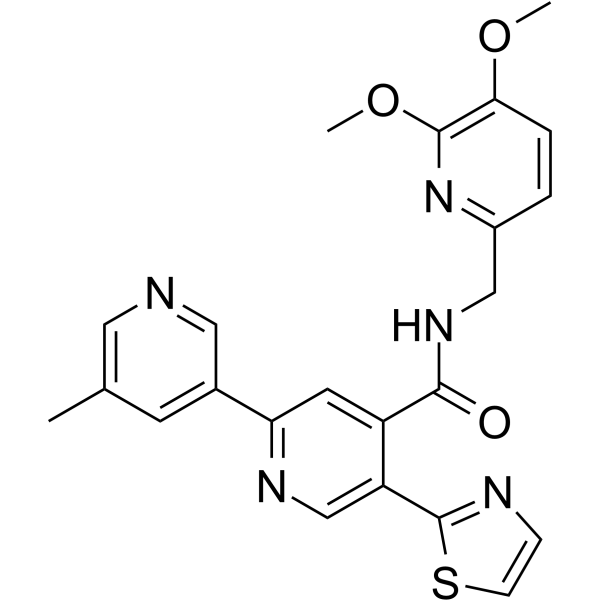
HY-12301
MK-3697OX2R Antagonist
All Orexin Receptor (OX Receptor) Isoforms
More

Biological Activity
Description
IC50 & Target
pKi: 9.4 (OX1), 9.5 (OX2)[1]
In Vitro
SB-649868 is identified as one the most in vitro potent dual OX1 and OX2 receptor antagonist known at that time (pKi=9.4 and 9.5 at the OX1 and OX2 receptor, respectively) [1]. SB-649868 antagonizes orexin-A-induced inositol 1 phosphate (IP1) accumulation with the following pKB value (OX1=9.67; OX2=9.64). SB-649868 displaces the [3H]ACT-078573 receptor binding with the following pKi values: OX1=9.27; OX2=8.91. Increasing concentrations of SB-649868 (0.3 nM-30 nM) induces a rightward shift of the orexin-A CRCs with a depression of the agonist efficacy suggesting a clear non-surmountable behavior. The calculated apparent pKb values are 9.67±0.03 and 9.64±0.07 for OX1 and OX2[2].
MedChemExpress (MCE) has not independently confirmed the accuracy of these methods. They are for reference only.
Clinical Trial
| NCT Number | Sponsor | Condition | Start Date |
Phase

|
|---|---|---|---|---|
| NCT01329991 | 2011-05 | PHASE1 |


Chemical Information
-
CAS No. 380899-24-1
-
Appearance Solid
-
Molecular Weight 477.55
-
Formula C26H24FN3O3S
-
Color White to off-white
-
SMILES
O=C(C1=C(C2=CC=C(F)C=C2)SC(C)=N1)N3CCCC[C@H]3CNC(C4=C(C=CO5)C5=CC=C4)=O
-
Synonyms
GSK649868
-
Shipping
Room temperature in continental US; may vary elsewhere.
-
Storage
Powder -20°C 3 years 4°C 2 years In solvent -80°C 2 years -20°C 1 year


Solvent & Solubility
In Vitro:
DMSO : 100 mg/mL (209.40 mM; Need ultrasonic; Hygroscopic DMSO has a significant impact on the solubility of product, please use newly opened DMSO)
Please refer to the solubility information to select the appropriate solvent. Once prepared, please aliquot and store the solution to prevent product inactivation from repeated freeze-thaw cycles.
Storage method and period of stock solution: -80°C, 2 years; -20°C, 1 year. When stored at -80°C, please use it within 2 years. When stored at -20°C, please use it within 1 year.
Please refer to the solubility information to select the appropriate solvent. Once prepared, please aliquot and store the solution to prevent product inactivation from repeated freeze-thaw cycles.
Storage method and period of stock solution: -80°C, 2 years; -20°C, 1 year. When stored at -80°C, please use it within 2 years. When stored at -20°C, please use it within 1 year.
Concentration (start) × Volume (start) = Concentration (final) × Volume (final)
In Vivo:
Select the appropriate dissolution method based on your experimental animal and administration route.
- For the following dissolution methods, please ensure to first prepare a clear stock solution using an In Vitro approach and then sequentially add co-solvents:
- To ensure reliable experimental results, the clarified stock solution can be appropriately stored based on storage conditions. As for the working solution for In Vivo experiments, it is recommended to prepare freshly and use it on the same day.
- The percentages shown for the solvents indicate their volumetric ratio in the final prepared solution. If precipitation or phase separation occurs during preparation, heat and/or sonication can be used to aid dissolution.
Add each solvent one by one: 10% DMSO 40% PEG300 5% Tween-80 45% Saline
Solubility: ≥ 2.5 mg/mL (5.24 mM); Clear solution
This protocol yields a clear solution of ≥ 2.5 mg/mL (saturation unknown).
Taking 1 mL working solution as an example, add 100 μL DMSO stock solution (25.0 mg/mL) to 400 μL PEG300, and mix evenly; then add 50 μL Tween-80 and mix evenly; then add 450 μL Saline to adjust the volume to 1 mL.
Preparation of Saline: Dissolve 0.9 g sodium chloride in ddH₂O and dilute to 100 mL to obtain a clear Saline solution.
In Vivo Dissolution Calculator
Please enter the basic information of animal experiments:
-
-
-
-
Recommended: Prepare an additional quantity of animals to account for potential losses during experiments.
Please enter your animal formula composition:
-
%DMSO +
Recommended: Keep the proportion of DMSO in working solution below 2% if your animal is weak.
-
%+
-
+%Tween-80 + +
-
%Saline +
The co-solvents required include: DMSO, . All of co-solvents are available by MedChemExpress (MCE). , Tween 80. All of co-solvents are available by MedChemExpress (MCE).
Working solution concentration: 0.22 mg/mL
Method for preparing stock solution: mg drug dissolved in μL DMSO. Stock solution concentration: mg/mL.
1. Take μL DMSO stock solution;
2. Add μL .
μL , mix evenly;
3. Then add μL Tween 80, mix evenly;
4. Then add μL
Please ensure that the stock solution in the first step is dissolved to a clear state, and add co-solvents in sequence. You can use ultrasonic heating (ultrasonic cleaner, recommended frequency 20-40 kHz), vortexing, etc. to assist dissolution.


Purity & Documentation
-
Data Sheet (279 KB)
-
SDS (394 KB)
- English - EN (394 KB)
- Français - FR (394 KB)
- Deutsch - DE (394 KB)
- Norwegian - NO (394 KB)
- Español - ES (394 KB)
- Swedish - SV (394 KB)
- Italian - IT (394 KB)
- Korean - KR (394 KB)
- Portuguese - PT (394 KB)
-
Handling Instructions (2659 KB)
References
[1]. Di Fabio R, et al. Discovery process and pharmacological characterization of a novel dual orexin 1 and orexin 2receptor antagonist useful for treatment of sleep disorders. Bioorg Med Chem Lett. 2011 Sep 15;21(18):5562-7. [Content Brief]
[2]. Faedo S, et al. Functional and binding kinetic studies make a distinction between OX1 and OX2 orexin receptorantagonists. Eur J Pharmacol. 2012 Oct 5;692(1-3):1-9. [Content Brief]


Complete Stock Solution Preparation Table
Please refer to the solubility information to select the appropriate solvent. Once prepared, please aliquot and store the solution to prevent product inactivation from repeated freeze-thaw cycles.
Storage method and period of stock solution: -80°C, 2 years; -20°C, 1 year. When stored at -80°C, please use it within 2 years. When stored at -20°C, please use it within 1 year.
| Optional Solvent | Concentration Solvent Mass | 1 mg | 5 mg | 10 mg | 25 mg |
|---|---|---|---|---|---|
| DMSO | 1 mM | 2.0940 mL | 10.4701 mL | 20.9402 mL | 52.3505 mL |
| 5 mM | 0.4188 mL | 2.0940 mL | 4.1880 mL | 10.4701 mL | |
| 10 mM | 0.2094 mL | 1.0470 mL | 2.0940 mL | 5.2351 mL | |
| 15 mM | 0.1396 mL | 0.6980 mL | 1.3960 mL | 3.4900 mL | |
| 20 mM | 0.1047 mL | 0.5235 mL | 1.0470 mL | 2.6175 mL | |
| 25 mM | 0.0838 mL | 0.4188 mL | 0.8376 mL | 2.0940 mL | |
| 30 mM | 0.0698 mL | 0.3490 mL | 0.6980 mL | 1.7450 mL | |
| 40 mM | 0.0524 mL | 0.2618 mL | 0.5235 mL | 1.3088 mL | |
| 50 mM | 0.0419 mL | 0.2094 mL | 0.4188 mL | 1.0470 mL | |
| 60 mM | 0.0349 mL | 0.1745 mL | 0.3490 mL | 0.8725 mL | |
| 80 mM | 0.0262 mL | 0.1309 mL | 0.2618 mL | 0.6544 mL | |
| 100 mM | 0.0209 mL | 0.1047 mL | 0.2094 mL | 0.5235 mL |


SB-649868 Related Classifications
HY-10806 Related Classifications
 Powered by Bioz