



Cholinesterase (ChE) Antagonist
-
Trihexyphenidyl hydrochloride
 0 Images
Trihexyphenidyl hydrochloride is a selective and orally active M1 muscarinic receptor antagonist with an IC50 of 3.7 nM for rat cerebral cortex M1 muscarinic receptors. Trihexyphenidyl hydrochloride modulates cholinergic activity, countering acetylcholine supersensitivity in neural pathways. Trihexyphenidyl hydrochloride improves movement disorder, inhibits McN-A-343 (HY-107648)-induced pressor responses, vagally-induced bradycardia and vasodilatation. Trihexyphenidyl hydrochloride can be used for the research of Parkinson's disease..
-
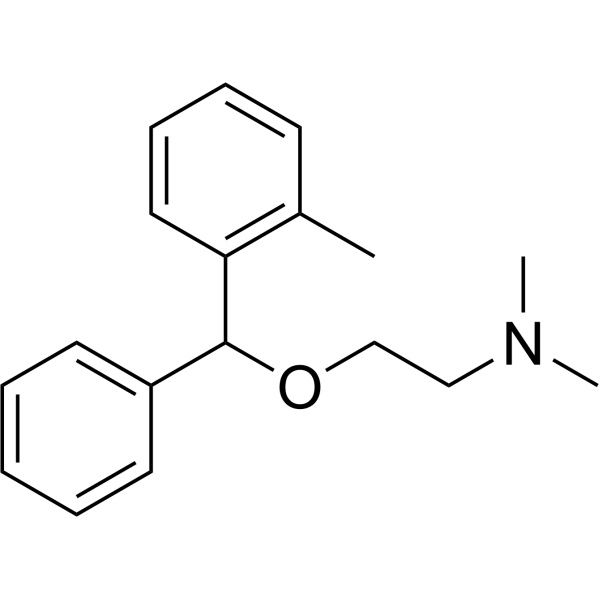
Orphenadrine
 0 Images
Orphenadrine ((±)-Orphenadrine) is a skeletal muscle relaxant and NMDA antagonist that also has antiparkinsonian, antihistamine, antitremor, antispasmodic, and analgesic effects. Orphenadrine inhibits the binding of [3H]MK-801 to the phencyclidine (PCP) binding site of the NMDA receptor. Orphenadrine is also an anticholinergic and CYP2B inducer. Orphenadrine may exert pro-tumor effects, causing CAR nuclear translocation, resulting in microsomal reactive oxygen species (ROS) production and oxidative stress. Orphenadrine also exerts neuronal protection, protecting rat cerebellar granule cells (CGC) from 3-NPA-induced death and has inhibitory potential against neurodegenerative diseases mediated by NMDA receptor overactivation.
-
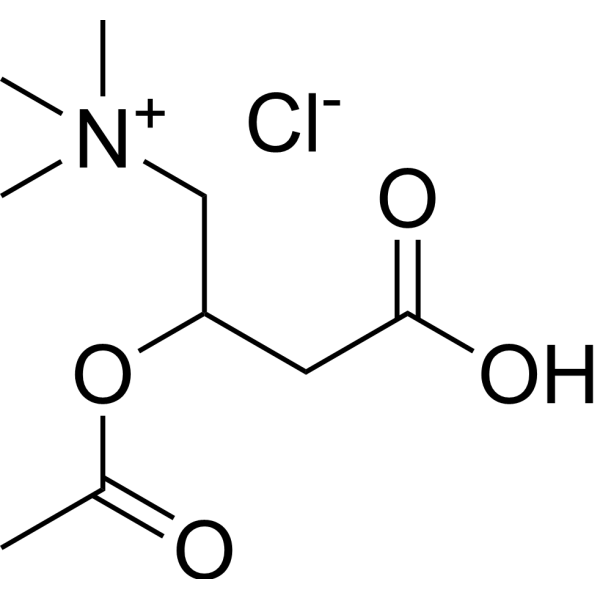
(±)-Acetylcarnitine chloride
 0 Images
(±)-Acetylcarnitine chloride (Acetyl dl-carnitine chloride) is a weak cholinergic agonist with cholinergic properties. (±)-Acetylcarnitine chloride is an important intermediate in lipid metabolism.
-
Trihexyphenidyl hydrochloride (Standard)
 0 Images
Trihexyphenidyl hydrochloride (Standard) is the analytical standard of Trihexyphenidyl hydrochloride (HY-B1277). This product is intended for research and analytical applications. Trihexyphenidyl is a selective and orally active M1 muscarinic receptor antagonist with an IC50 of 3.7 nM for rat cerebral cortex M1 muscarinic receptors. Trihexyphenidyl modulates cholinergic activity, countering acetylcholine supersensitivity in neural pathways. Trihexyphenidyl improves movement disorder, inhibits McN-A-343 (HY-107648)-induced pressor responses, vagally-induced bradycardia and vasodilatation. Trihexyphenidyl can be used for the research of Parkinson's disease..
-
Trihexyphenidyl
 0 Images
Trihexyphenidyl is a selective and orally active M1 muscarinic receptor antagonist with an IC50 of 3.7 nM for rat cerebral cortex M1 muscarinic receptors. Trihexyphenidyl modulates cholinergic activity, countering acetylcholine supersensitivity in neural pathways. Trihexyphenidyl improves movement disorder, inhibits McN-A-343 (HY-107648)-induced pressor responses, vagally-induced bradycardia and vasodilatation. Trihexyphenidyl can be used for the research of Parkinson's disease..

-
Itopride-d6
 0 ImagesCat. No.: HY-B0732ASCAS No.: 1346746-82-4Synonyms: HSR803-d6 free base
Itopride-d6 (HSR803-d6 (free base)) is deuterium labeled Itopride. Itopride (HSR803 free base) is a potent and orally active dopamine-2 antagonist and an acetylcholine esterase (AChE) inhibitor. Itopride enhances gastric motility through both antidopaminergic and anti-acetylcholinesterasic actions, can be used as a gastrointestinal prokinetic agent. Itopride can be used for researching gastro-esophageal reflux disease (GERD).



