



- Signaling Pathways
- Apoptosis
- Apoptosis
Apoptosis
Apoptosis
Apoptosis is a distinctive form of cell death exhibiting specific morphological and biochemical characteristics, including cell membrane blebbing, chromatin condensation, genomic DNA fragmentation, and exposure of specific phagocytosis signaling molecules on the cell surface. Cells undergoing apoptosis differ from those dying through necrosis. Necrotic cells are usually recognized by the immune system as a danger signal and, thus, resulting in inflammation; in contrast, apoptotic death is quiet and orderly.
There are two major pathways of apoptotic cell death induction: The intrinsic pathway, also called the Bcl-2-regulated or mitochondrial pathway, is activated by various developmental cues or cytotoxic insults, such as viral infection, DNA damage and growth-factor deprivation, and is strictly controlled by the BCL-2 family of proteins. The extrinsic or death-receptor pathway is triggered by ligation of death receptors (members of the tumor necrosis factor (TNF) receptor family, such as Fas or TNF receptor-1 (TNFR1)) that contain an intracellular death domain, which can recruit and activate caspase-8 through the adaptor protein Fas-associated death domain (FADD; also known as MORT1) at the cell surface. This recruitment causes subsequent activation of downstream (effector) caspases, such as caspase-3, -6 or -7, without any involvement of the BCL-2 family.
Studies suggest that alterations in cell survival contribute to the pathogenesis of a number of human diseases, including cancer, viral infections, autoimmune diseases, neurodegenerative disorders, and AIDS (acquired immunodeficiency syndrome). Treatments designed to specifically alter the apoptotic threshold may have the potential to change the natural progression of some of these diseases.
All Product Categories
-
Apoptosis Inhibitors
(854)
View all products
-
Apoptosis Agonists
(7)
View all products
-
Apoptosis Antagonists
(9)
View all products
-
Apoptosis Activators
(341)
View all products
-
Apoptosis Modulators
(57)
View all products
-
Apoptosis Inducers
(7596)
View all products
-
Apoptosis Degrader
(1)
View all products
-
Apoptosis Controls
(33)
View all products
-
Apoptosis Related Products (9439)
Related Products (9439)

-
Antibodies (120)
-
Luvometinib-d
 0 ImagesCat. No.: HY-159846SSynonyms: FCN-159-dLuvometinib-d (FCN-159-d) is the deuterated-labeled Luvometinib (HY-159846). Luvometinib is an orally potent MEK1/2 inhibitor. Luvometinib selectively blocks the MAPK signaling pathway by forming a ternary complex with MEKase and ATP, thereby reducing the phosphorylation level of ERK. Luvometinib induces cell cycle arrest and apoptosis, and inhibits cancer cell proliferation. Luvometinib can be used in relevant research on various solid tumors including melanoma, non-small cell lung cancer, colon cancer, and acute myeloid leukemia.
 -
loading...Please select quantityGet Quote
August 31
-
Please select quantity
August 31
Get Quote
loading... -
-
Thalidomide-O-amido-C8-NH2
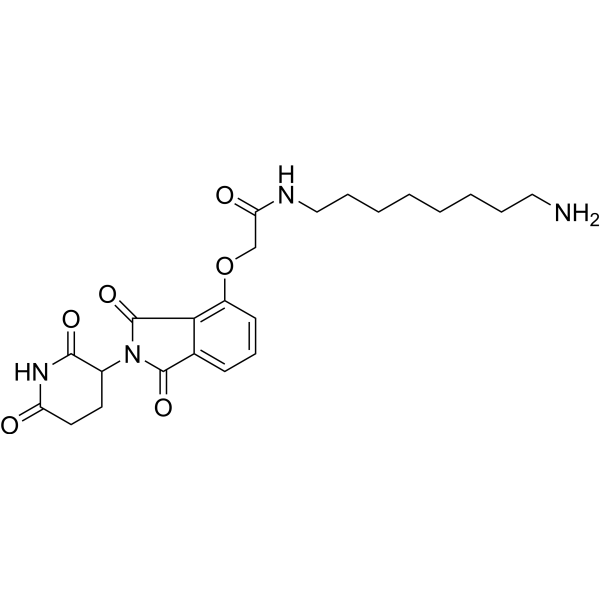 0 ImagesCat. No.: HY-107439CAS No.: 1950635-15-0Synonyms: Cereblon Ligand-Linker Conjugates 2; E3 Ligase Ligand-Linker Conjugates 20Thalidomide-O-amido-C8-NH2 (Cereblon Ligand-Linker Conjugates 2), a synthesized E3 ligase ligand-linker conjugate that incorporates the Thalidomide based cereblon ligand and a linker, can be used in the synthesis of PROTACs.
 -
loading...Please select quantityGet Quote
August 31
-
Please select quantity
August 31
Get Quote
loading... -
No matching results
No matching results
No matching results
No matching results
No matching results
No matching results
No matching results
No matching results
No matching results
No matching results




