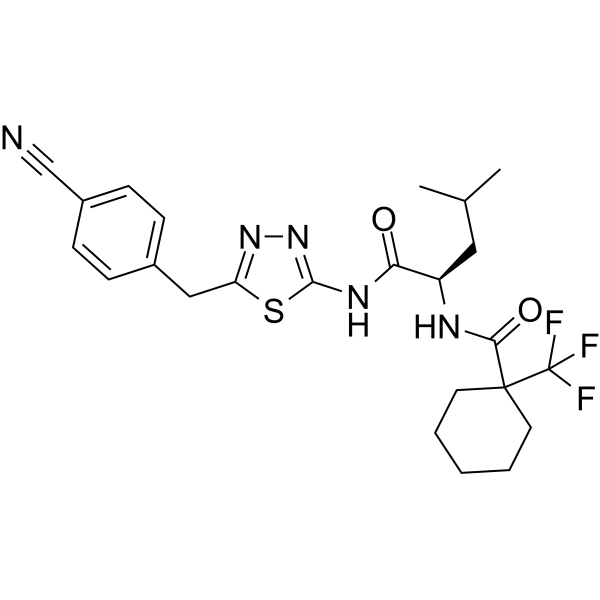
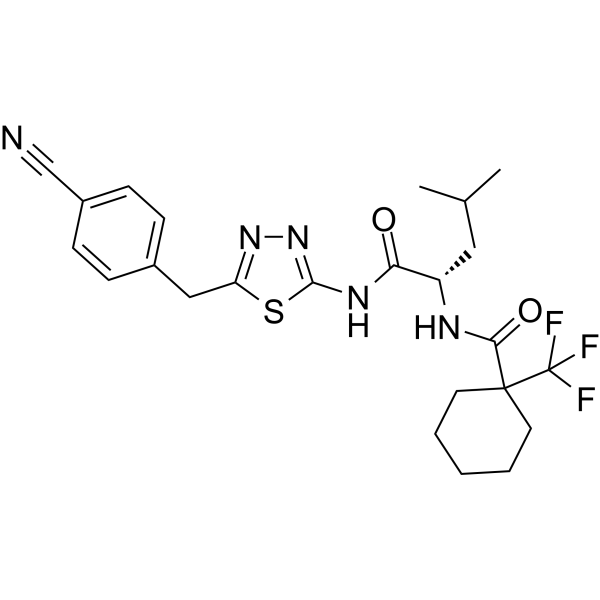
USP21
USP21 (ubiquitin-specific protease 21) is a member of the ubiquitin-specific protease family that functions as a deubiquitylating enzyme, reversing ubiquitination and regulating protein stability, signaling, transcription, and other cellular processes[1]. Mechanistically, USP21 deubiquitinates multiple substrates and participates in pathways linked to transcriptional regulation, epigenetic control, and signal transduction, including regulation of histone H2A ubiquitination and maintenance of signaling proteins that influence cell proliferation and survival[1][2]. In disease contexts, accumulating evidence identifies USP21 as a contributor to tumor development, with elevated expression or activity reported across multiple cancer models and associated with oncogenic phenotypes[1][2]. In hepatocellular carcinoma, USP21 promotes cell proliferation and tumor growth by deubiquitinating and stabilizing MEK2, thereby enhancing ERK signaling and cell-cycle progression[2]. Therefore, USP21 has emerged as a therapeutically relevant deubiquitinase and an experimental target for studies of cancer signaling, ubiquitin biology, and pathway regulation[1][3]. Compared with related USP family members, USP21 is distinguished by its specific substrate repertoire and biological functions, and current research emphasizes selective target engagement rather than broad deubiquitinase inhibition[1][3]. For experimental applications, BAY-805 is the first potent and selective USP21 inhibitor reported as a high-quality chemical probe, providing a useful tool for investigating USP21-dependent mechanisms and validating USP21 as a therapeutic target in cancer research[3].
References:
- [1]. An T, et al. Insights Into the Properties, Biological Functions, and Regulation of USP21. Front Pharmacol. 2022 Jun 30;13:944089. [Content Brief]
- [2]. Li W, et al. The deubiquitinase USP21 stabilizes MEK2 to promote tumor growth. Cell Death Dis. 2018 May 1;9(5):482. [Content Brief]
- [3]. Göricke F, et al. Discovery and Characterization of BAY-805, a Potent and Selective Inhibitor of Ubiquitin-Specific Protease USP21. J Med Chem. 2023 Mar 9;66(5):3431-3447. [Content Brief]
All Product Categories
-
USP21 Related Products (3)
Related Products (3)

-
BAY 11-7082
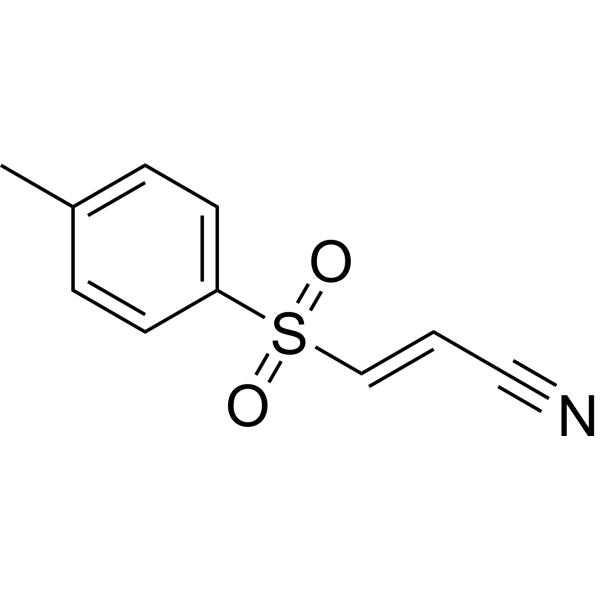 0 ImagesSynonyms: BAY 11-7821BAY 11-7082 is an IκBα phosphorylation and NF-κB inhibitor. BAY 11-7082 selectively and irreversibly inhibits the TNF-α-induced phosphorylation of IκB-α, and decreases NF-κB and expression of adhesion molecules. BAY 11-7082 inhibits ubiquitin-specific protease USP7 and USP21 (IC50=0.19, 0.96 μM, respectively). BAY 11-7082 inhibits gasdermin D (GSDMD) pore formation in liposomes and inflammasome-mediated pyroptosis and IL-1β secretion in human and mouse cells.