



USP8
Ubiquitin-specific protease 8 (USP8) functions as a deubiquitinating enzyme critical for protein homeostasis by regulating endosomal and lysosomal trafficking[1]. Mechanistically, USP8 stabilizes multiple receptor tyrosine kinases (RTKs) such as EGFR, c-Met, and Kit, thereby influencing downstream signaling pathways that control cell proliferation, survival, and migration[2][1]. In disease models, USP8 mutations or overexpression have been implicated in corticotroph pituitary adenomas and multiple myeloma, promoting tumor growth and therapy resistance[3][1]. Compared with related isoforms like USP7 and USP15, USP8 exhibits specificity for RTK substrates and has distinct effects on plasma and germinal center B-cell populations[4][1]. Inhibition of USP8 using small-molecule inhibitors such as DUB-IN-2 selectively induces degradation of oncogenic RTKs, disrupts proteostasis, and sensitizes resistant cancer cells to proteasome inhibitors[2][1]. These characteristics make USP8 a valuable target for experimental applications in cancer research and endocrine disease studies, allowing mechanistic investigation of deubiquitination-dependent signaling and therapeutic intervention strategies[3][1].
References:
- [1]. Duan B, et al. USP8 is a Novel Therapeutic Target in Melanoma Through Regulating Receptor Tyrosine Kinase Levels. Cancer Manag Res. 2021 May 24;13:4181-4189. [Content Brief]
- [2]. Hashemi-Madani N, et al. Targeted analysis of Ubiquitin-Specific Peptidase (USP8) in a population of Iranian people with Cushing's disease and a systematic review of the literature. BMC Endocr Disord. 2024 Jun 11;24(1):86. [Content Brief]
- [3]. Lusardi M, et al. USP7 at the Crossroads of Ubiquitin Signaling, Cell Cycle, and Tumorigenesis. Molecules. 2025 Oct 10;30(20):4038. [Content Brief]
- [4]. Hermans A, et al. A 3D-Printed and Freely Available Device to Measure the Zebrafish Optokinetic Response Before and After Injury. Zebrafish. 2024 Apr;21(2):144-148. [Content Brief]
All Product Categories
-
USP8 Related Products (4)
Related Products (4)

-
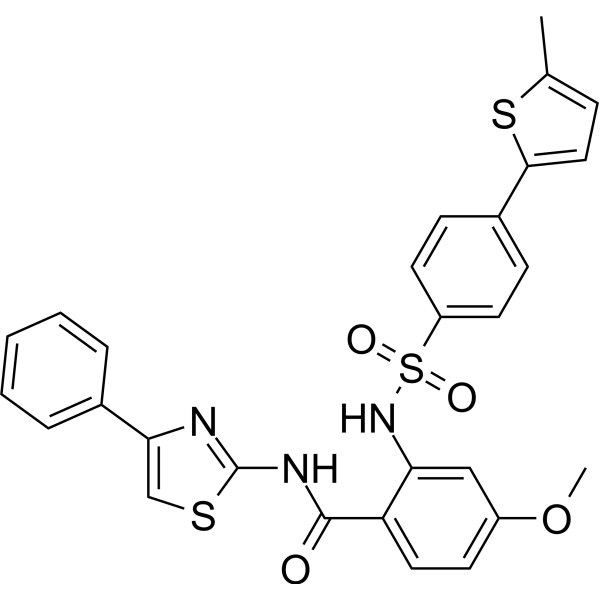
OTUB1/USP8-IN-1 TFA
 0 ImagesCat. No.: HY-151563APurity: 99.56%OTUB1/USP8-IN-1 TFA is the TFA salt form of OTUB1/USP8-IN-1 (HY-151563). OTUB1/USP8-IN-1 TFA is a dual inhibitor for OTUB1/USP8, IC50 for OTUB1 and USP8 is 0.17 and 0.28 nM, respectively. OTUB1/USP8-IN-1 TFA inhibits proliferation of NSCLC cells. OTUB1/USP8-IN-1 TFA exhibits good pharmacokinetic characters in ICR mouse, and exhibits antitumor activity in H1975 xenograft mouse model.
-
USP8-IN-3
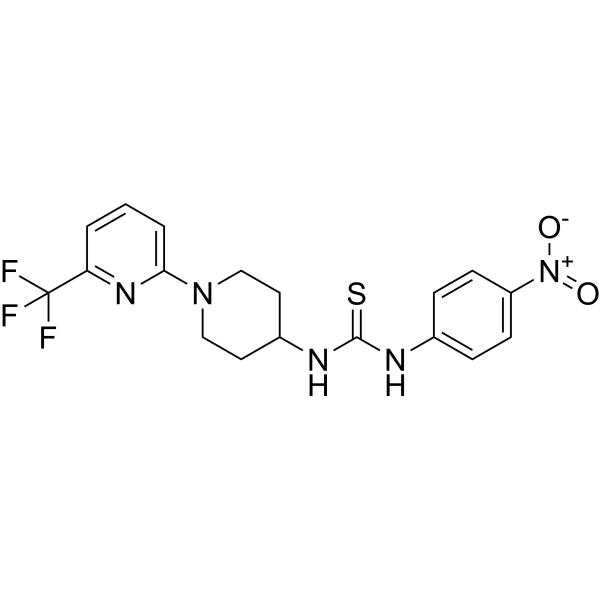 0 ImagesUSP8-IN-3 (Compd U51) is a deubiquitinase USP8 inhibitor with an IC50 value of 4.0 μM. USP8-IN-3 also inhibits the proliferation of GH3 and H1957 cells with GI50s of 37.03 μM and 6.01 μM, respectively.
-
USP8-IN-2
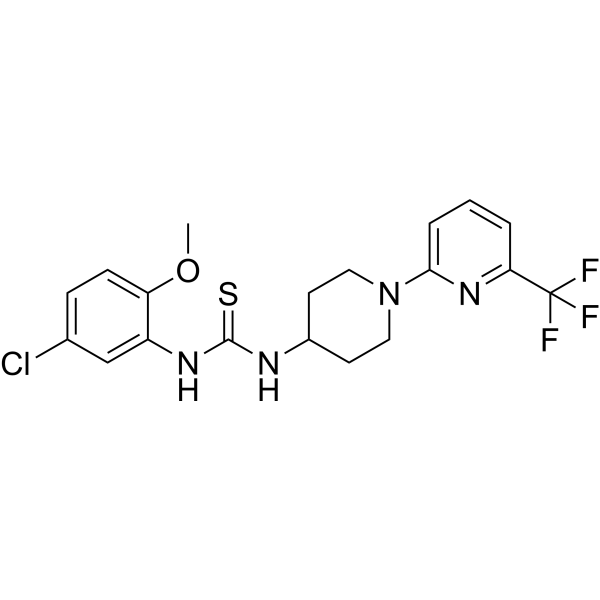 0 ImagesUSP8-IN-2 (Compd U52) is a deubiquitinase USP8 inhibitor with an IC50 value of 6.0 μM. USP8-IN-2 also inhibits the proliferation of H1957 cells with an GI50 value of 24.93 μM, respectively.



