



DAGLα
DAGLα (diacylglycerol lipase alpha) is a principal biosynthetic enzyme for the endocannabinoid 2-arachidonoylglycerol (2-AG) and is highly enriched in the central nervous system, where it regulates retrograde endocannabinoid signaling and neurotransmitter release through cannabinoid receptor activation.[1][2][3] Mechanistically, DAGLα generates 2-AG from diacylglycerol downstream of phospholipase C signaling, providing the major source of activity-dependent 2-AG required for synaptic plasticity, axonal growth, and neuronal communication.[1][2][4] Genetic deletion or manipulation of DAGLA markedly reduces brain 2-AG levels and disrupts endocannabinoid-mediated retrograde synaptic suppression, demonstrating its essential role in neuronal signaling networks.[2][4][5] In disease-related contexts, dysregulated DAGLA/2-AG signaling has been associated with hepatocellular carcinoma progression through activation of YAP/TEAD-dependent transcriptional programs and enhanced tumor cell proliferation, invasion, and therapeutic resistance.[6] Compared with the related isoform DAGLβ, which displays more restricted tissue- and cell-type-specific functions, DAGLα accounts for the majority of central nervous system 2-AG production and serves as the dominant neuronal 2-AG synthase in most brain regions.[5][7][8] This functional distinction has made DAGLα an important target for mechanistic studies of endocannabinoid signaling and neurobiology.[1][3] For experimental applications, pharmacological inhibitors such as DO34 reduce brain 2-AG levels and are widely used to investigate DAGL-dependent lipid signaling pathways and inflammatory phenotypes in vivo.[9]
References:
- [1]. Tanimura A, et al. The endocannabinoid 2-arachidonoylglycerol produced by diacylglycerol lipase alpha mediates retrograde suppression of synaptic transmission. Neuron. 2010 Feb 11;65(3):320-7. [Content Brief]
- [2]. Keimpema E, et al. Diacylglycerol lipase α manipulation reveals developmental roles for intercellular endocannabinoid signaling. Sci Rep. 2013;3:2093. [Content Brief]
- [3]. Rabezanahary H, et al. Live virus neutralizing antibodies against pre and post Omicron strains in food and retail workers in Québec, Canada. Heliyon. 2024 May 21;10(10):e31026. [Content Brief]
- [4]. Briand-Mésange F, et al. From Classical to Alternative Pathways of 2-Arachidonoylglycerol Synthesis: AlterAGs at the Crossroad of Endocannabinoid and Lysophospholipid Signaling. Molecules. 2024 Aug 4;29(15):3694. [Content Brief]
- [5]. Liu Z, et al. Deficiency in endocannabinoid synthase DAGLB contributes to early onset Parkinsonism and murine nigral dopaminergic neuron dysfunction. Nat Commun. 2022 Jun 17;13(1):3490. [Content Brief]
- [6]. Huang Y, et al. The adjuvant treatment role of ω-3 fatty acids by regulating gut microbiota positively in the acne vulgaris. J Dermatolog Treat. 2024 Dec;35(1):2299107. [Content Brief]
- [7]. Shin M, et al. Diacylglycerol Lipase-β Is Required for TNF-α Response but Not CD8+ T Cell Priming Capacity of Dendritic Cells. Cell Chem Biol. 2019 Jul 18;26(7):1036-1041.e3. [Content Brief]
- [8]. Singh PK, et al. Assay and Inhibition of the Purified Catalytic Domain of Diacylglycerol Lipase Beta. Biochemistry. 2016 May 17;55(19):2713-21. [Content Brief]
- [9]. Ciglenecki I, et al. Low sensitivity of the fourth-generation antigen/antibody HIV rapid diagnostic test Determine™ HIV Early Detect for detection of acute HIV infection at the point of care in rural Eswatini: a diagnostic accuracy study. J Int AIDS Soc. 2025 Jul;28(7):e26517. [Content Brief]
All Product Categories
-
DAGLα Related Products (7)
Related Products (7)

-
DO34
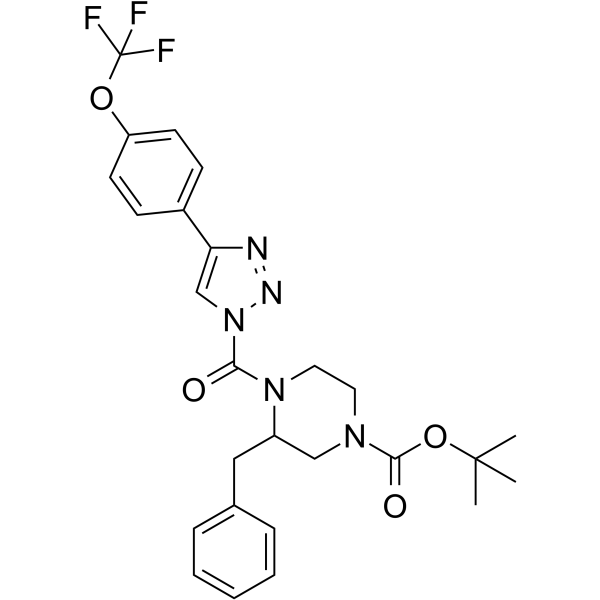 0 ImagesDO34 is a selective DAGL inhibitor, with an IC50 of 6 nM for DAGLα conversion of SAG to 2-AG. DO34 blocks de novo 2-AG synthesis, and suppresses tonic CB1 receptor activation. DO34 blocks depolarization-induced suppression of excitation and inhibition in the cerebellum and hippocampus. DO34 regulates feeding behavior and locomotor activity in mice. DO34 abolishes AM251-mediated enhancement of parallel fiber-evoked excitatory postsynaptic currents in cerebellar slices from MAGL global knockout mice. DO34 can be used for the research of energy balance disorder and neuroinflammation.
-
LEI-106
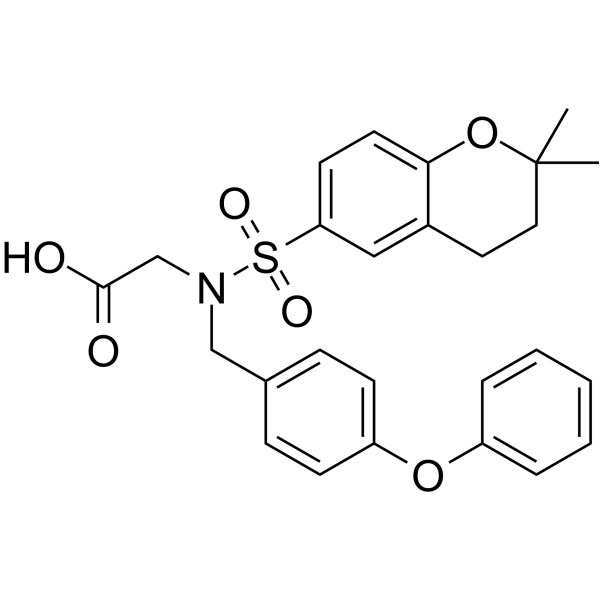 0 ImagesLEI-106 is a dual ABHD6 and DAGL-α inhibitor, with a Ki of 0.8 μM for ABHD6, and an IC50 of 18 nM and a Ki of 0.7 μM for DAGL-α. LEI-106 blocks the synthesis of 2-arachidonoylglycerol, reduces the level of endothelial cell-derived 2-arachidonoylglycerol, without altering the levels of cannabinoids and diacylglycerol. LEI-106 is applicable to research related to diet-induced obesity and metabolic syndrome.
-
DO34 analog
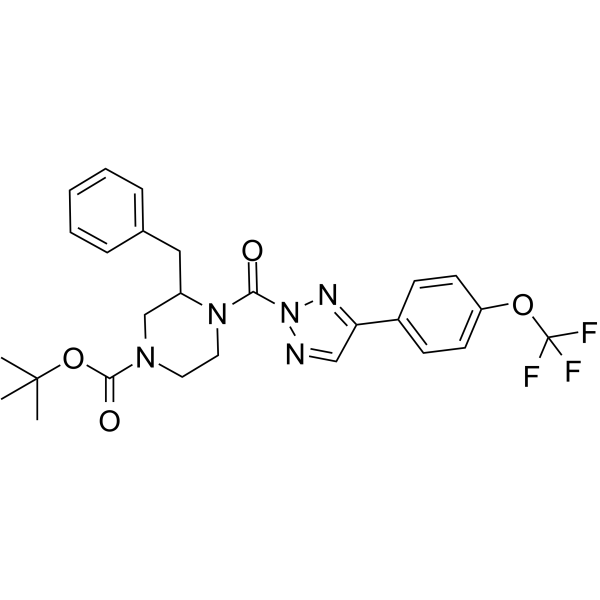 0 ImagesDO34 analog is a structural analog of DO34 (HY-117771). DO34 is a selective DAGL inhibitor, with an IC50 of 6 nM for DAGLα conversion of SAG to 2-AG. DO34 blocks de novo 2-AG synthesis, and suppresses tonic CB1 receptor activation. DO34 blocks depolarization-induced suppression of excitation and inhibition in the cerebellum and hippocampus. DO34 regulates feeding behavior and locomotor activity in mice. DO34 abolishes AM251-mediated enhancement of parallel fiber-evoked excitatory postsynaptic currents in cerebellar slices from MAGL global knockout mice. DO34 can be used for the research of energy balance disorder and neuroinflammation.
-
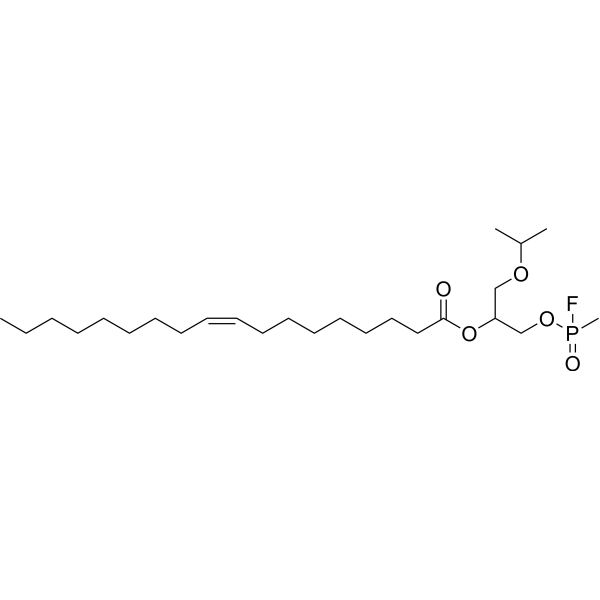
L-Isoleucine orlistat
 0 ImagesCat. No.: HY-118340CAS No.: 1072902-75-0
-
A1480LS
 0 ImagesCat. No.: HY-181482A1480LS is a peripherally restricted, orally active covalent and irreversible inhibitor of DAGLα and DAGLβ, with IC50 values of 6 nM and 4 nM against human targets, respectively, and IC50 values ≤15 nM across mouse, rat, dog, monkey and human systems. A1480LS reduces the levels of 2-arachidonoylglycerol, arachidonic acid, and cyclooxygenase- and lipoxygenase-derived eicosanoids. A1480LS inhibits injury-induced production of 2-arachidonoylglycerol and arachidonic acid in the peripheral sciatic nerve, and suppresses the responses of high-threshold and wide-dynamic-range-like dorsal horn neurons to mechanical stimulation. A1480LS alleviates pain behaviors in rat models of inflammatory pain, neuropathic pain and chemotherapy-induced peripheral neuropathy.
-
(R)-KT109
 0 ImagesCat. No.: HY-126031CAS No.: 2055172-60-4(R)-KT109 is a peripherally restricted serine hydrolase inhibitor that cannot cross the blood-brain barrier. (R)-KT109 irreversibly inhibits ABHD6, DAGLα and DAGLβ via carbamoylation of the active-site serine. (R)-KT109 exerts selective inhibitory effects on serine hydrolases in mouse brains, with pIC50 values of 8.6, 9.1 and 8.2 against human ABHD6, DAGLα and DAGLβ, respectively. (R)-KT109 effectively reduces the levels of 2-arachidonoylglycerol, arachidonic acid, eicosanoids and TNF-α. (R)-KT109 is widely used in studies of metabolic syndrome-related diseases and neuroinflammation.



