



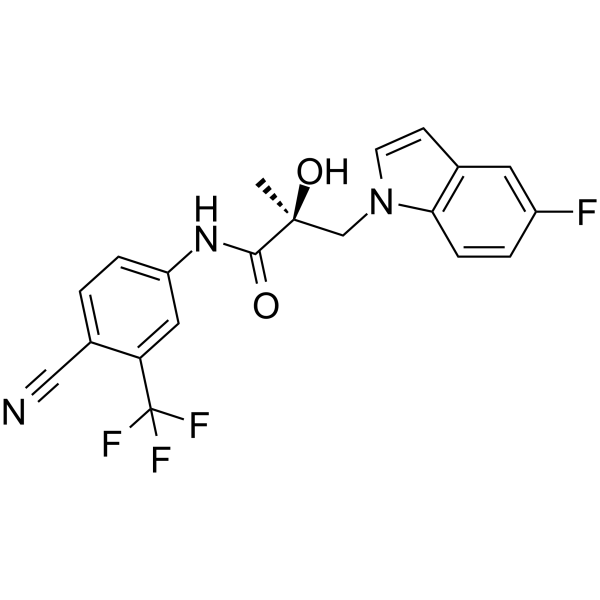
UT-155
Based on 2 publication(s) in Google Scholar
UT-155 is a selective and potent androgen receptor (AR) antagonist, with a Ki of 267 nM for UT-155 binding to AR-LBD.
For research use only. We do not sell to patients.
- Purity : 99.55%
- CAS No.: 2031161-35-8
- Formula: C20H15F4N3O2
- Molecular Weight:405.35
-
Storage:Powder -20°C, 3 years , 4°C, 2 years ; In solvent -80°C, 2 years , -20°C, 1 year

To place orders, for customer services and technical support, please contact: MedChemExpress USA
Tel: 609-228-6898 E-mail: [email protected] [email protected]


-
 Biological Activity
-
Chemical Information
-
Solvent & Solubility
- Protocols
- Purity & Documentation
- References
-
 Help & FAQs


-
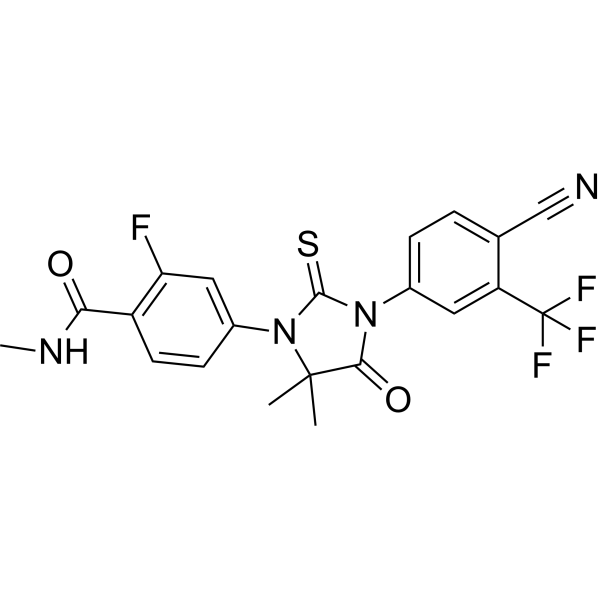
HY-70002
EnzalutamideAndrogen Receptor Antagonist -
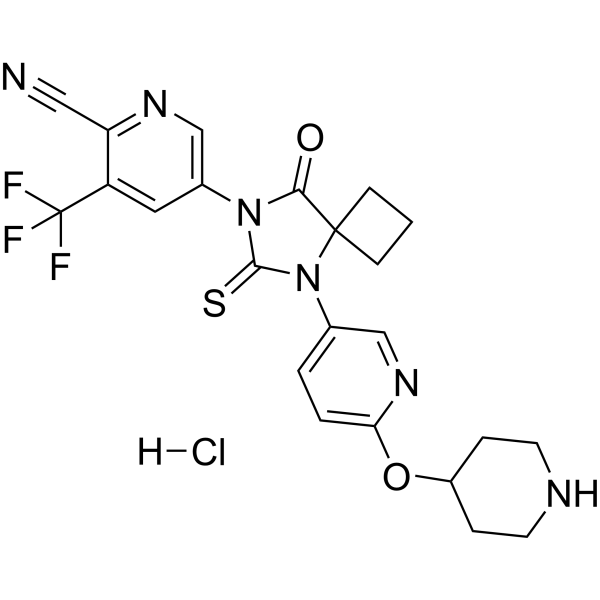
HY-115282A
JNJ-63576253AR Antagonist -
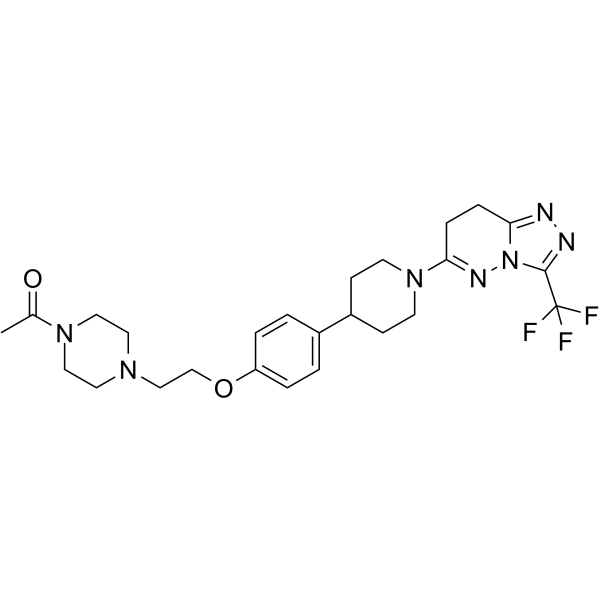
HY-16079
AZD3514AR Inhibitor -
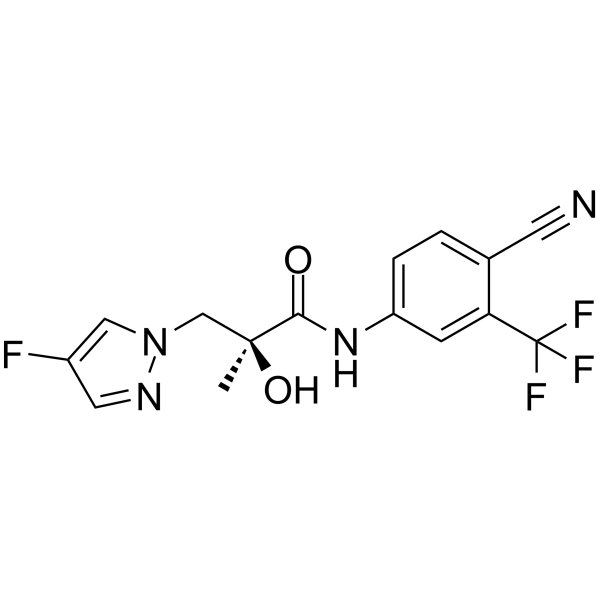
HY-136242
UT-34Androgen Receptor Antagonist/Degrader -
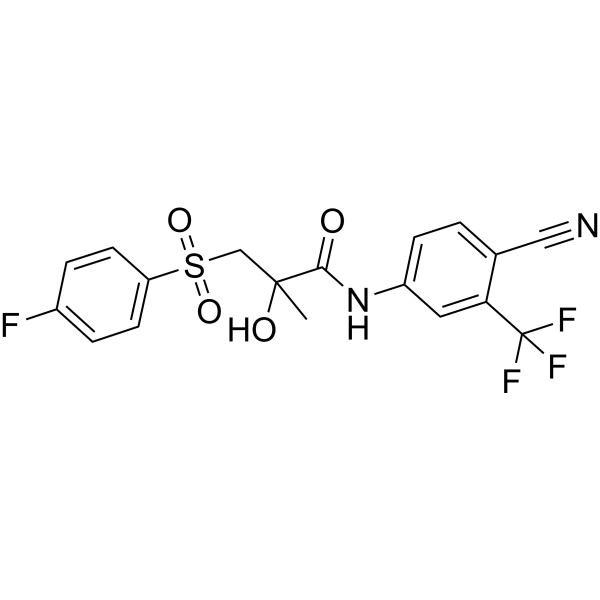
HY-14249
BicalutamideAndrogen Receptor Inhibitor -
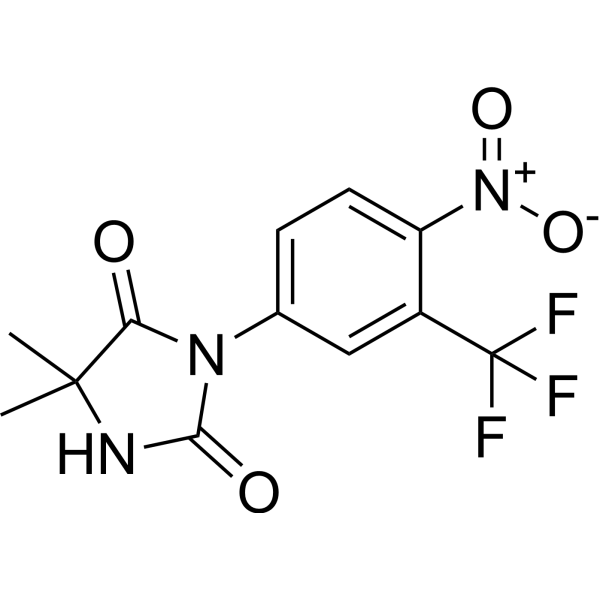
HY-13702
NilutamideAndrogen Receptor Antagonist -
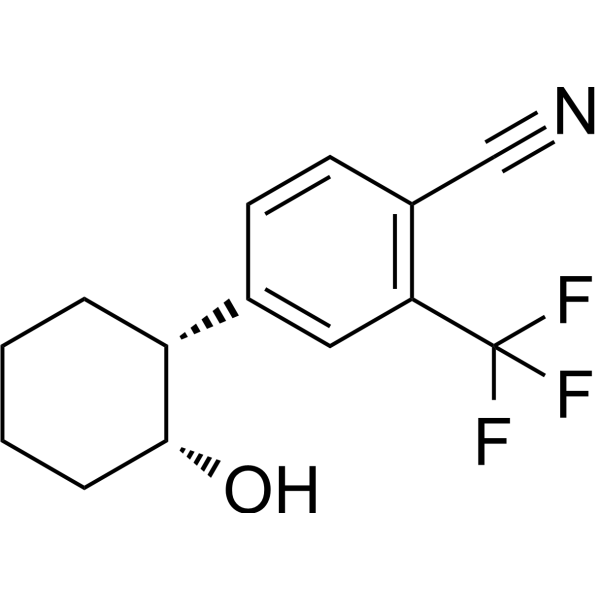
HY-14250
PF-998425Androgen Receptor Antagonist -
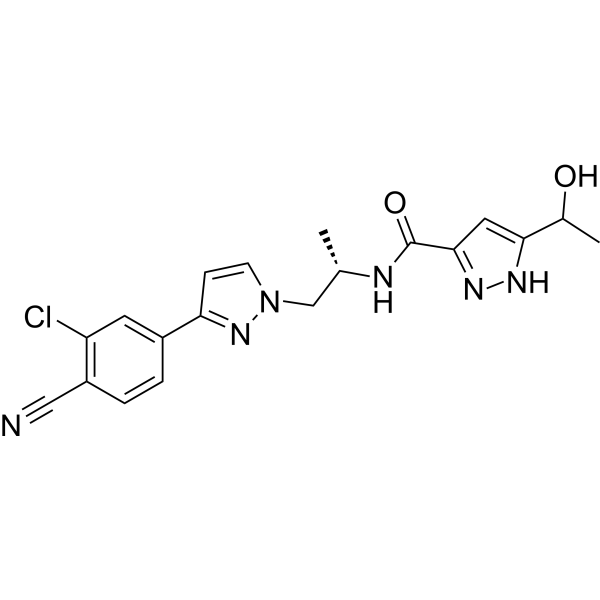
HY-16985
DarolutamideAndrogen Receptor Antagonist -
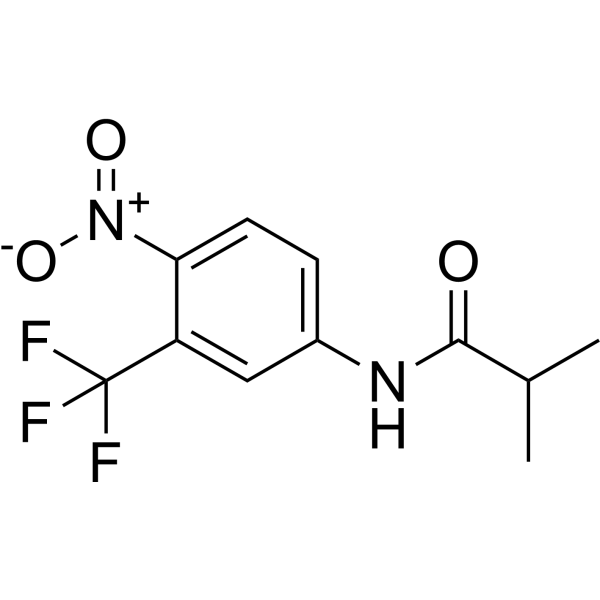
HY-B0022
FlutamideAntiandrogen Agent -
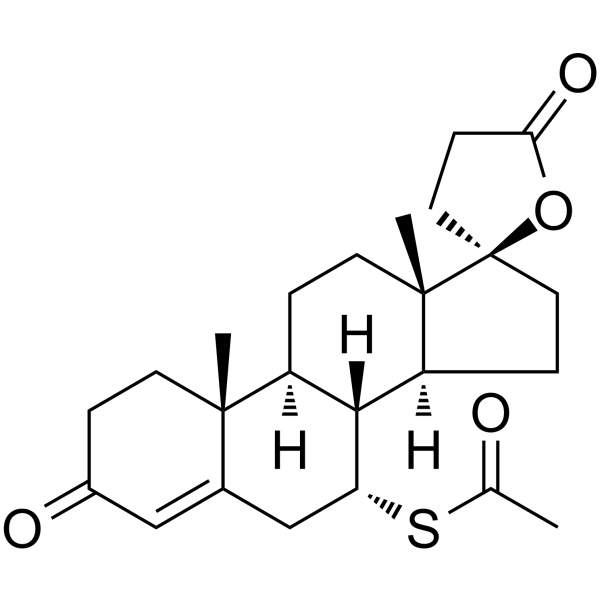
HY-B0561
SpironolactoneAldosterone/Corticoid Receptor/Androgen Antagonists -
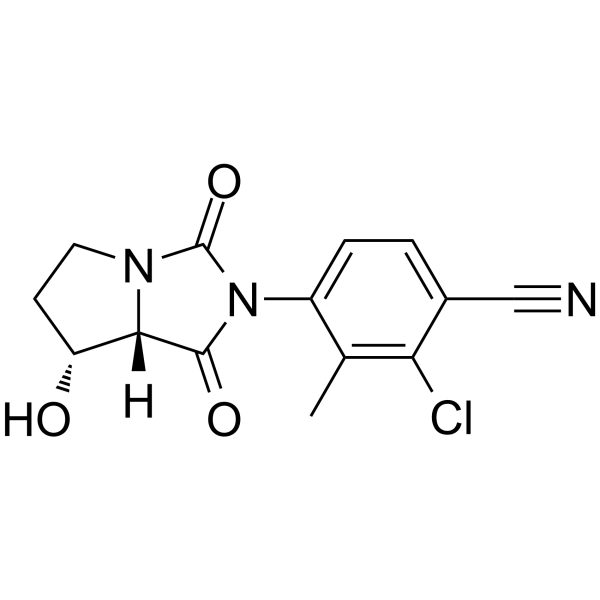
HY-12111
BMS-564929Androgen Receptor Agonist -
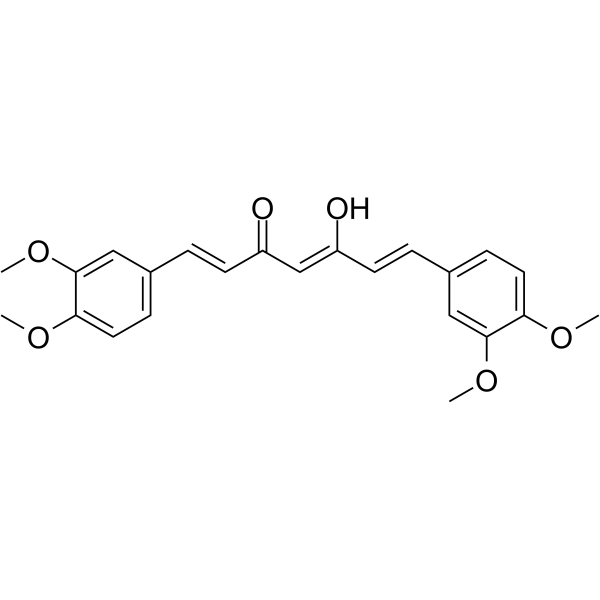
HY-15194
DimethylcurcuminAndrogen Receptor Inhibitor
Publications Citing Use of MedChemExpress (MCE) UT-155
More

Biological Activity
Description
IC50 & Target
Ki: 267 nM (AR-LBD)[1].
Cellular Effect
|
Cell Line

|
Type | Value | Description | References |
|---|---|---|---|---|
| HEK293 | IC50 |
0.085 μM
Compound: UT-155; 7
|
Antagonist activity at human androgen receptor expressed in HEK293 cells assessed as inhibition of R1881-induced receptor transactivation after 24 hrs by luciferase reporter gene assay
Antagonist activity at human androgen receptor expressed in HEK293 cells assessed as inhibition of R1881-induced receptor transactivation after 24 hrs by luciferase reporter gene assay
|
[PMID: 30525603] |
In Vitro
UT-155 binds to the AR-LBD at Ki of 267 nM. UT-155 potently inhibits the R1881-induced wildtype AR transactivation with 6-10-fold higher potency than enzalutamide. While UT-155 antagonizes both wildtype and mutant ARs comparably, enzalutamide is weaker by two fold with the W742L mutant AR relative to the wild type AR. Treatment of LNCaP cells with UT-155 inhibits 0.1 nM R1881-induced PSA and FKBP5 gene expression between 10 and 100 nM with 5-10-fold better potency than enzalutamide[1].
MedChemExpress (MCE) has not independently confirmed the accuracy of these methods. They are for reference only.
In Vivo
MedChemExpress (MCE) has not independently confirmed the accuracy of these methods. They are for reference only.


Chemical Information
-
CAS No. 2031161-35-8
-
Appearance Solid
-
Molecular Weight 405.35
-
Formula C20H15F4N3O2
-
Color White to off-white
-
SMILES
O=C([C@@](C)(O)CN1C(C=CC(F)=C2)=C2C=C1)NC3=CC=C(C#N)C(C(F)(F)F)=C3
-
Shipping
Room temperature in continental US; may vary elsewhere.
-
Storage
Powder -20°C 3 years 4°C 2 years In solvent -80°C 2 years -20°C 1 year


Publications (2)
-
Journal Impact Factor
-
Most Recent
-
Nat Commun
ANKRD1 is a mesenchymal-specific driver of cancer-associated fibroblast activation bridging androgen receptor loss to AP-1 activation. [Abstract]2024 Feb 3;15(1):1038. PMID: 38310103 -


Solvent & Solubility
In Vitro:
DMSO : ≥ 130 mg/mL (320.71 mM; Hygroscopic DMSO has a significant impact on the solubility of product, please use newly opened DMSO)
* "≥" means soluble, but saturation unknown.
Please refer to the solubility information to select the appropriate solvent. Once prepared, please aliquot and store the solution to prevent product inactivation from repeated freeze-thaw cycles.
Storage method and period of stock solution: -80°C, 2 years; -20°C, 1 year. When stored at -80°C, please use it within 2 years. When stored at -20°C, please use it within 1 year.
Please refer to the solubility information to select the appropriate solvent. Once prepared, please aliquot and store the solution to prevent product inactivation from repeated freeze-thaw cycles.
Storage method and period of stock solution: -80°C, 2 years; -20°C, 1 year. When stored at -80°C, please use it within 2 years. When stored at -20°C, please use it within 1 year.
Concentration (start) × Volume (start) = Concentration (final) × Volume (final)
In Vivo:
Select the appropriate dissolution method based on your experimental animal and administration route.
- For the following dissolution methods, please ensure to first prepare a clear stock solution using an In Vitro approach and then sequentially add co-solvents:
- To ensure reliable experimental results, the clarified stock solution can be appropriately stored based on storage conditions. As for the working solution for In Vivo experiments, it is recommended to prepare freshly and use it on the same day.
- The percentages shown for the solvents indicate their volumetric ratio in the final prepared solution. If precipitation or phase separation occurs during preparation, heat and/or sonication can be used to aid dissolution.
Add each solvent one by one: 10% DMSO 40% PEG300 5% Tween-80 45% Saline
Solubility: ≥ 2.17 mg/mL (5.35 mM); Clear solution
This protocol yields a clear solution of ≥ 2.17 mg/mL (saturation unknown).
Taking 1 mL working solution as an example, add 100 μL DMSO stock solution (21.7 mg/mL) to 400 μL PEG300, and mix evenly; then add 50 μL Tween-80 and mix evenly; then add 450 μL Saline to adjust the volume to 1 mL.
Preparation of Saline: Dissolve 0.9 g sodium chloride in ddH₂O and dilute to 100 mL to obtain a clear Saline solution.
Add each solvent one by one: 10% DMSO 90% (20% SBE-β-CD in Saline)
Solubility: ≥ 2.17 mg/mL (5.35 mM); Suspended solution
This protocol yields a suspended solution of ≥ 2.17 mg/mL (saturation unknown). Suspended solution can be used for oral and intraperitoneal injection.
Taking 1 mL working solution as an example, add 100 μL DMSO stock solution (21.7 mg/mL) to 900 μL 20% SBE-β-CD in Saline, and mix evenly.
Preparation of 20% SBE-β-CD in Saline (4°C, storage for one week): 2 g SBE-β-CD powder is dissolved in 10 mL Saline, completely dissolve until clear.
In Vivo Dissolution Calculator
Please enter the basic information of animal experiments:
-
-
-
-
Recommended: Prepare an additional quantity of animals to account for potential losses during experiments.
Please enter your animal formula composition:
-
%DMSO +
Recommended: Keep the proportion of DMSO in working solution below 2% if your animal is weak.
-
%+
-
+%Tween-80 + +
-
%Saline +
The co-solvents required include: DMSO, . All of co-solvents are available by MedChemExpress (MCE). , Tween 80. All of co-solvents are available by MedChemExpress (MCE).
Working solution concentration: 0.22 mg/mL
Method for preparing stock solution: mg drug dissolved in μL DMSO. Stock solution concentration: mg/mL.
1. Take μL DMSO stock solution;
2. Add μL .
μL , mix evenly;
3. Then add μL Tween 80, mix evenly;
4. Then add μL
Please ensure that the stock solution in the first step is dissolved to a clear state, and add co-solvents in sequence. You can use ultrasonic heating (ultrasonic cleaner, recommended frequency 20-40 kHz), vortexing, etc. to assist dissolution.


Purity & Documentation
-
Data Sheet (275 KB)
-
SDS (251 KB)
- English - EN (251 KB)
- Français - FR (251 KB)
- Deutsch - DE (251 KB)
- Norwegian - NO (251 KB)
- Español - ES (251 KB)
- Swedish - SV (251 KB)
- Italian - IT (251 KB)
- Korean - KR (251 KB)
- Portuguese - PT (251 KB)
-
Handling Instructions (2659 KB)
References


Complete Stock Solution Preparation Table
Please refer to the solubility information to select the appropriate solvent. Once prepared, please aliquot and store the solution to prevent product inactivation from repeated freeze-thaw cycles.
Storage method and period of stock solution: -80°C, 2 years; -20°C, 1 year. When stored at -80°C, please use it within 2 years. When stored at -20°C, please use it within 1 year.
| Optional Solvent | Concentration Solvent Mass | 1 mg | 5 mg | 10 mg | 25 mg |
|---|---|---|---|---|---|
| DMSO | 1 mM | 2.4670 mL | 12.3350 mL | 24.6700 mL | 61.6751 mL |
| 5 mM | 0.4934 mL | 2.4670 mL | 4.9340 mL | 12.3350 mL | |
| 10 mM | 0.2467 mL | 1.2335 mL | 2.4670 mL | 6.1675 mL | |
| 15 mM | 0.1645 mL | 0.8223 mL | 1.6447 mL | 4.1117 mL | |
| 20 mM | 0.1234 mL | 0.6168 mL | 1.2335 mL | 3.0838 mL | |
| 25 mM | 0.0987 mL | 0.4934 mL | 0.9868 mL | 2.4670 mL | |
| 30 mM | 0.0822 mL | 0.4112 mL | 0.8223 mL | 2.0558 mL | |
| 40 mM | 0.0617 mL | 0.3084 mL | 0.6168 mL | 1.5419 mL | |
| 50 mM | 0.0493 mL | 0.2467 mL | 0.4934 mL | 1.2335 mL | |
| 60 mM | 0.0411 mL | 0.2056 mL | 0.4112 mL | 1.0279 mL | |
| 80 mM | 0.0308 mL | 0.1542 mL | 0.3084 mL | 0.7709 mL | |
| 100 mM | 0.0247 mL | 0.1234 mL | 0.2467 mL | 0.6168 mL |


UT-155 Related Classifications
HY-112895 Related Classifications
 Powered by Bioz