
11 Results for "

epithelial dysfunction

" in MedChemExpress (MCE) Product Catalog:
Products (11)

11 Results for "epithelial dysfunction" in MCE Product Catalog:

6
6 Publications Verification
Cat. No.: HY-111431
CAS No.: 3233-58-7
Pureté:  99.87%
Synonyms: p-Tolyl sulfate
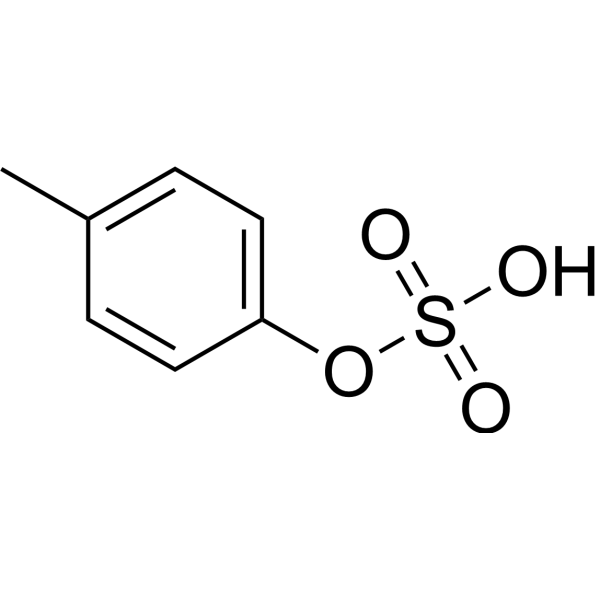
p-Cresyl sulfate (p-Tolyl sulfate) is a uremic toxin, that can cause renal damage and dysfunction. p-Cresyl sulfate shows antiproliferation activity. p-Cresyl sulfate increases the protein expression of HIF-1α and VHL, decreases the protein expression of HIF-2α. p-Cresyl sulfate induces epithelial-mesenchymal transition (EMT). p-Cresyl sulfate activates the JNK and p38 MAPK signaling pathways .
loading...
    loading...
2
2 Cited Publications
Cat. No.: HY-P99550
CAS No.: 2376858-66-9
Synonyms: MEDI-3506

Target:  

Interleukin Related

Domaines de recherche:  

Inflammation/Immunology

Tozorakimab (MEDI-3506) is a human immunoglobulin G1 monoclonal antibody targeting interleukin-33. Tozorakimab reduces inflammation and epithelial dysfunction. Tozorakimab can be used to research chronic obstructive pulmonary disease .
loading...
    loading...
1
1 Cited Publications
Cat. No.: HY-N6625
CAS No.: 1897-45-6
Domaines de recherche:  

Infection

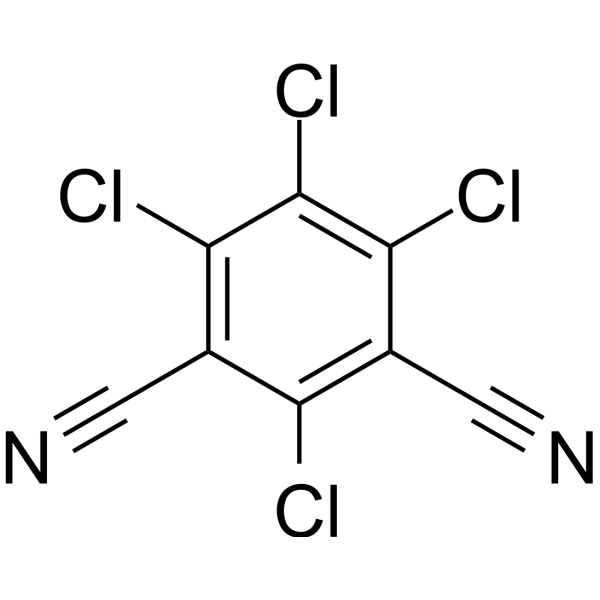
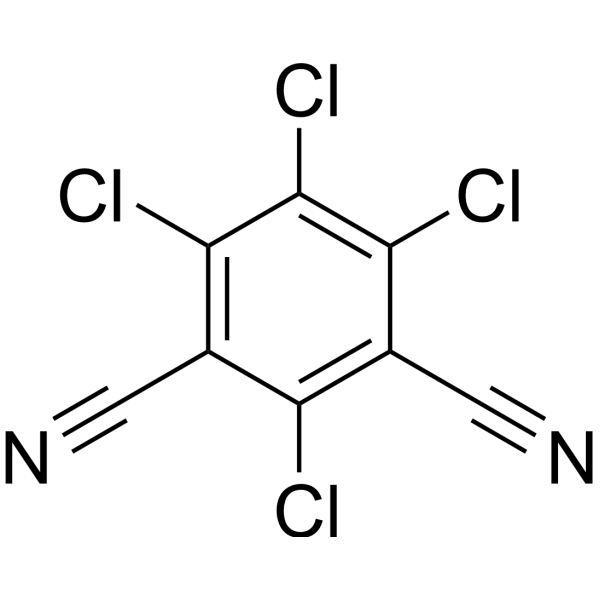
Chlorothalonil is a broad-spectrum foliar fungicide with oral activity. Chlorothalonil can be used to combat fungal diseases in vegetable and crop leaves. Chlorothalonil can alter the microbial community in the soil. Chlorothalonil inhibits spermatogenesis. Chlorothalonil can cause intestinal epithelial barrier dysfunction and fetal toxicity .
loading...
    loading...
Cat. No.: HY-113884B
CAS No.: 29623-28-7
Pureté:  ≥99.0%
Synonyms: 13(S)-HODE
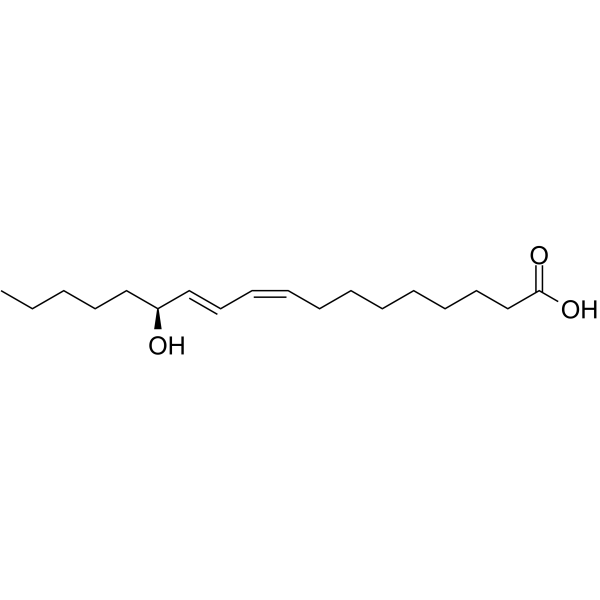
(S)-Coriolic acid (13(S)-HODE), the product of 15-lipoxygenase (15-LOX) metabolism of linoleic acid, functions as the endogenous ligand to activate PPARγ. (S)-Coriolic acid is an important intracellular signal agent and is involved in cell proliferation and differentiation in various biological systems. (S)-Coriolic acid induces mitochondrial dysfunction and airway epithelial injury .
loading...
    loading...
Cat. No.: HY-N4031
CAS No.: 82375-29-9
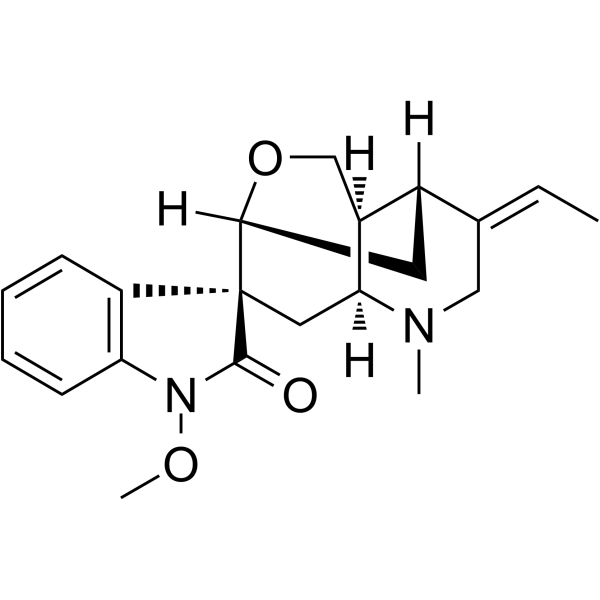
Humantenine is a highly toxic indole alkaloid from Gelsemium elegans (Gardn. & Champ.) Benth. that binds to RNA m6A modification regulatory proteins (ALKBH5, METTL). Humantenine stably binds via hydrogen bonding and hydrophobic interactions and disrupts the m6A methylation level of target genes, thereby impairing the expression of intestinal epithelial cell tight junction and cytoskeleton-related genes, causing intestinal barrier dysfunction and significant intestinal cytotoxicity. The intraperitoneal injection LD50 values of Humantenine are <1 mg/kg in mice, 1.2 mg/kg in male rats and 1.5 mg/kg in female rats, respectively. Species differences exist in the metabolism of Humantenine in human, porcine, goat and rat liver microsomes, and demethylation, dehydrogenation and oxidation occur in liver microsomes .
loading...
    loading...
Cat. No.: HY-161904
CAS No.: 2378625-66-0
Domaines de recherche:  

Endocrinology

CDYL-IN-1 is a selective small-molecule inhibitor of CDYL with a KD value of 0.5 μM. CDYL-IN-1 improves renal dysfunction, pathological damage and renal tubular pyroptosis, inhibits FABP4-mediated ROS production, and alleviates renal tubular epithelial cell injury. CDYL-IN-1 is applicable to the research of acute kidney injury .
loading...
    loading...
Cat. No.: HY-N6625R
CAS No.: 1897-45-6
Domaines de recherche:  

Infection

Chlorothalonil (Standard) is the analytical standard of Chlorothalonil. This product is intended for research and analytical applications. Chlorothalonil is a broad-spectrum foliar fungicide with oral activity. Chlorothalonil can be used to combat fungal diseases in vegetable and crop leaves. Chlorothalonil can alter the microbial community in the soil. Chlorothalonil inhibits spermatogenesis. Chlorothalonil can cause intestinal epithelial barrier dysfunction and fetal toxicity .
loading...
    loading...
Cat. No.: HY-111431AR
CAS No.: 91978-69-7
Synonyms: p-Tolyl sulfate potassium (Standard)
p-Cresyl sulfate (potassium) (Standard) is the analytical standard of p-Cresyl sulfate (potassium). This product is intended for research and analytical applications. p-Cresyl sulfate (p-Tolyl sulfate) potassium is a uremic toxin, that can cause renal damage and dysfunction. p-Cresyl sulfate potassium shows antiproliferation activity. p-Cresyl sulfate potassium increases the protein expression of HIF-1α and VHL, decreases the protein expression of HIF-2α. p-Cresyl sulfate potassium induces epithelial-mesenchymal transition (EMT). p-Cresyl sulfate potassium activates the JNK and p38 MAPK signaling pathways .
loading...
    loading...
Cat. No.: HY-184448
CAS No.: 2963747-43-3
CIB-Q22 is a potent pyruvate carboxylase (PC) inhibitor with an IC50 of 1.74 nM. CIB-Q22 suppresses hepatocellular carcinoma (HCC) cell proliferation, migration, and invasion. CIB-Q22 induces apoptosis and ferroptosis, promotes mitochondrial oxidative stress and dysfunction, inhibits glycolysis and anaplerotic flux, and reverses epithelial-mesenchymal transition (EMT). CIB-Q22 can be used for the study of hepatocellular carcinoma .
loading...
    loading...
Cat. No.: HY-183274
CAS No.: 3068830-45-2
Domaines de recherche:  

Cancer

Nur77 modulator 5 is a Nur77 modulator. Nur77 modulator 5 induces lysosomal dysfunction, impaired autophagic flux, and apoptosis with increased PARP cleavage, TUNEL positivity, and Annexin V/PI staining. Nur77 modulator 5 can be used for the research of gastric cancer .
loading...
    loading...
Cat. No.: HY-181413
CAS No.: 3093642-25-9
Domaines de recherche:  

Cancer

PROTAC EZH2 Degrader-44 (compound 60) is a highly efficient PROTAC degrader targeting the EZH2-PRC2 complex. By recruiting the CRBN E3 ligase and relying on the proteasome system, PROTAC EZH2 Degrader-44 simultaneously induces the degradation of core components EZH2, SUZ12 and EED, thereby significantly reducing the levels of H3K27me3 and CARM1. PROTAC EZH2 Degrader-44 exerts antiproliferative effects through a dual mechanism: on the one hand, it triggers mitochondrial dysfunction leading to decreased membrane potential; on the other hand, it strongly promotes apoptosis by regulating Bcl-2 family proteins (upregulating Bax, Caspase-3 and PARP, and downregulating Bcl-2). PROTAC EZH2 Degrader-44 exhibits only extremely low cytotoxicity in human normal mammary epithelial, liver and kidney cells, showing a favorable safety window. PROTAC EZH2 Degrader-44 is an ideal tool molecule for exploring the mechanisms of targeted therapy for triple-negative breast cancer .
loading...
    loading...
  • 1

