
21 Results for "

regional

" in MedChemExpress (MCE) Product Catalog:
Products (21)

21 Results for "regional" in MCE Product Catalog:

13
13 Publications Verification
Art. -Nr.: HY-B0715
CAS. Nr.: 6493-05-6
Synonyms: BL-191; Oxpentifylline
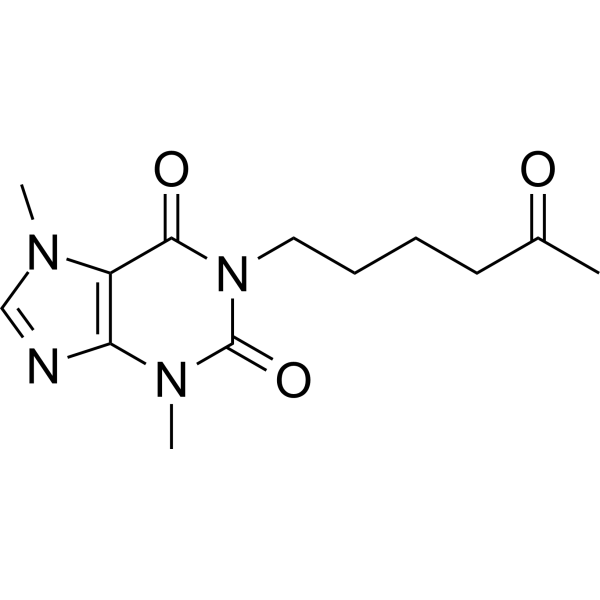
Pentoxifylline (BL-191), a haemorheological agent, is an orally active non-selective phosphodiesterase (PDE) inhibitor, with immune modulation, anti-inflammatory, hemorheological, anti-fibrinolytic and anti-proliferation effects. Pentoxifylline can be used for the research of peripheral vascular disease, cerebrovascular disease and a number of other conditions involving a defective regional microcirculation .
loading...
    loading...
8
8 Cited Publications
Art. -Nr.: HY-B0563A
CAS. Nr.: 132112-35-7
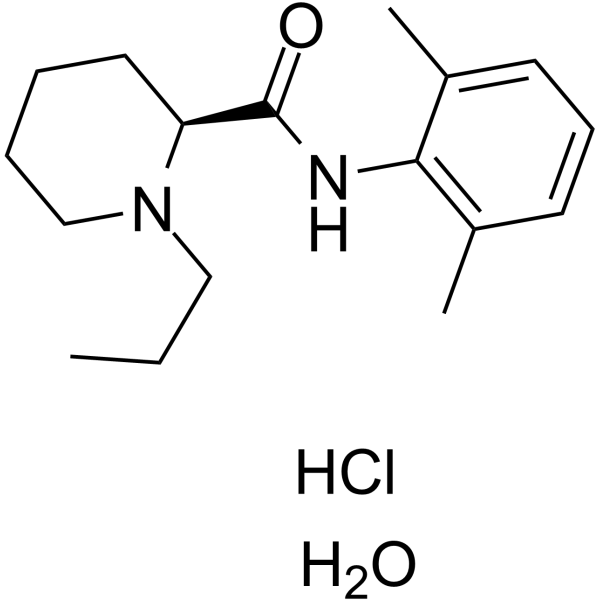
Ropivacaine hydrochloride monohydrate is a potent sodium channel blocker and blocks impulse conduction via reversible inhibition of sodium ion influx in nerve fibrese . Ropivacaine is also an inhibitor of K2P (two-pore domain potassium channel) TREK-1 with an IC50 of 402.7 μM in COS-7 cell's membrane . Ropivacaine is widely used for regional anesthesia and neuropathic pain management in vivo .
loading...
    loading...
1
1 Cited Publications
Art. -Nr.: HY-113061
CAS. Nr.: 1445-07-4
Reinheit:  99.93%
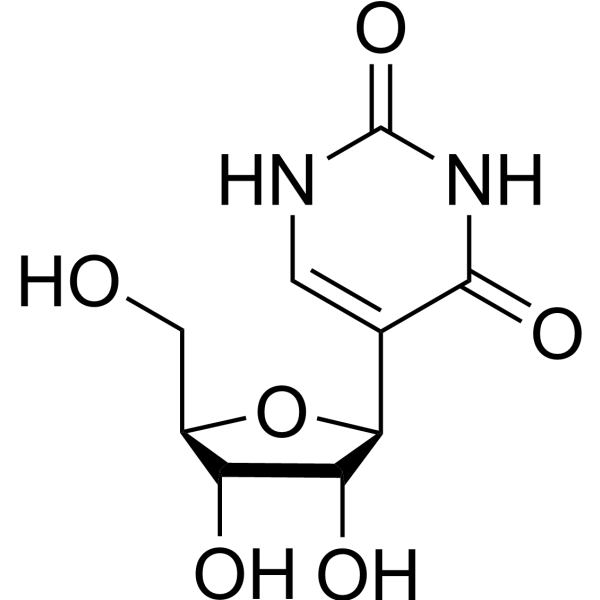
Pseudouridine is an isomer of uridine and the most abundant modified nucleoside in non-coding RNA. It fine-tunes and stabilizes regional structures in rRNA and tRNA, maintaining their functions in mRNA decoding, ribosome assembly, processing, and translation. Pseudouridine-modified tRNA fragments can inhibit aberrant protein synthesis and hold promise for research on myelodysplastic syndrome (MDS)-related leukemia. .
loading...
    loading...
1
1 Cited Publications
Art. -Nr.: HY-B0517A
CAS. Nr.: 1722-62-9
Target:  

Sodium Channel

Forschungsgebiete:  

Neurological Disease

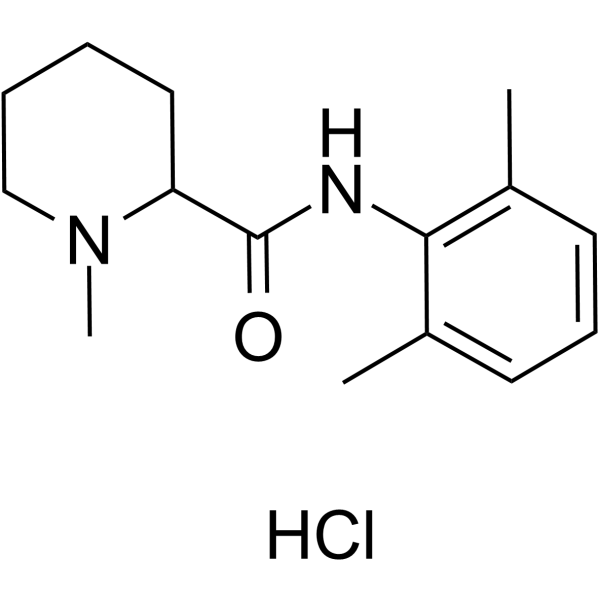
Mepivacaine hydrochloride binds to specific voltage-gated sodium ion channels in neuronal cell membranes, which inhibits both sodium influx and membrane depolarization .
loading...
    loading...
1
1 Cited Publications
Art. -Nr.: HY-NP0147
Synonyms: WGA (Fluorescein)
Wheat Germ Agglutinin (WGA) Fluorescein is a classic fluorescent label that specifically binds to sugar residues such as N-acetylglucosamine, N-acetylneuraminic acid and sialic acid. Wheat Germ Agglutinin Fluorescein performs regionally differential fluorescent staining of the ocular surface epithelial glycocalyx to assess its integrity, and causes no damage to the eye at safe concentrations. Wheat Germ Agglutinin Fluorescein is also used for staining structures including red blood cells, cultured cells, bacteria and pine wood nematodes, and facilitates the isolation of wheat-associated plant-growth-promoting rhizobacterial strains. Wheat Germ Agglutinin Fluorescein can be applied to the detection of ocular glycocalyx integrity and the research of related diseases such as pine wilt disease .
loading...
    loading...
Art. -Nr.: HY-W248594
CAS. Nr.: 134127-48-3
Target:  

Fluorescent Dye

Forschungsgebiete:  

Others

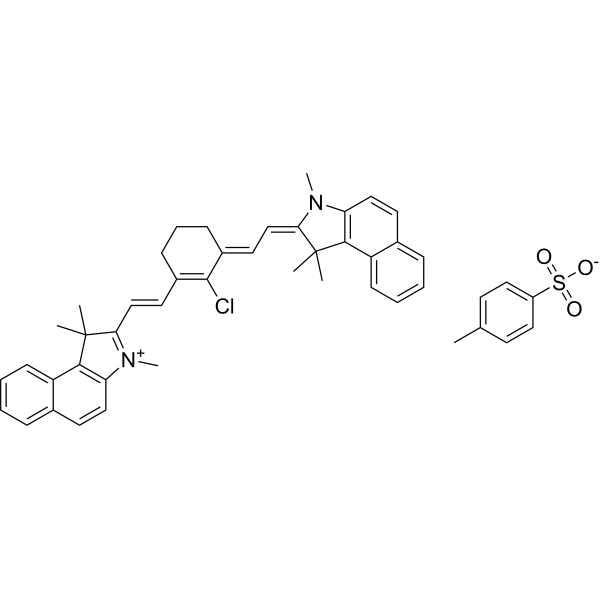
IR 813 tosylate is a near-infrared (NIR) fluorescent dye and can be used for visualizing regional lymph nodes in mice .
loading...
    loading...
Art. -Nr.: HY-P99806
CAS. Nr.: 499212-74-7
Synonyms: ACA-11; CLN-IgG; CLNH-11

Target:  

Inhibitory Antibodies

Forschungsgebiete:  

Cancer

Pritumumab is a natural human IgG1kappa mAb originally isolated from a regional draining lymph node of a patient with cervical carcinoma. Pritumumab recognizes vimentin expressing on the cell surface of the malignant tumor. Pritumumab can be used for glioblastoma research .
loading...
    loading...
Art. -Nr.: HY-113061R
CAS. Nr.: 1445-07-4
Pseudouridine (Standard) is the analytical standard of Pseudouridine. This product is intended for research and analytical applications. Pseudouridine is an isomer of the nucleoside uridine, and the most abundant modified nucleoside in non-coding RNAs. Pseudouridine in rRNA and tRNA can fine-tune and stabilize the regional structure and help maintain their functions in mRNA decoding, ribosome assembly, processing and translation [4].
loading...
    loading...
Art. -Nr.: HY-B0715S2
CAS. Nr.: 1185995-18-9
Synonyms: BL-191-d5; Oxpentifylline-d5
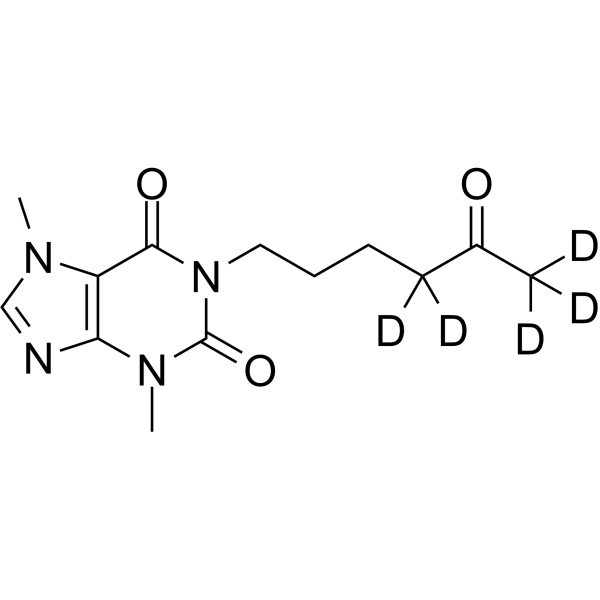
Pentoxifylline-d5 is the deuterium labeled Pentoxifylline. Pentoxifylline (BL-191), a haemorheological agent, is an orally active non-selective phosphodiesterase (PDE) inhibitor, with immune modulation, anti-inflammatory, hemorheological, anti-fibrinolytic and anti-proliferation effects. Pentoxifylline can be used for the research of peripheral vascular disease, cerebrovascular disease and a number of other conditions involving a defective regional microcirculation .
loading...
    loading...
Art. -Nr.: HY-D1535
CAS. Nr.: 201024-57-9
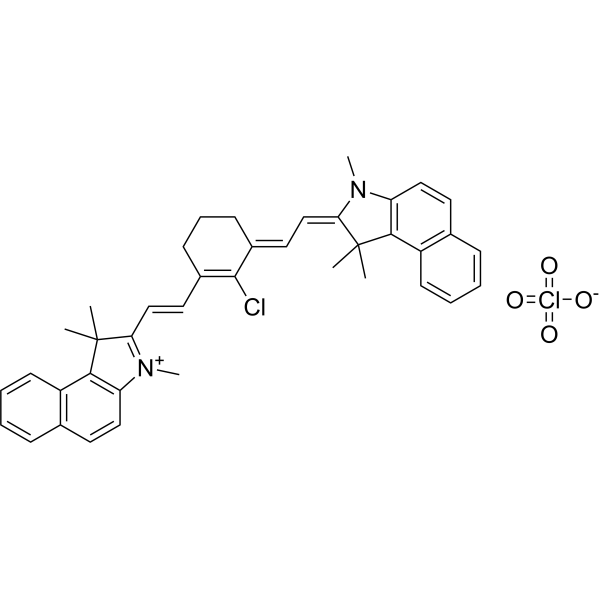
IR 813 perchlorate is a near-infrared (NIR) fluorescent dye (Ex=815 nm, Em=840 nm) and can be used for visualizing regional lymph nodes in mice .
loading...
    loading...
Art. -Nr.: HY-B0715S
CAS. Nr.: 1185878-98-1
Synonyms: BL-191-d6; Oxpentifylline-d6
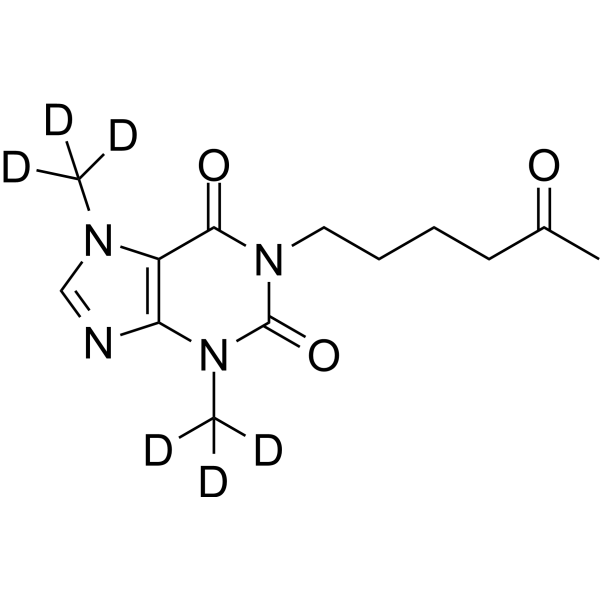
Pentoxifylline-d6 is the deuterium labeled Pentoxifylline. Pentoxifylline (BL-191), a haemorheological agent, is an orally active non-selective phosphodiesterase (PDE) inhibitor, with immune modulation, anti-inflammatory, hemorheological, anti-fibrinolytic and anti-proliferation effects. Pentoxifylline can be used for the research of peripheral vascular disease, cerebrovascular disease and a number of other conditions involving a defective regional microcirculation .
loading...
    loading...
Art. -Nr.: HY-B0715R
CAS. Nr.: 6493-05-6
Synonyms: BL-191 (Standard); Oxpentifylline (Standard)
Pentoxifylline (Standard) is the analytical standard of Pentoxifylline. This product is intended for research and analytical applications. Pentoxifylline (BL-191), a haemorheological agent, is an orally active non-selective phosphodiesterase (PDE) inhibitor, with immune modulation, anti-inflammatory, hemorheological, anti-fibrinolytic and anti-proliferation effects. Pentoxifylline can be used for the research of peripheral vascular disease, cerebrovascular disease and a number of other conditions involving a defective regional microcirculation .
loading...
    loading...
Art. -Nr.: HY-W768571
CAS. Nr.: 2230887-15-5
Pseudouridine- 13C, 15N2 is the 13C- and 15N-labeled Pseudouridine (HY-113061). Pseudouridine is an isomer of uridine and the most abundant modified nucleoside in non-coding RNA. It fine-tunes and stabilizes regional structures in rRNA and tRNA, maintaining their functions in mRNA decoding, ribosome assembly, processing, and translation. Pseudouridine-modified tRNA fragments can inhibit aberrant protein synthesis and hold promise for research on myelodysplastic syndrome (MDS)-related leukemia. .
loading...
    loading...
Art. -Nr.: HY-W709760
CAS. Nr.: 2095-62-7
Target:  

Endogenous Metabolite

Forschungsgebiete:  

Neurological Disease

7-Hydroxychlorpromazine is an active metabolite of Chlorpromazine (HY-12708). 7-Hydroxychlorpromazine reverses Amphetamine-induced depression of regional compact dopaminergic neurons .
loading...
    loading...
Art. -Nr.: HY-107095
CAS. Nr.: 724471-26-5
Synonyms: R317573; CRA5626; TAI041
Target:  

CRFR

Forschungsgebiete:  

Neurological Disease

JNJ19567470 (R317573) is a selective, non-peptidergic CRF type 1 receptor (CRF1) antagonist. JNJ19567470 blocks NaLac-induced panic-like behaviour and cardiovascular responses. JNJ19567470 decreases regional glucose utilization in the amygdala, and attenuates anxiety responses .
loading...
    loading...
Art. -Nr.: HY-113061S
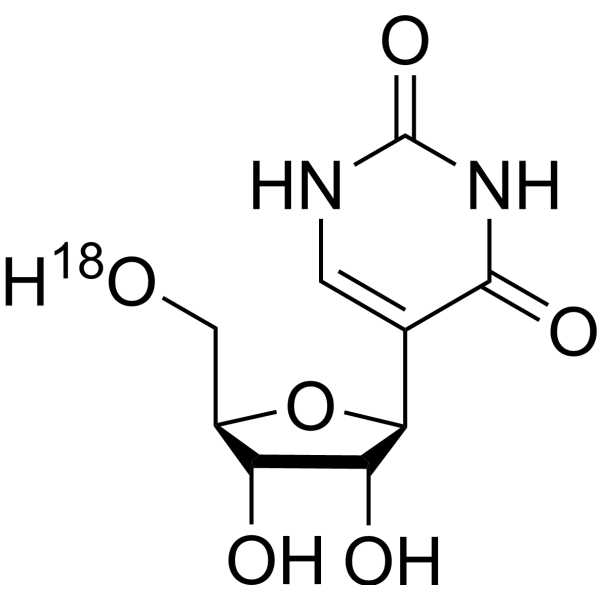
Pseudouridine- 18O is the 18O labeled Pseudouridine (HY-113061). Pseudouridine is an isomer of the nucleoside uridine, and the most abundant modified nucleoside in non-coding RNAs. Pseudouridine in rRNA and tRNA can fine-tune and stabilize the regional structure and help maintain their functions in mRNA decoding, ribosome assembly, processing and translation.
loading...
    loading...
Art. -Nr.: HY-B0715S3
CAS. Nr.: 1185878-97-0
Synonyms: BL-191-d3; Oxpentifylline-d3
Pentoxifylline-d3 (BL-191-d3) is deuterium labeled Pentoxifylline. Pentoxifylline (BL-191), a haemorheological agent, is an orally active non-selective phosphodiesterase (PDE) inhibitor, with immune modulation, anti-inflammatory, hemorheological, anti-fibrinolytic and anti-proliferation effects. Pentoxifylline can be used for the research of peripheral vascular disease, cerebrovascular disease and a number of other conditions involving a defective regional microcirculation .
loading...
    loading...
Art. -Nr.: HY-B0563AR
CAS. Nr.: 132112-35-7
Ropivacaine (hydrochloride monohydrate) (Standard) is the analytical standard of Ropivacaine (hydrochloride monohydrate). This product is intended for research and analytical applications. Ropivacaine hydrochloride monohydrate is a potent sodium channel blocker and blocks impulse conduction via reversible inhibition of sodium ion influx in nerve fibrese . Ropivacaine is also an inhibitor of K2P (two-pore domain potassium channel) TREK-1 with an IC50 of 402.7 μM in COS-7 cell's membrane . Ropivacaine is widely used for regional anesthesia and neuropathic pain management in vivo .
loading...
    loading...
Art. -Nr.: HY-129706
CAS. Nr.: 57184-68-6
Target:  

Others

Forschungsgebiete:  

Cardiovascular Disease

LY127210 free base is an orally active peripheral arterial vasodilating antihypertensive agent. LY127210 free base interferes with the baroreflex mechanism, exerts direct myocardial bradycardic activity, has no α or β receptor blocking properties, and acts via all conventional administration routes. LY127210 free base reduces vascular resistance, cardiac output, heart rate, left ventricular end-diastolic pressure, regional vascular resistance, as well as blood flow in the skin and cerebral cortex. LY127210 free base can be used in research related to hypertension .
loading...
    loading...
Art. -Nr.: HY-W205529
CAS. Nr.: 87235-61-8
Target:  

Fluorescent Dye

Forschungsgebiete:  

Neurological Disease

RO 16-6491 Free base is a selective, reversible inhibitor of monoamine oxidase type B (MAO-B), exhibiting high affinity and specificity for binding sites in human frontal cortex mitochondria and platelet membranes. RO 16-6491 demonstrates a fast dissociation of bound radioactivity at 20 degrees C, indicating its dynamic binding properties. RO 16-6491 also acts as a substrate for MAO-B, suggesting that its oxidation may produce a stable intermediate responsible for its potent inhibitory effects. RO 16-6491 serves as an excellent radioligand probe for investigating the regional tissue distribution of MAO-B in various physiological and pathological states.
loading...
    loading...

