



Phenylketonuria
-
Phenylketonuria (6)

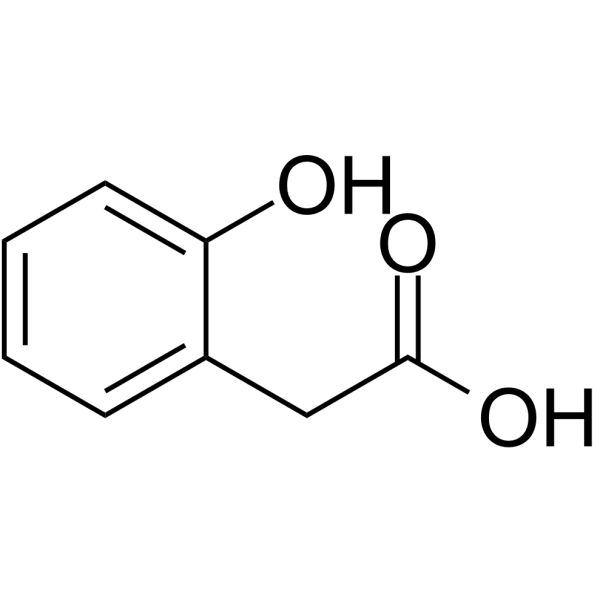
- Formula: C8H8O3
- Molecular Weight: 152.15
2-Hydroxyphenylacetic acid is a metabolite of Phenylalanine and Tyrosine, as well as a product of the biotransformation of Phenylacetonitrile by marine fungi. 2-Hydroxyphenylacetic acid acts as a potential biomarker for food. 2-Hydroxyphenylacetic acid slightly induces the expression of green fluorescent protein. 2-Hydroxyphenylacetic acid is used in the research of phenylketonuria and related hyperphenylalaninemia.

- Formula: C16H16F3N3O3
- Molecular Weight: 355.31
SLC6A19-IN-4 is an allosteric-competitive and orally active B0AT1 inhibitor. SLC6A19-IN-4 inhibits both human and mouse B0AT1 with IC50 values of 513 nM and 295 nM, respectively. SLC6A19-IN-4 exhibits excellent metabolic stability. SLC6A19-IN-4 significantly increases urinary phenylalanine (Phe) excretion and reduces plasma Phe levels through dual inhibition of B0AT1 in both the intestine (reducing absorption) and kidney (promoting excretion) in vivo. SLC6A19-IN-4 can be used for phenylketonuria (PKU) and other disorders involving SLC6-family transporters research.
Phenylalanine dehydrogenase is an NAD+-dependent oxidoreductase targeting L-phenylalanine. Phenylalanine dehydrogenase catalyzes deamination to phenylpyruvate and NADH as part of amino acid metabolism regulation. Phenylalanine dehydrogenase is promising for research of phenylketonuria (PKU).

- Formula: C21H25ClN4O2
- Molecular Weight: 400.90
SLC6A19-IN-3 (Compound 83-P1-P2) is a potent, selective and orally active SLC6A19 inhibitor with an IC50 of 28 nM. SLC6A19-IN-3 can block SLC6A19-mediated transmembrane transport of phenylalanine, reducing intestinal absorption of phenylalanine from food and renal tubular reabsorption of phenylalanine. SLC6A19-IN-3 can be used for the research of metabolic disease, such as phenylketonuria.

- Formula: C20H21F3N6O2
- Molecular Weight: 434.41
JN-170 is a potent and highly selective inhibitor and transport corrector of human SLC6A19 (IC50=47 nM). Furthermore, at a concentration of 35 μM, JN-170 exhibits no activity against SLC1A5, SLC7A5, or SLC6A8. JN-170 is applicable to research on phenylketonuria (PKU) and hyperphenylalaninemia. JN-170 is also suitable for studies related to various metabolic disorders, including tyrosinemia, maple syrup urine disease, urea cycle disorders, and hyperammonemia.
Phenylalanine ammonia-lyase is a non-mammalian enzyme converting phenylalanine into trans-cinnamic acid and ammonia. Phenylalanine ammonia-lyase can be used in the research of phenylketonuria.



