1. Search Result
Search Result
Results for "

bodipy

" in MedChemExpress (MCE) Product Catalog:

166

Inhibitors & Agonists

112

Fluorescent Dye

7

Natural
Products

3

Click Chemistry

13

Oligonucleotides

Cat. No. Product Name Target Research Areas Chemical Structure
  • HY-W090090
    BODIPY 493/503
    100+ Cited Publications

    Pyrromethene 546

    Fluorescent Dye Others
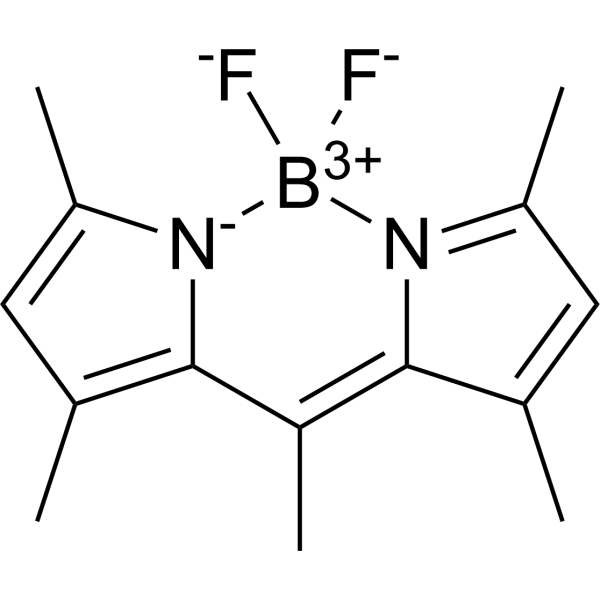
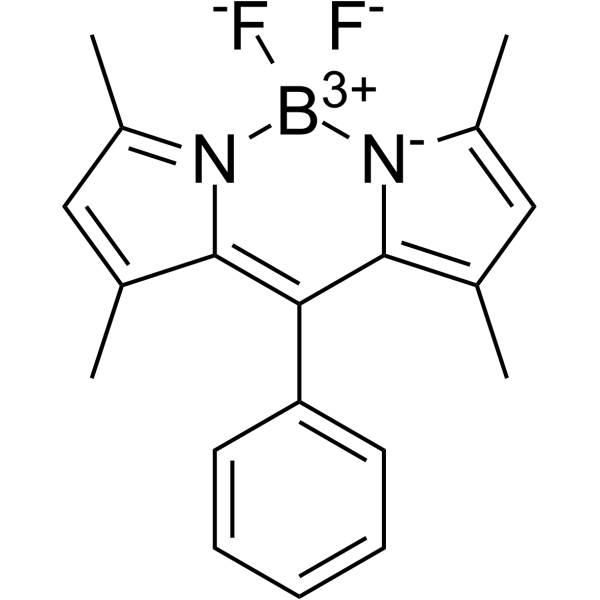
    BODIPY493/503 is a BODIPY dye. BODIPY dye is a small molecule dye with strong ultraviolet absorption ability, its fluorescence peak is relatively sharp, and the quantum yield is high. They are relatively insensitive to the polarity and pH of the environment and are relatively stable under different physiological conditions. Due to its structural asymmetry, BODIPY derives a variety of structural products. BODIPY lipid droplet dyes can well pass through the cell membrane into the cell, and localize the neutral lipids in the cell to specifically stain the lipid droplets, which can be used for labeling of live cells and fixed cells . Maximum excitation/emission wavelength: 493/503 nm .
    BODIPY 493/503
  • HY-D1301
    BODIPY 581/591 C11
    Maximum Cited Publications
    135 Publications Verification

    Fluorescent Dye Ferroptosis Metabolic Disease Inflammation/Immunology Cancer
    BODIPY 581/591 C11 is a BODIPY borofluoroprene derivative with good light stability and low fluorescence artifacts. BODIPY 581/591 C11 can be used for study lipid peroxidation and antioxidant properties in living cells, or detect ferroptosis by reaction with hydroxyl radicals. BODIPY 581/591 C11 is emitted at 591 nm (reduced prototype), or redshifted to 510 nm (oxidized type). The excitation wavelengths were 581 nm (reduced prototype) and 500 nm (oxidized type) .
    BODIPY 581/591 C11
  • HY-125746
    BODIPY-Cholesterol
    10+ Cited Publications

    Fluorescent Dye Others
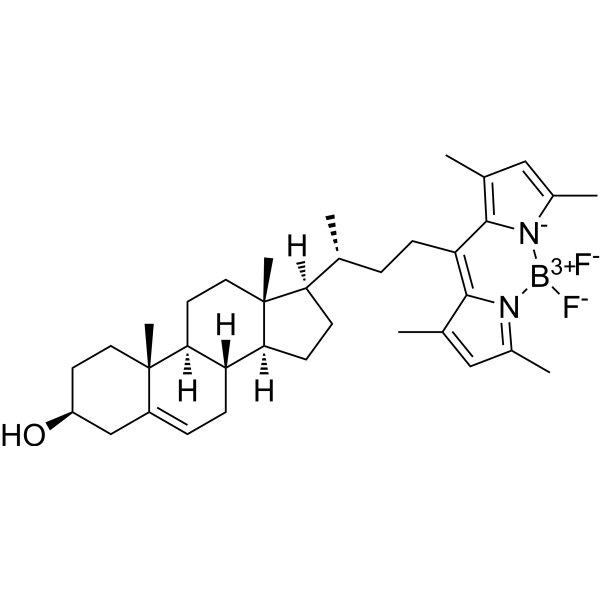
    BODIPY-cholesterol is an intrinsically lipophilic, and cell-permeable analog of cholesterol with a fluorescent BODIPY group. BODIPY-cholesterol can be used to monitor sterol uptake and inter-organelle sterol flux in cells. (Excitation/Emission: 505/515 nm) .
    BODIPY-Cholesterol
  • HY-110210

    bodipy FL,SE

    Fluorescent Dye Others
    BODIPY FL NHS ester (BODIPY FL, SE) is a cell membranes-penatrable amine-reactive fluorescent probe. The maximum excitation/emission wavelength of the BODIPY-FL NHS ester are 502/511 nm, respectively. BODIPY-FL NHS ester has high stability and is insensitive to the polarity, pH and type of solvent, and can maintain stable fluorescence properties under different environmental conditions. BODIPY-FL NHS ester can be used for the synthesis of protease substrates, live cell imaging, protein labeling and immunoassay .
    BODIPY-FL NHS ester
  • HY-D1614
    BODIPY 493/503 methyl bromide
    15+ Cited Publications

    Fluorescent Dye Others
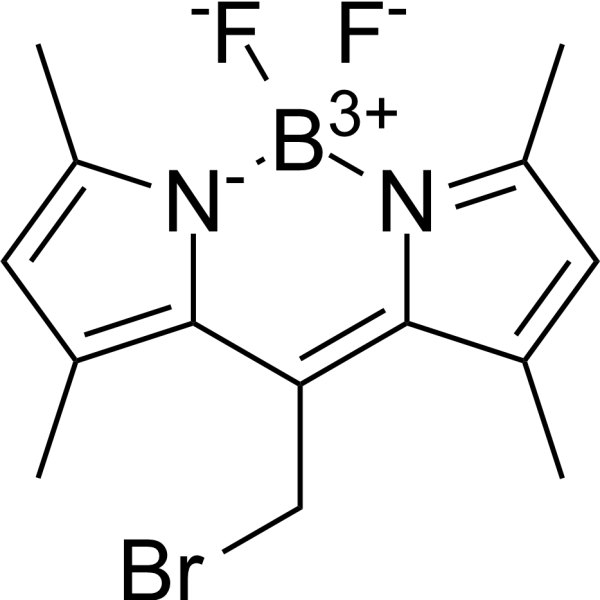
    BODIPY493/503 methyl bromide is a BODIPY dye. BODIPY dye is a small molecule dye with strong ultraviolet absorption ability, its fluorescence peak is relatively sharp, and the quantum yield is high. They are relatively insensitive to the polarity and pH of the environment and are relatively stable under different physiological conditions. Due to its structural asymmetry, BODIPY derives a variety of structural products. BODIPY lipid droplet dyes can well pass through the cell membrane into the cell, and localize the neutral lipids in the cell to specifically stain the lipid droplets, which can be used for labeling of live cells and fixed cells . Maximum excitation/emission wavelength: 493/503 nm .
    BODIPY 493/503 methyl bromide
  • HY-D1237
    BODIPY 505/515
    2 Publications Verification

    Fluorescent Dye Metabolic Disease
    BODIPY505/515 is a BODIPY dye. BODIPY dye is a small molecule dye with strong ultraviolet absorption ability, its fluorescence peak is relatively sharp, and the quantum yield is high. They are relatively insensitive to the polarity and pH of the environment and are relatively stable under different physiological conditions. Due to its structural asymmetry, BODIPY derives a variety of structural products. BODIPY lipid droplet dyes can well pass through the cell membrane into the cell, and localize the neutral lipids in the cell to specifically stain the lipid droplets, which can be used for labeling of live cells and fixed cells . Maximum excitation/emission wavelength: 505/515 nm .
    BODIPY 505/515
  • HY-43520

    Fluorescent Dye Others
    BODIPY-FL is a green fluorescent dye that can be used to label probes or primers. BODIPY-FL fluorescence can be quenched after interacting with uniquely positioned guanine, making it useful for quantifying specific DNA or RNA molecules. The maximum absorption wavelength of BODIPY-FL is 505 nm, and the maximum emission wavelength is 513 nm .
    BODIPY-FL
  • HY-138226
    BODIPY 558/568 C12
    4 Publications Verification

    Fluorescent Dye Others
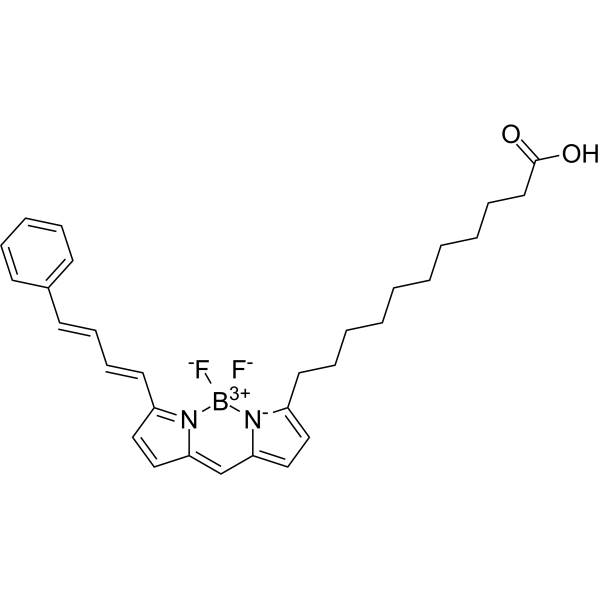
    BODIPY 558/568 C12 is a BODIPY dye. BODIPY dye is a small molecule dye with strong ultraviolet absorption ability, its fluorescence peak is relatively sharp, and the quantum yield is high. They are relatively insensitive to the polarity and pH of the environment and are relatively stable under different physiological conditions. Due to its structural asymmetry, BODIPY derives a variety of structural products. BODIPY lipid droplet dyes can well pass through the cell membrane into the cell, and localize the neutral lipids in the cell to specifically stain the lipid droplets, which can be used for labeling of live cells and fixed cells . Maximum excitation/emission wavelength: 558/568 nm .
    BODIPY 558/568 C12
  • HY-D1736

    Fluorescent Dye Others
    BODIPY FL-C16 is a BODIPY-labeled analog of Palmitic acid (HY-N0830), which serves as a fluorescent lipid tracer. BODIPY FL-C16 also acts as a ligand for liver fatty acid-binding protein (L-FABP) and intestinal fatty acid-binding protein (I-FABP) , with Kd values of 270 nM and 330 nM, respectively. BODIPY FL-C16 is rapidly taken up by cells, and after metabolic conversion to phospholipids, it is incorporated into the membrane structures of intracellular organelles and extracellular vesicles .
    BODIPY FL-C16
  • HY-DY1022

    Ferroptosis Fluorescent Dye Metabolic Disease Inflammation/Immunology Cancer
    BODIPY 581/591 C11 (solution) is a BODIPY borofluoroprene derivative with good light stability and low fluorescence artifacts. BODIPY 581/591 C11 can be used for study lipid peroxidation and antioxidant properties in living cells, or detect ferroptosis by reaction with hydroxyl radicals. BODIPY 581/591 C11 is emitted at 591 nm (reduced prototype) , or redshifted to 510 nm (oxidized type). The excitation wavelengths were 581 nm (reduced prototype) and 500 nm (oxidized type) .
    Solvent and concentration: DMSO: 2 mM
    BODIPY 581/591 C11 (solution)
  • HY-D1118
    BODIPY 576/589
    1 Publications Verification

    Fluorescent Dye Others
    BODIPY 576/589 is a long wavelength biological labeled dye contains a free COOH-group (Em/Ex = 589/576 nm) .
    BODIPY 576/589
  • HY-D1612

    Fluorescent Dye Others
    The Golgi apparatus is composed of flattened vesicles superimposed on each other by unit membranes. The flattened vesicles are round with expanded and perforated edges. The Golgi fluorescent probe is a BODIPY-labeled ceramide derivative, the synthesis of which occurs in the endoplasmic reticulum and can then be transported to the Golgi via ceramide transport protein (CERT) or vesicular translocation, allowing specific labeling of the dye . BODIPY Fl C5-Ceramide is a Golgi-specific green fluorescent dye, which can visualise individual cells . Ex/Em= 505 nm/512 nm.
    BODIPY FL C5-Ceramide
  • HY-110213

    Fluorescent Dye Others
    BODIPY 630/650X is a red fluorescent dye that targets amine groups. BODIPY 630/650X displays excitation/emission maxima of 630/650 nm, respectively. BODIPY 630/650X can be used to covalently label proteins, antibodies, or other amine-containing biomolecules for detection and imaging .
    BODIPY 630/650X
  • HY-DY1004

    Fluorescent Dye Others
    BODIPY 493/503 (solution) is a BODIPY dye. BODIPY dye is a small molecule dye with strong ultraviolet absorption ability, its fluorescence peak is relatively sharp, and the quantum yield is high. They are relatively insensitive to the polarity and pH of the environment and are relatively stable under different physiological conditions. Due to its structural asymmetry, BODIPY derives a variety of structural products. BODIPY lipid droplet dyes can well pass through the cell membrane into the cell, and localize the neutral lipids in the cell to specifically stain the lipid droplets, which can be used for labeling of live cells and fixed cells . Maximum excitation/emission wavelength: 493/503 nm.
    Solvent and concentration: DMSO: 5 mM.
    BODIPY 493/503 (solution)
  • HY-N0729F

    Fluorescent Dye Metabolic Disease
    BODIPY-Linoleic acid is a conjugate of the BODIPY fluorophore and Linoleic acid (HY-N0729) (C18:2) and is a lipid metabolism probe.
    BODIPY-Linoleic acid
  • HY-D1553

    Fluorescent Dye Others
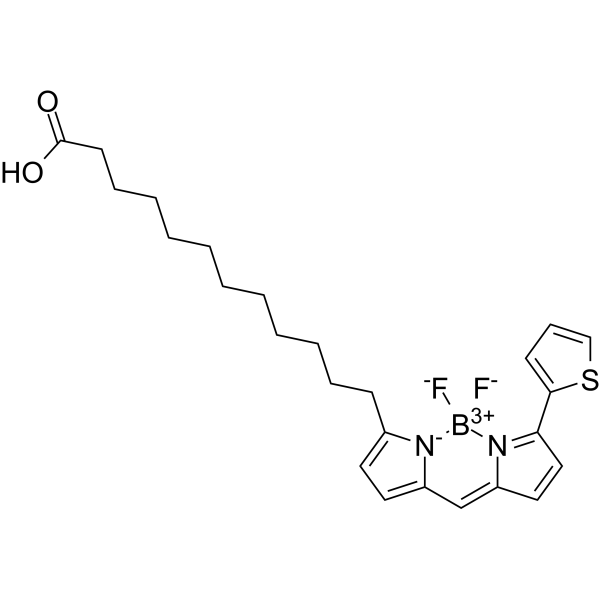
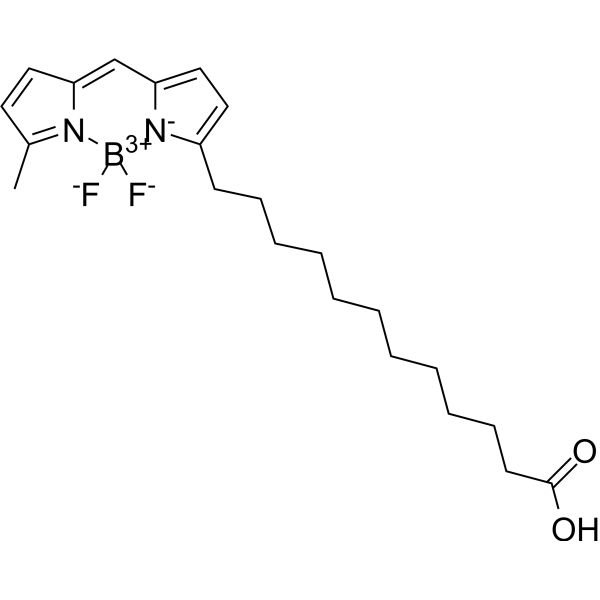
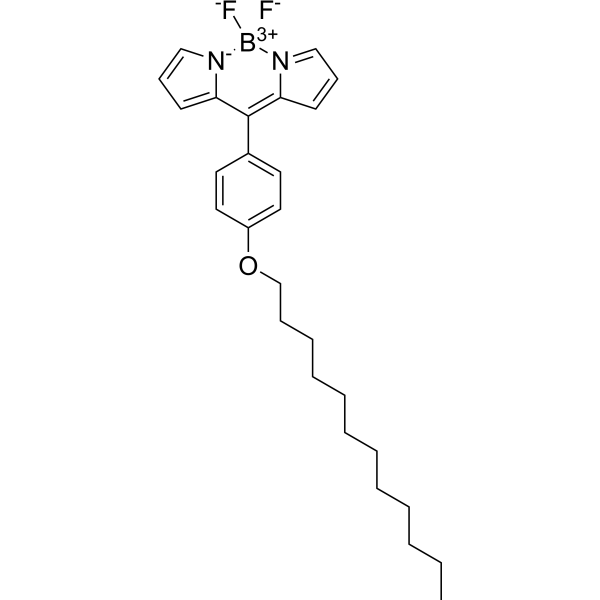
    BODIPY-C12 is a boron-dipyrromethene derivative containing a lipophilic tail (excitation 490 nm). BODIPY-C12 is a hydrophobic molecular and sensitivity to the surrounding environment and can be used to quantify viscosity, critical micelle concentration, and critical micelle temperature .
    BODIPY-C12
  • HY-D1570

    Fluorescent Dye Others
    BODIPYFL C12 is a BODIPY dye. BODIPY dye is a small molecule dye with strong ultraviolet absorption ability, its fluorescence peak is relatively sharp, and the quantum yield is high. They are relatively insensitive to the polarity and pH of the environment and are relatively stable under different physiological conditions. Due to its structural asymmetry, BODIPY derives a variety of structural products. BODIPY lipid droplet dyes can well pass through the cell membrane into the cell, and localize the neutral lipids in the cell to specifically stain the lipid droplets, which can be used for labeling of live cells and fixed cells . Maximum excitation/emission wavelength: 480/508 nm .
    BODIPY FL C12
  • HY-D1605
    BODIPY FL L-Cystine
    1 Publications Verification

    Fluorescent Dye Others
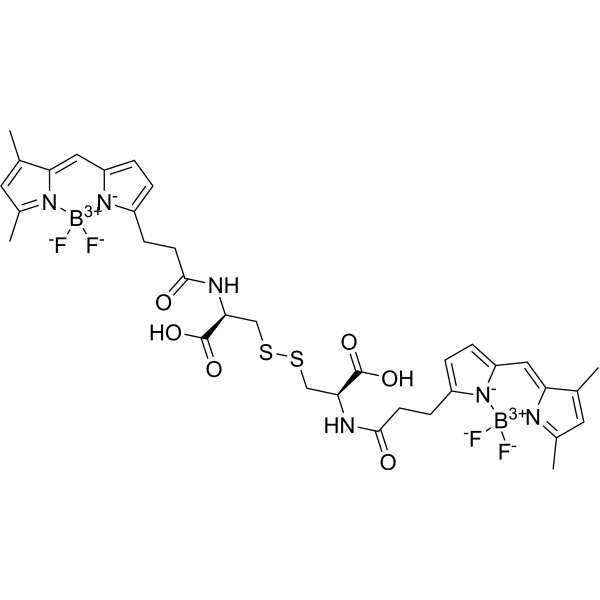
    BODIPY FL L-Cystine is a thiol-reactive, green-fluorescent dye. BODIPY FL L-Cystine can be the labeling of membrane proteins, proteins with hydrophobic binding sites, or hydrophobic ligands. (λex=504 nm, λem=511 nm) .
    BODIPY FL L-Cystine
  • HY-D1617
    BODIPY 500/510 C1, C12
    2 Publications Verification

    Fluorescent Dye Others
    BODIPY 500/510 C1, C12 is a BODIPY dye. BODIPY dye is a small molecule dye with strong ultraviolet absorption ability, its fluorescence peak is relatively sharp, and the quantum yield is high. They are relatively insensitive to the polarity and pH of the environment and are relatively stable under different physiological conditions. Due to its structural asymmetry, BODIPY derives a variety of structural products. BODIPY lipid droplet dyes can well pass through the cell membrane into the cell, and localize the neutral lipids in the cell to specifically stain the lipid droplets, which can be used for labeling of live cells and fixed cells . Maximum excitation/emission wavelength: 500/510 nm . Protect from light, stored at -20°C.
    BODIPY 500/510 C1, C12
  • HY-D1581

    Fluorescent Dye Others
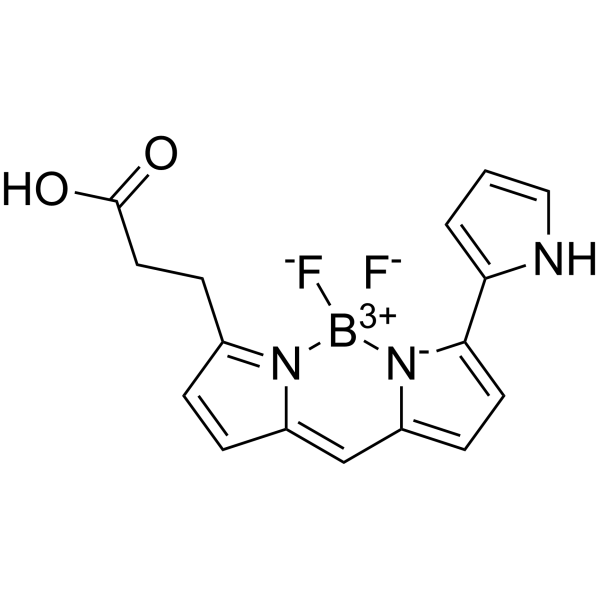
    BODIPY 505/515-8-C3-COOH is a green fluorescing derivative, as a fluorescent dye for imaging lipid droplets in nannochloropsis. BODIPY 505/515-8-C3-COOH can be used for the research of flow cytometric high-throughput screening and cell sorting .
    BODIPY 505/515-8-C3-COOH
  • HY-115691

    Styrene-bodipy; Styrene-Conjugated bodipy

    Fluorescent Dye Others
    STY-BODIPY (Styrene-BODIPY; Styrene-Conjugated BODIPY) is a styrene-conjugated fluorescent probe used to measure the activity of radical-trapping antioxidants (RTAs)> .
    STY-BODIPY
  • HY-168375

    Fluorescent Dye Metabolic Disease
    BODIPY-Palmitate is a fluorescently labeled palmitic acid (HY-N0830), with excitation/emission maxima at 488/508 nm. BODIPY-Palmitate can be used to detect fatty acid uptake and metabolism .
    BODIPY-Palmitate
  • HY-D1610

    Fluorescent Dye Others
    BODIPY FL C5 is a green fluorescent fatty acid. BODIPY FL C5 can be used as a precursor for the synthesis of various fluorescent phospholipids. BODIPY FL C5 is relatively insensitive to the environment and fluoresces in both water-soluble and lipid environments .
    BODIPY FL C5
  • HY-D1602

    Fluorescent Dye Others
    BODIPY FL DHPE is a green-fluorescent phospholipid probe. BODIPY FL DHPE labels lipid 1,2-dihexadecanoyl-sn-glycero-phosphoethanolamine (DHPE), labeled liposomes can be internalized by membrane fusion. BODIPY FL DHPE can be used for investigations of membrane surface and membrane fusion. (λex=505 nm, λem=511 nm) .
    BODIPY FL-DHPE
  • HY-152231

    Fluorescent Dye Ligands for E3 Ligase Others
    BODIPY FL thalidomide is a high-affinity and selective human cereblon (CRBN)-targeting fluorescent probe with a Kd of 3.6 nM. BODIPY FL thalidomide enables use as a probe in time-resolved fluorescence resonance energy transfer (TR-FRET) binding assays for cereblon ligands. BODIPY FL thalidomide supports development of highly sensitive, selective, stable cereblon TR-FRET binding assays (Ex/Em = 502/510 nm) .
    BODIPY FL thalidomide
  • HY-D1459

    Fluorescent Dye Metabolic Disease
    BODIPY 665/676 is a lipophilic radical-sensitive fluorescent probe that can be used to study radical-driven lipid autoxidation (Ex/Em=665/676 nm) .
    BODIPY 665/676
  • HY-D1588

    Fluorescent Dye Others
    BODIPY-X-Alkyne is an alkyne-modified BODIPY derivative (Ex=526 nm, Em=540 nm). BODIPY-X-Alkyne can react with azides via a copper-catalyzed click reaction .
    BODIPY-X-Alkyne
  • HY-D1590

    Fluorescent Dye Others
    ODIPY Green 8-P2M is a novel thiol-reactive fluorescence probe based on the BODIPY fluorophore, the fluorescence is strongly quenched by d-PeT and then can be restored after reaction with thiol, resulting in an extremely high signal-to-noise ratio. ODIPY Green 8-P2M can be useful for detecting extremely low concentrations of protein in the gel after SDS-PAGE .
    BODIPY Green 8-P2M
  • HY-D1691

    Fluorescent Dye Others
    BODIPY-581/591 NHS ester is a bright, red fluorescent dye (excitation: 581 nm; emission: 591 nm). BODIPY-581/591 NHS ester can be used for the labeling of amine containing biomolecules .
    BODIPY-581/591 NHS ester
  • HY-D1604

    Fluorescent Dye Others
    BODIPY FL Ethylamine is a fluorescent dye that reversibly reacts with aldehyde/ketone to yield a Schiff base. BODIPY FL Ethylamine can be reduced to form a stable amine derviative using sodium borohydride or sodium cyanoborohydride .
    BODIPY FL Ethylamine
  • HY-114354

    BOD FL alkyne

    Fluorescent Dye Inflammation/Immunology
    BODIPY (BOD) FL alkyne is an alkyne-containing BODIPY fluorophore derivative. BODIPY FL alkyne is a bioorthogonal labeling reagent with low toxicity and extremely low non-specific reactivity, and it is widely used in fluorescent bioimaging. BODIPY FL alkyne specifically labels azide groups on intracellular glycoconjugates mainly via strain-promoted azide-alkyne cycloaddition (SPAAC), or mediates site-specific conjugation with proteins such as IL-33, and supports positive cross-linking with other probes (e.g., DBCO-SCy5) for dual labeling. With the advantages of high specificity and low background interference, BODIPY FL alkyne can be used in the research of related diseases such as asthma, atopic dermatitis and inflammatory bowel disease .
    BODIPY FL alkyne
  • HY-114353

    Fluorescent Dye Others
    BODIPY FL azide is a BDP dye connector containing an azide group capable of Click Chemistry. The green fluorophore is representative of the borodipyrromethane class of fluorescent dyes and has a high quantum yield in aqueous environments, high stability to photobleaching and is compatible with FAM fluorescence measurement instruments .
    BODIPY FL azide
  • HY-D1735

    Golgi-Red Tracke

    Fluorescent Dye Others
    The Golgi apparatus is composed of flattened vesicles superimposed on each other by unit membranes. The flattened vesicles are round with expanded and perforated edges. The Golgi fluorescent probe is a BODIPY-labeled ceramide derivative, the synthesis of which occurs in the endoplasmic reticulum and can then be transported to the Golgi via ceramide transport protein (CERT) or vesicular translocation, allowing specific labeling of the dye. BODIPY TR Ceramide (Golgi-Red Tracke) is a Golgi-specific fluorescent dye, which can visualise individual cells . Ex/Em=589 nm/616 nm.
    BODIPY TR Ceramide
  • HY-D1603

    Fluorescent Dye Others
    BODIPY FL-EDA is a widely used fluorescent dye for quantitative analysis of nucleotides. BODIPY FL-EDA is an aliphatic amine analog that can react with aldehydes and ketones. BODIPY FL-EDA can be used to detect both modified and unmodified deoxynucleotides and to determine DNA damage and genomic DNA methylation through capillary electrophoresis with laser-induced fluorescence (CE-LIF). Additionally, it can be used for quantifying intracellular ATP levels. The excitation wavelength is 500 nm, and the emission wavelength is 510 nm .
    BODIPY FL-EDA
  • HY-D1299

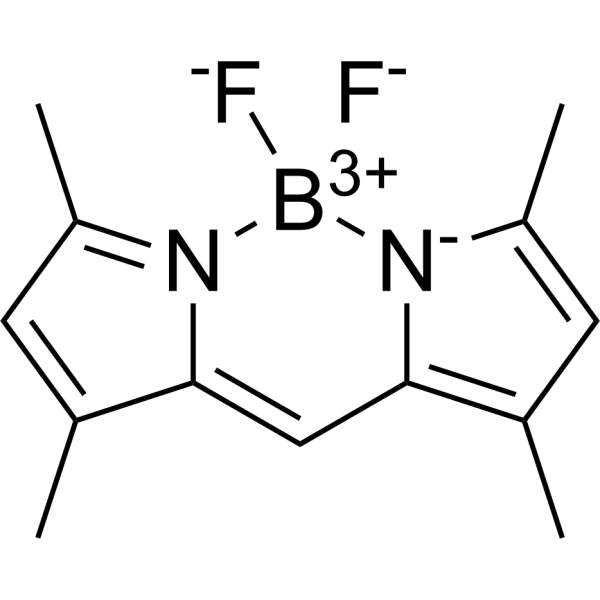
    CF3-substituted Tetramethyl bodipy

    Fluorescent Dye Cancer
    meso-CF3-BODIPY 2 (CF3-substituted Tetramethyl BODIPY) is a fluorescent dye with the absorption wavelength (λabs) of 553 nm and emission wavelength (λem) of 622 nm. meso-CF3-BODIPY 2 can be used in labeling reagents and photodynamic therapy .
    meso-CF3-BODIPY 2
  • HY-139005

    BAAA-DA

    Fluorescent Dye Others
    BODIPY aminoacetaldehyde diethyl acetal is a stable precursor to BODIPY-aminoacetaldehyde and can be converted into BODIPY-aminoacetaldehyde under acidic conditions. BODIPY-aminoacetaldehyde is a fluorescent substrate for aldehyde dehydrogenase (ALDH) .
    BODIPY aminoacetaldehyde diethyl acetal
  • HY-D2415

    Fluorescent Dye Others
    BODIPY-FL staurosporine (Compound 8a) is a fluorescence probe based on staurosporine, exhibiting high specificity towards tyrosine kinases (TK) and tyrosine kinase-like (TKL) family kinases. BODIPY-FL staurosporine has the potential to develop binding assays for kinases that are not recommended for use with Kinase Tracer 236, such as PIM3, CDC42BPG, MAP2K7, TXK, and SIK3. BODIPY-FL staurosporine can be a powerful tool for analyzing kinase selectivity in kinase drug discovery .
    BODIPY-FL staurosporine
  • HY-114351

    Fluorescent Dye Others
    BODIPY FL Hydrazide is a green-fluorescent dye, BODIPY FL Hydrazide is reactive with aldehyde/ketone on polysaccharides and glycoproteins, yielding a reversible Schiff base product that can be transformed to a stable linkage using a reducing agent like sodium borohydride or sodium cyanoborohydride. (λex=495 nm, λem=516 nm) .
    BODIPY FL hydrazide
  • HY-D1606

    Adrenergic Receptor Metabolic Disease
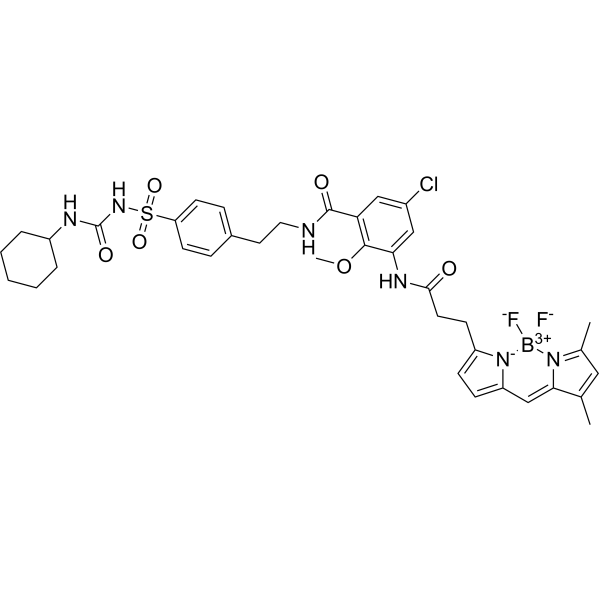
    BODIPY FL prazosin is a fluorescent α1-adrenergic antagonist with Ki values of 14.5, 43.3 nM for α1a-AR and α1b-AR, respectively. BODIPY FL prazosin also is a fluorescent ligand with the excitation and emission wavelengths are 485 and 535 nm, respectively. BODIPY FL prazosin can be used for study the differences in the subcellular localization of α1-adrenoceptor subtypes .
    BODIPY FL prazosin
  • HY-DY1061

    Fluorescent Dye Others
    BODIPY 558/568 C12 (solution) is a BODIPY dye. BODIPY dye is a small molecule dye with strong ultraviolet absorption ability, its fluorescence peak is relatively sharp, and the quantum yield is high. They are relatively insensitive to the polarity and pH of the environment and are relatively stable under different physiological conditions. Due to its structural asymmetry, BODIPY derives a variety of structural products. BODIPY lipid droplet dyes can well pass through the cell membrane into the cell, and localize the neutral lipids in the cell to specifically stain the lipid droplets, which can be used for labeling of live cells and fixed cells . Maximum excitation/emission wavelength: 558/568 nm .
    Solvent and concentration: DMSO: 2 mM
    BODIPY 558/568 C12 (solution)
  • HY-D1262

    Thiol-green 2

    Fluorescent Dye Others
    BODIPY-TS (Thiol-green 2) is a fast response and thiol-specific turn-on probe. BODIPY-TS utilizes the thiosulfonate scaffold as a thiol recognition unit. BODIPY-TS has low toxicity, and features high selectivity, low detection limit, and quantitative reaction to thiols . Ex: 490 nM; Em: 515 nM.
    BODIPY-TS
  • HY-D2413

    bodipy FL PEG4-VH032

    Fluorescent Dye Others
    BODIPY FL VH032 is a high-affinity VHL fluorescent probe with a Kd value of 3.01 nM. BODIPY FL VH032 consists of von Hippel-Lindau (VHL) ligand VH032 (HY-120217) and BODIPY FL (HY-43520). BODIPY FL VH032 can be used for time-resolved fluorescence resonance energy transfer (TR-FRET) detection for high-throughput identification and characterization of VHL ligands with maximum excitation emission wavelength: 504/520 nm .
    BODIPY FL VH032
  • HY-D2083
    BODIPY 540 (purity 99%)
    1 Publications Verification

    Fluorescent Dye Metabolic Disease
    BODIPY 540 (purity>98%) is a BODIPY dye.BODIPY dye is a small molecule dye with strong UV absorption ability.Its fluorescence peak is relatively sharp, its quantum yield is high, and it is relatively insensitive to the polarity and pH value of the environment.BODIPY 540 (purity>98%) has a purity higher than 98% and is suitable for cell experiments (Ex/Em = 540/580 nm) .
    BODIPY 540 (purity 99%)
  • HY-DY1029

    Fluorescent Dye Others
    BODIPY-cholesterol (solution) is an intrinsically lipophilic, and cell-permeable analog of cholesterol with a fluorescent BODIPY group. BODIPY-cholesterol can be used to monitor sterol uptake and inter-organelle sterol flux in cells. (Excitation/Emission: 505/515 nm) .
    Solvent and concentration: DMSO: 1 mM
    BODIPY-Cholesterol (solution)
  • HY-D1704

    GABA Receptor Neurological Disease
    Bodipy TMR-X muscimol is a Bodipy labeled Muscimol (HY-N2313) (Ex=543 nm, Em=572 nm). Muscimol is a GABAA agonist. Bodipy TMR-X muscimol can be used for imaging the spread of reversible brain inactivations .
    Bodipy TMR-X muscimol
  • HY-137115

    Smo Cancer
    BODIPY-Cyclopamine is a fluorescently labeled ligand for the Smoothened (SMO) receptor. The activation of SMO is regulated by Patch protein, and over-activated SMO signaling pathways are associated with tumorigenesis. The NanoBRET (Nanofluorescein bioluminescence resonance energy transfer) technique used in the study can sensitively detect the resonance energy transfer between SMO and BODIPY-Cyclopamine, which can be used for high-throughput screening and kinetic analysis. Studying the binding site of BODIPY-Cyclopamine on SMO can also further explore SMO-targeted drugs .
    BODIPY-Cyclopamine
  • HY-110211

    Fluorescent Dye Others
    BODIPY TMR-X SE is a potent fluorescent dye. BODIPY TMR-X SE can be used to label the primary amines (R-NH2) of proteins, amine-modified oligonucleotides, and other amine-containing molecules. BODIPY TR-X binds to protein or antibody and has bright, orange fluorescent light. (λex=544 nm, λem=570 nm) .
    BODIPY TMR-X SE
  • HY-D1594
    BODIPY TR Cadaverine
    3 Publications Verification

    Fluorescent Dye Others
    BODIPY TR Cadaverine, a cadaverine derivative, is a red fluorescent dye. BODIPY TR Cadaverine can be used in a a highly sensitive and robust fluorescent displacement assay, which binds to native LPS strongly, specifically recognizing lipid A, and is competitively displaced by compounds displaying an affinity for lipid A .
    BODIPY TR Cadaverine
  • HY-W778830

    Drug Metabolite Neurological Disease
    Bodipy C12-ceramide (B12Cer) is a fluorescently tagged form of C12-Ceramide (HY-100353) that displays excitation/emission maxima of 505/540 nm, respectively. Bodipy C12-ceramide is formed when acid sphingomyelinase hydrolyzes BODIPY-C12 sphingomyelin in vitro and has been used to quantify acid sphingomyelinase activity in plasma with Niemann-Pick disease .
    Bodipy C12-ceramide
  • HY-DY1076

    Fluorescent Dye Others
    BODIPY TR Cadaverine (solution) , a cadaverine derivative, is a red fluorescent dye. BODIPY TR Cadaverine can be used in a a highly sensitive and robust fluorescent displacement assay, which binds to native LPS strongly, specifically recognizing lipid A, and is competitively displaced by compounds displaying an affinity for lipid A .
    Solvent and concentration: DMSO: 2 mM
    BODIPY TR Cadaverine (solution)

Inquiry Online

Your information is safe with us. * Required Fields.

Salutation


Country or Region *

Applicant Name *


Organization Name *

Department *


Email Address *


Product Name *

Cat. No.


Requested quantity *

Phone Number *


Remarks

Inquiry Online

Inquiry Information

Product Name:
Cat. No.:
Quantity:
MCE Japan Authorized Agent:

