



Valpromide

Based on 1 Customer Validation
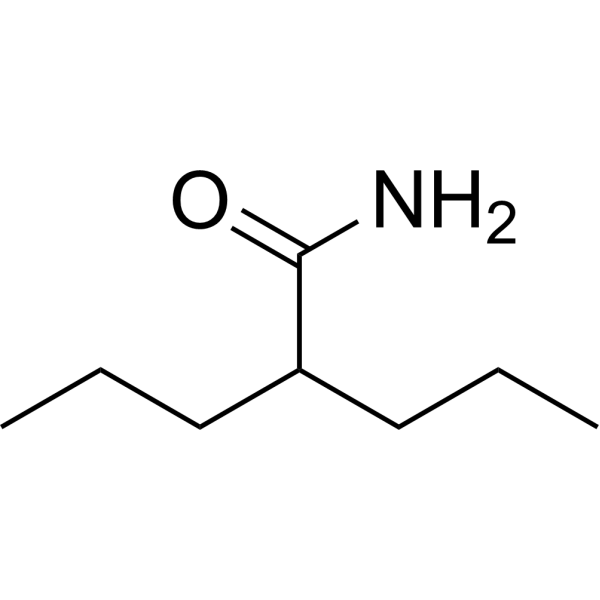
Valpromide is an amide derivative of Valproic acid (HY-10585) and an orally active epoxide hydrolase inhibitor that can cross the blood-brain barrier. Valpromide has antiepileptic, anticonvulsant, and antipsychotic effects. Valpromide also exhibits antiviral activity and can inhibit the reactivation of the EBV lytic cycle.
Nos produits utilisent uniquement pour la recherche. Nous ne vendons pas aux patients.
- Pureté : 99.72%
- CAS No.: 2430-27-5
- Formule: C8H17NO
- Masse moléculaire:143.23
-
Stockage:
Store at room temperature 3 years.
In solvent -80°C, 2 years , -20°C, 1 year

To place orders, for customer services and technical support, please contact: MedChemExpress USA
Tel: 609-228-6898 E-mail: [email protected] [email protected]


-
 Activité biologique
-
Chemical Information
-
Solvant et solubilité
- Protocole
- Pureté et documentation
- Références
-
 Help & FAQs


-
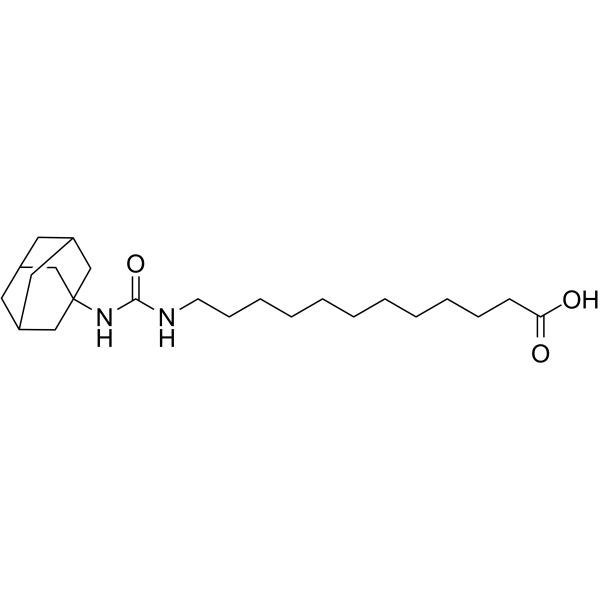
HY-108570
AUDAsEH Inhibitor -
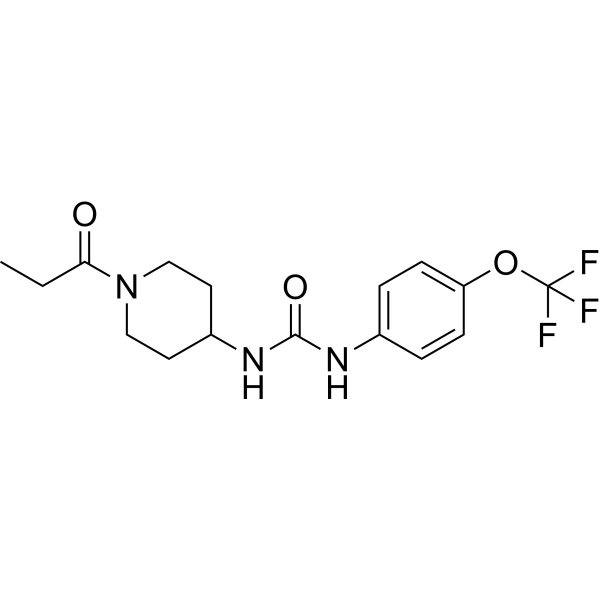
HY-101294
TPPUsEH Inhibitor -
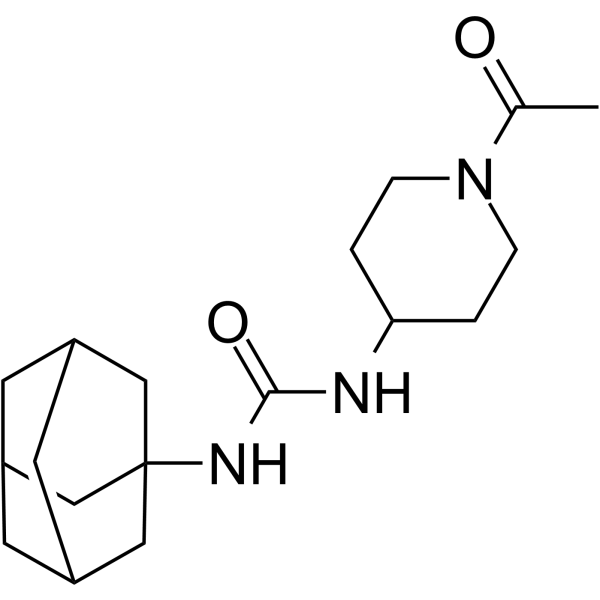
HY-111151
AR-9281s-EH Inhibitor -
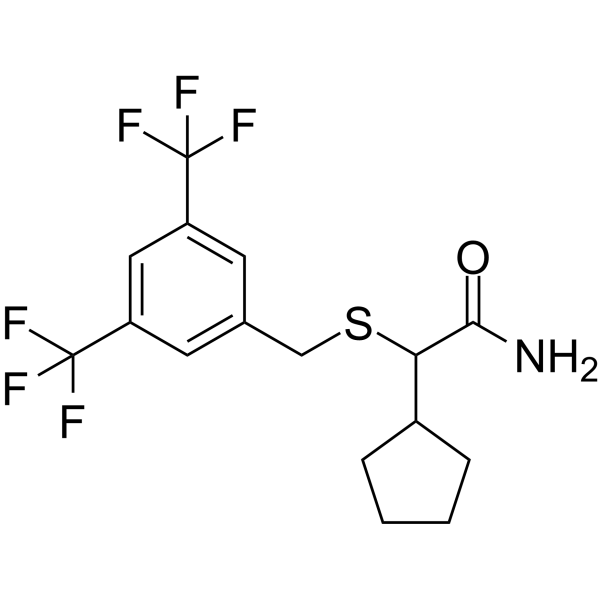
HY-146696
mEH-IN-1mEH Inhibitor -
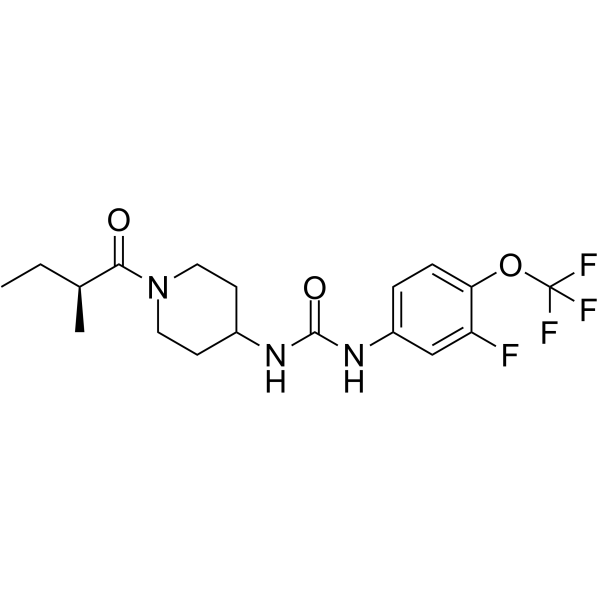
HY-135653
EC5026sEH Inhibitor -
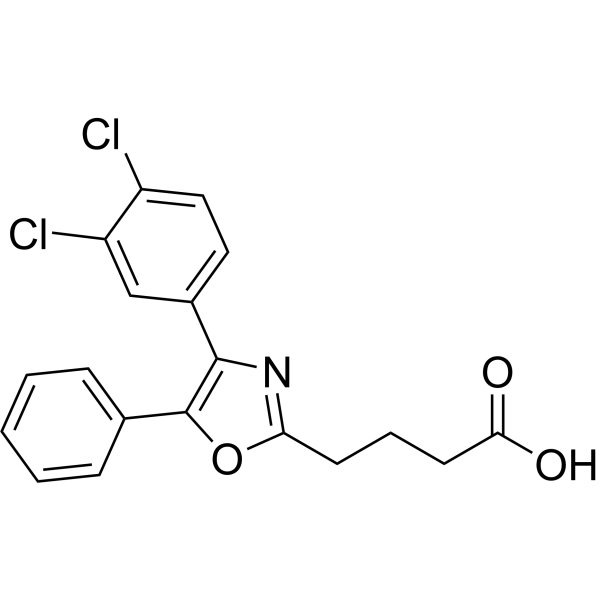
HY-126326
SWE101Epoxide Hydrolase Inhibitor -
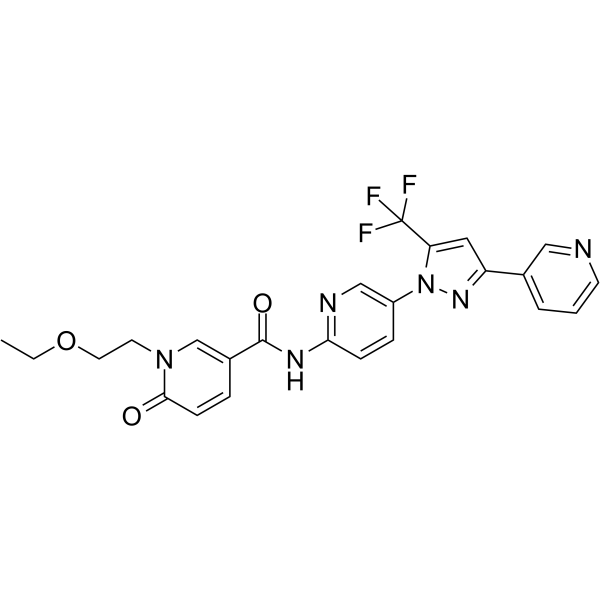
HY-124063
BI-1935sEH Inhibitor -

HY-B2117R
Valpromide (Standard)Standard of Valpromide -
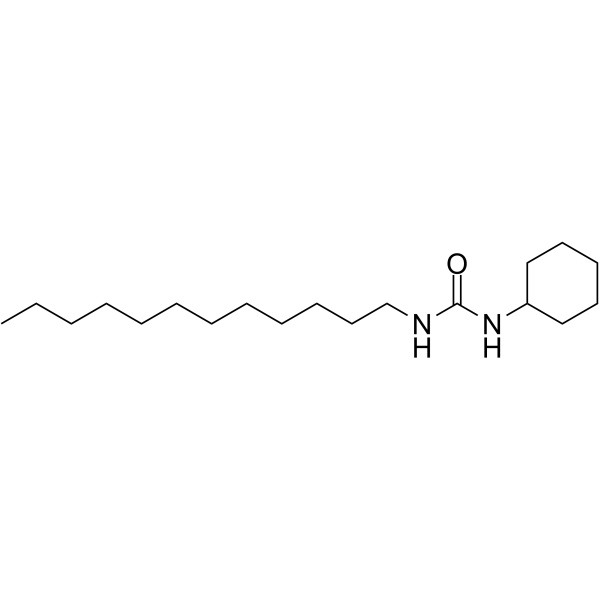
HY-135795
1-Cyclohexyl-3-dodecyl ureasEH Inhibitor -
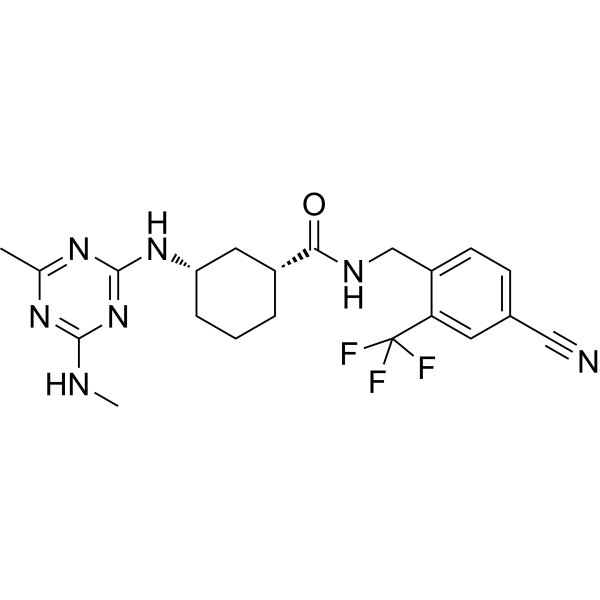
HY-19644
GSK2256294AsEH Inhibitor -
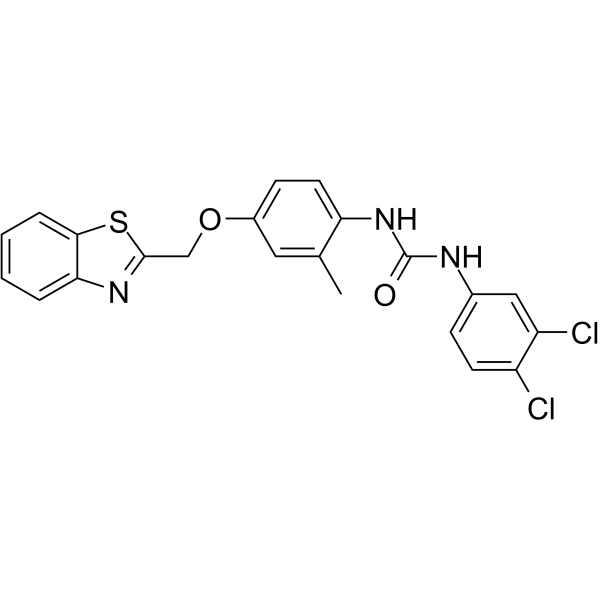
HY-128171
DiflapolinFLAP/sEH Inhibitor -
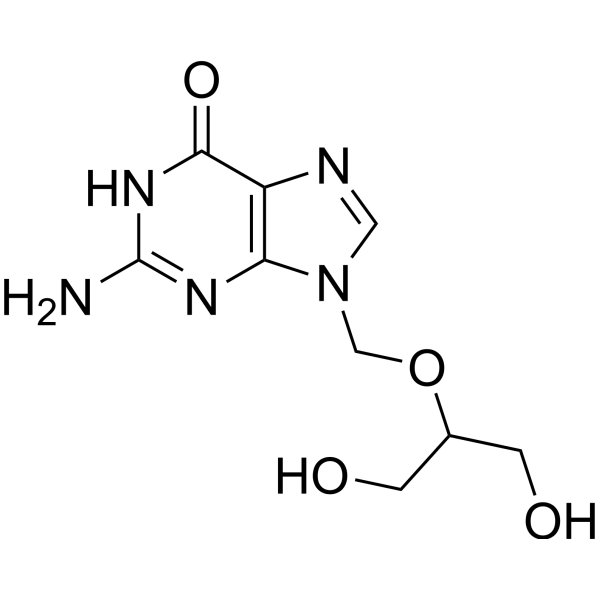
HY-13637
GanciclovirAntiviral Agent


Activité biologique
Description
In Vitro
Valpromide (10 mM; 24-48 h) inhibits the expression of EBV lytic transactivator proteins Zebra, BZLF1, and BRLF1 in EBV-positive HH514-16 cells[1].
Valpromide (10 mM; 18 h) inhibits the expression of BZLF1 and BRLF1 in EBV-infected Raji cells[1].
MedChemExpress (MCE) has not independently confirmed the accuracy of these methods. They are for reference only.
-
Cell Line:EBV-infected Raji cells
-
Concentration:10 mM
-
Incubation Time:18 h
-
Result:Inhibited the mRNA levels of viral immediate-early genes BZLF1 and BRLF1.
In Vivo
MedChemExpress (MCE) has not independently confirmed the accuracy of these methods. They are for reference only.
-
Animal Model:Mice of the NMRI strain[3]
-
Dosage:3 mmol/kg
-
Administration:Subcutaneously injected once on the morning of the 8th day of gestation.
-
Result:Caused the exencephaly rate of 6%, which was significantly higher than that of the control group but much lower than that induced by valproic acid.
Caused the embryolethality rate of 7%, showing no significant difference from the control group.
Had no significant difference of fetal weight compared with the control group.


Chemical Information
-
CAS No. 2430-27-5
-
Appearance Solid
-
Masse moléculaire 143.23
-
Formule C8H17NO
-
Color White to off-white
-
SMILES
CCCC(CCC)C(N)=O
-
Livraison
Room temperature in continental US; may vary elsewhere.
-
Stockage
Store at room temperature 3 years
In solvent -80°C 2 years -20°C 1 year


Solvant et solubilité
In Vitro:
DMSO : ≥ 50 mg/mL (349.09 mM; Hygroscopic DMSO has a significant impact on the solubility of product, please use newly opened DMSO)
* "≥" means soluble, but saturation unknown.
Please refer to the solubility information to select the appropriate solvent. Once prepared, please aliquot and store the solution to prevent product inactivation from repeated freeze-thaw cycles.
Storage method and period of stock solution: -80°C, 2 years; -20°C, 1 year. When stored at -80°C, please use it within 2 years. When stored at -20°C, please use it within 1 year.
Please refer to the solubility information to select the appropriate solvent. Once prepared, please aliquot and store the solution to prevent product inactivation from repeated freeze-thaw cycles.
Storage method and period of stock solution: -80°C, 2 years; -20°C, 1 year. When stored at -80°C, please use it within 2 years. When stored at -20°C, please use it within 1 year.
Concentration (start) × Volume (start) = Concentration (final) × Volume (final)
In Vivo:
Select the appropriate dissolution method based on your experimental animal and administration route.
- For the following dissolution methods, please ensure to first prepare a clear stock solution using an In Vitro approach and then sequentially add co-solvents:
- To ensure reliable experimental results, the clarified stock solution can be appropriately stored based on storage conditions. As for the working solution for In Vivo experiments, it is recommended to prepare freshly and use it on the same day.
- The percentages shown for the solvents indicate their volumetric ratio in the final prepared solution. If precipitation or phase separation occurs during preparation, heat and/or sonication can be used to aid dissolution.
Add each solvent one by one: 10% DMSO 40% PEG300 5% Tween-80 45% Saline
Solubility: ≥ 2.5 mg/mL (17.45 mM); Clear solution
This protocol yields a clear solution of ≥ 2.5 mg/mL (saturation unknown).
Taking 1 mL working solution as an example, add 100 μL DMSO stock solution (25.0 mg/mL) to 400 μL PEG300, and mix evenly; then add 50 μL Tween-80 and mix evenly; then add 450 μL Saline to adjust the volume to 1 mL.
Preparation of Saline: Dissolve 0.9 g sodium chloride in ddH₂O and dilute to 100 mL to obtain a clear Saline solution.
Add each solvent one by one: 10% DMSO 90% (20% SBE-β-CD in Saline)
Solubility: ≥ 2.5 mg/mL (17.45 mM); Clear solution
This protocol yields a clear solution of ≥ 2.5 mg/mL (saturation unknown).
Taking 1 mL working solution as an example, add 100 μL DMSO stock solution (25.0 mg/mL) to 900 μL 20% SBE-β-CD in Saline, and mix evenly.
Preparation of 20% SBE-β-CD in Saline (4°C, storage for one week): 2 g SBE-β-CD powder is dissolved in 10 mL Saline, completely dissolve until clear.
In Vivo Dissolution Calculator
Please enter the basic information of animal experiments:
-
-
-
-
Recommended: Prepare an additional quantity of animals to account for potential losses during experiments.
Please enter your animal formula composition:
-
%DMSO +
Recommended: Keep the proportion of DMSO in working solution below 2% if your animal is weak.
-
%+
-
+%Tween-80 + +
-
%Saline +
The co-solvents required include: DMSO, . All of co-solvents are available by MedChemExpress (MCE). , Tween 80. All of co-solvents are available by MedChemExpress (MCE).
Working solution concentration: 0.22 mg/mL
Method for preparing stock solution: mg drug dissolved in μL DMSO. Stock solution concentration: mg/mL.
1. Take μL DMSO stock solution;
2. Add μL .
μL , mix evenly;
3. Then add μL Tween 80, mix evenly;
4. Then add μL
Please ensure that the stock solution in the first step is dissolved to a clear state, and add co-solvents in sequence. You can use ultrasonic heating (ultrasonic cleaner, recommended frequency 20-40 kHz), vortexing, etc. to assist dissolution.


Pureté et documentation
-
Fiche technique (273 KB)
-
SDS (393 KB)
- English - EN (393 KB)
- Français - FR (393 KB)
- Deutsch - DE (393 KB)
- Norwegian - NO (393 KB)
- Español - ES (393 KB)
- Swedish - SV (393 KB)
- Italian - IT (393 KB)
- Korean - KR (393 KB)
- Portuguese - PT (393 KB)
-
Instruction de manipulation (2659 KB)
Références
[1]. Gorres KL, et al. Valpromide Inhibits Lytic Cycle Reactivation of Epstein-Barr Virus. MBio. 2016 Mar 1;7(2):e00113. [Content Brief]
[2]. Pacifici GM, et al. Valpromide inhibits human epoxide hydrolase. Br J Clin Pharmacol. 1986 Sep;22(3):269-74. [Content Brief]
[3]. Radatz M, et al. Valnoctamide, valpromide and valnoctic acid are much less teratogenic in mice than valproic acid. Epilepsy Res. 1998 Mar;30(1):41-8. [Content Brief]


Complete Stock Solution Preparation Table
Please refer to the solubility information to select the appropriate solvent. Once prepared, please aliquot and store the solution to prevent product inactivation from repeated freeze-thaw cycles.
Storage method and period of stock solution: -80°C, 2 years; -20°C, 1 year. When stored at -80°C, please use it within 2 years. When stored at -20°C, please use it within 1 year.
| Optional Solvent | Concentration Solvent Mass | 1 mg | 5 mg | 10 mg | 25 mg |
|---|---|---|---|---|---|
| DMSO | 1 mM | 6.9818 mL | 34.9089 mL | 69.8178 mL | 174.5444 mL |
| 5 mM | 1.3964 mL | 6.9818 mL | 13.9636 mL | 34.9089 mL | |
| 10 mM | 0.6982 mL | 3.4909 mL | 6.9818 mL | 17.4544 mL | |
| 15 mM | 0.4655 mL | 2.3273 mL | 4.6545 mL | 11.6363 mL | |
| 20 mM | 0.3491 mL | 1.7454 mL | 3.4909 mL | 8.7272 mL | |
| 25 mM | 0.2793 mL | 1.3964 mL | 2.7927 mL | 6.9818 mL | |
| 30 mM | 0.2327 mL | 1.1636 mL | 2.3273 mL | 5.8181 mL | |
| 40 mM | 0.1745 mL | 0.8727 mL | 1.7454 mL | 4.3636 mL | |
| 50 mM | 0.1396 mL | 0.6982 mL | 1.3964 mL | 3.4909 mL | |
| 60 mM | 0.1164 mL | 0.5818 mL | 1.1636 mL | 2.9091 mL | |
| 80 mM | 0.0873 mL | 0.4364 mL | 0.8727 mL | 2.1818 mL | |
| 100 mM | 0.0698 mL | 0.3491 mL | 0.6982 mL | 1.7454 mL |


Valpromide Related Classifications
HY-B2117 Related Classifications
 Powered by Bioz