
1. Search Result
Search Result
No matches for "

51026

" within the MedChemExpress (MCE) catalog. Here are the results you might be looking for.

16

Inhibitors & Agonists

1

Inhibitory Antibodies

6

Antibodies

8

Oligonucleotides

Cat. No. Product Name Target Research Areas Chemical Structure
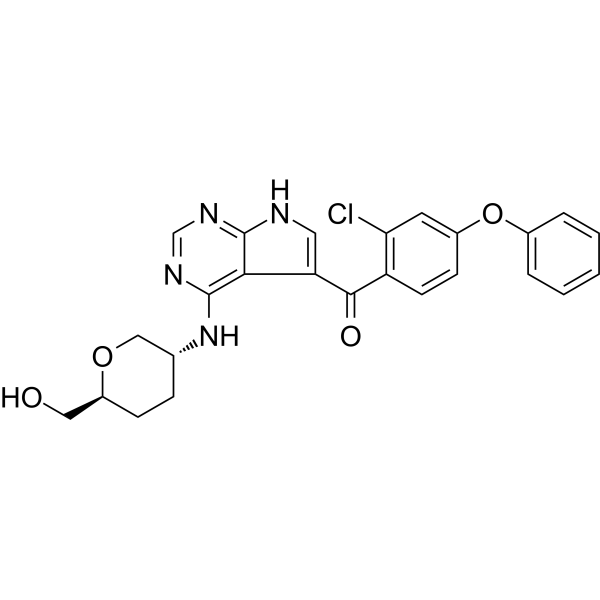
  • HY-112215
    Nemtabrutinib
    4 Publications Verification

    ARQ-531; MK-1026

    Btk Inflammation/Immunology Cancer
    Nemtabrutinib (ARQ 531) is a reversible non-covalent and orally active inhibitor of Bruton’s Tyrosine Kinase (BTK), with IC50s of 0.85 nM and 0.39 nM for WT-BTK and C481S-BTK, respectively.
    Nemtabrutinib
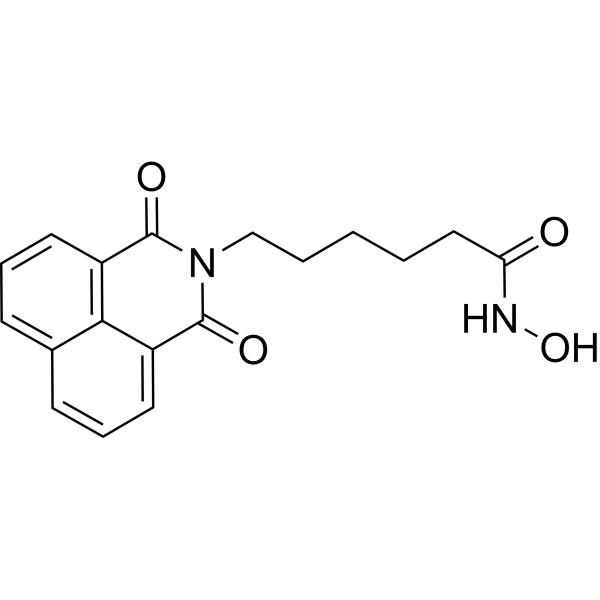
  • HY-15489
    Scriptaid
    4 Publications Verification

    Scriptide; GCK1026

    HDAC Autophagy Apoptosis Influenza Virus Cancer
    Scriptaid is a potent histone deacetylase (HDAC) inhibitor, used in cancer research. Scriptaid is also a sensitizer to antivirals and has potential for epstein-barr virus (EBV)-associated lymphomas treatment.
    Scriptaid
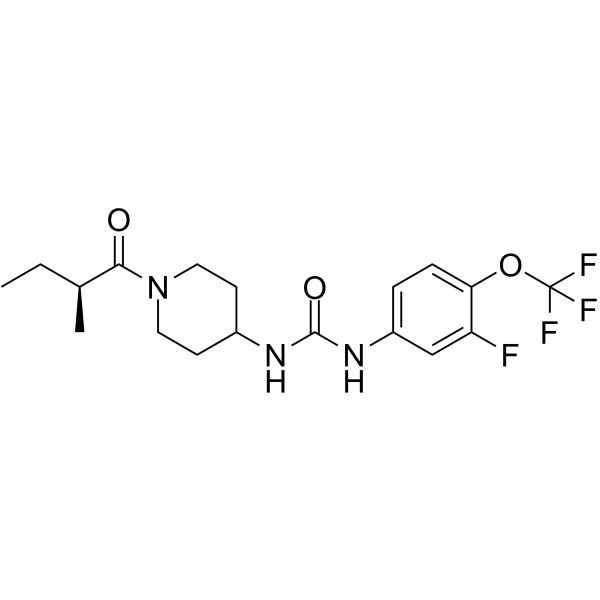
  • HY-135653
    EC5026
    1 Publications Verification

    BPN-19186

    Epoxide Hydrolase Neurological Disease
    EC5026 (BPN-19186) is a first-in-class, non-opioid and orally active soluble Epoxide Hydrolase (sEH) inhibitor. EC5026 shows efficacy for inflammatory and neuropathic pain .
    EC5026
  • HY-P99835

    MABT 5102A; RG 7412

    Amyloid-β Neurological Disease
    Crenezumab (MABT 5102A; RG 7412) is a fully humanized anti-Aβ monoclonal antibody that binds multiple forms of Aβ, such as soluble, oligomeric and fibrillar, for use in Alzheimer's disease research .
    Crenezumab
  • HY-121242

    VEL-5026

    Photosystem II Others
    Buthidazole is a selective herbicide for weed control in corn. Buthidazole inhibits photosynthetic electron transport at two distinct sites in the photosynthetic electron transport chain. The major site of inhibition was on the reducing side of photosystem II. Another site of electron transport inhibition is on the oxidizing side of photosystem II. Buthidazole inhibits corn photosynthesis and prevents starch accumulation in bundle sheath chloroplasts and some ultrastructural disruption of mesophyl chloroplasts of corn plants .
    Buthidazole
  • HY-123369

    CDK Apoptosis Cancer
    BMI-1026 is a cyclin-dependent kinase 1 (Cdk1) inhibitor with IC50 of 2.3 nM. BMI-1026 induces apoptosis by arresting the G2-M phase .
    BMI-1026
  • HY-R03271

    MicroRNA Cancer
    mmu-miR-5126 mimics are small, chemically synthesized double-stranded RNAs that mimic endogenous miRNAs and enable miRNA functional analysis by up-regulation of miRNA activity.
    mmu-miR-5126 mimic
    mmu-miR-5126 mimic
  • HY-R03251

    MicroRNA Cancer
    mmu-miR-5106 mimics are small, chemically synthesized double-stranded RNAs that mimic endogenous miRNAs and enable miRNA functional analysis by up-regulation of miRNA activity.
    mmu-miR-5106 mimic
    mmu-miR-5106 mimic
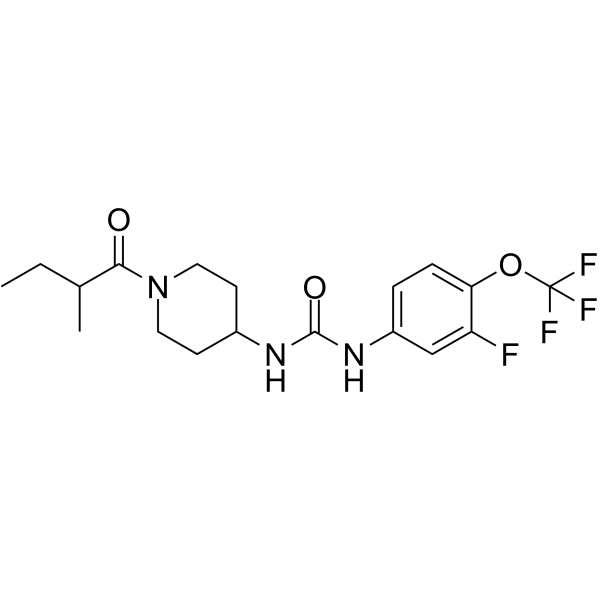
  • HY-135653A

    (Rac)-BPN-19186

    Epoxide Hydrolase Neurological Disease
    (Rac)-EC5026 ((Rac)-BPN-19186) is a potent piperidine inhibitor of soluble epoxide hydrolase (sEH) extracted from patent WO2019156991A1, page 39, has a Ki of 0.06 nM. (Rac)-EC5026 can be used for the research of Parkinson's disease and dementia with Lewy Bodies (DLB) .
    (Rac)-EC5026
  • HY-180355

    CDK Ser/Thr Kinase c-Myc Apoptosis Cancer
    SY-5102 is a potent, selective and orally active cyclin-dependent kinase (CDK7) inhibitor with a Kd of 0.03 nM. SY-5102 shows anti-proliferative activity against HCC70 cells with an EC50 of 9 nM. SY-5102 can inhibit CDK7-mediated CAK function (downregulate CDK2 Thr160 phosphorylation) and TFIIH transcription function (downregulate RNA polymerase II Ser5 phosphorylation). SY-5102 can induce G2/M cell cycle arrest, downregulate the expression of the oncogene c-Myc, and ultimately trigger cancer cell apoptosis. SY-5102 can be used for the research of triple-negative breast cancer (TNBC) .
    SY-5102
  • HY-R03271A

    MicroRNA Cancer
    mmu-miR-5126 agomirs are chemically-modified double-strand miRNA mimics with modified mature miRNA strand: 2 phosphorothioates at the 5' end, 4 phosphorothioates at the 3' end, 3' end cholesterol group, and full-length nucleotide 2'-methoxy modification. They are designed to mimic endogenous miRNAs and recommended for miRNA functional studies. Compared with miRNA mimics, they exhibits enhanced cellular uptake, stability and regulatory activity in vivo.
    mmu-miR-5126 agomir
    mmu-miR-5126 agomir
  • HY-RI03251A

    MicroRNA Cancer
    mmu-miR-5106 antagomirs are chemically-modified oligonucleotides that hybridize with mature miRNAs. The miRNA antagomirs have 2 phosphorothioates at the 5' end, 4 phosphorothioates at the 3' end, 1 cholesterol group at the 3' end, and full-length nucleotide 2'-methoxy modification. The miRNA antagomirs strongly compete with mature miRNAs to prevent the complementary pairing of miRNAs and their target genes, thereby inhibiting miRNAs from functioning. Stability of miRNA antagomirs appears to be significantly higher than miRNA inhibitors, they exhibits enhanced cellular uptake, stability and regulatory activity in vivo.
    mmu-miR-5106 antagomir
    mmu-miR-5106 antagomir
  • HY-RI03251

    MicroRNA Cancer
    mmu-miR-5106 inhibitors are chemically-modified oligonucleotides that hybridize with mature miRNAs. The miRNA inhibitors have full-length nucleotide 2'-methoxy modification. The miRNA inhibitors strongly compete with mature miRNAs to prevent the complementary pairing of miRNAs and their target genes, thereby inhibiting miRNAs from functioning.
    mmu-miR-5106 inhibitor
    mmu-miR-5106 inhibitor
  • HY-RI03271

    MicroRNA Cancer
    mmu-miR-5126 inhibitors are chemically-modified oligonucleotides that hybridize with mature miRNAs. The miRNA inhibitors have full-length nucleotide 2'-methoxy modification. The miRNA inhibitors strongly compete with mature miRNAs to prevent the complementary pairing of miRNAs and their target genes, thereby inhibiting miRNAs from functioning.
    mmu-miR-5126 inhibitor
    mmu-miR-5126 inhibitor
  • HY-R03251A

    MicroRNA Cancer
    mmu-miR-5106 agomirs are chemically-modified double-strand miRNA mimics with modified mature miRNA strand: 2 phosphorothioates at the 5' end, 4 phosphorothioates at the 3' end, 3' end cholesterol group, and full-length nucleotide 2'-methoxy modification. They are designed to mimic endogenous miRNAs and recommended for miRNA functional studies. Compared with miRNA mimics, they exhibits enhanced cellular uptake, stability and regulatory activity in vivo.
    mmu-miR-5106 agomir
    mmu-miR-5106 agomir
  • HY-RI03271A

    MicroRNA Cancer
    mmu-miR-5126 antagomirs are chemically-modified oligonucleotides that hybridize with mature miRNAs. The miRNA antagomirs have 2 phosphorothioates at the 5' end, 4 phosphorothioates at the 3' end, 1 cholesterol group at the 3' end, and full-length nucleotide 2'-methoxy modification. The miRNA antagomirs strongly compete with mature miRNAs to prevent the complementary pairing of miRNAs and their target genes, thereby inhibiting miRNAs from functioning. Stability of miRNA antagomirs appears to be significantly higher than miRNA inhibitors, they exhibits enhanced cellular uptake, stability and regulatory activity in vivo.
    mmu-miR-5126 antagomir
    mmu-miR-5126 antagomir

Inquiry Online

Submit your filled information, we will contact you soon.

Salutation: * Country or Region:
* Applicant Name: * Organization Name:
* Department:    
* Email Address: * Product Name:
Cat. No.: * Requested quantity:
* Phone Number:    
Remarks:

Inquiry Online

Your information is safe with us. * Required Fields.

Salutation


Country or Region *

Applicant Name *


Organization Name *

Department *


Email Address *


Product Name *

Cat. No.


Requested quantity *

Phone Number *


Remarks

Inquiry Online

Inquiry Information

Product Name:
Cat. No.:
Quantity:
MCE Japan Authorized Agent:

