
1. Search Result
Search Result
No matches for "

57547

" within the MedChemExpress (MCE) catalog. Here are the results you might be looking for.

9

Inhibitors & Agonists

1

Inhibitory Antibodies

1

Recombinant Proteins

5

Antibodies

Cat. No. Product Name Target Research Areas Chemical Structure
  • HY-14277A

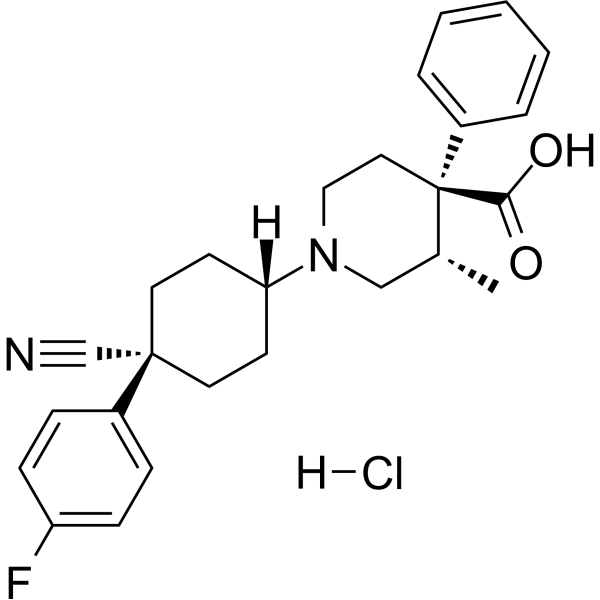
    R 50547 hydrochloride

    Histamine Receptor Neurotensin Receptor Integrin Inflammation/Immunology
    Levocabastine (R 50547) hydrochloride is a potent and selective histamine H1-receptor antagonist. Levocabastine hydrochloride is also a selective, high affinity neurotensin receptor subtype 2 (NTR2) antagonist, with a Ki of 17 nM for mNTR2. Levocabastine hydrochloride can act as a VLA-4 antagonist, interferes with conjunctival eosinophil infiltration in allergic conjunctivitis (AC) .
    Levocabastine hydrochloride
  • HY-P99593

    DMUC5754A

    Antibody-Drug Conjugates (ADCs) Cancer
    Sofituzumab vedotin (DMUC5754A) is a MMAE-containing anti-MUC16 antibody-drug conjugate (ADC) with a protease-cleavable linker. Sofituzumab vedotin can be used for the research of cancer .
    Sofituzumab vedotin
  • HY-14157

    Opioid Receptor Inflammation/Immunology
    ADL-5747 is a selective and orally active agonist of the δ-opioid receptor (DOR). By binding to the δ-opioid receptors, ADL-5747 activates these receptors, thereby playing a role in pain management pathways. ADL-5747 can be used for research into pain management mechanisms .
    ADL-5747
  • HY-14277

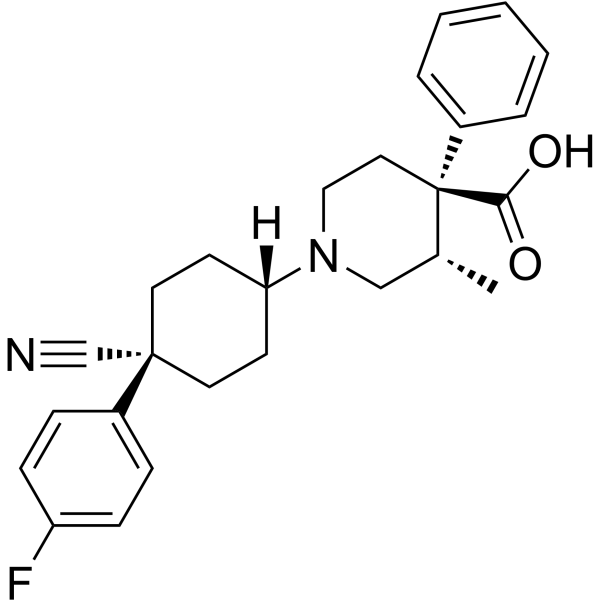
    R 50547

    Histamine Receptor Neurotensin Receptor Integrin Inflammation/Immunology
    Levocabastine (R 50547) is a potent and selective histamine H1-receptor antagonist. Levocabastine hydrochloride is also a selective, high affinity neurotensin receptor subtype 2 (NTR2) antagonist, with a Ki of 17 nM for mNTR2. Levocabastine can act as a VLA-4 antagonist, interferes with conjunctival eosinophil infiltration in allergic conjunctivitis (AC) .
    Levocabastine
  • HY-129316

    CGP 52547

    Antibiotic Fungal Bacterial Infection
    (S)-Dihydroaeruginoic acid is an antibiotic originally isolated from P. fluorescens. It has antimicrobial activity in a disc assay against R. solani, P. ultimum, B. cinera, S. rolfsii, C. gloeosporioide, F. oxysporum, and S. tritici fungi as well as B. subtilis, E. herbicola, and S. albus bacteria when used at a concentration of 200 μg/disc.
    (S)-Dihydroaeruginoic acid
  • HY-14124

    Opioid Receptor Neurological Disease
    MK-5757 is a Nociceptin/Orphanin FQ Peptide Receptor antagonist. ORL1 antagonist 3 can improve cerebral blood flow disorders and ischemic damage, and alleviate abnormal neurological symptoms. ORL1 antagonist 3can be used for the research of neurological disease, such as traumatic brain injury .
    MK-5757
  • HY-14277AR

    R 50547 hydrochloride (Standard)

    Reference Standards Histamine Receptor Neurotensin Receptor Integrin Inflammation/Immunology
    Levocabastine (hydrochloride) (Standard) is the analytical standard of Levocabastine (hydrochloride). This product is intended for research and analytical applications. Levocabastine (R 50547) hydrochloride is a potent and selective histamine H1-receptor antagonist. Levocabastine hydrochloride is also a selective, high affinity neurotensin receptor subtype 2 (NTR2) antagonist, with a Ki of 17 nM for mNTR2. Levocabastine hydrochloride can act as a VLA-4 antagonist, interferes with conjunctival eosinophil infiltration in allergic conjunctivitis (AC) .
    Levocabastine hydrochloride (Standard)
  • HY-14157A

    Opioid Receptor Inflammation/Immunology
    ADL-5747 hydrochloride is a selective and orally active agonist of the δ-opioid receptor (DOR). By binding to the δ-opioid receptors, ADL-5747 hydrochloride activates these receptors, thereby playing a role in pain management pathways. ADL-5747 hydrochloride can be used for research into pain management mechanisms .
    ADL-5747 hydrochloride
  • HY-W718262

    (Rac)-CGP 52547

    Antibiotic Fungal Bacterial Infection Cancer
    Dihydroaeruginoic acid ((Rac)-CGP 52547), an antifungal antibiotic, is a thiazoline iron chelator. Dihydroaeruginoic acid is the condensation product of salicylate and one cysteine residue. Dihydroaeruginoic acid chelates Fe(III), inhibits DNA replication via ribonucleotide reductase, induces G1/S cell cycle block, reduces leukemia cell clonogenic viability. Dihydroaeruginoic acid inhibits phytopathogenic fungi and bacteria, suppresses Candida albicans development, and inhibits Agrobacterium tumefaciens biofilm formation via extracellular iron sequestration. Dihydroaeruginoic acid can be used for the research of phytopathogenic fungal and bacterial infections, and leukemia .
    Dihydroaeruginoic acid

Inquiry Online

Submit your filled information, we will contact you soon.

Salutation: * Country or Region:
* Applicant Name: * Organization Name:
* Department:    
* Email Address: * Product Name:
Cat. No.: * Requested quantity:
* Phone Number:    
Remarks:

Inquiry Online

Your information is safe with us. * Required Fields.

Salutation


Country or Region *

Applicant Name *


Organization Name *

Department *


Email Address *


Product Name *

Cat. No.


Requested quantity *

Phone Number *


Remarks

Inquiry Online

Inquiry Information

Product Name:
Cat. No.:
Quantity:
MCE Japan Authorized Agent:

