



Glimepiride
Based on 8 publication(s) in Google Scholar
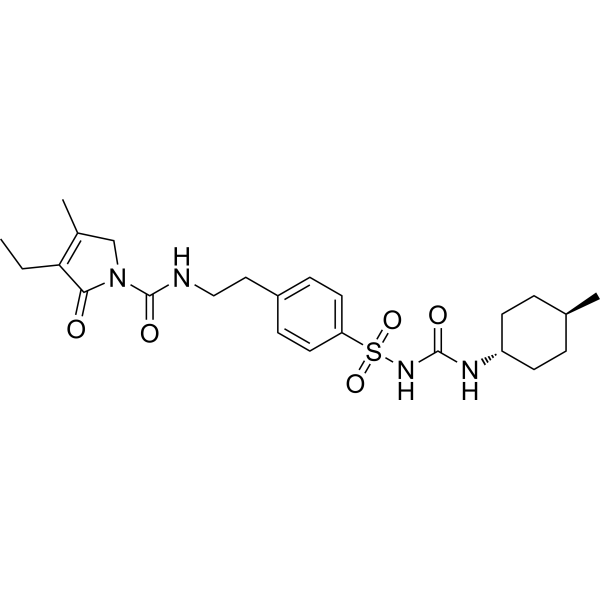
Glimepiride (Glimperide) is a medium-to-long acting sulfonylurea anti-diabetic compound with an ED50 of 182 μg/kg. Glimepiride acts at ATPase-dependent potassium channels in β cells of the pancreas to stimulate insulin release.
For research use only. We do not sell to patients.
- Purity : 99.92%
- CAS No.: 93479-97-1
- Formula: C24H34N4O5S
- Molecular Weight:490.62
-
Storage:Powder -20°C, 3 years , 4°C, 2 years ; In solvent -80°C, 2 years , -20°C, 1 year

To place orders, for customer services and technical support, please contact: MedChemExpress USA
Tel: 609-228-6898 E-mail: [email protected] [email protected]


-
 Biological Activity
-
Chemical Information
-
Solvent & Solubility
- Protocols
- Purity & Documentation
- References
-
 Help & FAQs


-
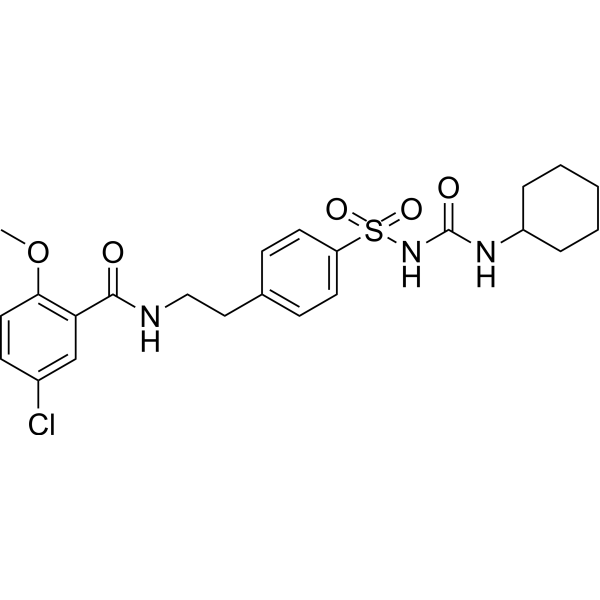
HY-15206
GlibenclamideKATP Inhibitor -
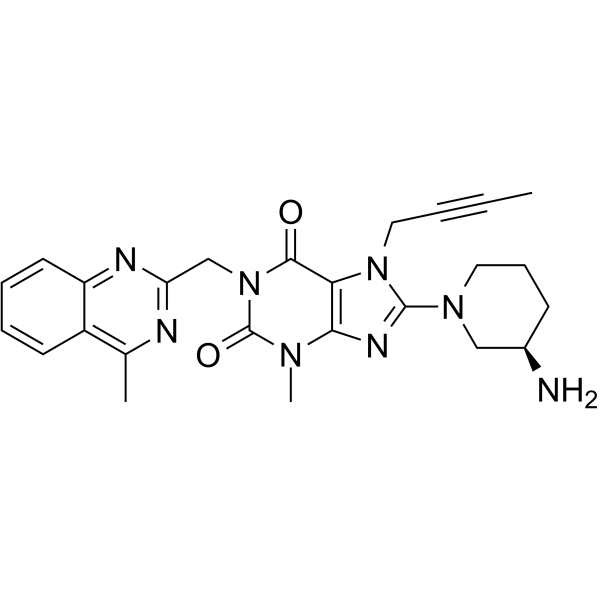
HY-10284
LinagliptinDPP-4 Inhibitor -
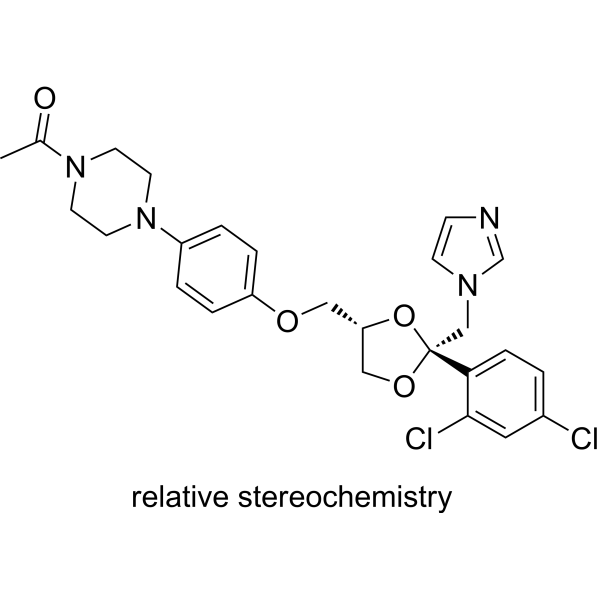
HY-B0105
KetoconazoleCYP3A4 Inhibitor -
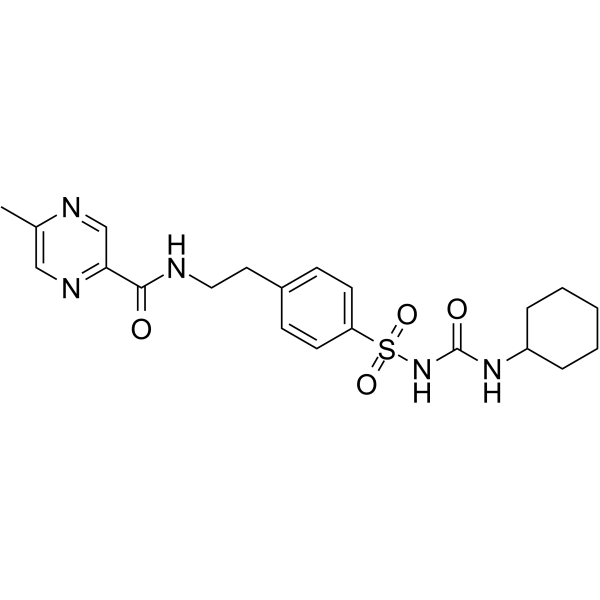
HY-B0254
GlipizideAnti-diabetic Agent -
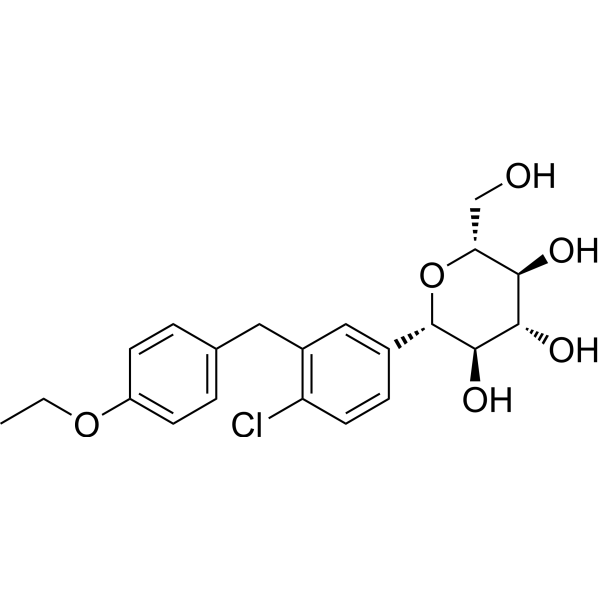
HY-10450
DapagliflozinSGLT2 Inhibitor -

HY-B0104R
Glimepiride (Standard)Anti-diabetic Agent -
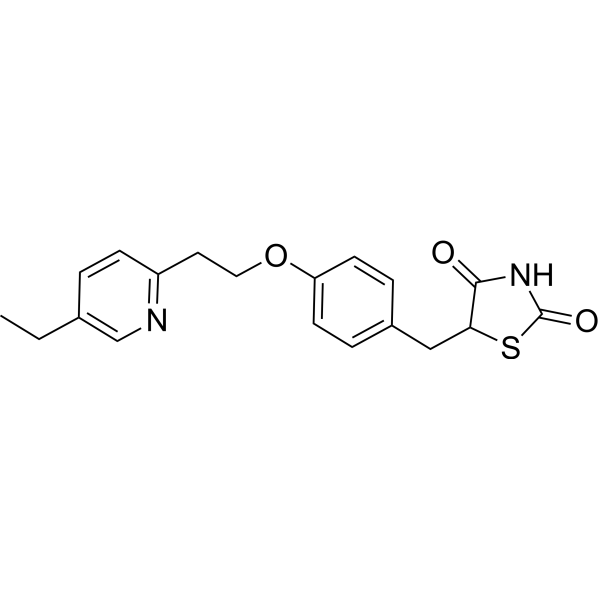
HY-13956
PioglitazonePPARγ Agonist -
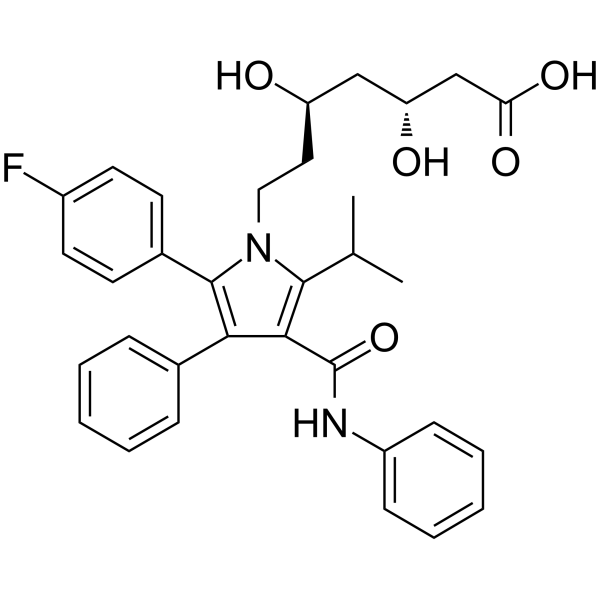
HY-B0589
AtorvastatinHMG-CoA Reductase Inhibitor -
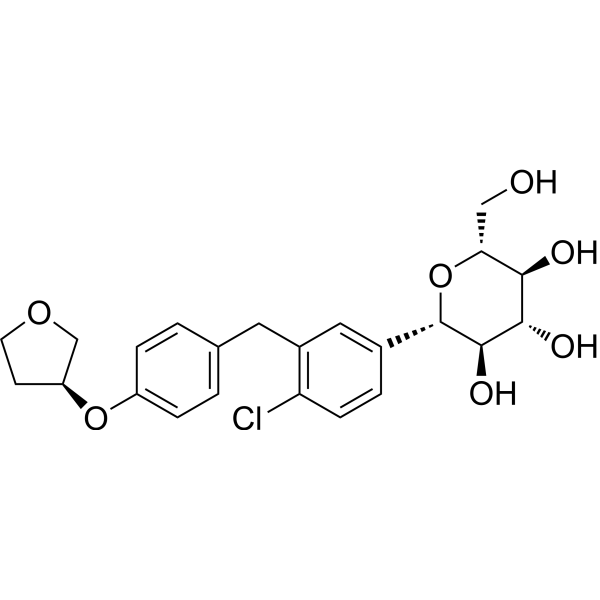
HY-15409
EmpagliflozinSGLT2 Inhibitor -
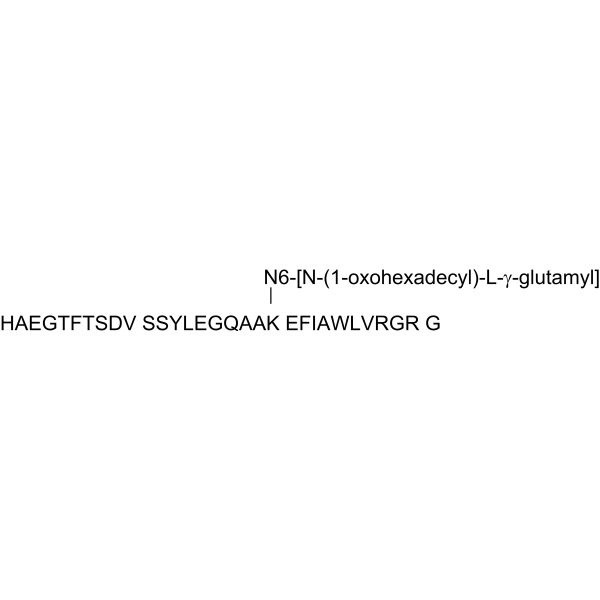
HY-P0014
LiraglutideGLP-1R Agonist -
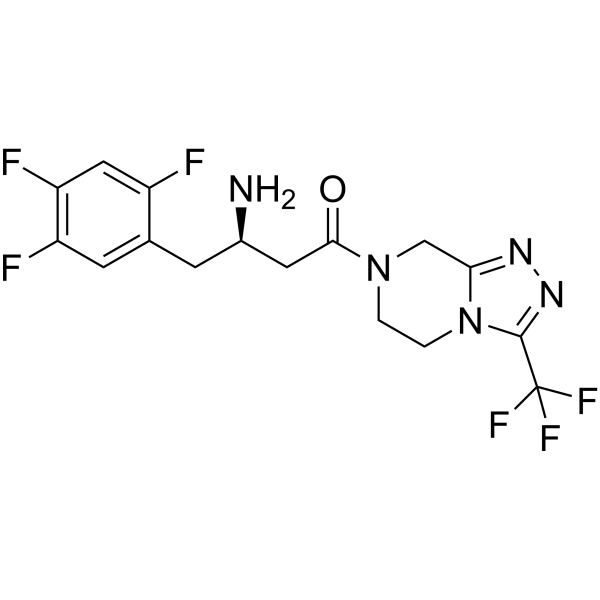
HY-13749
SitagliptinDPP4 Inhibitor -
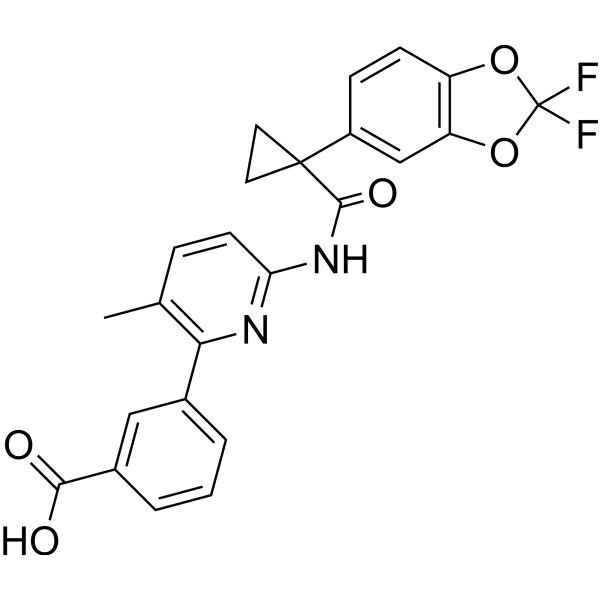
HY-13262
LumacaftorCFTR Modulator
Publications Citing Use of MedChemExpress (MCE) Glimepiride
More- ACS Environ Au. 2025 Aug 5;5(6):573-582. [Abstract]
- Anal Chem. 2025 Jun 3;97(21):11099-11109. [Abstract]
- Biochem Pharmacol. 2025 Nov:241:117162. [Abstract]
- Pharmaceuticals (Basel). 2023 Feb 1;16(2):225. [Abstract]
- Ann Med. 2026 Dec;58(1):2663133. [Abstract]
- J Biol Chem. 2025 Jul 30;301(9):110544. [Abstract]
- Onco Targets Ther. 2020 May 4:13:3777-3788. [Abstract]
- Research Square Print. 2022 Aug.


Biological Activity
Description
IC50 & Target
DPP4[1].
In Vivo
Glimepiride (Glimperide) decreased extracellular Aβ40 and Aβ42 levels. glimepiride may serve as a promising drug for the treatment of AD associated with diabetes[2].
Glimepiride (Glimperide) was generally associated with lower risk of hypoglycemia and less weight gain compared to other sulfonylureas. Glimepiride (Glimperide) use may be safer in patients with cardiovascular disease because of its lack of detrimental effects on ischemic preconditioning[3].
MedChemExpress (MCE) has not independently confirmed the accuracy of these methods. They are for reference only.
Clinical Trial
| NCT Number | Sponsor | Condition | Start Date |
Phase

|
|---|---|---|---|---|
| NCT01329991 | Plexxikon| | 2011-05 | PHASE1 |


Chemical Information
-
CAS No. 93479-97-1
-
Appearance Solid
-
Molecular Weight 490.62
-
Formula C24H34N4O5S
-
Color White to off-white
-
SMILES
O=C(N1C(C(CC)=C(C)C1)=O)NCCC2=CC=C(S(=O)(NC(N[C@H]3CC[C@H](C)CC3)=O)=O)C=C2
-
Synonyms
Glimperide; HOE-490
-
Shipping
Room temperature in continental US; may vary elsewhere.
-
Storage
Powder -20°C 3 years 4°C 2 years In solvent -80°C 2 years -20°C 1 year


Publications (8)
-
Journal Impact Factor
-
Most Recent
-
ACS Environ Au
Machine Learning-Assisted Recognition of Environmental Sulfur-Containing Chemicals in Nontargeted Mass Spectrometry Analysis of Inadequate Mass Resolution. [Abstract]2025 Aug 5;5(6):573-582. PMID: 41277996 -
Anal Chem
Exposome-Scale Investigation of Cl-/Br-Containing Chemicals Using High-Resolution Mass Spectrometry, Multistage Machine Learning, and Cloud Computing. [Abstract]2025 Jun 3;97(21):11099-11109. PMID: 40401576 -
Biochem Pharmacol
Glimepiride overcomes acquired resistance to EGFR TKIs in lung cancer via the AMPK/ERK/MMP7 signaling pathway. [Abstract]2025 Nov:241:117162. PMID: 40659128 -
Pharmaceuticals (Basel)
Pharmacological Profiling of KATP Channel Modulators: An Outlook for New Treatment Opportunities for Migraine. [Abstract]2023 Feb 1;16(2):225. PMID: 37259373 -
Ann Med
Glimepiride alleviates blood-brain barrier disruption and neuroinflammation in mice with intracerebral haemorrhage. [Abstract]2026 Dec;58(1):2663133. PMID: 42046441 -
J Biol Chem
2025 Jul 30;301(9):110544. PMID: 40749831 -
Onco Targets Ther
2020 May 4:13:3777-3788. PMID: 32440146 -


Solvent & Solubility
In Vitro:
DMSO : 33.33 mg/mL (67.93 mM; Need ultrasonic; Hygroscopic DMSO has a significant impact on the solubility of product, please use newly opened DMSO)
H2O : < 0.1 mg/mL (insoluble)
Please refer to the solubility information to select the appropriate solvent. Once prepared, please aliquot and store the solution to prevent product inactivation from repeated freeze-thaw cycles.
Storage method and period of stock solution: -80°C, 2 years; -20°C, 1 year. When stored at -80°C, please use it within 2 years. When stored at -20°C, please use it within 1 year.
Please refer to the solubility information to select the appropriate solvent. Once prepared, please aliquot and store the solution to prevent product inactivation from repeated freeze-thaw cycles.
Storage method and period of stock solution: -80°C, 2 years; -20°C, 1 year. When stored at -80°C, please use it within 2 years. When stored at -20°C, please use it within 1 year.
Concentration (start) × Volume (start) = Concentration (final) × Volume (final)
In Vivo:
Select the appropriate dissolution method based on your experimental animal and administration route.
- For the following dissolution methods, please ensure to first prepare a clear stock solution using an In Vitro approach and then sequentially add co-solvents:
- To ensure reliable experimental results, the clarified stock solution can be appropriately stored based on storage conditions. As for the working solution for In Vivo experiments, it is recommended to prepare freshly and use it on the same day.
- The percentages shown for the solvents indicate their volumetric ratio in the final prepared solution. If precipitation or phase separation occurs during preparation, heat and/or sonication can be used to aid dissolution.
Add each solvent one by one: 10% DMSO 40% PEG300 5% Tween-80 45% Saline
Solubility: 2.5 mg/mL (5.10 mM); Suspended solution; Need ultrasonic
This protocol yields a suspended solution of 2.5 mg/mL. Suspended solution can be used for oral and intraperitoneal injection.
Taking 1 mL working solution as an example, add 100 μL DMSO stock solution (25.0 mg/mL) to 400 μL PEG300, and mix evenly; then add 50 μL Tween-80 and mix evenly; then add 450 μL Saline to adjust the volume to 1 mL.
Preparation of Saline: Dissolve 0.9 g sodium chloride in ddH₂O and dilute to 100 mL to obtain a clear Saline solution.
In Vivo Dissolution Calculator
Please enter the basic information of animal experiments:
-
-
-
-
Recommended: Prepare an additional quantity of animals to account for potential losses during experiments.
Please enter your animal formula composition:
-
%DMSO +
Recommended: Keep the proportion of DMSO in working solution below 2% if your animal is weak.
-
%+
-
+%Tween-80 + +
-
%Saline +
The co-solvents required include: DMSO, . All of co-solvents are available by MedChemExpress (MCE). , Tween 80. All of co-solvents are available by MedChemExpress (MCE).
Working solution concentration: 0.22 mg/mL
Method for preparing stock solution: mg drug dissolved in μL DMSO. Stock solution concentration: mg/mL.
1. Take μL DMSO stock solution;
2. Add μL .
μL , mix evenly;
3. Then add μL Tween 80, mix evenly;
4. Then add μL
Please ensure that the stock solution in the first step is dissolved to a clear state, and add co-solvents in sequence. You can use ultrasonic heating (ultrasonic cleaner, recommended frequency 20-40 kHz), vortexing, etc. to assist dissolution.

Protocols
-
Research Protocol for Endocrine Diseases
Endocrine diseases often arise from disrupted hormone production, hormone signaling, or target-tissue responsiveness; for diabetes-focused endocrine disease models, insulin signaling regulates glucose uptake, hepatic glucose output, lipid metabolism, and β-cell compensation. Type 2 diabetes develops through interacting defects in insulin resistance, β-cell dysfunction, adipose inflammation, hepatic glucose overproduction, altered incretin signaling, and ectopic lipid metabolism. A major unresolved question is whether endocrine dysfunction is driven primarily by target-tissue insulin resistance, intrinsic β-cell failure, immune/inflammatory stress, or combined multi-organ failure that differs by disease stage.


Purity & Documentation
-
Data Sheet (290 KB)
-
SDS (644 KB)
- English - EN (644 KB)
- Français - FR (644 KB)
- Deutsch - DE (644 KB)
- Norwegian - NO (644 KB)
- Español - ES (644 KB)
- Swedish - SV (644 KB)
- Italian - IT (644 KB)
- Korean - KR (644 KB)
- Portuguese - PT (644 KB)
-
Handling Instructions (2659 KB)
References
[1]. Geisen, K., Special pharmacology of the new sulfonylurea glimepiride. Arzneimittelforschung, 1988. 38(8): p. 1120-30. [Content Brief]
[2]. Liu, F., et al., Glimepiride attenuates Abeta production via suppressing BACE1 activity in cortical neurons. Neurosci Lett, 2013. 557 Pt B: p. 90-4. [Content Brief]
[3]. Basit, A., M. Riaz, and A. Fawwad, Glimepiride: evidence-based facts, trends, and observations (GIFTS). [corrected]. Vasc Health Risk Manag, 2012. 8: p. 463-72. [Content Brief]
[4]. Basit A, Riaz M, Fawwad A. Glimepiride: evidence-based facts, trends, and observations (GIFTS). [corrected]. Vasc Health Risk Manag. 2012;8:463-72. doi: 10.2147/HIV.S33194. Epub 2012 Aug 15. Erratum in: Vasc Health Risk Manag. 2013;9:1. [Content Brief]


Complete Stock Solution Preparation Table
Please refer to the solubility information to select the appropriate solvent. Once prepared, please aliquot and store the solution to prevent product inactivation from repeated freeze-thaw cycles.
Storage method and period of stock solution: -80°C, 2 years; -20°C, 1 year. When stored at -80°C, please use it within 2 years. When stored at -20°C, please use it within 1 year.
| Optional Solvent | Concentration Solvent Mass | 1 mg | 5 mg | 10 mg | 25 mg |
|---|---|---|---|---|---|
| DMSO | 1 mM | 2.0382 mL | 10.1912 mL | 20.3824 mL | 50.9559 mL |
| 5 mM | 0.4076 mL | 2.0382 mL | 4.0765 mL | 10.1912 mL | |
| 10 mM | 0.2038 mL | 1.0191 mL | 2.0382 mL | 5.0956 mL | |
| 15 mM | 0.1359 mL | 0.6794 mL | 1.3588 mL | 3.3971 mL | |
| 20 mM | 0.1019 mL | 0.5096 mL | 1.0191 mL | 2.5478 mL | |
| 25 mM | 0.0815 mL | 0.4076 mL | 0.8153 mL | 2.0382 mL | |
| 30 mM | 0.0679 mL | 0.3397 mL | 0.6794 mL | 1.6985 mL | |
| 40 mM | 0.0510 mL | 0.2548 mL | 0.5096 mL | 1.2739 mL | |
| 50 mM | 0.0408 mL | 0.2038 mL | 0.4076 mL | 1.0191 mL | |
| 60 mM | 0.0340 mL | 0.1699 mL | 0.3397 mL | 0.8493 mL |


Glimepiride Related Classifications
HY-B0104 Related Classifications
 Powered by Bioz