



Echinatin
Based on 9 publication(s) in Google Scholar
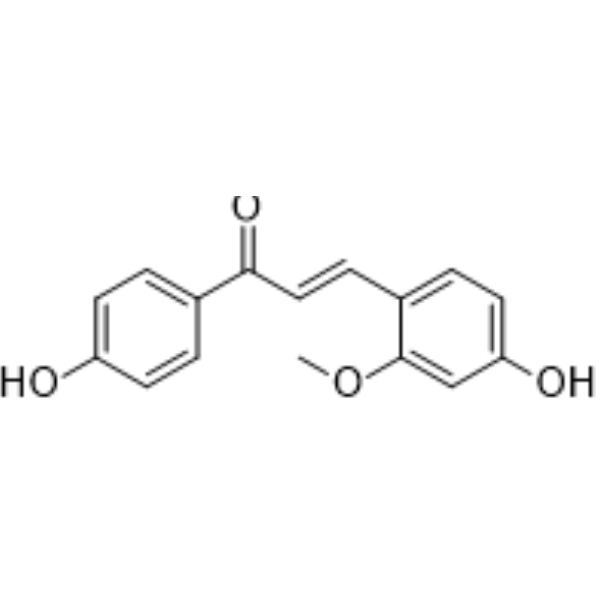
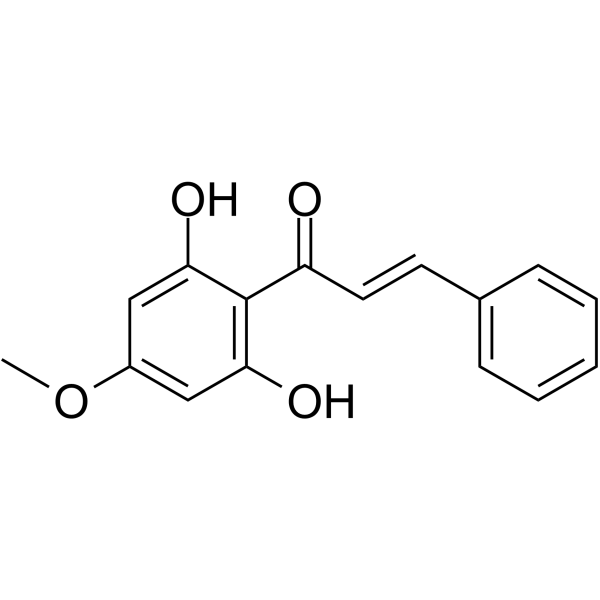
Echinatin is a chalcone isolated from the Chinese herbal medicine Gancao with hepatoprotective and anti-inflammatory effects. Echinatin can be quickly absorbed and eliminated and extensively distributed with an absolute bioavailability of approximately 6.81% in Rat.
For research use only. We do not sell to patients.
- Purity : 99.83%
- CAS No.: 34221-41-5
- Formula: C16H14O4
- Molecular Weight:270.28
-
Storage:
4°C, protect from light
* In solvent : -80°C, 6 months; -20°C, 1 month (protect from light)

To place orders, for customer services and technical support, please contact: MedChemExpress USA
Tel: 609-228-6898 E-mail: [email protected] [email protected]


-
 Biological Activity
-
Chemical Information
-
Solvent & Solubility
- Protocols
- Purity & Documentation
- References
-
 Help & FAQs


-
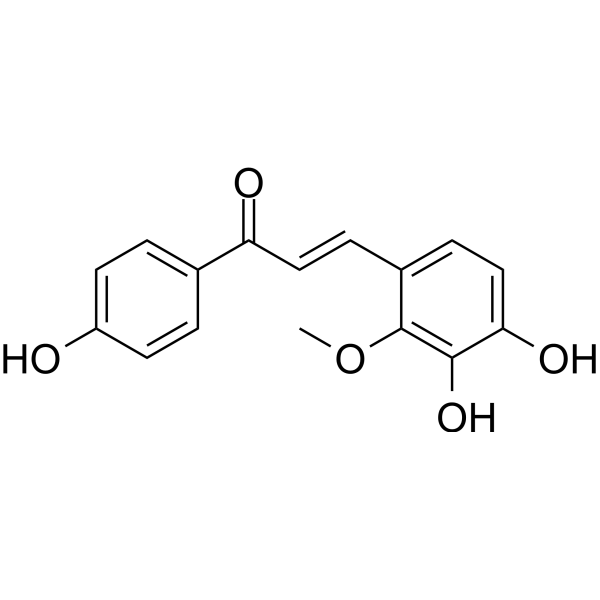
HY-N0373
Licochalcone BApoptosis Inducer -
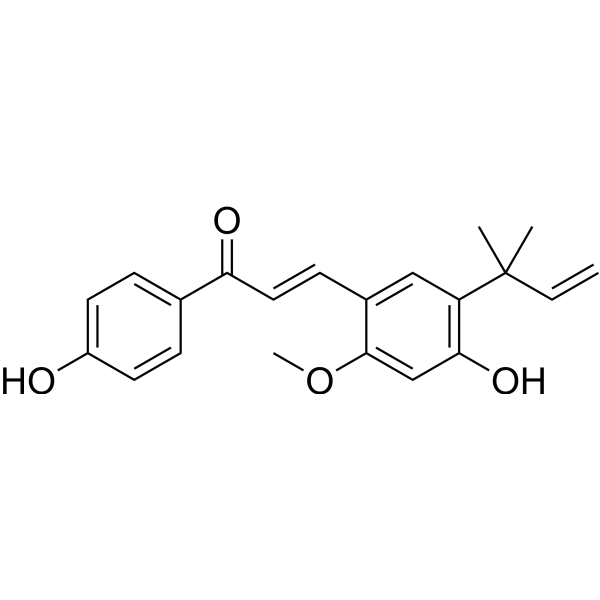
HY-N0372
Licochalcone AUGTs inhibitor -
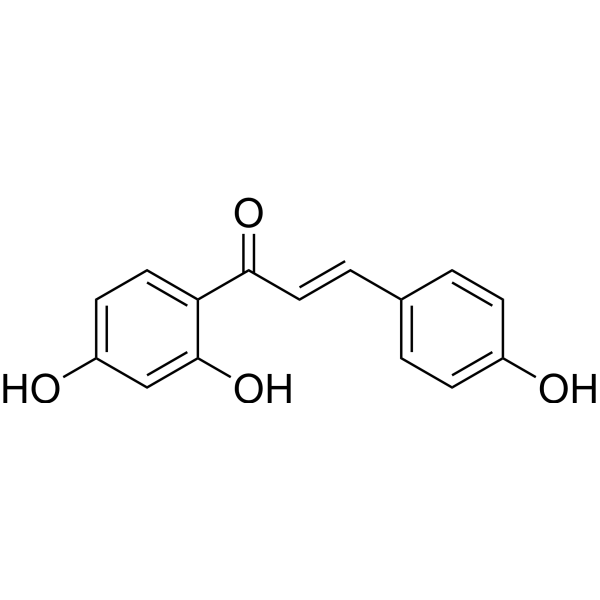
HY-N0102
IsoliquiritigeninAutophagy Inducer -
HY-N0393
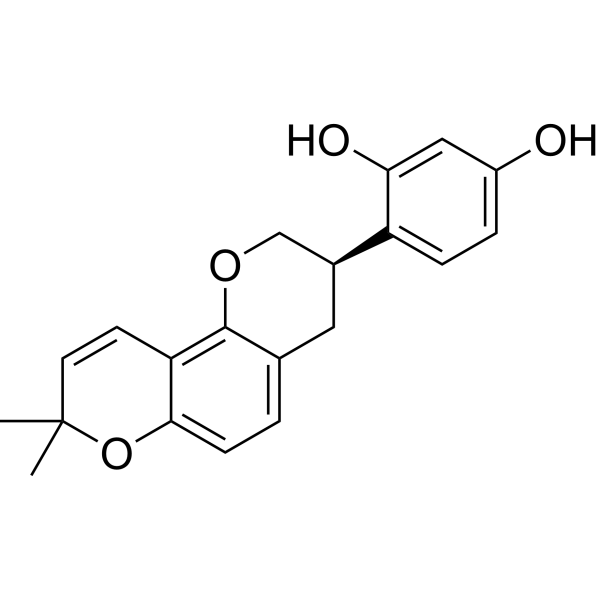
GlabridinPPARγ Activator -
HY-16558
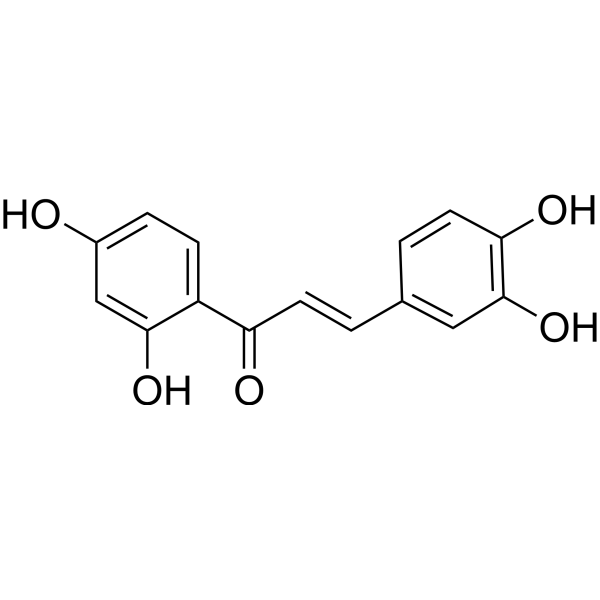
ButeinEGFR/PDE Inhibitor -
HY-13065
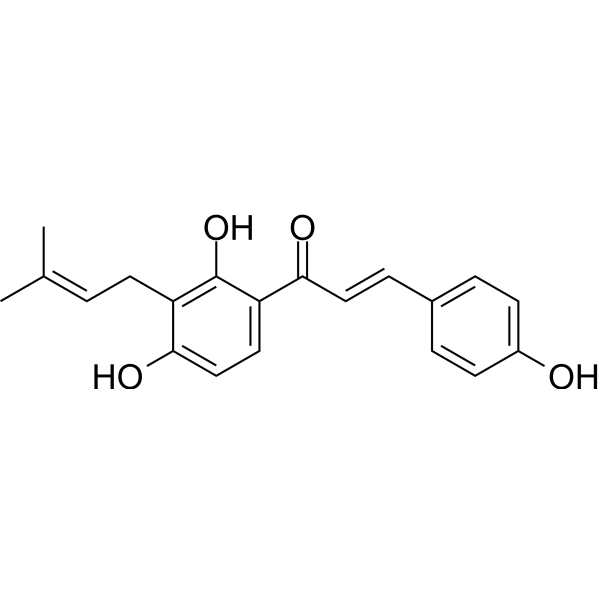
IsobavachalconeAkt Inhibitor -
HY-N7080
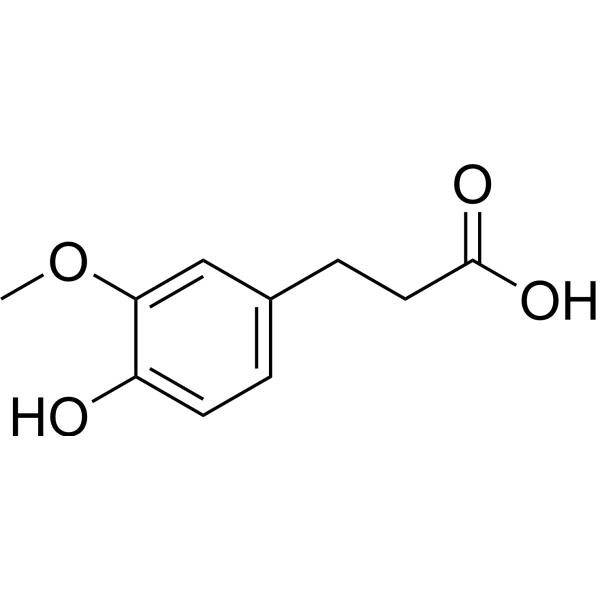
Dihydroferulic acidAntioxidant Agent -
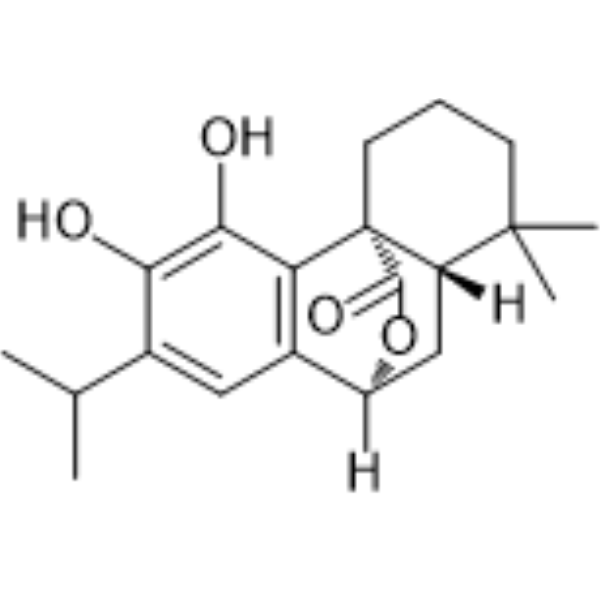
HY-N0643
CarnosolEndogenous Metabolite -
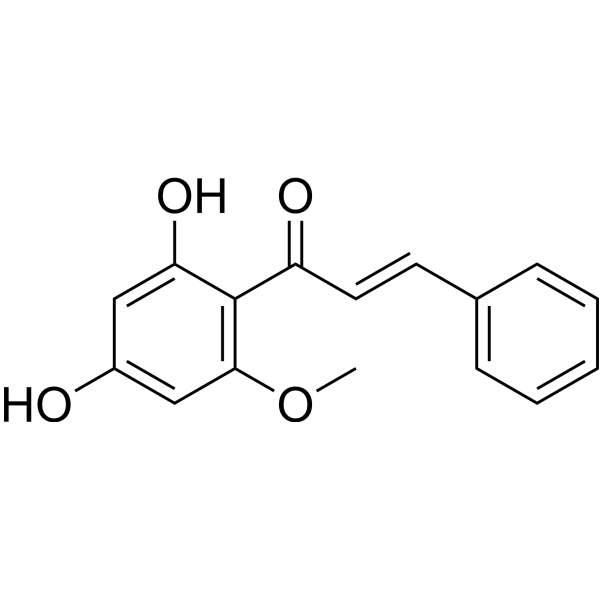
HY-N0279
CardamoninNF-κB Inhibitor -
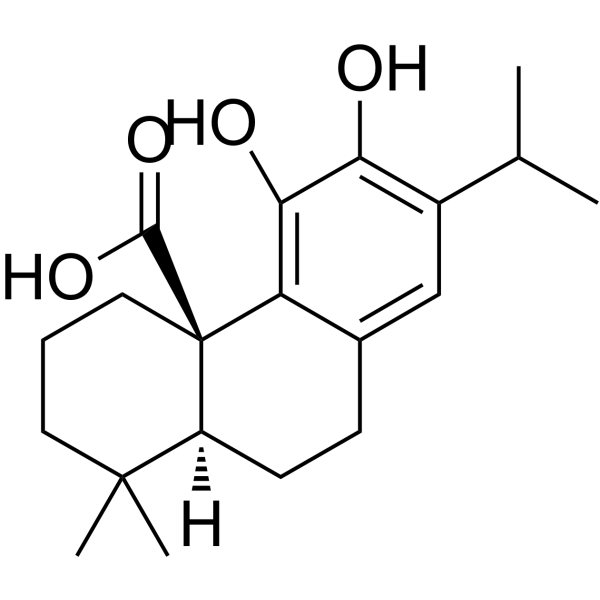
HY-N0644
Carnosic acidLipid Absorption Inhibitor -
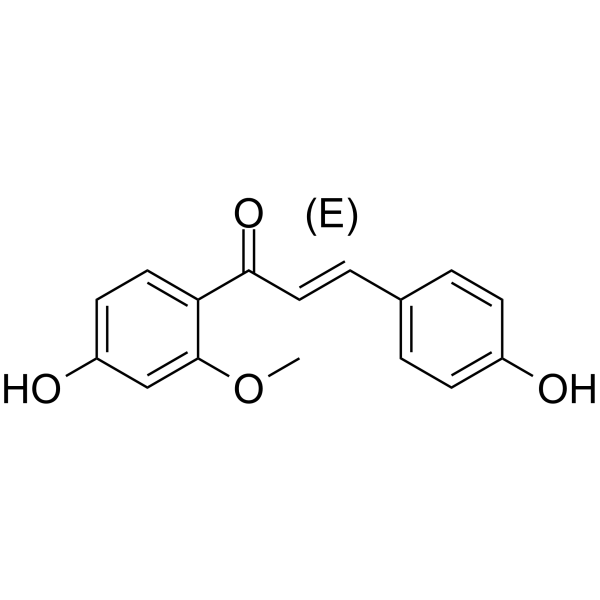
HY-N1745A
3-DeoxysappanchalconeChalcone Compound -
HY-N3057
Pinostrobin chalconeAnti-Cancer Agent
Publications Citing Use of MedChemExpress (MCE) Echinatin
More- Food Chem. 2025 Dec 30:497:146992. [Abstract]
- Food Chem. 2025 Oct 15:489:144992. [Abstract]
- Ind Crops Prod. 2025 Dec 11;239:122458.
- Int Immunopharmacol. 2024 Jul 30:136:112372. [Abstract]
- Front Cell Dev Biol. 2021 Jun 11:9:684393. [Abstract]
- Liver Res. 2022 Dec 1;6(4):251-257. [Abstract]
- Naunyn Schmiedebergs Arch Pharmacol. 2025 Jun;398(6):7363-7375. [Abstract]
- BMC Vet Res. 2026 May 28. [Abstract]
- SSRN. 2024 Mar 8.
 Customer Validation & Images

-
WB

-
Histological Imaging/Staining

-
IF

-
RT-PCR

-
Cell Proliferation/Viability Assay


Biological Activity
Description
Cellular Effect
|
Cell Line

|
Type | Value | Description | References |
|---|---|---|---|---|
| A549 | GI50 |
36 μM
Compound: 12
|
Cytotoxicity against human A549 cells assessed as growth inhibition after 72 hrs by MTT assay
Cytotoxicity against human A549 cells assessed as growth inhibition after 72 hrs by MTT assay
|
[PMID: 32345458] |
| HCT-116 | GI50 |
64 μM
Compound: 12
|
Cytotoxicity against human HCT116 cells assessed as growth inhibition after 72 hrs by MTT assay
Cytotoxicity against human HCT116 cells assessed as growth inhibition after 72 hrs by MTT assay
|
[PMID: 32345458] |
| HEK-293T | IC50 |
2.19 μg/mL
Compound: 3
|
Inhibition of oseltamivir-resistant H1N1 swine influenza virus neuraminidase H274Y mutant activity expressed in HEK293T cells after 2 hrs by spectrofluorometry
Inhibition of oseltamivir-resistant H1N1 swine influenza virus neuraminidase H274Y mutant activity expressed in HEK293T cells after 2 hrs by spectrofluorometry
|
[PMID: 21123068] |
| HEK-293T | IC50 |
2.49 μg/mL
Compound: 3
|
Inhibition of wild type H1N1 swine influenza virus neuraminidase activity expressed in HEK293T cells after 2 hrs by spectrofluorometry
Inhibition of wild type H1N1 swine influenza virus neuraminidase activity expressed in HEK293T cells after 2 hrs by spectrofluorometry
|
[PMID: 21123068] |
| MCF7 | GI50 |
43 μM
Compound: 12
|
Cytotoxicity against human MCF7 cells assessed as reduction in cell viability after 72 hrs by MTT assay
Cytotoxicity against human MCF7 cells assessed as reduction in cell viability after 72 hrs by MTT assay
|
[PMID: 32345458] |
| RBL-2H3 | IC50 |
>30 μM
Compound: Echinatin
|
Antiinflammatory activity in RBL2H3 cells assessed as inhibition of degranulation
Antiinflammatory activity in RBL2H3 cells assessed as inhibition of degranulation
|
[PMID: 24316124] |
| SNU-638 | IC50 |
10.41 μM
Compound: 7
|
Cytotoxicity against human SNU638 cells by MTT assay
Cytotoxicity against human SNU638 cells by MTT assay
|
[PMID: 23608763] |
| T47D | IC50 |
12.11 μM
Compound: 7
|
Cytotoxicity against human T47D cells by MTT assay
Cytotoxicity against human T47D cells by MTT assay
|
[PMID: 23608763] |
In Vitro
Echinatin (0-40 μM, 60 min) inhibits Nigericin induced NLRP3 inflammasome activation by binding to HSP90 and suppressing its ATPase activity in LPS-primed BMDMs[2].
Echinatin (0-40 μM, 1-5 days) induces apoptosis and autophagy, and inhibits cell proliferation, migration, invasion in ESCC (KYSE30 and KYSE270 cells)[4].
MedChemExpress (MCE) has not independently confirmed the accuracy of these methods. They are for reference only.
-
Cell Line:LPS-primed BMDMs
-
Concentration:0-40 μM
-
Incubation Time:60 min
-
Result:Reduced cleaved caspase-1 and production of IL-1β.
-
Cell Line:KYSE30 and KYSE270 cells
-
Concentration:40 μM
-
Incubation Time:2 days
-
Result:Induced cellular LC3 puncta accumulation.
In Vivo
Echinatin (20-80 mg/kg, i.p.) shows cardioprotective effect, and relieves I/R-Induced Myocardial Injury in rats[3].
Echinatin (20 and 50 mg/kg, p.o.) inhibits tumor growth and inhibits the AKT/mTOR pathway of KYSE270-derived tumor mice xenografts[4].
MedChemExpress (MCE) has not independently confirmed the accuracy of these methods. They are for reference only.
-
Animal Model:LPS-induced septic shock in mice[1]
-
Dosage:20 and 40 mg/kg
-
Administration:i.p.
-
Result:Inhibited LPS-induced IL-1β and TNF-α production.
Reduced the proportion and the number of neutrophils in peritoneal lavage cells from mice.


Chemical Information
-
CAS No. 34221-41-5
-
Appearance Solid
-
Molecular Weight 270.28
-
Formula C16H14O4
-
Color Light yellow to yellow
-
SMILES
O=C(C1=CC=C(O)C=C1)/C=C/C2=CC=C(O)C=C2OC
-
Structure Classification
-
Initial Source
-
Shipping
Room temperature in continental US; may vary elsewhere.
-
Storage
4°C, protect from light
* In solvent : -80°C, 6 months; -20°C, 1 month (protect from light)


Publications (9)
-
Journal Impact Factor
-
Most Recent
-
Food Chem
Effects of sun drying combined with baking processes on the flavor quality of Chongqing Tuocha raw tea. [Abstract]2025 Dec 30:497:146992. PMID: 41285060 -
Food Chem
Flavonoid-mediated metabolic underpinning quality variation in red bud-sport pear mutants. [Abstract]2025 Oct 15:489:144992. PMID: 40466530 -
-
Int Immunopharmacol
Echinatin alleviates inflammation and pyroptosis in hypoxic-ischemic brain damage by inhibiting TLR4/ NF-κB pathway. [Abstract]2024 Jul 30:136:112372. PMID: 38850784
Echinatin purchased from MedChemExpress. Usage Cited in: Int Immunopharmacol. 2024 Jul 30:136:112372. [Abstract]
The protein levels of MAP-2 and MBP 7 d after HI treated with Echinatin (Ech) (2.5 mg/kg, i.p.).
Echinatin purchased from MedChemExpress. Usage Cited in: Int Immunopharmacol. 2024 Jul 30:136:112372. [Abstract]
Representative pictures of HE staining of coronary brain slices 7 d after HI treated with Echinatin (Ech) (2.5 mg/kg, i.p.).
Echinatin purchased from MedChemExpress. Usage Cited in: Int Immunopharmacol. 2024 Jul 30:136:112372. [Abstract]
Representative images of Iba-1 immunofluorescence staining 72 h after HI treated with Echinatin (Ech) (2.5 mg/kg, i.p.).
Echinatin purchased from MedChemExpress. Usage Cited in: Int Immunopharmacol. 2024 Jul 30:136:112372. [Abstract]
The levels of mRNA expression in rat brain samples 24 h after OGD injury normalized to those of β-actin treated with Echinatin (Ech) (2.5 mg/kg, i.p.).
Echinatin purchased from MedChemExpress. Usage Cited in: Int Immunopharmacol. 2024 Jul 30:136:112372. [Abstract]
Cell viability of PC12 treated with different dose of Echinatin (Ech) (0.5, 1, 2, 4, 8, 15, 30 μM) for 24 h.
-
Front Cell Dev Biol
Licarin-B Exhibits Activity Against the Toxoplasma gondii RH Strain by Damaging Mitochondria and Activating Autophagy. [Abstract]2021 Jun 11:9:684393. PMID: 34179016 -
Liver Res
Chemical basis of pregnane X receptor activators in the herbal supplement Gancao (licorice). [Abstract]2022 Dec 1;6(4):251-257. PMID: 39957905 -
Naunyn Schmiedebergs Arch Pharmacol
2025 Jun;398(6):7363-7375. PMID: 39747466 -
BMC Vet Res
Echinatin attenuates LPS-induced mastitis by suppressing IL-17RA and MAPK/NF-κB signaling. [Abstract]2026 May 28. PMID: 42210240 -


Solvent & Solubility
In Vitro:
DMSO : 116.67 mg/mL (431.66 mM; Need ultrasonic; Hygroscopic DMSO has a significant impact on the solubility of product, please use newly opened DMSO)
Please refer to the solubility information to select the appropriate solvent. Once prepared, please aliquot and store the solution to prevent product inactivation from repeated freeze-thaw cycles.
Storage method and period of stock solution: -80°C, 6 months; -20°C, 1 month (protect from light). When stored at -80°C, please use it within 6 months. When stored at -20°C, please use it within 1 month.
Please refer to the solubility information to select the appropriate solvent. Once prepared, please aliquot and store the solution to prevent product inactivation from repeated freeze-thaw cycles.
Storage method and period of stock solution: -80°C, 6 months; -20°C, 1 month (protect from light). When stored at -80°C, please use it within 6 months. When stored at -20°C, please use it within 1 month.
Concentration (start) × Volume (start) = Concentration (final) × Volume (final)
In Vivo:
Select the appropriate dissolution method based on your experimental animal and administration route.
- For the following dissolution methods, please ensure to first prepare a clear stock solution using an In Vitro approach and then sequentially add co-solvents:
- To ensure reliable experimental results, the clarified stock solution can be appropriately stored based on storage conditions. As for the working solution for In Vivo experiments, it is recommended to prepare freshly and use it on the same day.
- The percentages shown for the solvents indicate their volumetric ratio in the final prepared solution. If precipitation or phase separation occurs during preparation, heat and/or sonication can be used to aid dissolution.
Add each solvent one by one: 10% DMSO 40% PEG300 5% Tween-80 45% Saline
Solubility: ≥ 2.17 mg/mL (8.03 mM); Clear solution
This protocol yields a clear solution of ≥ 2.17 mg/mL (saturation unknown).
Taking 1 mL working solution as an example, add 100 μL DMSO stock solution (21.7 mg/mL) to 400 μL PEG300, and mix evenly; then add 50 μL Tween-80 and mix evenly; then add 450 μL Saline to adjust the volume to 1 mL.
Preparation of Saline: Dissolve 0.9 g sodium chloride in ddH₂O and dilute to 100 mL to obtain a clear Saline solution.
Add each solvent one by one: 10% DMSO 90% (20% SBE-β-CD in Saline)
Solubility: ≥ 2.08 mg/mL (7.70 mM); Clear solution
This protocol yields a clear solution of ≥ 2.08 mg/mL (saturation unknown).
Taking 1 mL working solution as an example, add 100 μL DMSO stock solution (20.8 mg/mL) to 900 μL 20% SBE-β-CD in Saline, and mix evenly.
Preparation of 20% SBE-β-CD in Saline (4°C, storage for one week): 2 g SBE-β-CD powder is dissolved in 10 mL Saline, completely dissolve until clear.
For the following dissolution methods, please prepare the working solution directly:
It is recommended to prepare fresh solutions and use them promptly within a short period of time.
The percentages shown for the solvents indicate their volumetric ratio in the final prepared solution. If precipitation or phase separation occurs during preparation, heat and/or sonication can be used to aid dissolution.
Add each solvent one by one: 50% PEG300 50% Saline
Solubility: 10 mg/mL (37.00 mM); Clear solution; Need ultrasonic
In Vivo Dissolution Calculator
Please enter the basic information of animal experiments:
-
-
-
-
Recommended: Prepare an additional quantity of animals to account for potential losses during experiments.
Please enter your animal formula composition:
-
%DMSO +
Recommended: Keep the proportion of DMSO in working solution below 2% if your animal is weak.
-
%+
-
+%Tween-80 + +
-
%Saline +
The co-solvents required include: DMSO, . All of co-solvents are available by MedChemExpress (MCE). , Tween 80. All of co-solvents are available by MedChemExpress (MCE).
Working solution concentration: 0.22 mg/mL
Method for preparing stock solution: mg drug dissolved in μL DMSO. Stock solution concentration: mg/mL. * In solvent : -80°C, 6 months; -20°C, 1 month (protect from light)
1. Take μL DMSO stock solution;
2. Add μL .
μL , mix evenly;
3. Then add μL Tween 80, mix evenly;
4. Then add μL
Please ensure that the stock solution in the first step is dissolved to a clear state, and add co-solvents in sequence. You can use ultrasonic heating (ultrasonic cleaner, recommended frequency 20-40 kHz), vortexing, etc. to assist dissolution.


Purity & Documentation
-
Data Sheet (277 KB)
-
SDS (393 KB)
- English - EN (393 KB)
- Français - FR (393 KB)
- Deutsch - DE (393 KB)
- Norwegian - NO (393 KB)
- Español - ES (393 KB)
- Swedish - SV (393 KB)
- Italian - IT (393 KB)
- Korean - KR (393 KB)
- Portuguese - PT (393 KB)
-
Handling Instructions (2659 KB)
References
[1]. Liang M, et al. Antioxidant Mechanisms of Echinatin and Licochalcone A. Molecules. 2018 Dec 20;24(1). [Content Brief]
[2]. Xu G, et al. Echinatin effectively protects against NLRP3 inflammasome-driven diseases by targeting HSP90. JCI Insight. 2021 Jan 25;6(2):e134601. [Content Brief]
[3]. Niu J, et al. Cardioprotective Effect of Echinatin Against Ischemia/Reperfusion Injury: Involvement of Hippo/Yes-Associated Protein Signaling. Front Pharmacol. 2021 Jan 11;11:593225. [Content Brief]
[4]. Hong P, et al. Echinatin suppresses esophageal cancer tumor growth and invasion through inducing AKT/mTOR-dependent autophagy and apoptosis. Cell Death Dis. 2020 Jul 13;11(7):524. [Content Brief]


Complete Stock Solution Preparation Table
Please refer to the solubility information to select the appropriate solvent. Once prepared, please aliquot and store the solution to prevent product inactivation from repeated freeze-thaw cycles.
Storage method and period of stock solution: -80°C, 6 months; -20°C, 1 month (protect from light). When stored at -80°C, please use it within 6 months. When stored at -20°C, please use it within 1 month.
| Optional Solvent | Concentration Solvent Mass | 1 mg | 5 mg | 10 mg | 25 mg |
|---|---|---|---|---|---|
| DMSO | 1 mM | 3.6999 mL | 18.4993 mL | 36.9987 mL | 92.4967 mL |
| 5 mM | 0.7400 mL | 3.6999 mL | 7.3997 mL | 18.4993 mL | |
| 10 mM | 0.3700 mL | 1.8499 mL | 3.6999 mL | 9.2497 mL | |
| 15 mM | 0.2467 mL | 1.2333 mL | 2.4666 mL | 6.1664 mL | |
| 20 mM | 0.1850 mL | 0.9250 mL | 1.8499 mL | 4.6248 mL | |
| 25 mM | 0.1480 mL | 0.7400 mL | 1.4799 mL | 3.6999 mL | |
| 30 mM | 0.1233 mL | 0.6166 mL | 1.2333 mL | 3.0832 mL | |
| 40 mM | 0.0925 mL | 0.4625 mL | 0.9250 mL | 2.3124 mL | |
| 50 mM | 0.0740 mL | 0.3700 mL | 0.7400 mL | 1.8499 mL | |
| 60 mM | 0.0617 mL | 0.3083 mL | 0.6166 mL | 1.5416 mL | |
| 80 mM | 0.0462 mL | 0.2312 mL | 0.4625 mL | 1.1562 mL | |
| 100 mM | 0.0370 mL | 0.1850 mL | 0.3700 mL | 0.9250 mL |


Echinatin Related Classifications
HY-N0269 Related Classifications
 Powered by Bioz