


179 Results for "

lambda

" in MedChemExpress (MCE) Product Catalog:
Products (179)

179 Results for "lambda" in MCE Product Catalog:

Cat. No.: HY-P990932
CAS No.: 2851943-09-2
Synonyms: BI 764532; OBT 620

Target:  

CD3

Research Areas:  

Cancer

Obrixtamig (BI 764532; OBT 620) is an CD3E/DLL3-targeting L-κ-G1-h-CH2-CH3_L-λ-G1-h-CH2-CH3 type human antibody. Obrixtamig is a delta-like ligand 3 (DLL3)/CD3 IgG-like T-cell engager. Obrixtamig can be used for research of DLL3-positive small cell lung cancer .
loading...
    loading...
Cat. No.: HY-P99709
CAS No.: 2118349-31-6
Synonyms: LY3300054

Target:  

PD-1/PD-L1

Research Areas:  

Inflammation/Immunology Cancer

Lodapolimab (LY3300054) is a fully human IgG1λ anti-PD-L1 monoclonal antibody, with an EC50 of 0.075 nM against hPD-L1 and an EC50 of 0.085 nM against cynomolgus monkey PD-L1. Lodapolimab induces naive T cell activation, enhances the T cell activation effect of anti-CTLA4 antibodies, promotes anti-tumor alloreactivity, regulates innate immune pathways, and induces characteristics of adaptive immune activation. Lodapolimab can be used in research related to high-grade serous ovarian cancer and other solid tumors .
loading...
    loading...
Cat. No.: HY-P990259
Anti-Mouse CD96 Antibody (3.3) is a rat-derived anti-mouse CD96 IgG1 λ type antibody inhibitor. Anti-Mouse CD96 Antibody (3.3) blocks binding of CD155 to CD96. Anti-Mouse CD96 Antibody (3.3) can enhance the antitumor efficacy of multiple immune-checkpoint inhibitors. Anti-Mouse CD96 Antibody (3.3) shows potent anti-tumor and anti-metastatic activity in various tumor models. Anti-Mouse CD96 Antibody (3.3) can be used for the researches of cancer and inflammation, such as mammary carcinoma .
loading...
    loading...
Cat. No.: HY-P991461
Synonyms: XmAb968

Target:  

CD38

Research Areas:  

Cancer

AMG-424 (XmAb968) is a human bispecific antibody (bsAb) targeting CD38 & CD3E. AMG-424 kills CD38-expressing cancer cells, triggers T-cell proliferation and attenuates cytokine release. AMG 424 has antitumor activity in a bone marrow-invasive mouse cancer model and induces peripheral B-cell depletion in cynomolgus monkeys. AMG-424 can be used in multiple myeloma research. Recommended isotype control: half-IG G1-kappa/(scFv-heavy-lambda)-h-CH2-CH3 .
loading...
    loading...
Cat. No.: HY-133240
CAS No.: 1109241-72-6
trans-AzoTAB is a photoresponsive potassium/sodium/calcium channel modulator and DNA-binding agent. trans-AzoTAB undergoes trans-cis isomerization driven by light, with variable polarity and DNA affinity. trans-AzoTAB also enhances voltage-gated potassium currents and inhibits sodium and calcium currents in cardiomyocytes, thereby reducing spontaneous electrical activity and excitation conduction velocity. In addition, trans-AzoTAB induces compaction and frozen conformation of λ-phage DNA, and non-sequence-dependently inhibits transcription and translation processes in the dark; its activity can be reversed and restored by visible light after activation with ultraviolet irradiation. trans-AzoTAB can serve as a probe for two-photon optical regulation of myocardial excitability, and is used to construct photoresponsive interfacial polymer structures .
loading...
    loading...
Cat. No.: HY-P990281

Target:  

Interleukin Related

Research Areas:  

Inflammation/Immunology

Anti-Mouse CD25/IL-2Rα Antibody (PC-61.5.3) is a rat-derived IgG1 λ type antibody inhibitor, targeting to mouse CD25/IL-2Rα. Anti-Mouse CD25/IL-2Rα Antibody (PC-61.5.3) can deplete CD25+ T cells. Anti-Mouse CD25/IL-2Rα Antibody (PC-61.5.3) can be used for the researches of immunology and inflammation, such as atopic dermatitis .
loading...
    loading...
Cat. No.: HY-P990296

Target:  

CCR

Anti-Mouse CCR3/CD193 Antibody (6S2-19-4) is a rat-derived IgG2b λ type antibody inhibitor, targeting to mouse CCR3/CD193. Anti-Mouse CCR3/CD193 Antibody (6S2-19-4) can deplete eosinophils. Anti-Mouse CCR3/CD193 Antibody (6S2-19-4) can be used for the researches of cancer, infection, inflammation and immunology, such as lymphoma, ileitis and strongyloides stercoralis infection .
loading...
    loading...
Cat. No.: HY-P990301

Target:  

Amyloid-β

Research Areas:  

Neurological Disease

Anti-Human/Mouse/Rat Amyloid-beta Antibody (MOAB-2) is a mouse-derived IgG2b λ type antibody inhibitor, targeting to Amyloid-beta. Anti-Human/Mouse/Rat Amyloid-beta Antibody (MOAB-2) recognizes unaggregated, oligomeric or fibrillar forms of Aβ42 and unaggregated Aβ40. Anti-Human/Mouse/Rat Amyloid-beta Antibody (MOAB-2) is selective for human Aβ42 over Aβ40, but not amyloid precursor protein (APP). Anti-Human/Mouse/Rat Amyloid-beta Antibody (MOAB-2) can immunostain human or rat and mouse tissue. Anti-Human/Mouse/Rat Amyloid-beta Antibody (MOAB-2) can be used for detections of western blot, immunohistochemistry, immunofluorescence, immunoprecipitation and ELISA .
loading...
    loading...
Cat. No.: HY-P990953
CAS No.: 2640279-10-1
Synonyms: Gen1047

Target:  

CD3

Research Areas:  

Cancer

Zubotamig (Gen1047) is an CD3E/VTCN1-targeting Ig(G1 -κ_G1 -λ2) type chimeric human antibody. The recommed isotype control is Human IgG1 kappa, Isotype Control (HY-P99001). Zubotamig induces T-cell mediated cytotoxicity of B7H4-positive tumor cells, triggers T-cell activation, and induces cytokine release from T cells in the presence of B7H4-expressing tumor cells. Zubotamig demonstrates antitumor activity in mouse patient-derived xenograft (PDX) models. Zubotamig can be used for the research of solid cancers (including breast, ovarian and lung cancer) .
loading...
    loading...
Cat. No.: HY-P991381
Synonyms: PPMX-T003; TSP-A18
JST‑TfR09 (PPMX‑T003) is a human monoclonal antibody (mAb) targeting transferrin receptor 1 (TfR1/CD71). JST‑TfR09 blocks the binding of transferrin to TfR1, inhibits TfR1 internalization, and suppresses cellular iron uptake. JST‑TfR09 triggers ferritin degradation via activating the autolysosomal system, promotes ROS production and lipid peroxidation, and ultimately induces ferroptosis. JST‑TfR09 exhibits cytotoxicity toward human erythroblasts differentiated from hematopoietic stem cells. JST-TfR09 can be used in leukemia research. Recommended isotype control: Human IgG1 lambda, Isotype Control (HY-P99992) .
loading...
    loading...
Cat. No.: HY-P10667
Target:  

Integrin

Research Areas:  

Cancer

Ac-MRGDH-NH2 is a pentapeptide containing the RGD sequence. Ac-MRGDH-NH2 can be used to synthesize the diastereoisomeric prodrugs Λ- and Δ-[Ru(Ph2phen)2(κS,κN-(Ac-MRGDH-NH2))]Cl2. In these prodrugs, Ac-MRGDH-NH2 serves as a photolabile protecting group for the cytotoxic bis-aqua ruthenium warhead [Ru(Ph2phen)2(OH2)2]2+, and Ac-MRGDH-NH2 possesses integrin targeting ability and photosubstitution properties. Therefore, Ac-MRGDH-NH2 can be utilized in research on tumor-targeted photodynamic activation chemotherapy (PACT) .
loading...
    loading...
Cat. No.: HY-N18124
CAS No.: 122688-84-0
1-O-Tigloyl-1-O-debenzoylohchinal is an orally active limonoid-type triterpenoid anti-inflammatory and peripheral analgesic agent isolated from the fruits of Melia toosendan. 1-O-Tigloyl-1-O-debenzoylohchinal significantly inhibits acetic acid (HY-Y0319)-induced increase in vascular permeability, λ-Carrageenan (HY-N9470)-induced paw edema, and acetic acid-induced writhing response in mice. 1-O-Tigloyl-1-O-debenzoylohchinal shows no significant analgesic effect in the hot-plate test, and acts mainly on the peripheral rather than the central nervous system. 1-O-Tigloyl-1-O-debenzoylohchinal can be widely used in the research of acute or chronic inflammation, stomachache and other related diseases .
loading...
    loading...
Cat. No.: HY-P991959

Target:  

CTLA-4

Research Areas:  

Inflammation/Immunology Cancer

JMW-3B3 is a humanized IgG1λ monoclonal antibody targeting CTLA-4. JMW-3B3 selectively binds the unique C-terminal sequence of sCTLA-4 to block its immunoregulatory and immunosuppressive activity without cross-reacting with full-length CTLA-4 receptor. JMW-3B3 enhances cytokine profiles in PBMC cultures responding to lupus autoantigen-derived peptides. JMW-3B3 enhances IFN-γ production in anti-CD3 stimulated PBMC from melanoma patients at low anti-CD3 doses. JMW-3B3 can be used for the research of systemic lupus erythematosus and malignant melanoma.
loading...
    loading...
Cat. No.: HY-P76400
Purity:  ≥ 90%, as determined by reducing SDS-PAGE.
Synonyms: IFNA14; Interferon Alpha-14; Interferon Alpha 14; Interferon Alpha-H; IFN-AlphaH; IFN-Alpha-14; LEIF2H; LeIF H; Interferon lambda-2-H; Interferon, Alpha 14
Species:  
Source:  
loading...
    loading...
Cat. No.: HY-P991402

Target:  

TNF Receptor NF-κB

Research Areas:  

Cancer

BI-1910 is an agonistic human IgG2 monoclonal antibody targeting TNFR2, which selectively binds to human TNFR2 without inhibiting TNF-α binding. As an endogenous agonist, BI-1910 activates TNFR2 and mediates the activation of the NF-κB signaling pathway. Its agonistic activity is independent of FcγR or cross-linking; it can directly costimulate T cells and NK cells, induce T cell proliferation, and activate tumor-specific CD8+ T cells. BI-1910 exhibits antitumor activity in vivo, and shows an additive antitumor effect when combined with anti-PD-1 (HY-P9902). It can be used in research related to advanced/metastatic non-small cell lung cancer and hepatocellular carcinoma. Recommended isotype control: Human IgG2 lambda, Isotype Control (HY-P991206) .
loading...
    loading...
Cat. No.: HY-179413
CAS No.: 3050552-13-8
Target:  

DNA/RNA Synthesis

Research Areas:  

Cancer

Polθ-IN-9 is an orally active Polθ polymerase inhibitor (IC50 = 9.6 nM, Kd = 47.5 nM). Polθ-IN-9 shows remarkable selectivity with no inhibitory activity against other human DNA polymerases, including Pol α, Pol ε, Pol γ, Pol λ, and Pol μ. Polθ-IN-9 exhibits strong antiproliferative activity in DLD1 BRCA2 KO cells (IC50 = 2.9 μM), and high sensitivity to MDA-MB-436 cells (IC50 = 4.9 μM). Polθ-IN-9 increases DNA damage accumulation, induces γH2AX levels, and inhibits tumor growth in combination with Olaparib (HY-10162), in the MDA-MB-436 xenograft model. Polθ-IN-9 can be used for the research of homologous recombination (HR)-deficient cancers such as breast cancer .
loading...
    loading...
Cat. No.: HY-P77390
Purity:  ≥ 90%, as determined by reducing SDS-PAGE.
Synonyms: IFNA14; Interferon Alpha-14; Interferon Alpha 14; Interferon Alpha-H; IFN-AlphaH; IFN-Alpha-14; LEIF2H; LeIF H; Interferon lambda-2-H; Interferon, Alpha 14
Species:  
Source:  
loading...
    loading...
Cat. No.: HY-W015490R
CAS No.: 130-15-4
1,4-Naphthoquinone is an inhibitor with broad-spectrum inhibitory activity targeting DNA polymerase, NF-κB and monoamine oxidase (MAO-A/B), with antibacterial and anti-biofilm efficacy. 1,4-Naphthoquinone is a competitive inhibitor of MAO-B (Ki=1.4 μM) and a non-competitive inhibitor of MAO-A (Ki=7.7 μM). 1,4-Naphthoquinone inhibits DNA polymerase pol α, β, γ, δ, ε, λ with IC50 ranging from 5.57-128 μM. 1,4-Naphthoquinone inhibits tumor cell proliferation, induces apoptosis and necrosis, and has anti-angiogenic and anti-inflammatory activities by inducing oxidative stress, depleting glutathione (GSH), inhibiting DNA polymerase-mediated DNA synthesis and blocking NF-κB nuclear translocation. 1,4-Naphthoquinone can be used in anti-bacterial , anti-tumor and anti-inflammatory studies, including inhibition of melanoma and colon cancer cell growth and endothelial cell function, as well as LPS-induced inflammation models .
loading...
    loading...
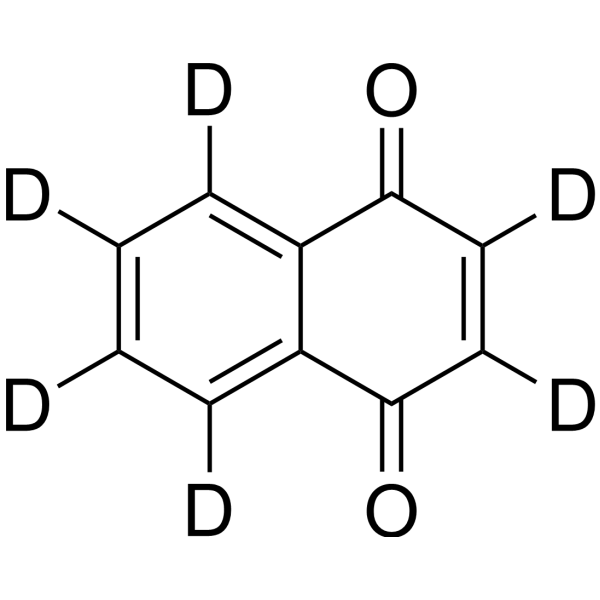
Cat. No.: HY-W015490S
CAS No.: 26473-08-5
1,4-Naphthoquinone-d6 is the deuterium labeled 1,4-Naphthoquinone. 1,4-Naphthoquinone is an inhibitor with broad-spectrum inhibitory activity targeting DNA polymerase, NF-κB and monoamine oxidase (MAO-A/B), with antibacterial and anti-biofilm efficacy. 1,4-Naphthoquinone is a competitive inhibitor of MAO-B (Ki=1.4 μM) and a non-competitive inhibitor of MAO-A (Ki=7.7 μM). 1,4-Naphthoquinone inhibits DNA polymerase pol α, β, γ, δ, ε, λ with IC50 ranging from 5.57-128 μM. 1,4-Naphthoquinone inhibits tumor cell proliferation, induces apoptosis and necrosis, and has anti-angiogenic and anti-inflammatory activities by inducing oxidative stress, depleting glutathione (GSH), inhibiting DNA polymerase-mediated DNA synthesis and blocking NF-κB nuclear translocation. 1,4-Naphthoquinone can be used in anti-bacterial , anti-tumor and anti-inflammatory studies, including inhibition of melanoma and colon cancer cell growth and endothelial cell function, as well as LPS-induced inflammation models .
loading...
    loading...

