



BT2
Based on 12 publication(s) in Google Scholar
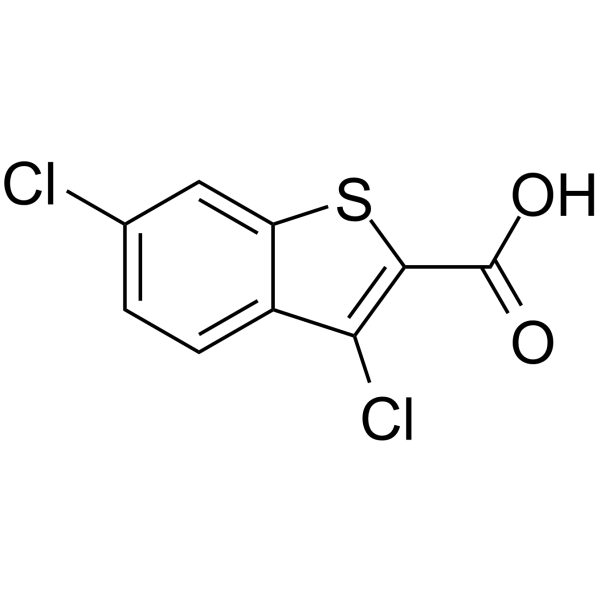
BT2 is a BCKDC kinase (BDK) inhibitor with an IC50 of 3.19 μM. BT2 binding to BDK triggers helix movements in the N-terminal domain, resulting in the dissociation of BDK from the branched-chain α-ketoacid dehydrogenase complex (BCKDC). BT2 (compound 4) is also a potent and selective Mcl-1 inhibitor with a Ki value of 59 μM.
연구목적의 판매만을 진행합니다. 환자를 대상으로 한 판매는 하지 않습니다.
- Purity : 99.81%
- CAS No.: 34576-94-8
- 화학식: C9H4Cl2O2S
- 분자량:247.10
-
보관:Powder -20°C, 3 years ; In solvent -80°C, 6 months , -20°C, 1 month

To place orders, for customer services and technical support, please contact: MedChemExpress USA
Tel: 609-228-6898 E-mail: [email protected] [email protected]


-
 Biological Activity
-
Chemical Information
-
용액&용해도
- 순도&문서
- References
-
 Help & FAQs


-

HY-Y1891
Tween 80 -
HY-Y0873
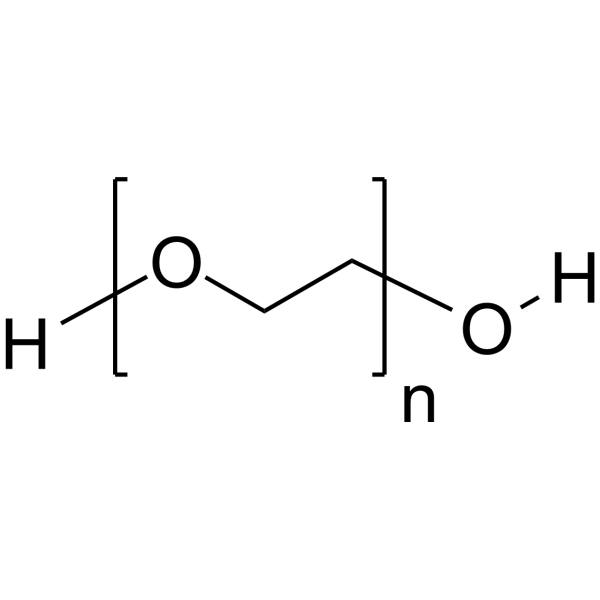
PEG300Neutral Polymer -
HY-10087
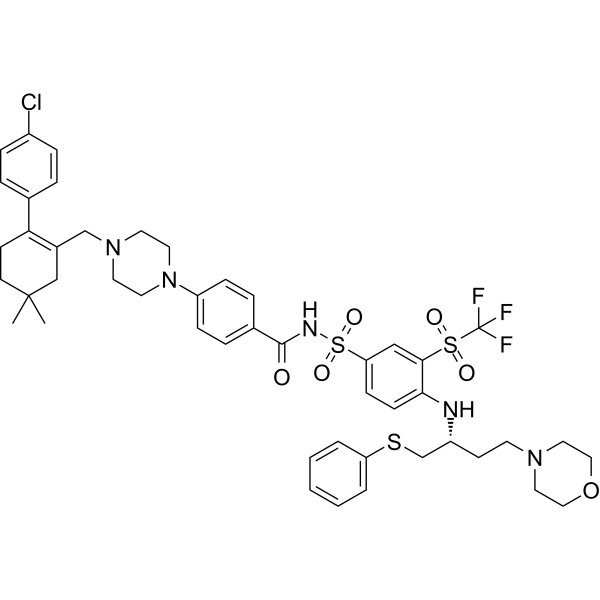
NavitoclaxBcl-2 Inhibitor -
HY-15531
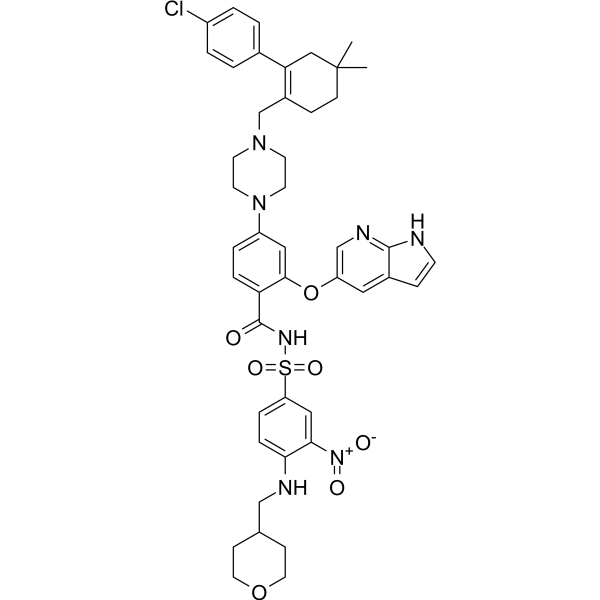
VenetoclaxBCL-2 Inhibitor -
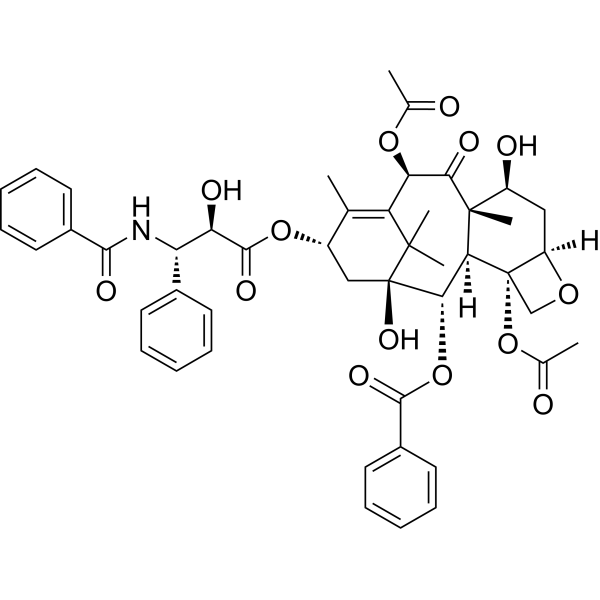
HY-B0015
PaclitaxelAntitumor Agent -
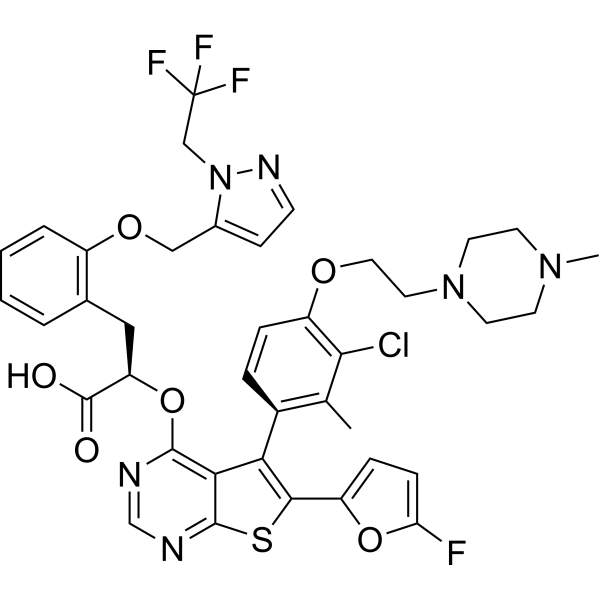
HY-100741
S63845MCL1 Inhibitor -
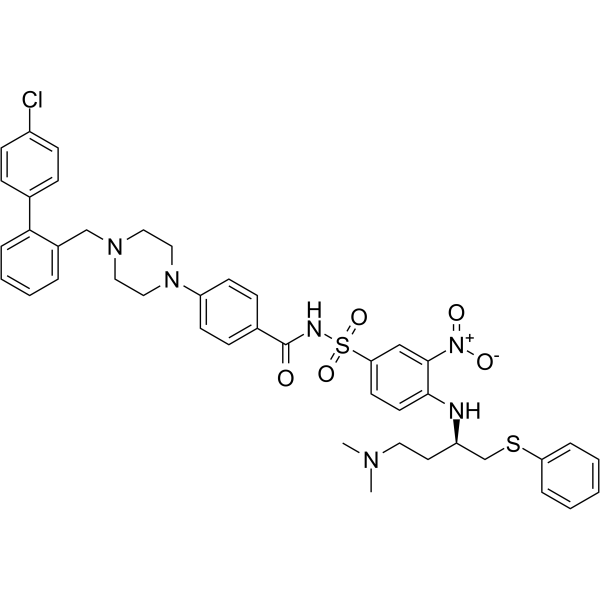
HY-50907
ABT-737Bcl-2 Family Inhibitor/BH3 Mimetic -
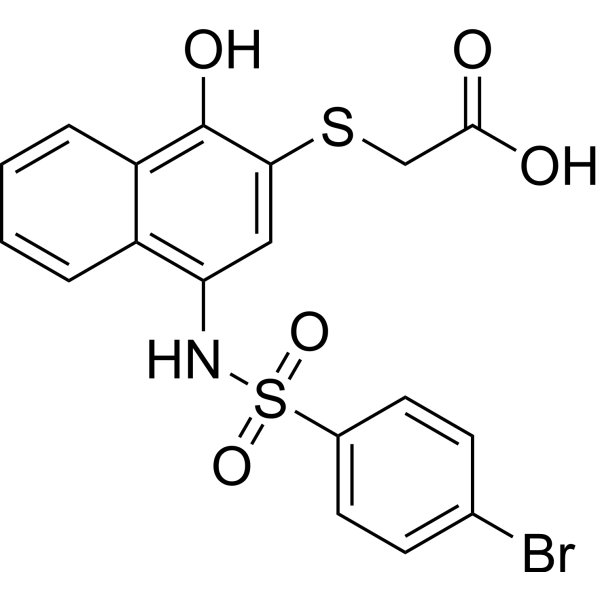
HY-18628
UMI-77Bcl-2 Family Inhibitor -
HY-100579
Ferrostatin-1Ferroptosis Inhibitor -

HY-10087R
Navitoclax (Standard)Reference Standard -
HY-12468
A-1210477Mcl-1 Inhibitor -
HY-117288
S55746Bcl-2 Inhibitor
Publications Citing Use of MedChemExpress (MCE) BT2
More- Nat Aging. 2025 Mar;5(3):419-436. [Abstract]
- Adv Sci (Weinh). 2025 Aug 11:e11081. [Abstract]
- Cell Death Dis. 2026 Aug 19.
- Cell Death Dis. 2024 Oct 10;15(10):736. [Abstract]
- Cell Death Dis. 2024 Jul 18;15(7):516. [Abstract]
- Mol Ther. 2024 Sep 4;32(9):3128-3144. [Abstract]
- JHEP Rep. 2026 Sep 10:102035.
- Atherosclerosis. 2025 Jun:405:119216. [Abstract]
- Resuscitation. 2026 Aug 20:111272.
- bioRxiv. 2025 Sep 3:2025.09.03.672819. [Abstract]
- Biomed Pharmacother. 2025 Sep:190:118426. [Abstract]
- Research Square Preprint. 2023 Jul 19.
 Customer Validation & Images

-
Cell Proliferation/Viability Assay
-
Cell Proliferation/Viability Assay
-
WB
-
Apoptosis Analysis
-
WB


Biological Activity
제품 설명
|
BDK 3.19 μM (IC50) |
Mcl-1 59 μM (Ki) |
In Vivo
MedChemExpress (MCE) has not independently confirmed the accuracy of these methods. They are for reference only.
-
Animal Model:C57BL/6J male mice (8-10-week-old)[1]
-
Dosage:20 mg/kg/day
-
Administration:Intraperitoneal injection; daily; for 1 week
-
Result:BCKDC activity was robustly (12.3-fold) enhanced in the heart compared with the vehicle-treated animals. Less activation was obtained in muscle and kidney at 3.6- and 3.8-fold, respectively. The protein levels of BDK in kidneys and heart were reduced to averages of 39 and 24%, respectively.


Chemical Information
-
CAS No. 34576-94-8
-
Appearance Solid
-
분자량 247.10
-
화학식 C9H4Cl2O2S
-
Color White to light yellow
-
SMILES
O=C(O)C1=C(C2=CC=C(C=C2S1)Cl)Cl
-
선적
Room temperature in continental US; may vary elsewhere.
-
보관
Powder -20°C 3 years In solvent -80°C 6 months -20°C 1 month


Publications (12)
-
Journal Impact Factor
-
Most Recent
-
Nat Aging
Multi-omic profiling of sarcopenia identifies disrupted branched-chain amino acid catabolism as a causal mechanism and therapeutic target. [Abstract]2025 Mar;5(3):419-436. PMID: 39910243 -
Adv Sci (Weinh)
Branched-Chain α Keto-Acid Dehydrogenase Kinase-Mediated AKT Phosphorylation Promotes RCC Tumorigenesis and Drug Resistance. [Abstract]2025 Aug 11:e11081. PMID: 40789057
BT2 purchased from MedChemExpress. Usage Cited in: Adv Sci (Weinh). 2025 Aug 11:e11081. [Abstract]
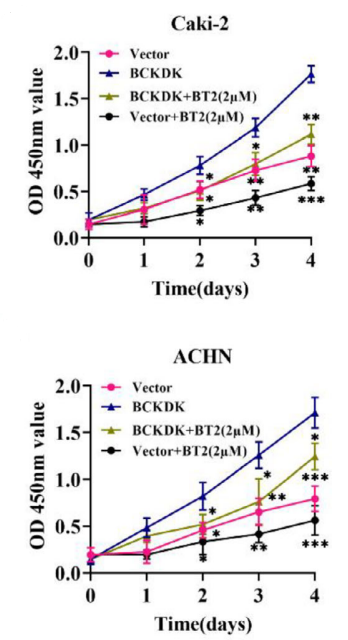
BT2 (2 μM; 1-4 days) treatment decreased the viability of BCKDK-overexpressing Caki-2 and ACHN cells. CCK-8 assay detecting cell viability after BCKDK overexpression in RCC cells.
BT2 purchased from MedChemExpress. Usage Cited in: Adv Sci (Weinh). 2025 Aug 11:e11081. [Abstract]
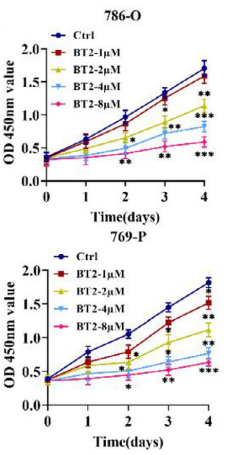
CCK-8 assay assessing the cell viability of 786-O and 769-P cells treated with BT2 (1, 2, 4, 8 μM; 1-4 days).
BT2 purchased from MedChemExpress. Usage Cited in: Adv Sci (Weinh). 2025 Aug 11:e11081. [Abstract]
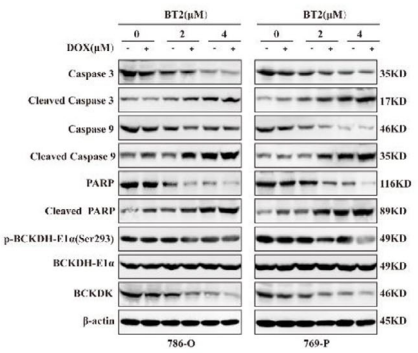
786‐O cells were treated with 0, 2, and 4 μM BT2 for 24 h, followed by 2 μM DOX or DMSO treatment for 12 h. The effect of DOX-mediated cell death and apoptosis was analyzed.
BT2 purchased from MedChemExpress. Usage Cited in: Adv Sci (Weinh). 2025 Aug 11:e11081. [Abstract]
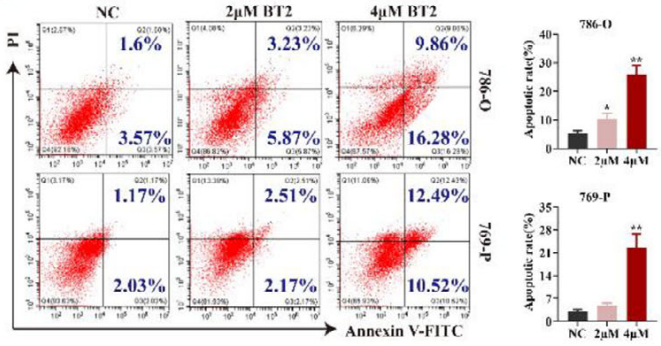
Apoptosis of RCC cells treated with BT2 (2, 4 μM; 24 h) at 780-O and 769-P cells was detected by flow cytometry.
-
-
Cell Death Dis
2024 Oct 10;15(10):736. PMID: 39389936
BT2 purchased from MedChemExpress. Usage Cited in: Cell Death Dis. 2024 Oct 10;15(10):736. [Abstract]
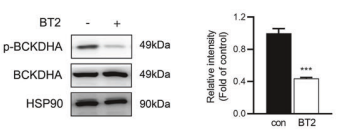
Phosphorylation level of BCKDHA in primary mouse hepatocytes incubated with 200 μM BT2 for 1 h.
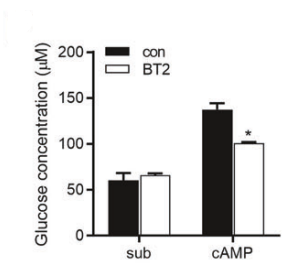
BT2 purchased from MedChemExpress. Usage Cited in: Cell Death Dis. 2024 Oct 10;15(10):736. [Abstract]
Primary mouse hepatocytes were incubated with 200 μM BT2 and 100 μM 8-Br-cAMP in glucose-free DMEM containing gluconeogenic substrates (1 mM sodium pyruvate and 10 mM sodium lactate) for 24 h. The cell culture supernatants were collected to measure glucose content.
-
Cell Death Dis
MAZ-mediated up-regulation of BCKDK reprograms glucose metabolism and promotes growth by regulating glucose-6-phosphate dehydrogenase stability in triple-negative breast cancer. [Abstract]2024 Jul 18;15(7):516. PMID: 39025830 -
Mol Ther
BCKDK modification enhances the anticancer efficacy of CAR-T cells by reprogramming branched chain amino acid metabolism. [Abstract]2024 Sep 4;32(9):3128-3144. PMID: 38734897 -
-
Atherosclerosis
Valine acts as an early biomarker and exacerbates pathological cardiac hypertrophy by impairing mitochondrial quality control. [Abstract]2025 Jun:405:119216. PMID: 40318256 -
-
bioRxiv
Impaired Lung BCAA Metabolism Promotes Ferroptosis and Resultant Pulmonary Arterial Hypertension-Associated Hepatopathy. [Abstract]2025 Sep 3:2025.09.03.672819. PMID: 40950189 -
Biomed Pharmacother
Donor-specific response of visceral adipocytes differentiated from human adipose-derived mesenchymal stem cells to branched-chain alpha-keto acid (BCKA) dehydrogenase activation. [Abstract]2025 Sep:190:118426. PMID: 40752427 -


용액&용해도
In Vitro:
DMSO : 62.5 mg/mL (252.93 mM; Need ultrasonic; Hygroscopic DMSO has a significant impact on the solubility of product, please use newly opened DMSO)
Please refer to the solubility information to select the appropriate solvent. Once prepared, please aliquot and store the solution to prevent product inactivation from repeated freeze-thaw cycles.
Storage method and period of stock solution: -80°C, 6 months; -20°C, 1 month. When stored at -80°C, please use it within 6 months. When stored at -20°C, please use it within 1 month.
Please refer to the solubility information to select the appropriate solvent. Once prepared, please aliquot and store the solution to prevent product inactivation from repeated freeze-thaw cycles.
Storage method and period of stock solution: -80°C, 6 months; -20°C, 1 month. When stored at -80°C, please use it within 6 months. When stored at -20°C, please use it within 1 month.
Concentration (start) × Volume (start) = Concentration (final) × Volume (final)
In Vivo:
Select the appropriate dissolution method based on your experimental animal and administration route.
- For the following dissolution methods, please ensure to first prepare a clear stock solution using an In Vitro approach and then sequentially add co-solvents:
- To ensure reliable experimental results, the clarified stock solution can be appropriately stored based on storage conditions. As for the working solution for In Vivo experiments, it is recommended to prepare freshly and use it on the same day.
- The percentages shown for the solvents indicate their volumetric ratio in the final prepared solution. If precipitation or phase separation occurs during preparation, heat and/or sonication can be used to aid dissolution.
Add each solvent one by one: 10% DMSO 40% PEG300 5% Tween-80 45% Saline
Solubility: ≥ 2.08 mg/mL (8.42 mM); Clear solution
This protocol yields a clear solution of ≥ 2.08 mg/mL (saturation unknown).
Taking 1 mL working solution as an example, add 100 μL DMSO stock solution (20.8 mg/mL) to 400 μL PEG300, and mix evenly; then add 50 μL Tween-80 and mix evenly; then add 450 μL Saline to adjust the volume to 1 mL.
Preparation of Saline: Dissolve 0.9 g sodium chloride in ddH₂O and dilute to 100 mL to obtain a clear Saline solution.
In Vivo Dissolution Calculator
Please enter the basic information of animal experiments:
-
-
-
-
Recommended: Prepare an additional quantity of animals to account for potential losses during experiments.
Please enter your animal formula composition:
-
%DMSO +
Recommended: Keep the proportion of DMSO in working solution below 2% if your animal is weak.
-
%+
-
+%Tween-80 + +
-
%Saline +
The co-solvents required include: DMSO, . All of co-solvents are available by MedChemExpress (MCE). , Tween 80. All of co-solvents are available by MedChemExpress (MCE).
Working solution concentration: 0.22 mg/mL
Method for preparing stock solution: mg drug dissolved in μL DMSO. Stock solution concentration: mg/mL.
1. Take μL DMSO stock solution;
2. Add μL .
μL , mix evenly;
3. Then add μL Tween 80, mix evenly;
4. Then add μL
Please ensure that the stock solution in the first step is dissolved to a clear state, and add co-solvents in sequence. You can use ultrasonic heating (ultrasonic cleaner, recommended frequency 20-40 kHz), vortexing, etc. to assist dissolution.


순도&문서
-
Data Sheet (278 KB)
-
SDS (394 KB)
- English - EN (394 KB)
- Français - FR (394 KB)
- Deutsch - DE (394 KB)
- Norwegian - NO (394 KB)
- Español - ES (394 KB)
- Swedish - SV (394 KB)
- Italian - IT (394 KB)
- Korean - KR (394 KB)
- Portuguese - PT (394 KB)
-
Handling Instructions (2659 KB)
References
[1]. Tso SC, et al. Benzothiophene carboxylate derivatives as novel allosteric inhibitors of branched-chain α-ketoacid dehydrogenase kinase. J Biol Chem. 2014 Jul 25;289(30):20583-93. [Content Brief]
[2]. Friberg A, et al. Discovery of potent myeloid cell leukemia 1 (Mcl-1) inhibitors using fragment-based methods and structure-based design. J Med Chem. 2013 Jan 10;56(1):15-30. [Content Brief]


Complete Stock Solution Preparation Table
Please refer to the solubility information to select the appropriate solvent. Once prepared, please aliquot and store the solution to prevent product inactivation from repeated freeze-thaw cycles.
Storage method and period of stock solution: -80°C, 6 months; -20°C, 1 month. When stored at -80°C, please use it within 6 months. When stored at -20°C, please use it within 1 month.
| Optional Solvent | Concentration Solvent Mass | 1 mg | 5 mg | 10 mg | 25 mg |
|---|---|---|---|---|---|
| DMSO | 1 mM | 4.0469 mL | 20.2347 mL | 40.4694 mL | 101.1736 mL |
| 5 mM | 0.8094 mL | 4.0469 mL | 8.0939 mL | 20.2347 mL | |
| 10 mM | 0.4047 mL | 2.0235 mL | 4.0469 mL | 10.1174 mL | |
| 15 mM | 0.2698 mL | 1.3490 mL | 2.6980 mL | 6.7449 mL | |
| 20 mM | 0.2023 mL | 1.0117 mL | 2.0235 mL | 5.0587 mL | |
| 25 mM | 0.1619 mL | 0.8094 mL | 1.6188 mL | 4.0469 mL | |
| 30 mM | 0.1349 mL | 0.6745 mL | 1.3490 mL | 3.3725 mL | |
| 40 mM | 0.1012 mL | 0.5059 mL | 1.0117 mL | 2.5293 mL | |
| 50 mM | 0.0809 mL | 0.4047 mL | 0.8094 mL | 2.0235 mL | |
| 60 mM | 0.0674 mL | 0.3372 mL | 0.6745 mL | 1.6862 mL | |
| 80 mM | 0.0506 mL | 0.2529 mL | 0.5059 mL | 1.2647 mL | |
| 100 mM | 0.0405 mL | 0.2023 mL | 0.4047 mL | 1.0117 mL |


BT2 Related Classifications
HY-114855 Related Classifications
 Powered by Bioz