



Methylprednisolone aceponate
Based on 2 publication(s) in Google Scholar
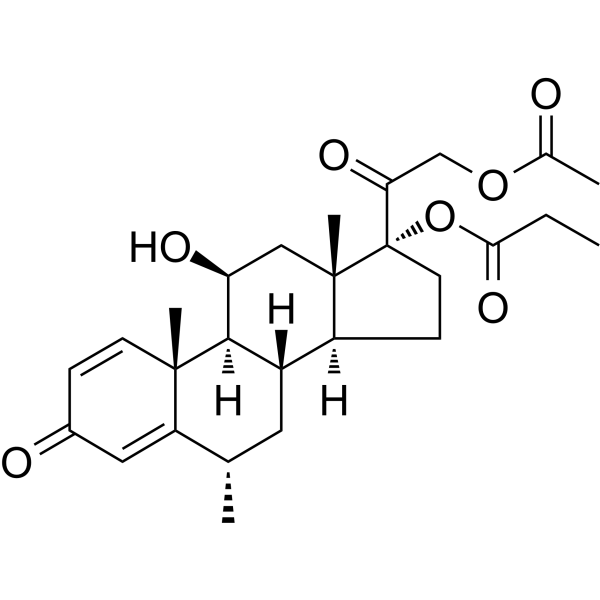
Methylprednisolone aceponate (ZK 91588) is a glucocorticoid and anti-inflammatory agent with weak systemic effects. Methylprednisolone aceponate is a selective glucocorticoid receptor Ligand.Methylprednisolone aceponate can be used for research of eczema and other inflammatory skin disorders.
For research use only. We do not sell to patients.
- Purity : 99.82%
- CAS No.: 86401-95-8
- Formula: C27H36O7
- Molecular Weight:472.57
-
Storage:Powder -20°C, 3 years , 4°C, 2 years ; In solvent -80°C, 6 months , -20°C, 1 month

To place orders, for customer services and technical support, please contact: MedChemExpress USA
Tel: 609-228-6898 E-mail: [email protected] [email protected]


-
 Biological Activity
-
Chemical Information
-
Solvent & Solubility
- Purity & Documentation
- References
-
 Help & FAQs


-
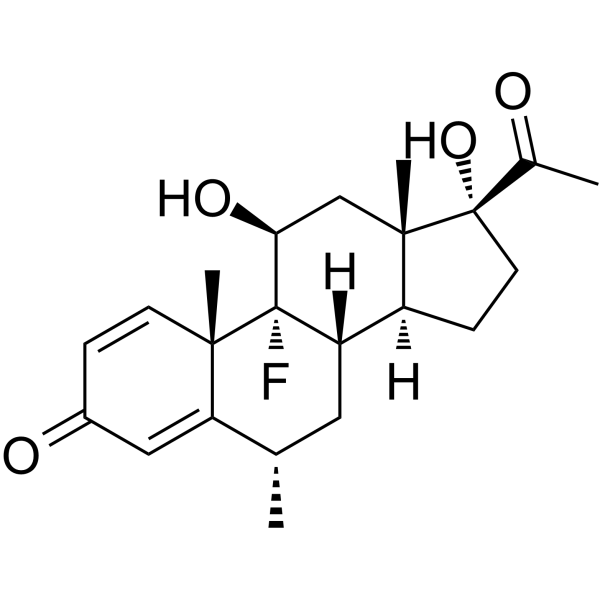
HY-B1893
Fluorometholone -
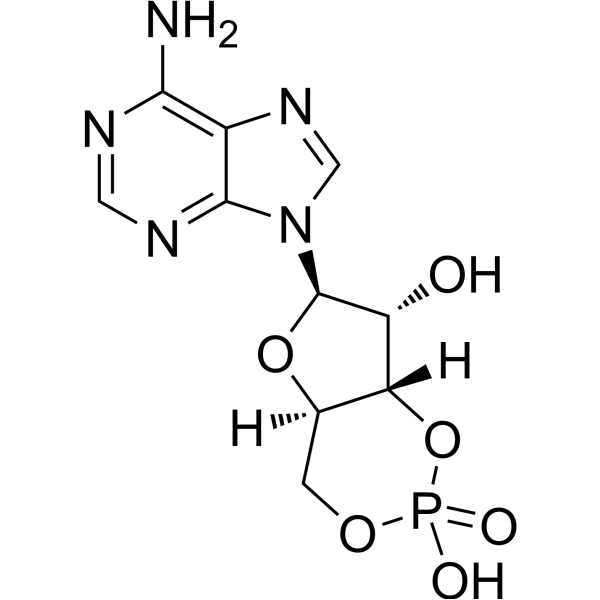
HY-B1511
Cyclic AMP -
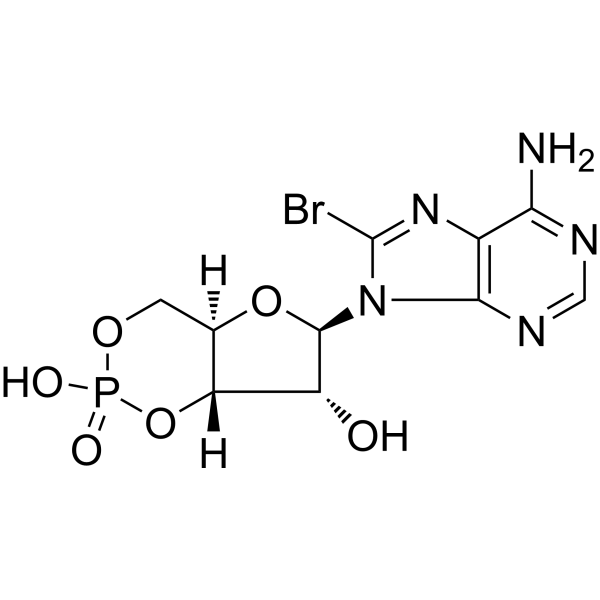
HY-12306A
8-Bromo-cAMP -
HY-B0764
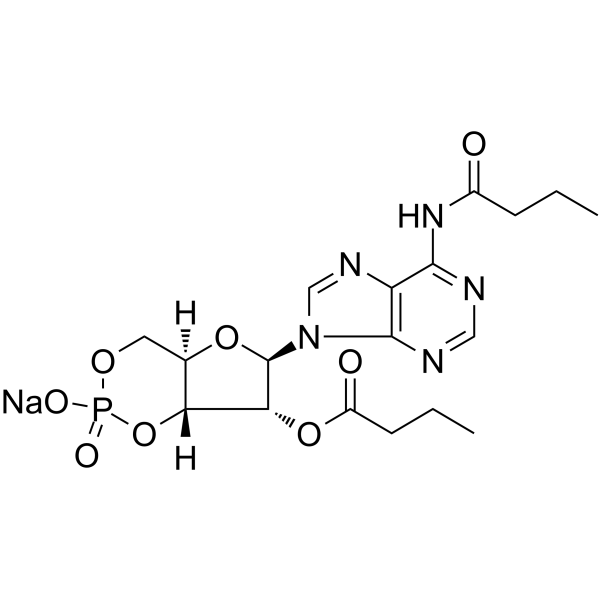
Bucladesine sodium -
HY-14650
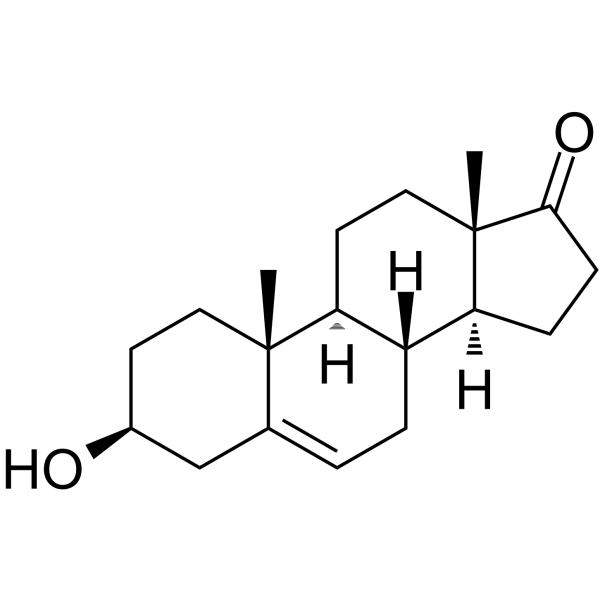
DHEA -
HY-B1900
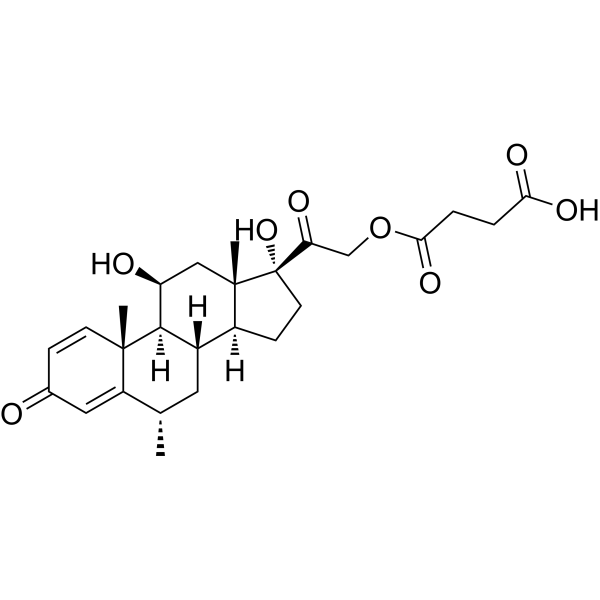
Methylprednisolone succinate -
HY-B1900R
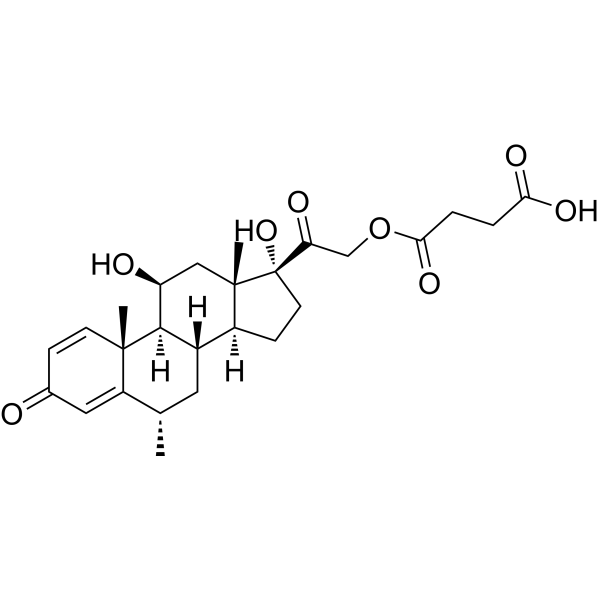
Methylprednisolone succinate (Standard) -
HY-B1829A
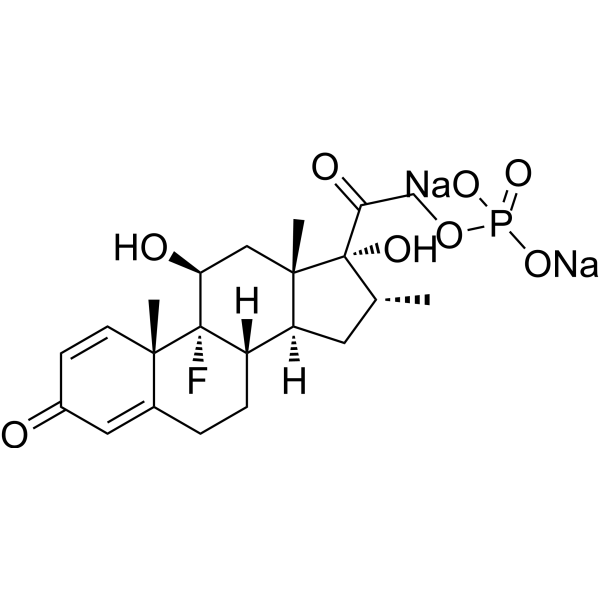
Dexamethasone phosphate disodium -
HY-B0727
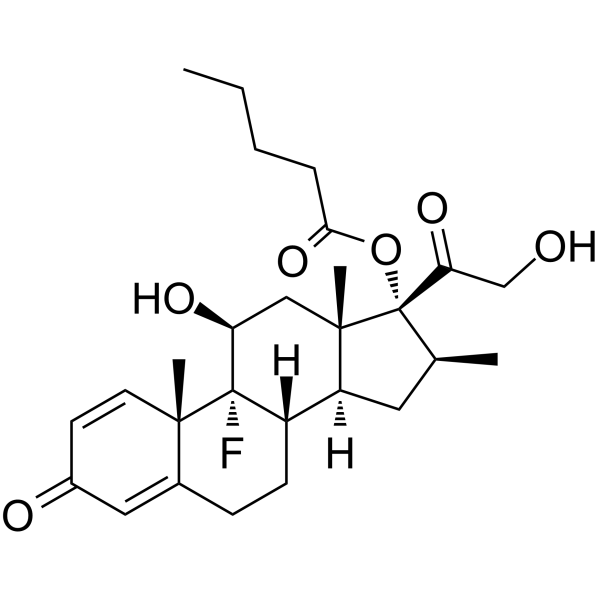
Betamethasone valerate -
HY-B1616
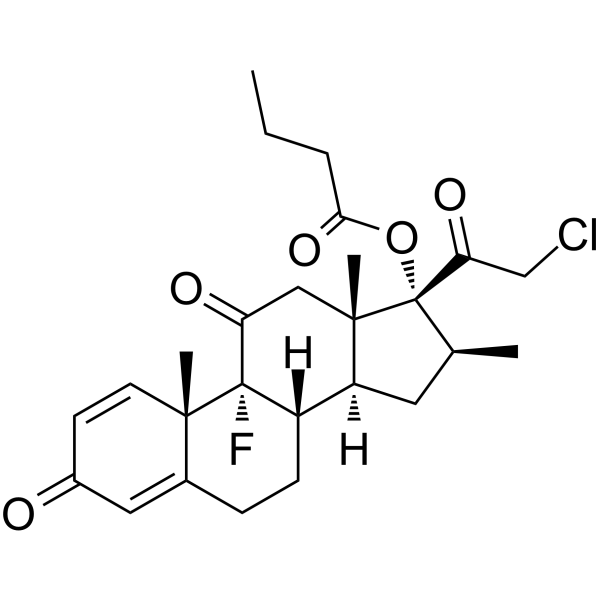
Clobetasone butyrate -
HY-17461
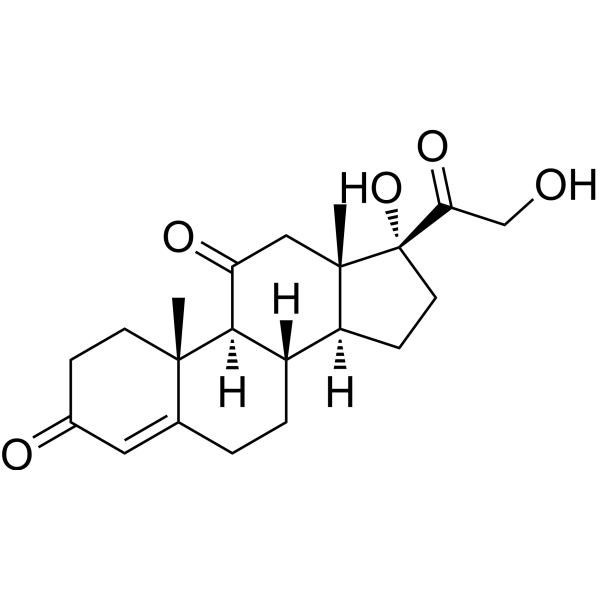
Cortisone -
HY-15709
AL 082D06
Publications Citing Use of MedChemExpress (MCE) Methylprednisolone aceponate
More

Biological Activity
Description
In Vitro
Methylprednisolone aceponate inhibits collagenase promoter activity (in HeLa cells), LPS-induced IL-12p40 secretion (in human PBMCs) and phytohemagglutinin-induced IFN-γ secretion (in human PBMCs) with IC50s of 9.3, 16.8, 15.2 nM[3].
Methylprednisolone aceponate induces MMTV promoter and TAT activities with EC50s of 21.8 and 20.5 nM respectively[3].
MedChemExpress (MCE) has not independently confirmed the accuracy of these methods. They are for reference only.
In Vivo
Methylprednisolone aceponate (0.0001%-0.1%, topically applied) inhibits oedema formation with ED50 of 0.002% in irritant contact dermatitis in mice and rat[3].
MedChemExpress (MCE) has not independently confirmed the accuracy of these methods. They are for reference only.
-
Animal Model:Irritant contact dermatitis mice and rat[3]
-
Dosage:0.0001%-0.1%
-
Administration:Topically applied, 10 µL for mice and 20 µL for rats.
-
Result:Significantly inhibited ear inflammation.
Clinical Trial
| NCT Number | Sponsor | Condition | Start Date |
Phase

|
|---|---|---|---|---|
| NCT01329991 | Plexxikon| | 2011-05 | PHASE1 |


Chemical Information
-
CAS No. 86401-95-8
-
Appearance Solid
-
Molecular Weight 472.57
-
Formula C27H36O7
-
Color White to off-white
-
SMILES
CC(OCC([C@@]1([C@@]2([C@@]([C@@]3([H])[C@]([C@@]4(C([C@@H](C)C3)=CC(C=C4)=O)C)([H])[C@@H](O)C2)([H])CC1)C)OC(CC)=O)=O)=O
-
Synonyms
ZK 91588; MPA
-
Shipping
Room temperature in continental US; may vary elsewhere.
-
Storage
Powder -20°C 3 years 4°C 2 years In solvent -80°C 6 months -20°C 1 month


Publications (2)
-
Journal Impact Factor
-
Most Recent
-
Genomics
2025 Jan 21;117(2):111002. PMID: 39848478 -
J Assist Reprod Genet
High concentration of estrogen resulted by COH may affect the secretion of pro-angiogenic factors in uNK cells by downregulating the expression of IL-11 in decidual stromal cells. [Abstract]2024 Nov;41(11):3189-3200. PMID: 39276273


Solvent & Solubility
In Vitro:
DMSO : 100 mg/mL (211.61 mM; Need ultrasonic; Hygroscopic DMSO has a significant impact on the solubility of product, please use newly opened DMSO)
Please refer to the solubility information to select the appropriate solvent. Once prepared, please aliquot and store the solution to prevent product inactivation from repeated freeze-thaw cycles.
Storage method and period of stock solution: -80°C, 6 months; -20°C, 1 month. When stored at -80°C, please use it within 6 months. When stored at -20°C, please use it within 1 month.
Please refer to the solubility information to select the appropriate solvent. Once prepared, please aliquot and store the solution to prevent product inactivation from repeated freeze-thaw cycles.
Storage method and period of stock solution: -80°C, 6 months; -20°C, 1 month. When stored at -80°C, please use it within 6 months. When stored at -20°C, please use it within 1 month.
Concentration (start) × Volume (start) = Concentration (final) × Volume (final)
In Vivo:
Select the appropriate dissolution method based on your experimental animal and administration route.
- For the following dissolution methods, please ensure to first prepare a clear stock solution using an In Vitro approach and then sequentially add co-solvents:
- To ensure reliable experimental results, the clarified stock solution can be appropriately stored based on storage conditions. As for the working solution for In Vivo experiments, it is recommended to prepare freshly and use it on the same day.
- The percentages shown for the solvents indicate their volumetric ratio in the final prepared solution. If precipitation or phase separation occurs during preparation, heat and/or sonication can be used to aid dissolution.
Add each solvent one by one: 10% DMSO 40% PEG300 5% Tween-80 45% Saline
Solubility: ≥ 2.5 mg/mL (5.29 mM); Clear solution
This protocol yields a clear solution of ≥ 2.5 mg/mL (saturation unknown).
Taking 1 mL working solution as an example, add 100 μL DMSO stock solution (25.0 mg/mL) to 400 μL PEG300, and mix evenly; then add 50 μL Tween-80 and mix evenly; then add 450 μL Saline to adjust the volume to 1 mL.
Preparation of Saline: Dissolve 0.9 g sodium chloride in ddH₂O and dilute to 100 mL to obtain a clear Saline solution.
In Vivo Dissolution Calculator
Please enter the basic information of animal experiments:
-
-
-
-
Recommended: Prepare an additional quantity of animals to account for potential losses during experiments.
Please enter your animal formula composition:
-
%DMSO +
Recommended: Keep the proportion of DMSO in working solution below 2% if your animal is weak.
-
%+
-
+%Tween-80 + +
-
%Saline +
The co-solvents required include: DMSO, . All of co-solvents are available by MedChemExpress (MCE). , Tween 80. All of co-solvents are available by MedChemExpress (MCE).
Working solution concentration: 0.22 mg/mL
Method for preparing stock solution: mg drug dissolved in μL DMSO. Stock solution concentration: mg/mL.
1. Take μL DMSO stock solution;
2. Add μL .
μL , mix evenly;
3. Then add μL Tween 80, mix evenly;
4. Then add μL
Please ensure that the stock solution in the first step is dissolved to a clear state, and add co-solvents in sequence. You can use ultrasonic heating (ultrasonic cleaner, recommended frequency 20-40 kHz), vortexing, etc. to assist dissolution.


Purity & Documentation
-
Data Sheet (279 KB)
-
SDS (393 KB)
- English - EN (393 KB)
- Français - FR (393 KB)
- Deutsch - DE (393 KB)
- Norwegian - NO (393 KB)
- Español - ES (393 KB)
- Swedish - SV (393 KB)
- Italian - IT (393 KB)
- Korean - KR (393 KB)
- Portuguese - PT (393 KB)
-
Handling Instructions (2659 KB)
References
[1]. Ruzicka T. Methylprednisolone aceponate in eczema and other inflammatory skin disorders -- a clinical update. Int J Clin Pract. 2006 Jan;60(1):85-92. [Content Brief]
[3]. Schäcke H, et al. Characterization of ZK 245186, a novel, selective glucocorticoid receptor agonist for the topical treatment of inflammatory skin diseases. Br J Pharmacol. 2009 Oct;158(4):1088-103. [Content Brief]


Complete Stock Solution Preparation Table
Please refer to the solubility information to select the appropriate solvent. Once prepared, please aliquot and store the solution to prevent product inactivation from repeated freeze-thaw cycles.
Storage method and period of stock solution: -80°C, 6 months; -20°C, 1 month. When stored at -80°C, please use it within 6 months. When stored at -20°C, please use it within 1 month.
| Optional Solvent | Concentration Solvent Mass | 1 mg | 5 mg | 10 mg | 25 mg |
|---|---|---|---|---|---|
| DMSO | 1 mM | 2.1161 mL | 10.5804 mL | 21.1609 mL | 52.9022 mL |
| 5 mM | 0.4232 mL | 2.1161 mL | 4.2322 mL | 10.5804 mL | |
| 10 mM | 0.2116 mL | 1.0580 mL | 2.1161 mL | 5.2902 mL | |
| 15 mM | 0.1411 mL | 0.7054 mL | 1.4107 mL | 3.5268 mL | |
| 20 mM | 0.1058 mL | 0.5290 mL | 1.0580 mL | 2.6451 mL | |
| 25 mM | 0.0846 mL | 0.4232 mL | 0.8464 mL | 2.1161 mL | |
| 30 mM | 0.0705 mL | 0.3527 mL | 0.7054 mL | 1.7634 mL | |
| 40 mM | 0.0529 mL | 0.2645 mL | 0.5290 mL | 1.3226 mL | |
| 50 mM | 0.0423 mL | 0.2116 mL | 0.4232 mL | 1.0580 mL | |
| 60 mM | 0.0353 mL | 0.1763 mL | 0.3527 mL | 0.8817 mL | |
| 80 mM | 0.0265 mL | 0.1323 mL | 0.2645 mL | 0.6613 mL | |
| 100 mM | 0.0212 mL | 0.1058 mL | 0.2116 mL | 0.5290 mL |


Methylprednisolone aceponate Related Classifications
HY-103025 Related Classifications
 Powered by Bioz