



Self-assembling Peptides

- 分子式: C33H30N2O5
- 分子量: 534.60
Fmoc-FF is a building block. Fmoc-FF-prepared hydrogels and nanogels selectively deliver Dexamethasone (HY-14648) to leukemia cells.

- 分子式: C72H98N20O22
- 分子量: 1595.67
Oligopeptide P11-4 is an α-peptide that can be self-assembled into β-sheet amyloids with a hydrogel appearance at low pH. Oligopeptide P11-4 can be used in biomimetic mineralization, enamel regeneration and oral care agent.

- 分子式: C25H47N9O10S
- 分子量: 665.76
CREKA peptide acetate is a short peptide sequence, belonging to self-assembling peptides (SAPs), which can self-assemble into functional nanostructures, typically nanofibers, under physiological conditions. CREKA peptide acetate can be used to target tumor cells and tumor vasculature, exhibiting antitumor activity.
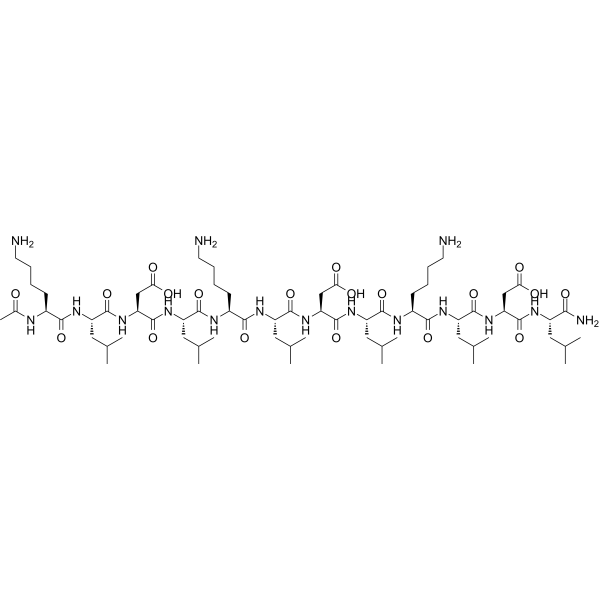
- 分子式: C68H122N16O19
- 分子量: 1467.79
KLD-12 is a 12-residue self-assembling peptide that is used in tissue-engineering. KLD-12 combined with SDF-1 self-assembled polypeptide enhances chondrogenic differentiation of bone marrow stromal cells (BMSCs). KLD-12 hydrogel can fill full-thickness osteochondral defects in situ and improve cartilage repair.

- 分子式: C84H149N29O28.xC2H4O2
- 分子量: 2013.26 (free base)
R5 peptide acetate shows silica-precipitating activity.

- 分子式: C64H110N28O25.xC2HF3O2
- 分子量: 1671.73 (free acid)
RAD16-I, free acid TFA is a derivative of RADA16 (HY-P2632), with no Ac and NH2 modifications at both ends, and it has the same function as RADA16. RAD16-I, free acid TFA is a non-directed self-assembling peptide hydrogel. Under physiological conditions, RAD16-I, free acid TFA spontaneously forms a three-dimensional nanofiber network that mimics the extracellular matrix, and possesses excellent properties such as high water content, biocompatibility and degradability. RAD16-I, free acid TFA serves as an ideal scaffold for three-dimensional cell culture. RAD16-I, free acid TFA not only maintains cell viability and induces self-organization, but also supports cell adhesion, proliferation, differentiation and insulin secretion, effectively stabilizes islet clusters and promotes directed differentiation of the cardiac lineage. RAD16-I, free acid TFA can construct a cell-friendly nano-microenvironment for research related to diseases such as myocardial infarction and diabetes.

- 分子式: C106H196N28O23.xC2H4O2
- 分子量: 2230.86 (free base)
MAX8 is a peptide made up of 20 residues that can fold and self-assemble under the influence of DMEM, forming a mechanically rigid hydrogel, this allows cells to be evenly immersed in the gel when the gelation is triggered in the presence of cells.

- 分子式: C26H50N6O5
- 分子量: 526.71
Ac-I3K-NH2 is a surfactant-like peptide. Ac-I3K-NH2 self-assembles into β-sheet nanofibers through β-sheet hydrogen bonding, hydrophobic interactions, and electrostatic repulsion. Ac-I3K-NH2 forms ribbon-like nanofibers with nanoscale widths, adopting a β-sheet conformation, with lateral stacking driven by isoleucine side-chain contacts. Ac-I3K-NH2 templates the sol-gel condensation of tetraethoxysilane, producing silica nanotubes. Ac-I3K-NH2 templates the synthesis of one-dimensional Pt nanostructures with P7A as a capping agent.

- 分子式: C107H201N29O21
- 分子量: 2229.92
MAX1 is a synthetic β-hairpin peptide that folds rapidly and self-assembles into a β-sheet-rich fibrous hydrogel network via non-covalent crosslinking. MAX1 hydrogel exhibits excellent shear-thinning and self-healing properties, enabling precise delivery via syringe and maintaining local retention after implantation. MAX1 hydrogel can uniformly encapsulate cells while preserving their viability and morphology, and protect growth factors (e.g., NGF) and chemotherapeutic drugs from degradation. MAX1 is applicable for spinal cord injury repair, medulloblastoma treatment, and three-dimensional high-throughput drug screening.
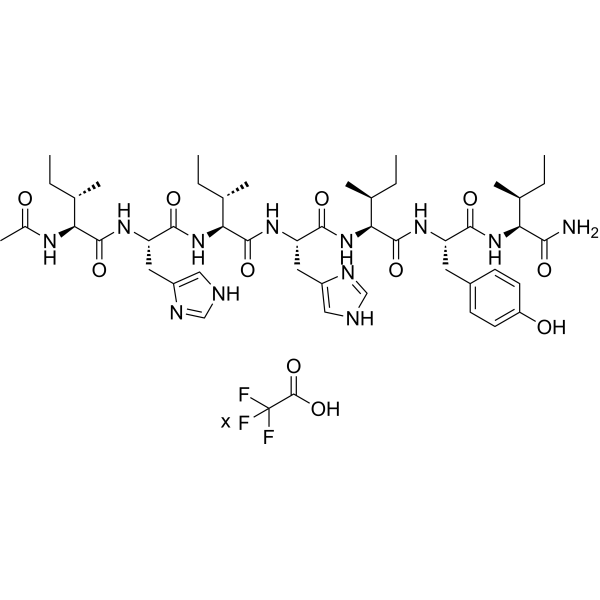
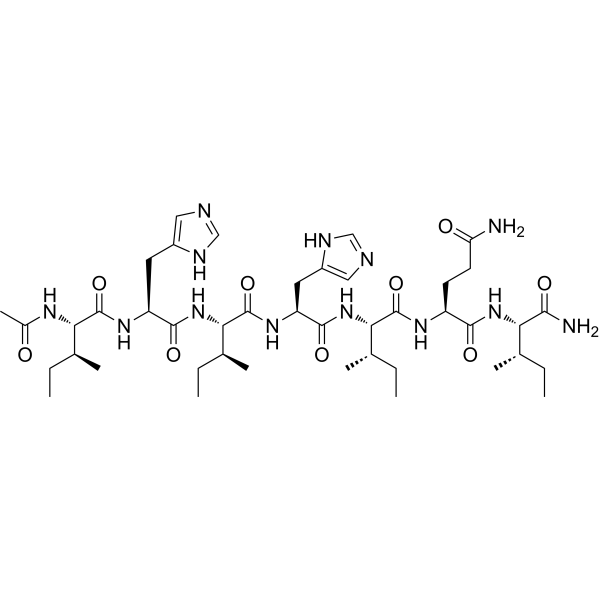
- 分子式: C43H71N13O9
- 分子量: 914.11
Ac-IHIHIQI-NH2 is a fibril-forming heptapeptide with high catalytic activity to laccase mimics. Ac-IHIHIQI-NH2 exhibits selectivity for hydrophobic p-nitrophenyl (ONp) ester substrates in the process of self-assembly.
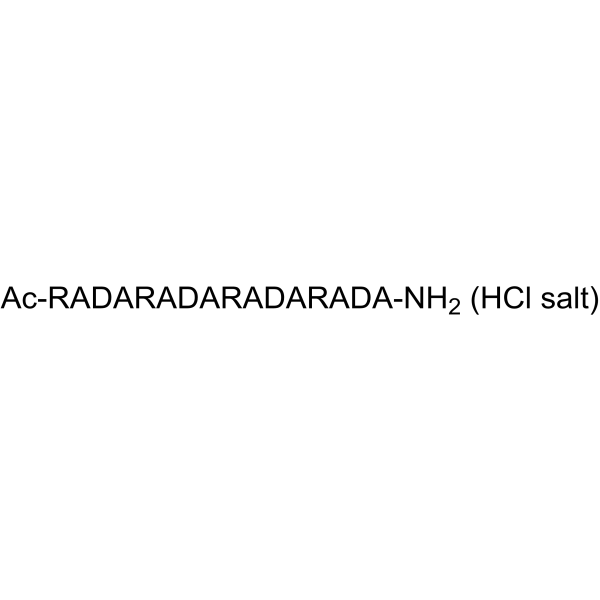
- 分子式: C66H113N29O25·xHCl
- 分子量: 1712.78 (free base)
RAD16-I hydrochloride, a soft nanofibrous self-assembling peptide, is a suitable microenvironment for human mesenchymal stem cells’ (hMSC) proliferation and differentiation into chondrocytes. RAD16-I is a well-studied ionic complementary peptide was used as a model to check potential amyloid-like staining properties of SAPNFs.

- 分子式: C68H122N16O19.xC2HF3O2
- 分子量: 1467.79 (free base)
KLD-12 TFA is the TFA salt form of KLD-12 (HY-P2263). KLD-12 TFA is a self a 12-residue self-assembling peptide that is used in tissue-engineering. KLD-12 TFA combined with SDF-1 self-assembled polypeptide enhances chondrogenic differentiation of bone marrow stromal cells (BMSCs). KLD-12 TFA hydrogel can fill full-thickness osteochondral defects in situ and improve cartilage repair.

- 分子式: C55H95N9O17
- 分子量: 1154.39
C16-VVVAAAEEE is a peptide amphiphile and biodegradable nanofiber scaffold that self-assembles into a hydrogel upon calcium ion triggering, enabling delivery of Sonic hedgehog protein to corpus cavernosum smooth muscle with prolonged release and without eliciting a significant immune response. C16-VVVAAAEEE is used in research on erectile dysfunction.

- 分子式: C73H134N26O18
- 分子量: 1664.01
SPG-178 is a synthetic neutral Self-assembling peptide. In neutral aqueous solution, SPG-178 spontaneously assembles into an antiparallel β-sheet nanoscale three-dimensional hydrogel (SPG-178-Gel) through electrostatic and hydrophobic interactions, and biologically mimics the natural extracellular matrix (ECM) to provide a microenvironment that promotes cell proliferation and angiogenesis.

- 分子式: C35H51N9O7
- 分子量: 709.84

- 分子式: C44H58N8O10S2
- 分子量: 923.11
Antifouling zwitterionic peptide is a zwitterionic peptide that shows good antifouling property. Antifouling zwitterionic peptide exhibits excellent biocompatibility. Antifouling zwitterionic peptide can be used for research on antifouling electrochemical biosensor for reliable detection of prostate specific antigen.


- 分子式: C101H170N40O39
- 分子量: 2568.68
RAD-SKP peptide is a self-assembling peptide. RAD-SKP peptide with decellularized cartilage matrix (DCM) can be used for synthesis of nanofiber hydrogel. RAD-SKP peptide can be used for cartilage repair research.

- 分子式: C54H72N12O12
- 分子量: 1081.22
IKFQFHFD is a pH-responsive and self-assembling peptide. IKFQFHFD is biocompatible at neutral pH and becomes an antimicrobial peptide-like molecular structure only at acidic pH. IKFQFHFD can be used for chronic wounds (venous ulcers, diabetic ulcers, and pressure ulcers) induced by biofilm infections research.



